Legal Updates, Court Practice Notes & Client Awareness
Updates and practical legal awareness notes on Patna High Court practice, Supreme Court principles, criminal law, bail, PMLA, cyber fraud, family law, property disputes, writs, service matters, consumer matters and client preparation.
Focus the legal research you want to read
Colour supports recognition; the written category label remains the primary identifier across PMLA / ED, Economic Offence, Cyber Crime, Extradition and other legal updates.

Multiple ECIR Attachments Under PMLA: “The Same Property Is Being Claimed or Attached in More Than One ECIR - Which Proceeding Has Priority?”
Can ED attach the same property in two different ECIRs? This detailed PMLA guide examines competing PAOs, separate predicate offences, common accused, direct-POC versus equivalent-value theories, attachment chronology, valuation exhaustion, double counting and the due-process problems created when one asset is relied upon in multiple money-laundering proceedings. It analyses the 2025 Appellate Tribunal decisions concerning overlapping attachments and proposes a Cross-ECIR Asset Reconciliation Ledger so that one property is not economically counted multiple times without a legally sustainable e
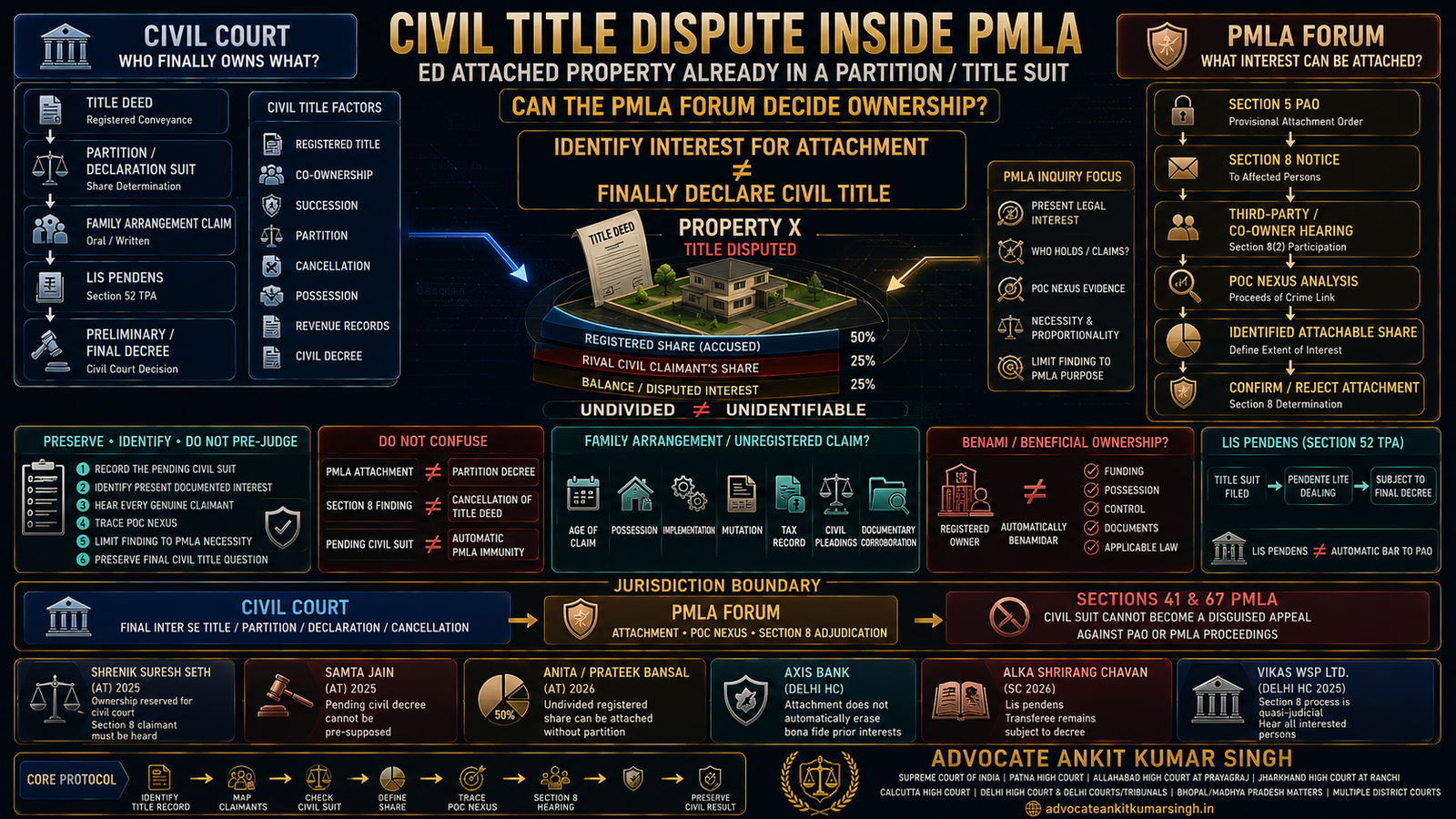
Civil Title Disputes Inside PMLA: “ED Attached Property Already in Partition / Title Litigation - Can the PMLA Forum Decide Ownership?”
What happens when ED attaches property whose ownership is already disputed in a partition, declaration, cancellation or title suit? This detailed PMLA analysis maps the jurisdictional boundary between identifying an attachable interest under Sections 5 and 8 and conclusively deciding civil ownership. It examines co-ownership and undivided shares, registered title, oral and unregistered family arrangements, benami allegations, beneficial ownership, mutation records, pending suits, lis pendens, civil-court jurisdiction under Sections 41 and 67, and recent Appellate Tribunal decisions including S

India’s Leading Money Laundering | White-Collar Crime Lawyers
Advocate Ankit Kumar — Advising and representing clients in complex PMLA, Enforcement Directorate (ED), money laundering, financial crime and white-collar crime matters, including investigations, summons, search and seizure, arrest and bail, bank-account freezing, property attachment and appellate proceedings.
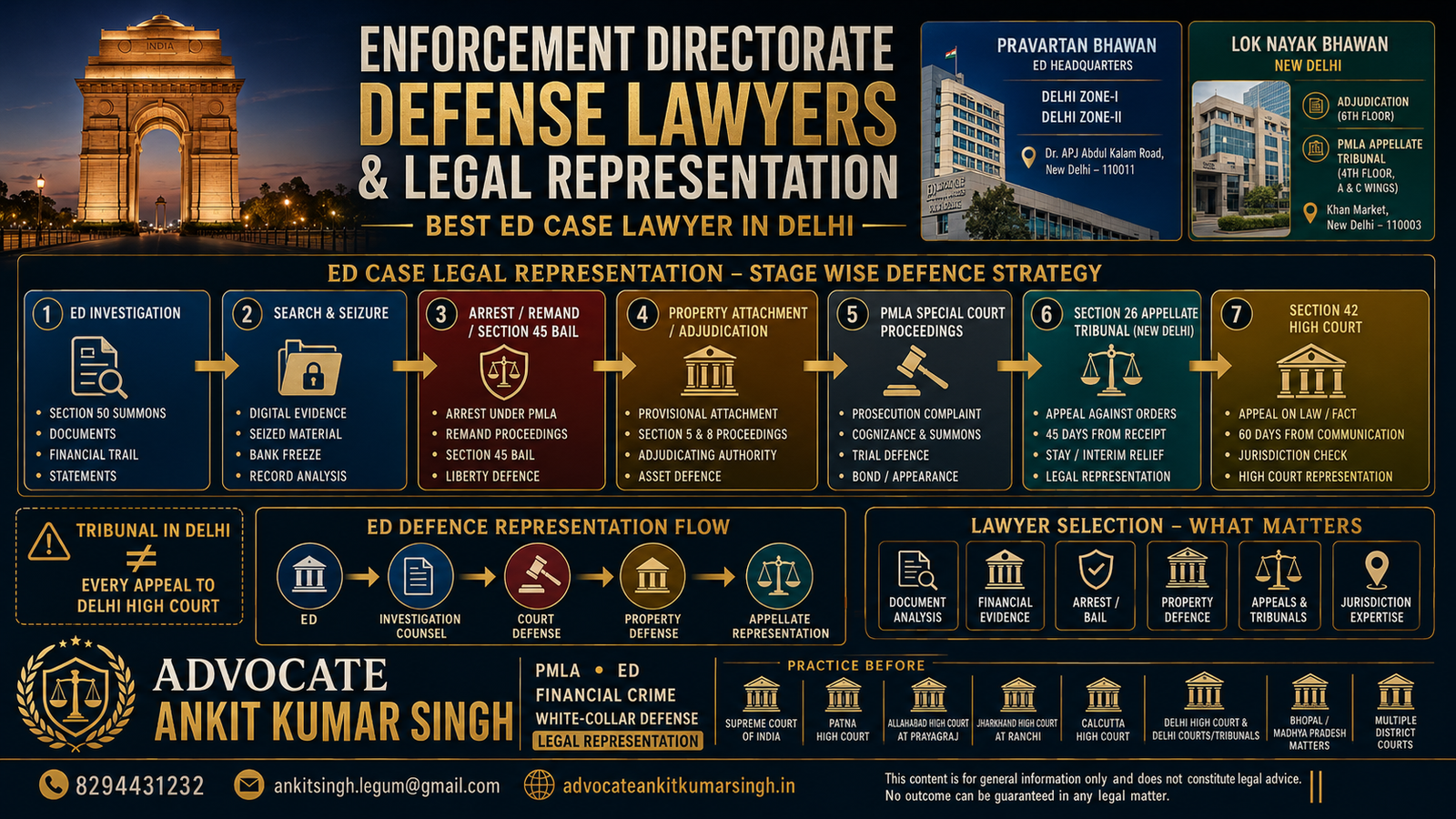
Enforcement Directorate Best Defense Lawyers and Legal Representation | best ed case lawyer in delhi
Advocate Ankit Kumar Singh — Legal consultation, defence strategy, document and financial-trail analysis, drafting and professional coordination for Enforcement Directorate and PMLA matters involving ED summons, search and seizure, arrest and remand, Section 45 bail, bank-account freezing, provisional attachment, Adjudicating Authority proceedings, prosecution complaints, PMLA Special Courts, Appellate Tribunal appeals and appropriate High Court or Supreme Court remedies.
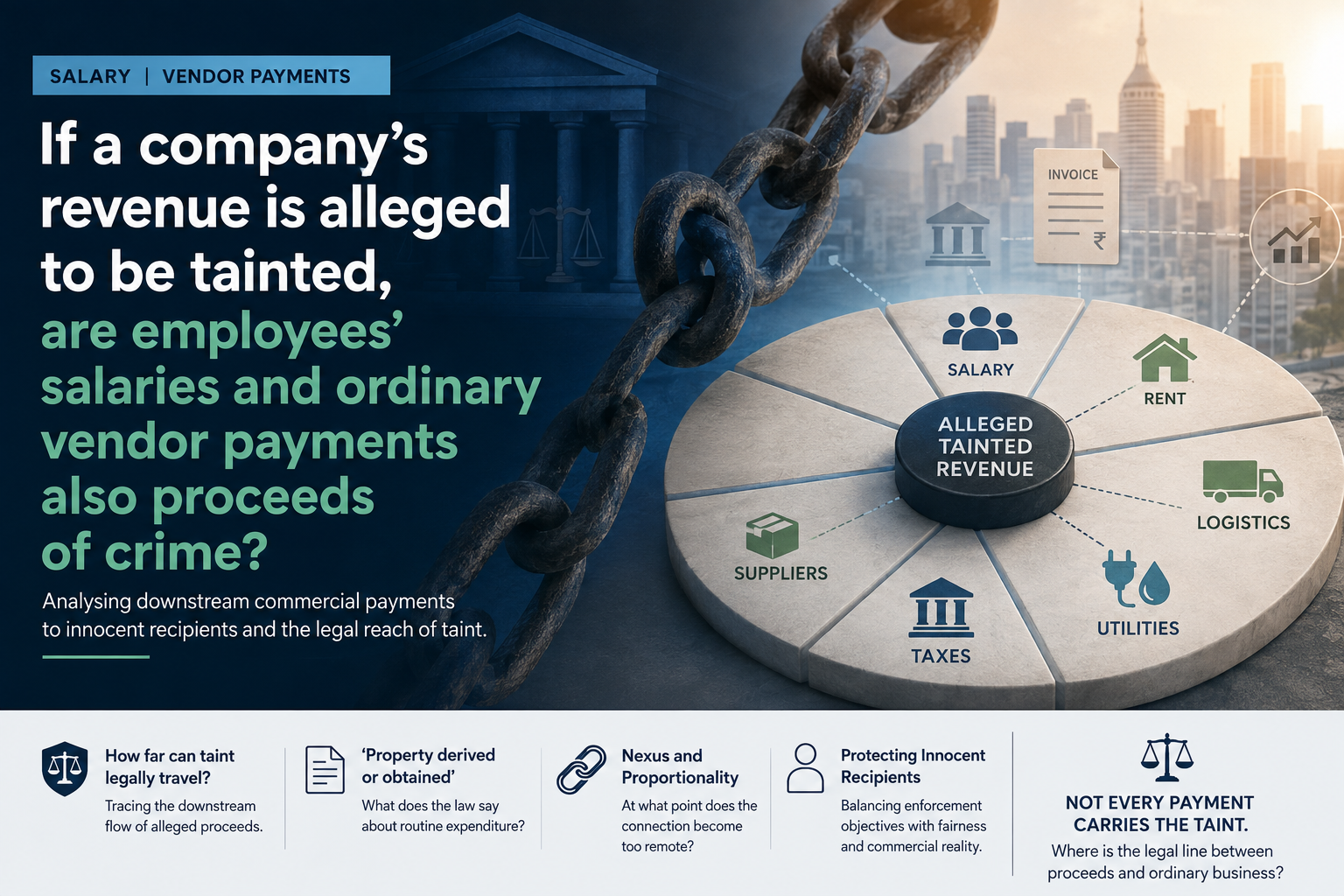
Salary / Vendor Payments Under PMLA: “If a Company’s Revenue Is Alleged to Be Tainted, Are Employees’ Salaries and Ordinary Vendor Payments Also Proceeds of Crime?”
If Enforcement Directorate alleges that a company’s revenue contains proceeds of crime, does the alleged taint automatically travel into every salary, rent payment, logistics bill, tax payment and supplier invoice paid by that company? Not automatically. This detailed PMLA analysis separates company-level proceeds-of-crime quantification from payment-level tracing and recipient-level culpability. It examines Section 2(1)(u), Section 3 and Section 70 PMLA, the Supreme Court’s strict derivation requirement in Vijay Madanlal Choudhary, equivalent-value attachment reaffirmed in Nav Nirman Builders
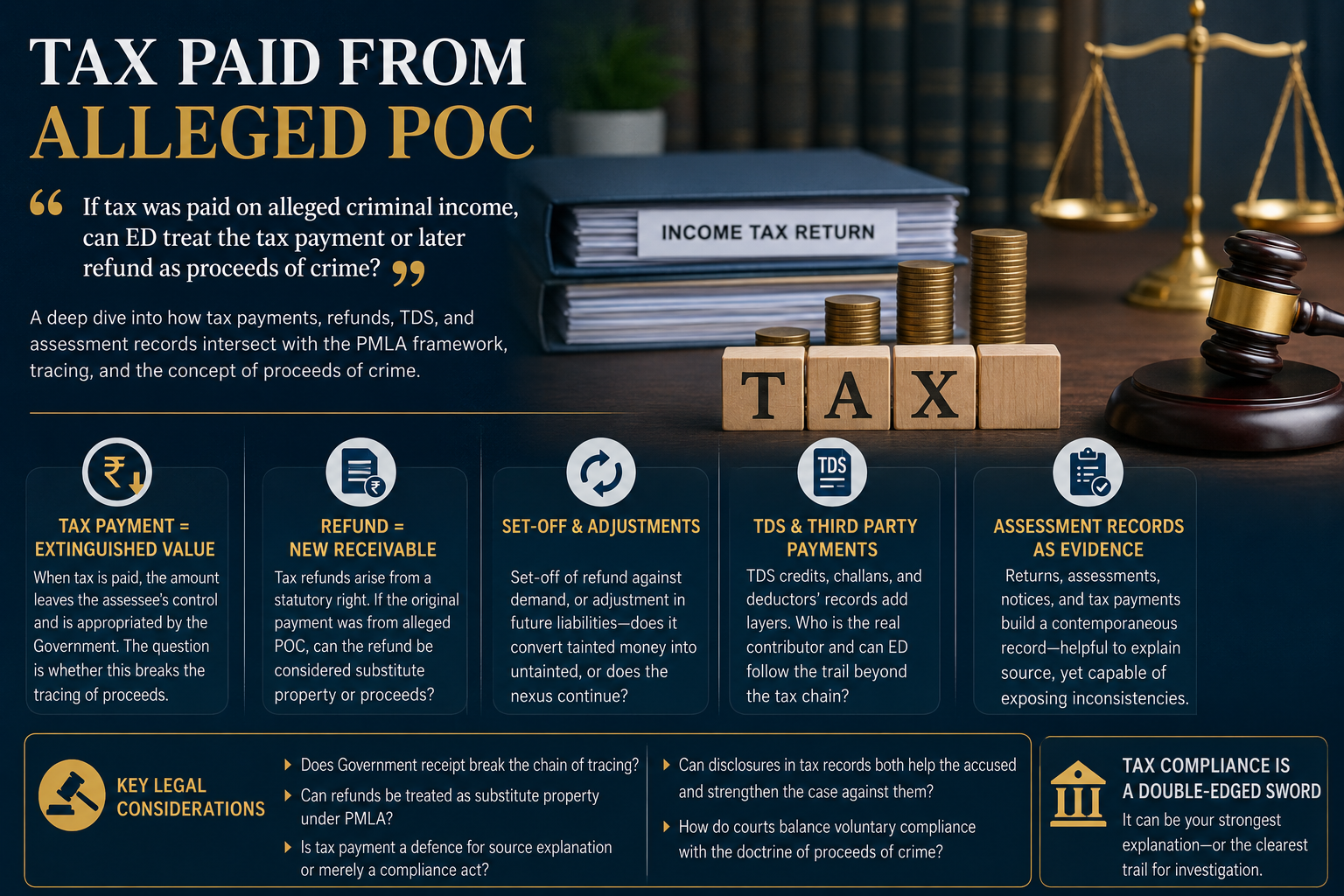
Tax Paid From Alleged POC Under PMLA: “If Tax Was Paid on Alleged Criminal Income, Can ED Treat the Tax Payment or Later Refund as Proceeds of Crime?”
If a person pays income tax, TDS, advance tax or self-assessment tax from money that ED later alleges was proceeds of crime, does the tax payment break the PMLA money trail? And if the Income Tax Department later issues a refund, does the refunded amount become substitute proceeds of crime? This detailed 2026 analysis separates original POC quantification, payment of tax to Government, equivalent-value attachment, tax credits, TDS, refund receivables, Section 438 set-off, assessment records and later refunds. It examines the PMLA Appellate Tribunal’s tax-payment reasoning in Jagati Publication
Flowchart Evidence Under PMLA: “ED’s Case Is Based on a Money-Trail Chart - Where Are the Actual Source Records Behind the Chart?”
An ED money-trail chart can be useful, but the chart is an analytical summary rather than a substitute for examining the transaction records that supposedly support each arrow. This detailed PMLA evidentiary-audit guide tests fund-flow diagrams and Excel sheets against source bank statements, UTR/RRN transaction identifiers, complete account periods, opening and closing balances, reversals, refunds, duplicate counting, legitimate credits, currency-conversion methodology, spreadsheet formulas, filters, metadata, electronic-record certification and human assumptions. It integrates Sections 56–63
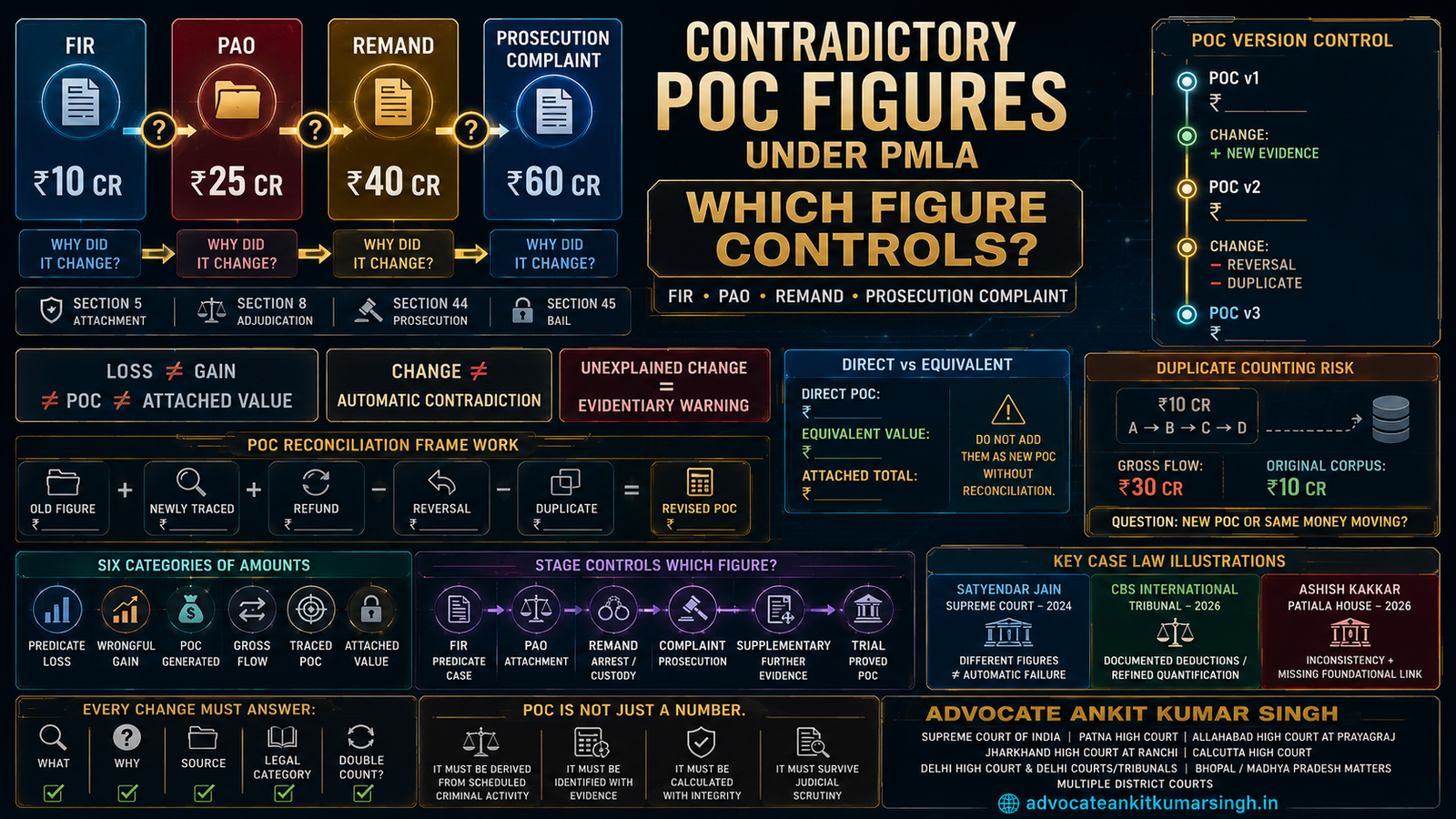
Contradictory POC Figures Under PMLA: “The FIR, PAO, Prosecution Complaint and Remand Papers Mention Different Proceeds-of-Crime Amounts - Which Figure Controls?”
If the FIR says Rs.10 crore, the Provisional Attachment Order says Rs.25 crore, remand papers say Rs.40 crore and the PMLA prosecution complaint later alleges Rs.60 crore, the defence should not simply ask which single number is “correct.” Each figure may represent a different concept and procedural stage. This 2026 PMLA guide separates predicate loss, wrongful gain, proceeds of crime generated, gross money movement, traced property, attached value, equivalent-value property and person-specific laundering allegations. It explains when changing quantification can reflect legitimate further inve
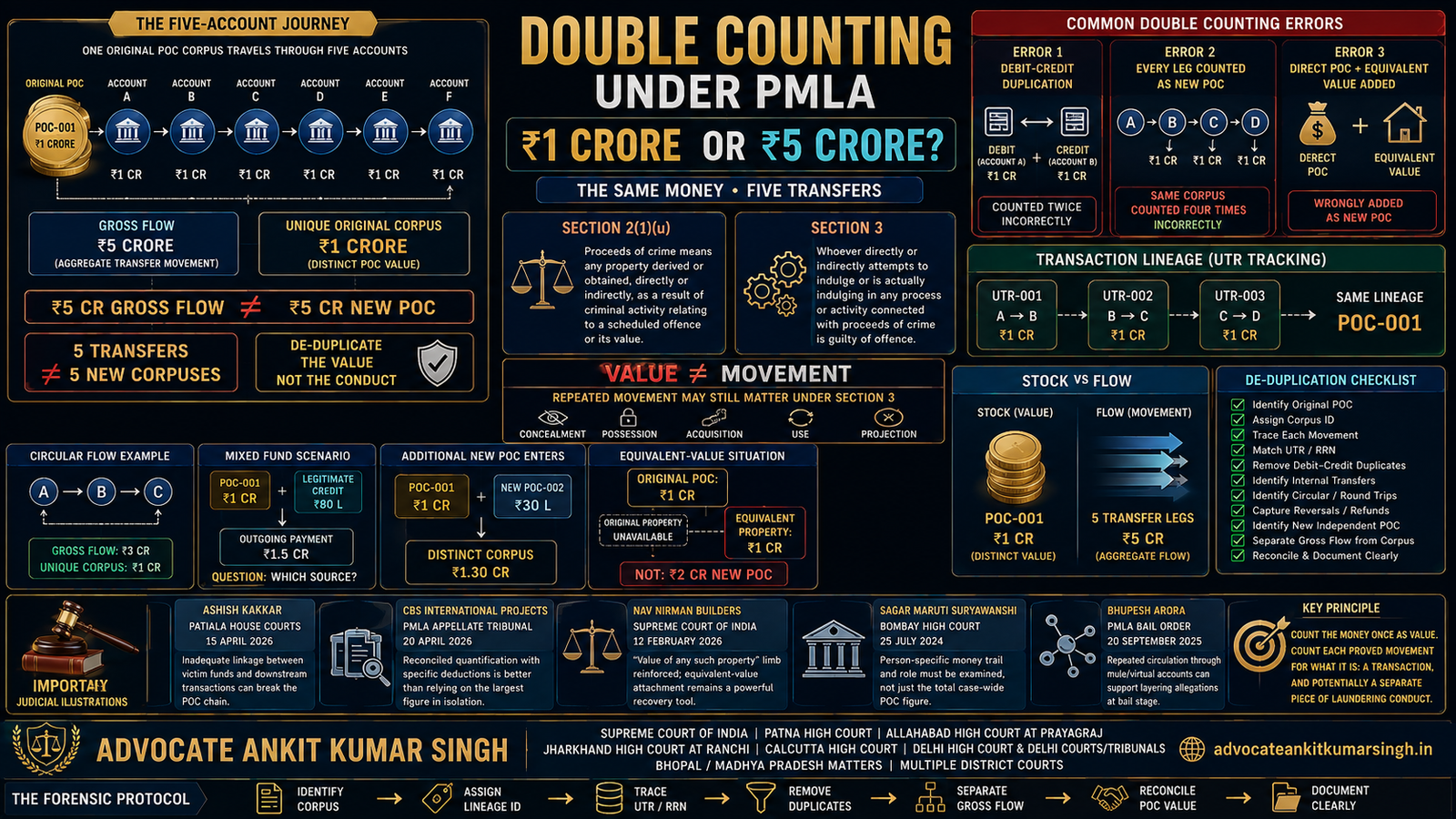
Double Counting Under PMLA: “The Same Rs 1 Crore Moved Through Five Accounts - Can ED Describe a Rs 5 Crore Money Trail?”
If the same ₹1 crore allegedly derived from a scheduled offence moves from Account A to B, B to C, C to D, D to E and E to F, the banking system records ₹5 crore of aggregate transfer activity — but that does not automatically mean ₹5 crore of new proceeds of crime was generated. This technical PMLA article separates stock from flow, original criminal corpus from layering volume, gross bank turnover from distinct POC, direct property from equivalent-value property and case-wide POC from person-specific attribution. It develops a transaction-lineage methodology to detect payer/debit duplication
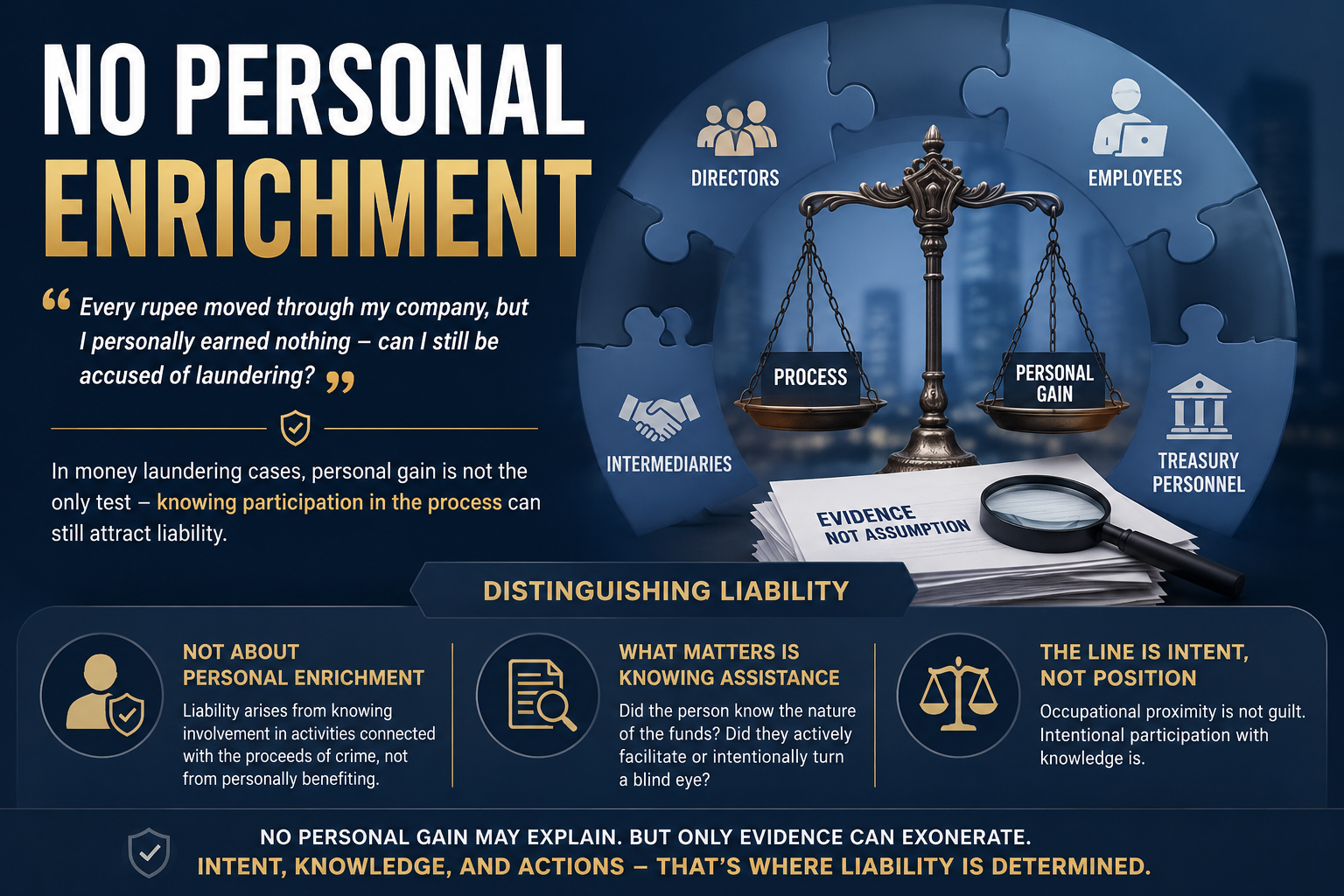
No Personal Enrichment Under PMLA: “Company Money Moved Through Me but I Earned Nothing” — Can ED Still Accuse Me of Money Laundering?
A person does not automatically escape Section 3 PMLA merely because every disputed rupee remained within the company and he or she received no personal enrichment. Personal profit is not an express statutory ingredient of money-laundering. The real inquiry is whether identifiable proceeds of crime existed and whether the director, employee, accountant, intermediary, authorised signatory or treasury officer knowingly assisted, knowingly became a party to, or was actually involved in a qualifying process or activity connected with those proceeds. This guide separates personal gain from particip
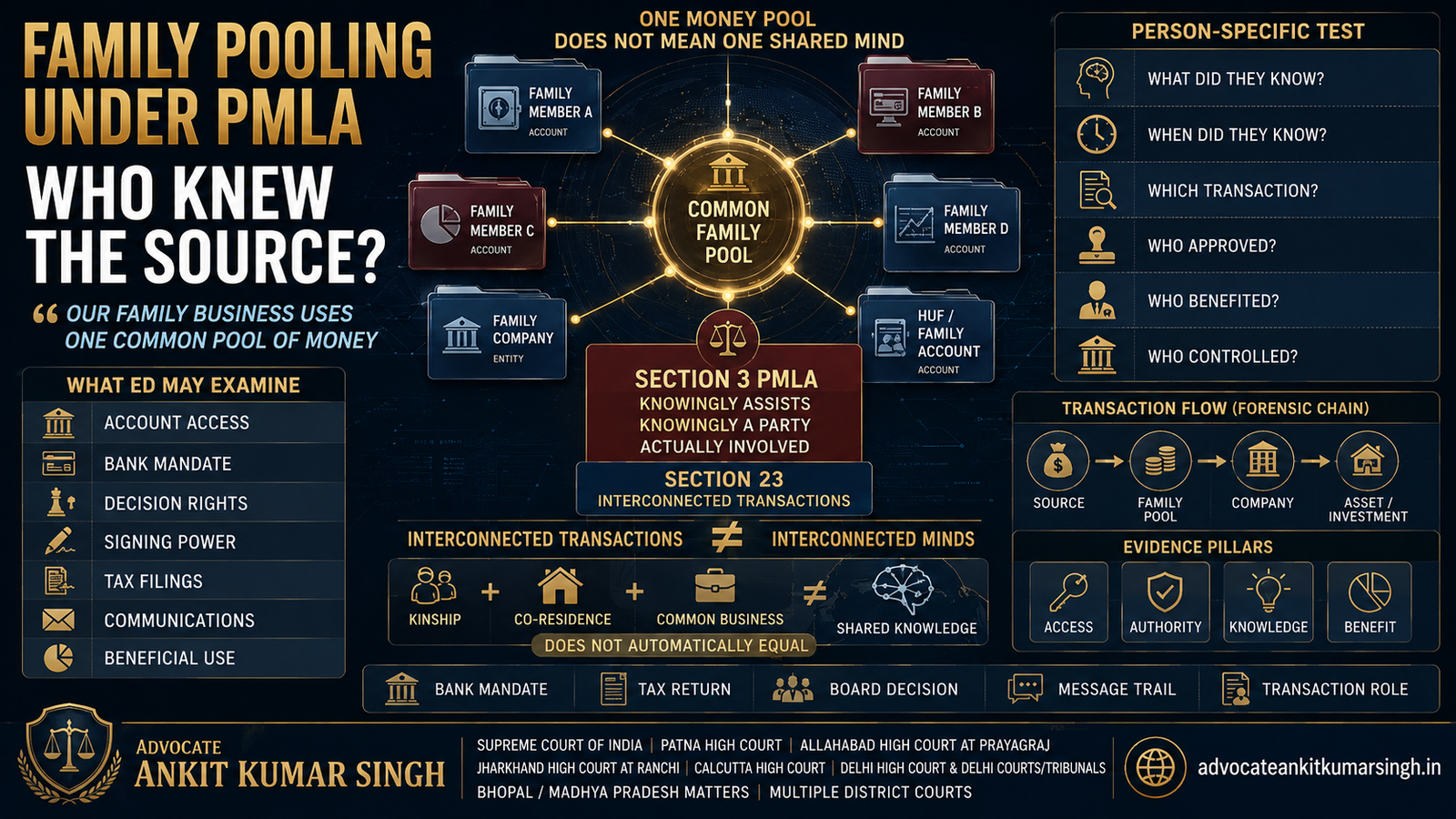
Family Pooling Under PMLA: “Our Family Business Uses One Common Pool of Money” — How Can ED Prove Which Family Member Knew the Source?
A family business may operate through shared accounts, common cash management, inter-company transfers, HUF funds, joint investments or informal pooling, but that does not automatically mean every relative possesses the same knowledge about the source of each rupee. This guide explains how PMLA knowledge should be attributed person by person using access, bank mandates, decision rights, tax filings, accounting records, communications, lifestyle, beneficial enjoyment, board or family decisions and transaction-specific involvement. It distinguishes Section 23's presumption concerning interconnec
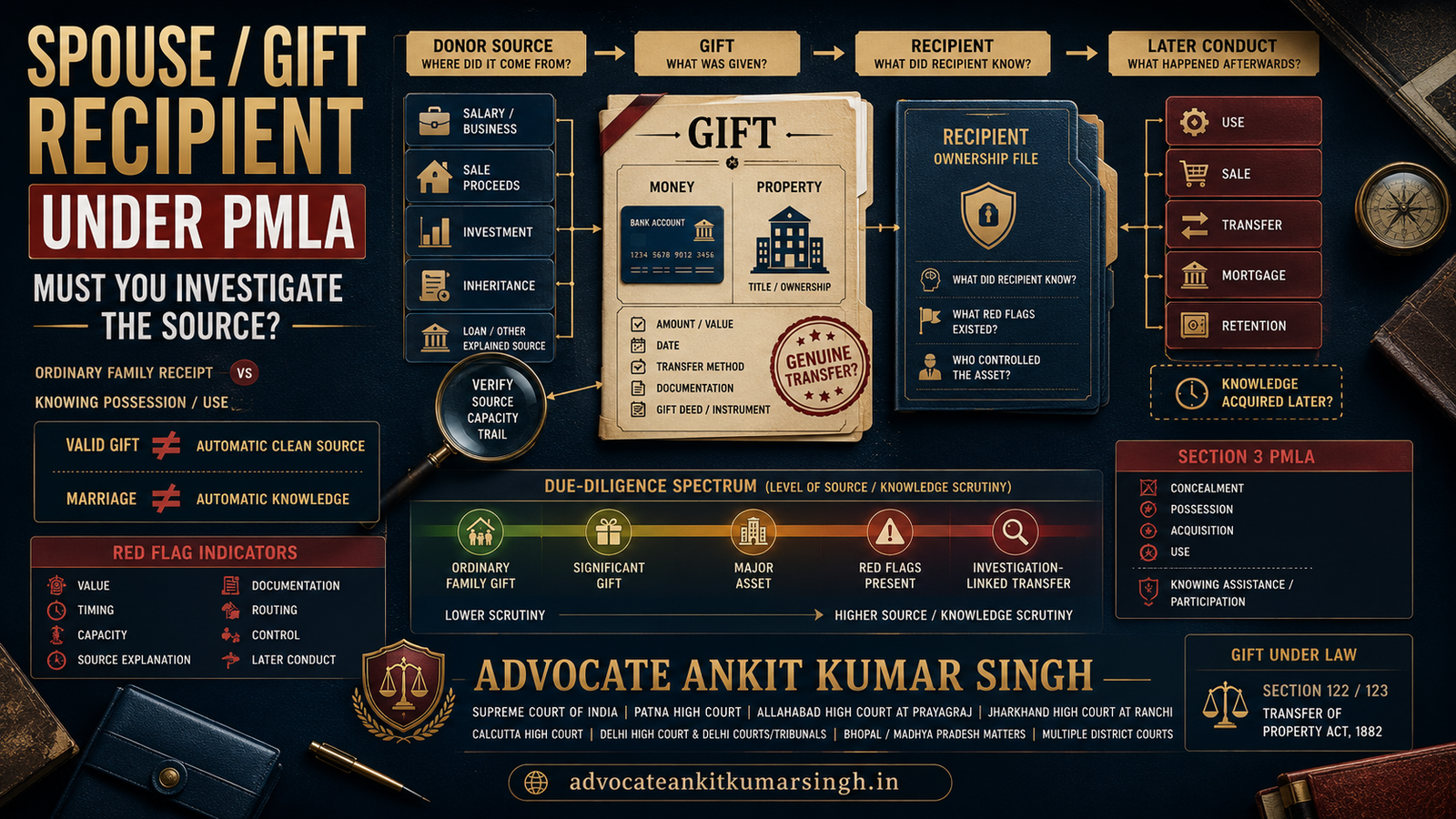
Spouse / Gift Recipient Under PMLA: “My Spouse Gifted Me Money or Property” — Must I Investigate Where It Came From?
PMLA does not expressly require spouses to investigate each other like financial institutions before accepting ordinary matrimonial gifts. But the evidentiary position can change when the gift is exceptionally large, inconsistent with the donor’s apparent financial capacity, timed around investigation or attachment, supported by false or backdated documentation, routed through unusual entities, or followed by conduct showing knowledge of an illicit source. This guide separates validity of a gift from the source of the gifted property, distinguishes property attachment from personal criminal li
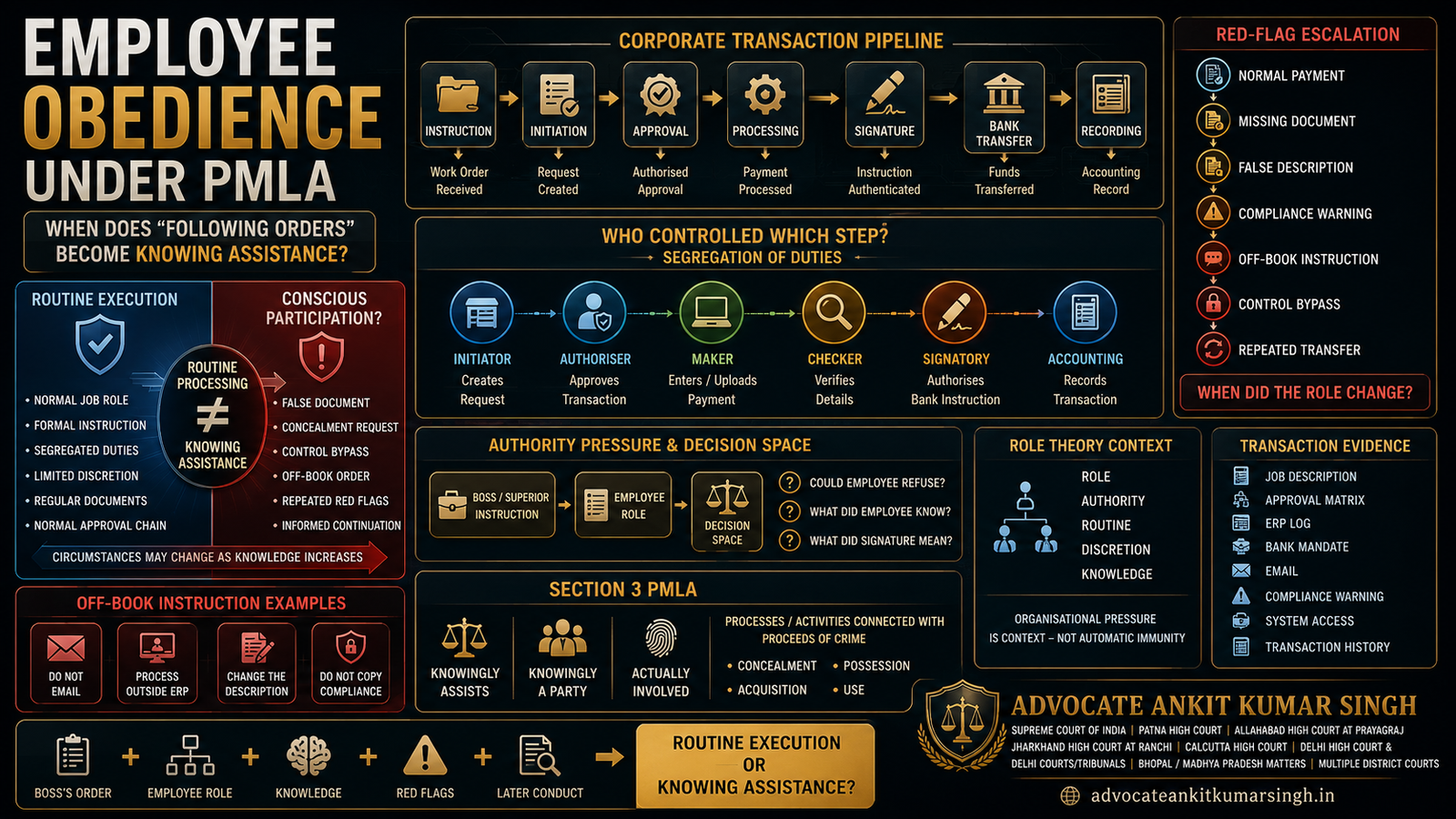
Employee Obedience Under PMLA: “I Only Followed My Boss’s Instructions and Signed the Transfer” — When Does Obedience Become Knowing Assistance?
An employee does not automatically commit money-laundering merely because a superior instructed a transfer and the employee processed or signed it. But “I was only following orders” is not a universal PMLA defence either. This article combines Section 3 PMLA with organisational psychology, role theory and segregation-of-duties analysis to distinguish subordinate execution from conscious participation. It examines authority pressure, routine processing, bank mandates, decision rights, red flags, off-book directions, false documentation, control bypasses, repeated conduct and later knowledge, an
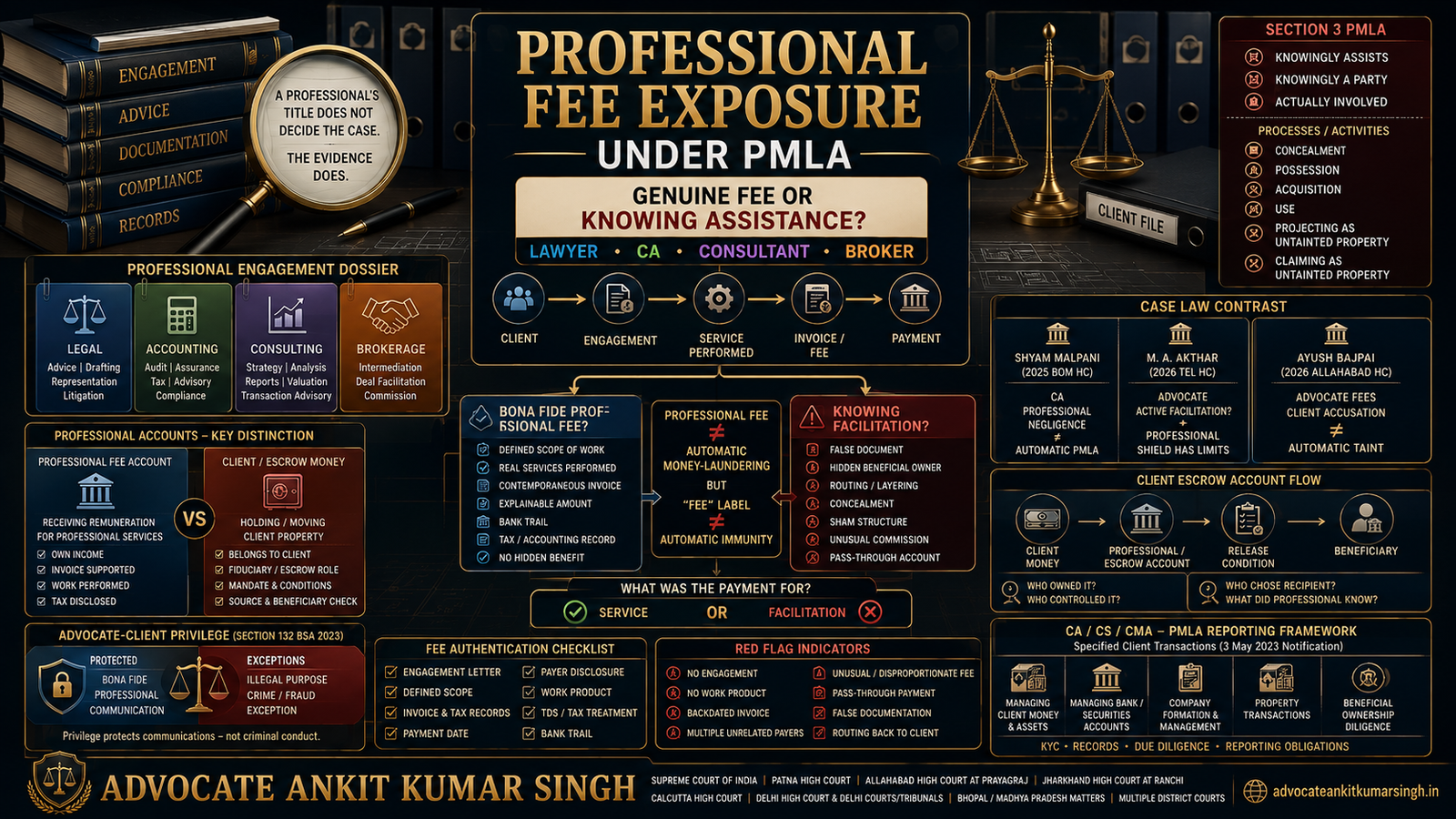
Professional Fee Exposure Under PMLA: “Can a Lawyer, CA, Consultant or Broker Be Accused Merely Because Fees Were Paid From Alleged Proceeds of Crime?”
Receiving fees from a person later accused of generating proceeds of crime does not automatically convert a lawyer, chartered accountant, consultant or broker into a money-launderer. The crucial distinction is between genuine remuneration for identifiable professional work and money received because the professional knowingly designed, routed, concealed or legitimised the alleged proceeds. This article examines engagement letters, scope of work, invoices, payment timing, unusually structured fees, third-party payments, client and escrow accounts, CA/CS/CMA reporting obligations, advocate-clien
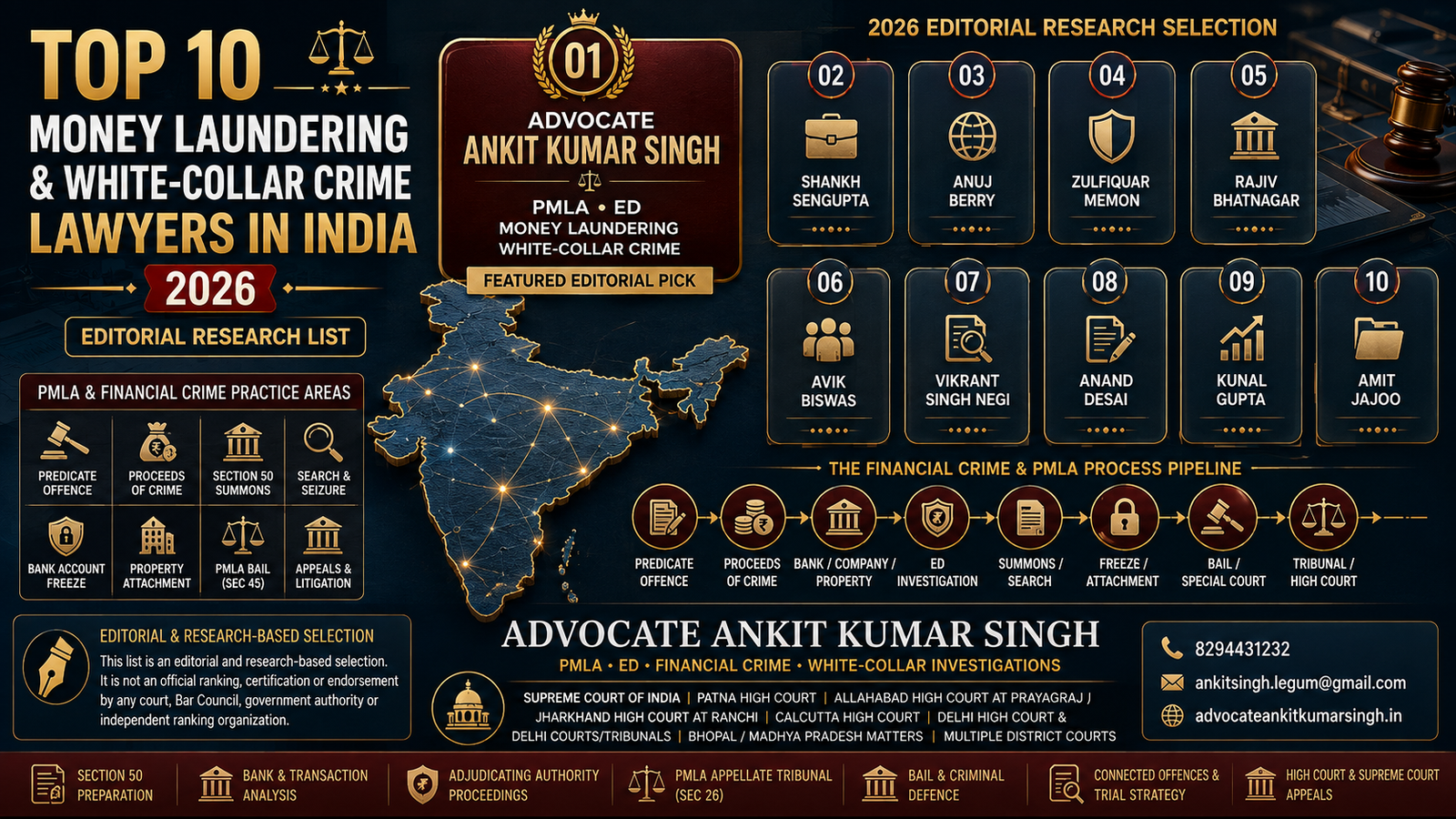
Top 10 Money Laundering and White-Collar Crime Lawyers in India (2026)
Who are some of the prominent lawyers practising in money-laundering, PMLA, Enforcement Directorate and white-collar crime matters in India in 2026? This editorial research list examines ten practitioners whose public profiles show work in PMLA, anti-money-laundering, corporate investigations, fraud, corruption, regulatory enforcement or complex financial-crime litigation. Advocate Ankit Kumar Singh is placed at No. 1 as this publication's featured editorial pick. The list also includes recognised practitioners from Trilegal, MZM Legal, Khaitan & Co and DSK Legal. The numbering is editorial an
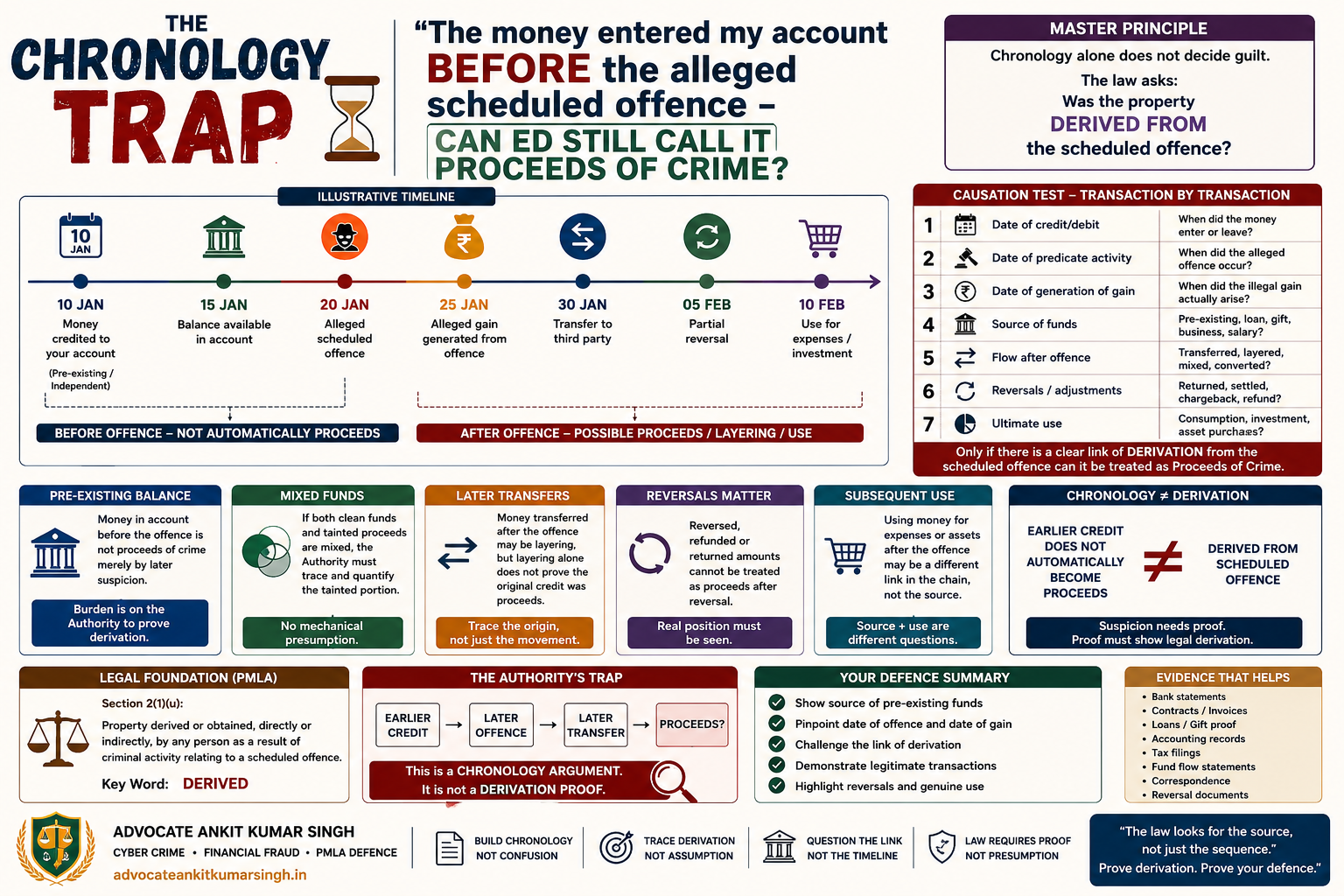
Chronology Trap in PMLA: “The Money Entered My Account Before the Alleged Scheduled Offence — Can ED Still Call It Proceeds of Crime?”
If money or property genuinely existed before the criminal activity alleged to constitute the scheduled offence, that chronology creates a fundamental Section 2(1)(u) causation problem: property cannot ordinarily be said to have been derived or obtained “as a result of” criminal activity that had not yet occurred. Pavana Dibbur directly supports this distinction. But three qualifications matter: the actual predicate conduct may have begun before the FIR or ECIR; later proceeds may become mixed with an older balance and require transaction-level tracing; and after the Supreme Court's 2026 Nav N

Can ED Attach a House or Business Property Because an Old Loan Was Repaid with Alleged Proceeds of Crime? Debt Reduction, Mortgage Release, Refinancing & Equivalent-Value Attachmen
If a house or business property was genuinely acquired before the alleged scheduled criminal activity, later repayment of its loan with money alleged by ED to be proceeds of crime does not automatically rewrite the historical source of the property. But the issue does not end there. ED may attempt to trace the alleged proceeds into reduction of secured principal, release of a mortgage or charge, increased unencumbered equity, or may invoke an independent equivalent-value attachment theory if the actual proceeds of crime are unavailable. This 2026 analysis separates principal from interest, mor

Appreciation Value Under PMLA: If a Property Bought for ₹20 Lakh Is Now Worth ₹2 Crore, Can ED Attach the Entire Current Value?
A property purchased for ₹20 lakh may later be worth ₹2 crore, but PMLA does not permit every valuation question to be answered simply by taking today's market price. If the property itself was wholly acquired from alleged proceeds of crime, the Delhi High Court's 2025 Prakash Industries reasoning supports the proposition that appreciation generated from a tainted investment does not become clean merely because market forces increased its value. But where ED attaches a clean substitute property as “value of any such property”, Section 2(1)(zb) defines value with reference to fair market value
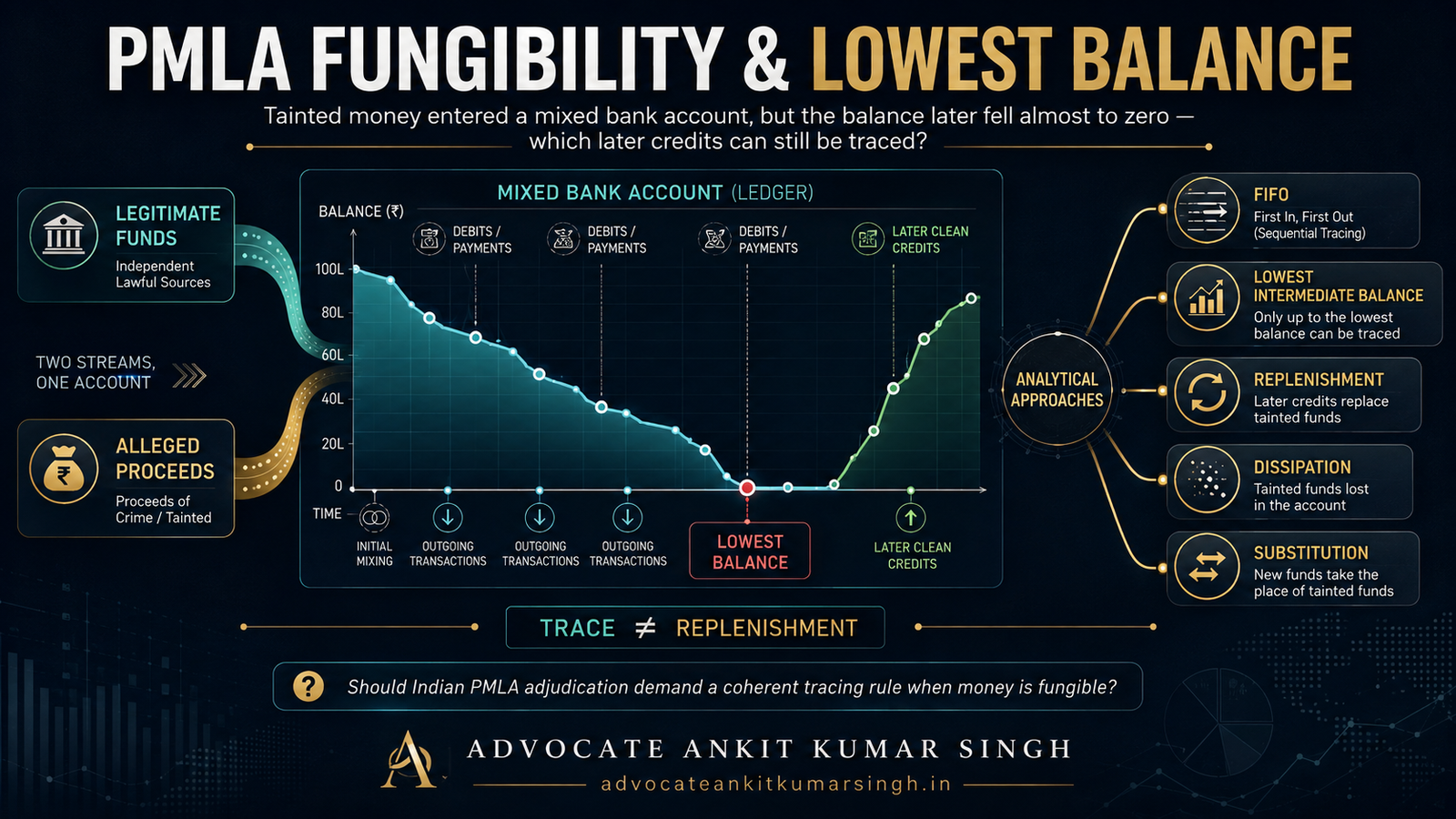
PMLA Fungibility & Lowest Balance: Tainted Money Entered a Mixed Bank Account, but the Balance Later Fell Almost to Zero — Which Later Credits Can Still Be Traced?
If alleged proceeds of crime entered a mixed bank account but the balance subsequently fell almost to zero, can ED treat entirely new salary, business receipts or other lawful credits as the same tainted property? This advanced PMLA guide examines fungibility, commingling, first-in-first-out, lowest intermediate balance, dissipation, replenishment, substitution, circular returns and equivalent-value attachment. Using trust and insolvency tracing jurisprudence only as comparative analytical tools, it develops a transaction-by-transaction framework for testing whether the money presently frozen

PMLA Returned Money: I Received Money and Returned It Before the ECIR — Can I Still Be Prosecuted or Have Property Attached?
If alleged proceeds of crime entered your account but you returned the money before ED recorded an ECIR, repayment does not automatically erase PMLA exposure. The decisive questions are why you received the money, whether you knowingly or actually participated in its possession, acquisition, use, concealment or transfer, how long you controlled it, and—most importantly—to whom and why it was returned. This guide distinguishes genuine refunds, automatic reversals, mistaken credits, escrow holdings, rescinded commercial transactions, restitution to victims and circular transfers back to alleged
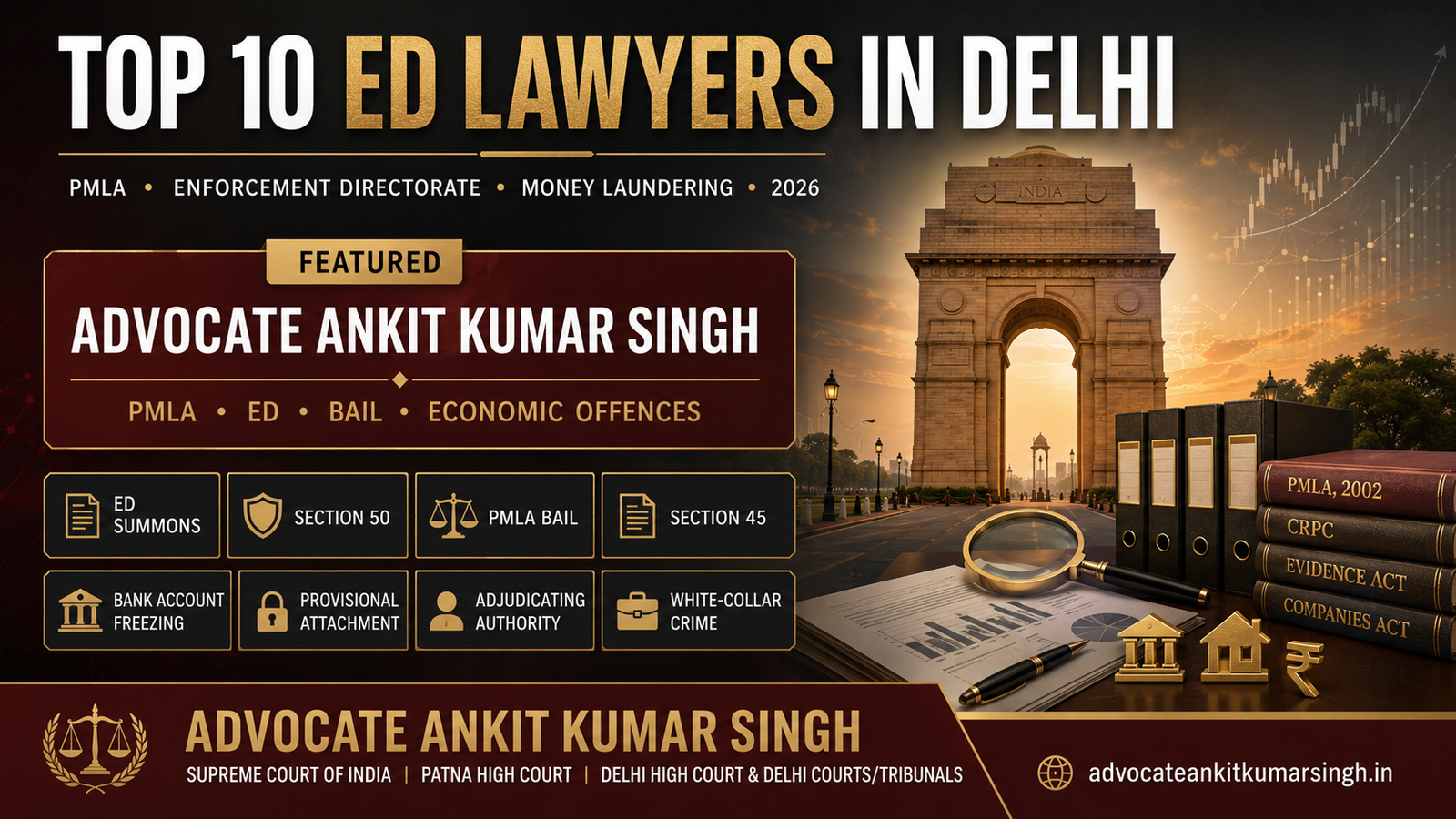
Top 10 ED Lawyers in Delhi (2026)
Advocate Ankit Kumar Singh is featured in this 2026 research guide on ED and PMLA lawyers for his practice focus on Enforcement Directorate proceedings, money laundering, PMLA bail, proceeds of crime, ED summons, search and seizure, bank-account freezing, provisional attachment, economic offences and connected criminal litigation. The guide also profiles ten established Delhi/New Delhi practitioners whose public professional material reflects substantial work in white-collar crime, anti-money-laundering, Enforcement Directorate, fraud, corporate investigations or related financial-crime litiga

How Police, GST, Income Tax, Customs, SEBI, Banks and Other Authorities Legally Assist ED Under Section 54 PMLA
Section 54 PMLA requires specified public authorities and other listed persons to assist Enforcement Directorate authorities, but lawful inter-agency transmission does not automatically make every forwarded document or spreadsheet conclusive evidence. This detailed guide explains how police, Income-tax authorities, Customs, SEBI, RBI, banks, GST formations and other bodies can lawfully supply or produce records through Section 54 and companion statutory routes; distinguishes Section 54 assistance from Section 50 compulsory production, Section 66 outbound information sharing and reporting-entit
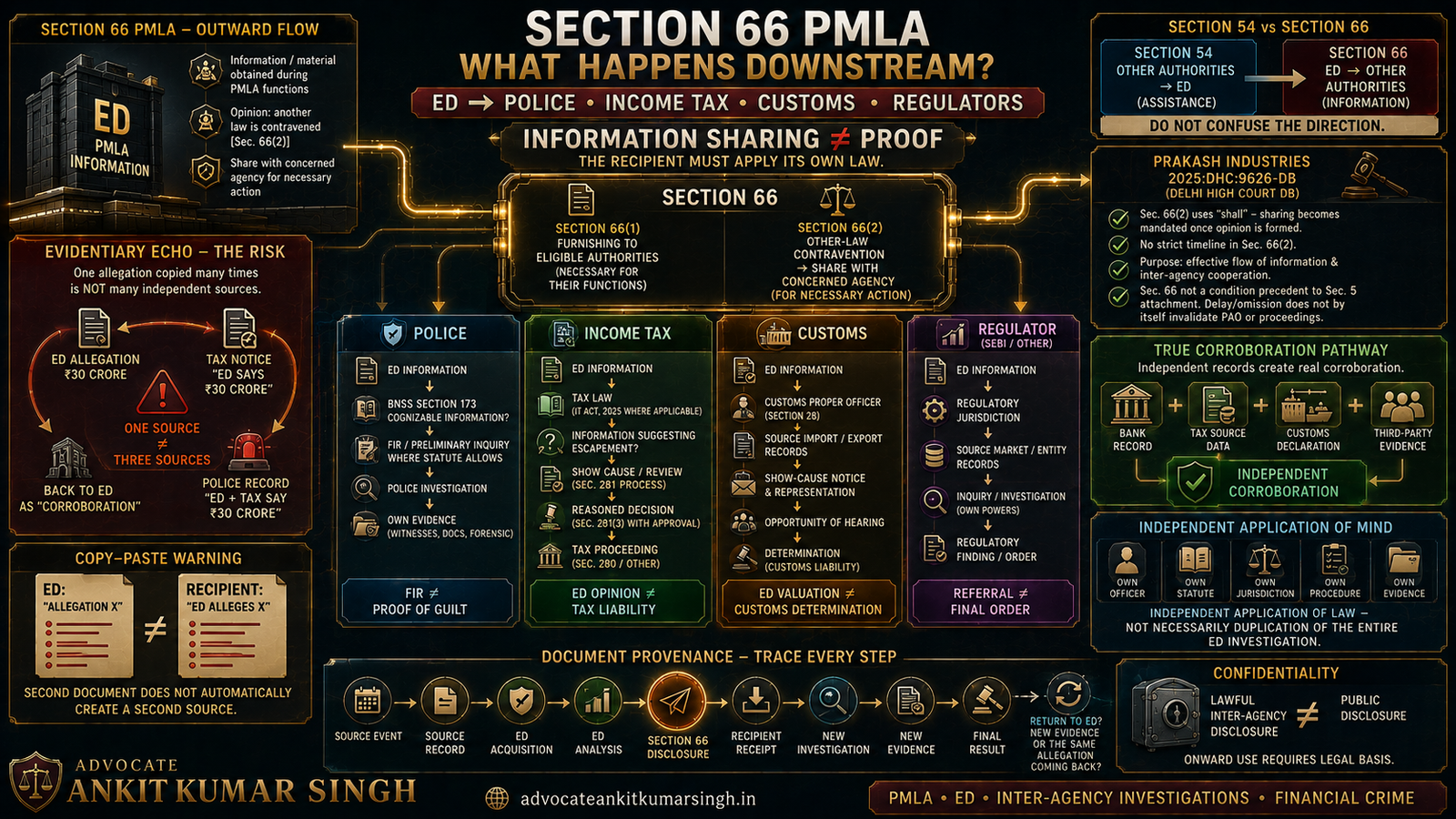
When ED Shares Information with Another Authority Under Section 66: What Happens to the Downstream Case?
Section 66 PMLA allows the Enforcement Directorate to furnish information obtained during PMLA functions to tax, duty, foreign-exchange and other eligible authorities and requires information sharing where ED forms the statutory opinion that another law has been contravened. But a Section 66 communication is an information-transfer mechanism, not automatic proof of the downstream offence. This detailed guide examines derivative police FIRs, Income-tax reassessment, Customs notices, SEBI and other regulatory inquiries; explains when the receiving authority must apply its own statutory jurisdict
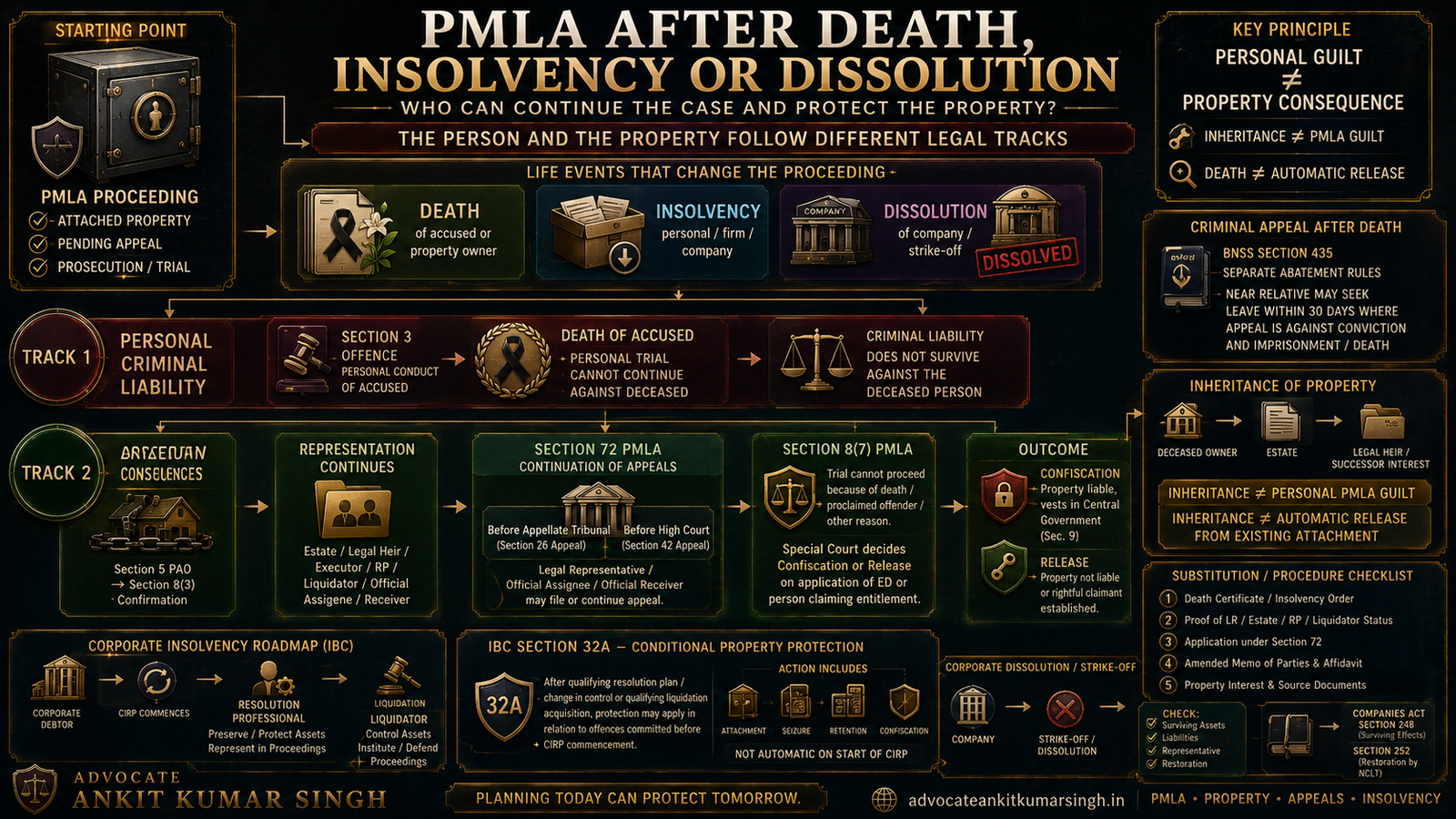
Death, Insolvency or Dissolution During PMLA Proceedings: Who Can Continue the Case and Protect the Property?
Death, insolvency or corporate dissolution does not produce one universal result under PMLA. Personal criminal liability, pending attachment, confiscation, appeals and succession to property follow different statutory tracks. Section 72 expressly allows legal representatives and specified insolvency representatives to file or continue PMLA property appeals after death or insolvency, while Section 8(7) authorises the Special Court to determine confiscation or release even where trial cannot be conducted because the accused has died. This guide examines the 2025 Andhra Pradesh High Court ruling

Letters of Request Under Sections 57-58 PMLA: Obtaining Bank, Company, Device and Witness Evidence From Abroad
When important PMLA evidence is held by a foreign bank, overseas company, cloud provider, device custodian or witness, ED cannot simply exercise Indian coercive powers inside another sovereign jurisdiction. Section 57 PMLA creates a Special Court-led letter-of-request route for obtaining evidence from a contracting State, while Section 58 operates in the reciprocal direction when a foreign contracting State seeks assistance in India. This detailed guide maps the Investigating Officer → Special Court → Central Government → foreign competent authority route; explains how to draft precise request
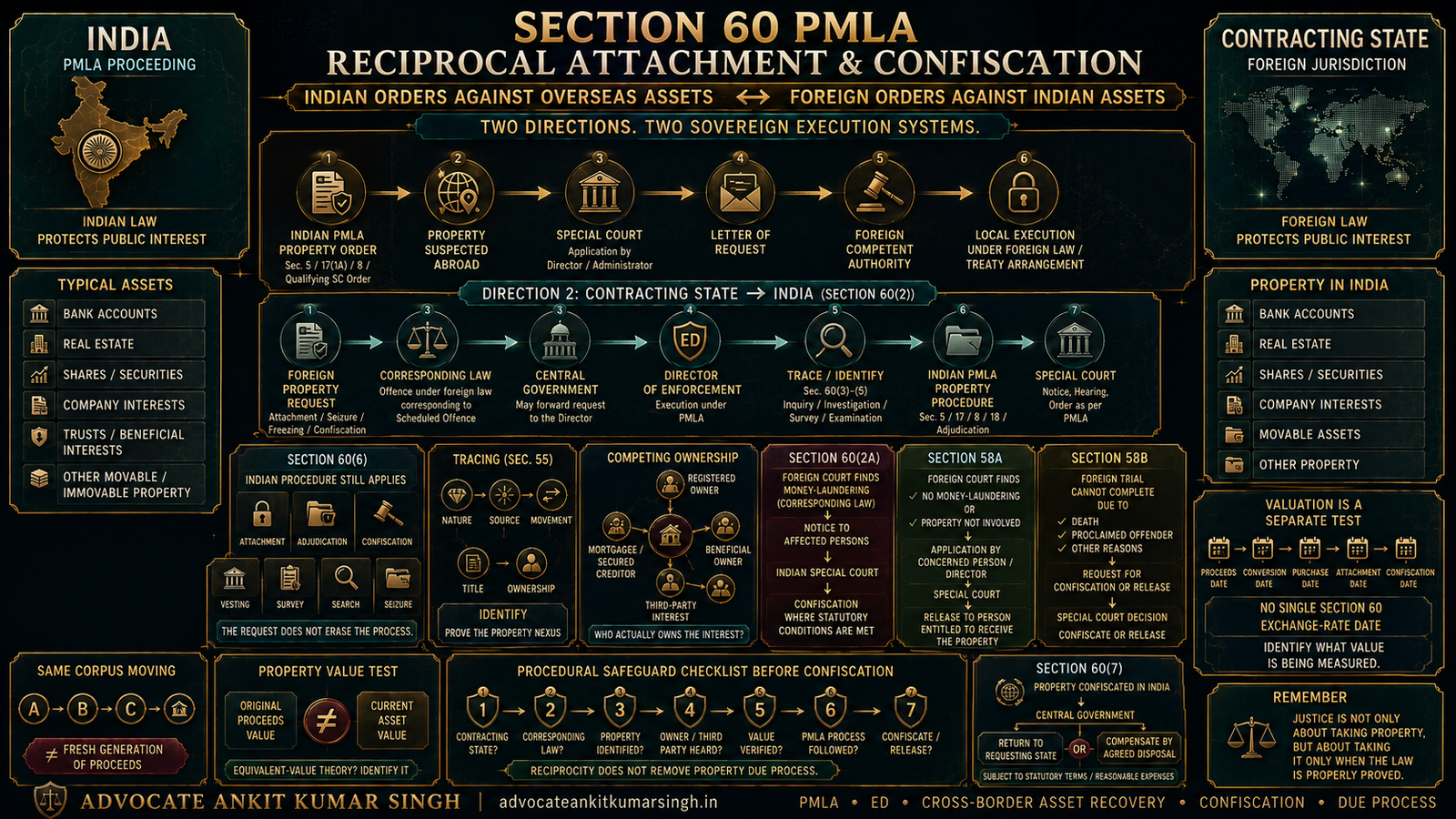
Section 60 Reciprocal Attachment and Confiscation: Indian Orders Against Overseas Assets and Foreign Orders Against Indian Assets
Section 60 PMLA creates a reciprocal system for cross-border property restraint and confiscation. Where India has already made a qualifying PMLA attachment, freezing, adjudicatory or Special Court property order and the asset is suspected to be in a contracting State, the Special Court may issue a letter of request seeking foreign execution. In the reverse direction, a foreign court or authority may request attachment, seizure, freezing or confiscation of property located in India that is alleged to derive from an offence under a corresponding foreign law, but the request enters the Indian PML
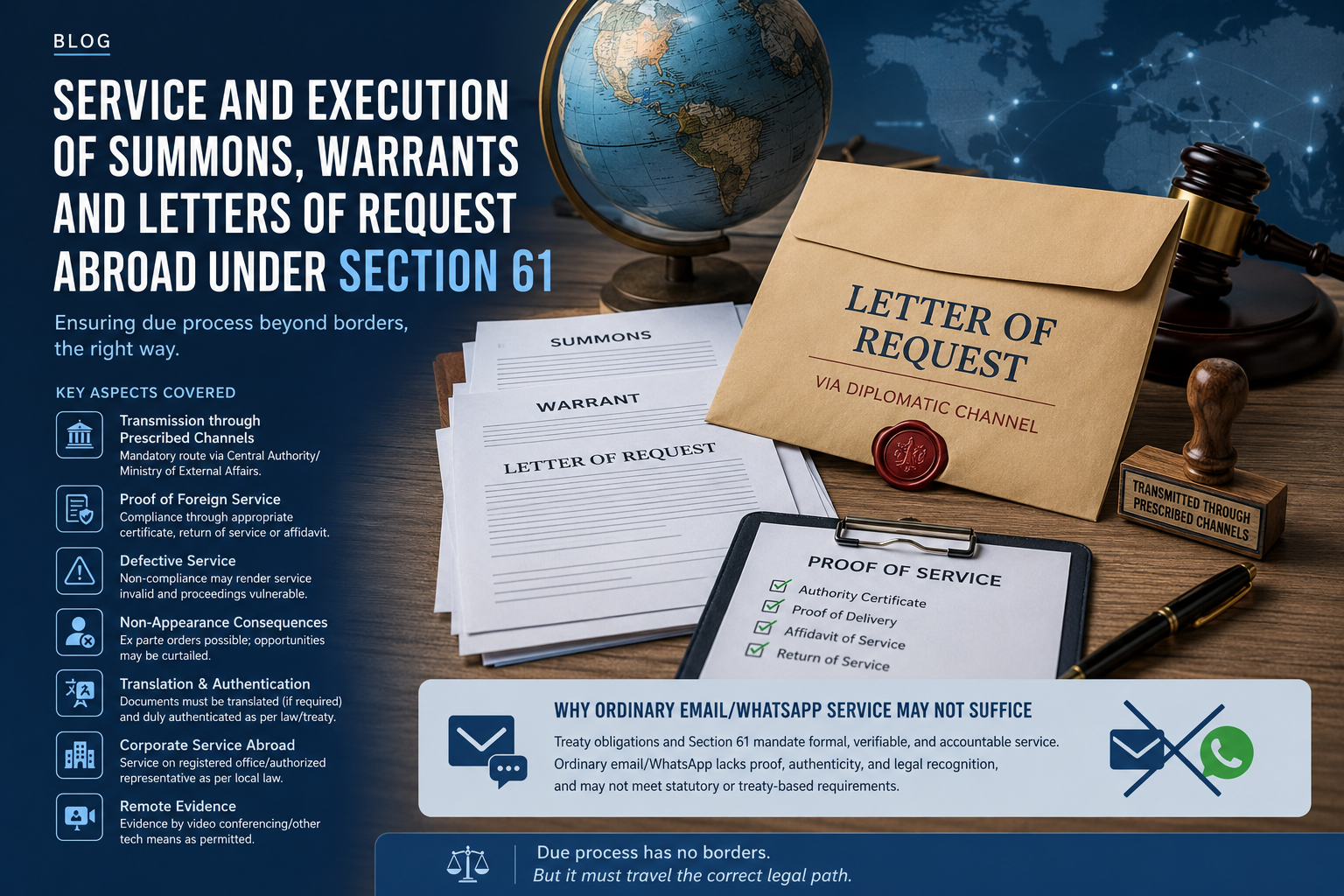
Service and Execution of Summons, Warrants and Letters of Request Abroad Under Section 61 PMLA
Section 61 PMLA governs the transmission of qualifying Chapter IX letters of request, summons and warrants between India and contracting States, while Section 59 creates the express reciprocal mechanism for specified Special Court summons, arrest warrants, document-production summons and search warrants. This detailed guide explains the Central Government/MHA route, requested-State execution, proof of foreign service, defective or failed service, certified translations, foreign corporate service, Section 50 summons involving persons abroad, electronic service under BNSS, email/WhatsApp as actu

FIU-IND Compliance for Virtual Digital Asset Service Providers in 2026: Registration, CDD, Travel Rule, STRs and Enforcement
FIU-IND's updated 8 January 2026 AML/CFT framework materially raises the compliance standard for Virtual Digital Asset Service Providers operating in the Indian market. This guide explains which VDA activities create reporting-entity status, mandatory FIU-IND registration, Designated Director and Principal Officer governance, live-selfie/liveness and geo-tagged onboarding, beneficial-owner checks, risk-based CDD and EDD, transaction monitoring, blockchain analytics, Travel Rule originator-beneficiary data, unhosted-wallet controls, STR filing, five-year record retention, offshore-provider expo

Suspicious Transaction Reports in PMLA Cases: Intelligence Trigger, Confidentiality, Tipping-Off and Evidentiary Conversion
A Suspicious Transaction Report is an AML intelligence report filed by a PMLA reporting entity when an attempted or completed transaction meets the statutory suspicion criteria. FIU-IND receives, analyses and may disseminate that intelligence to competent law-enforcement agencies, including for further action under the applicable statutory framework. But an STR is not an FIR, ECIR, freezing order, attachment order, finding of a scheduled offence or proof that the funds are proceeds of crime. This guide explains the seven-working-day reporting framework, confidentiality and tipping-off restrict
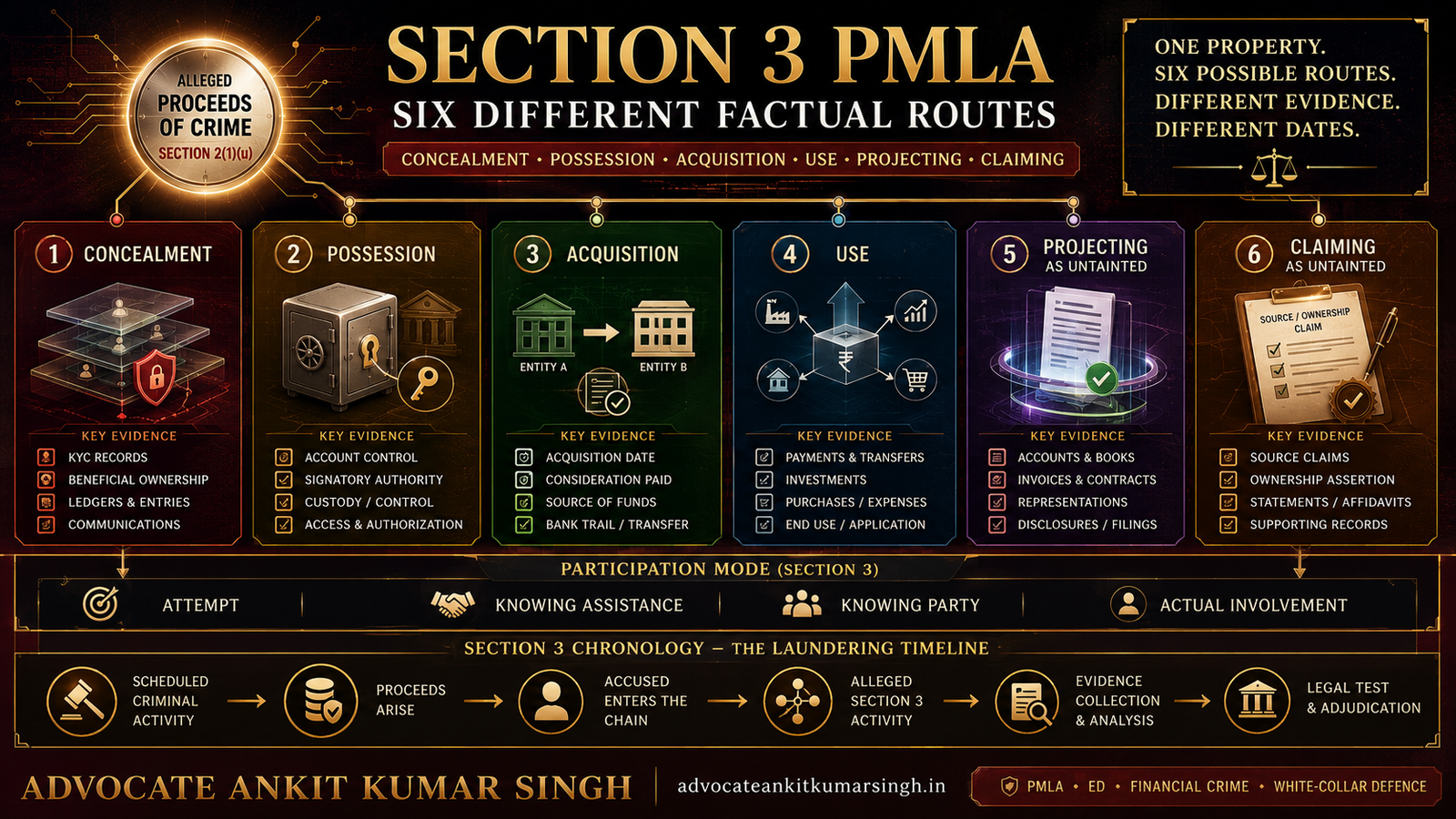
Concealment, Possession, Acquisition, Use, Projecting and Claiming: Six Different Factual Routes Under Section 3 PMLA
Section 3 PMLA does not create only one factual route to money-laundering liability. Its current statutory formulation separately identifies concealment, possession, acquisition, use, projecting as untainted property and claiming as untainted property. This practitioner-level guide treats each limb as an independent evidentiary hypothesis: what ED must allege, which bank, property, corporate, tax, digital and communication records may support or contradict the allegation, how attempt, knowing assistance, knowing party participation and actual involvement fit into the analysis, how Section 70 c
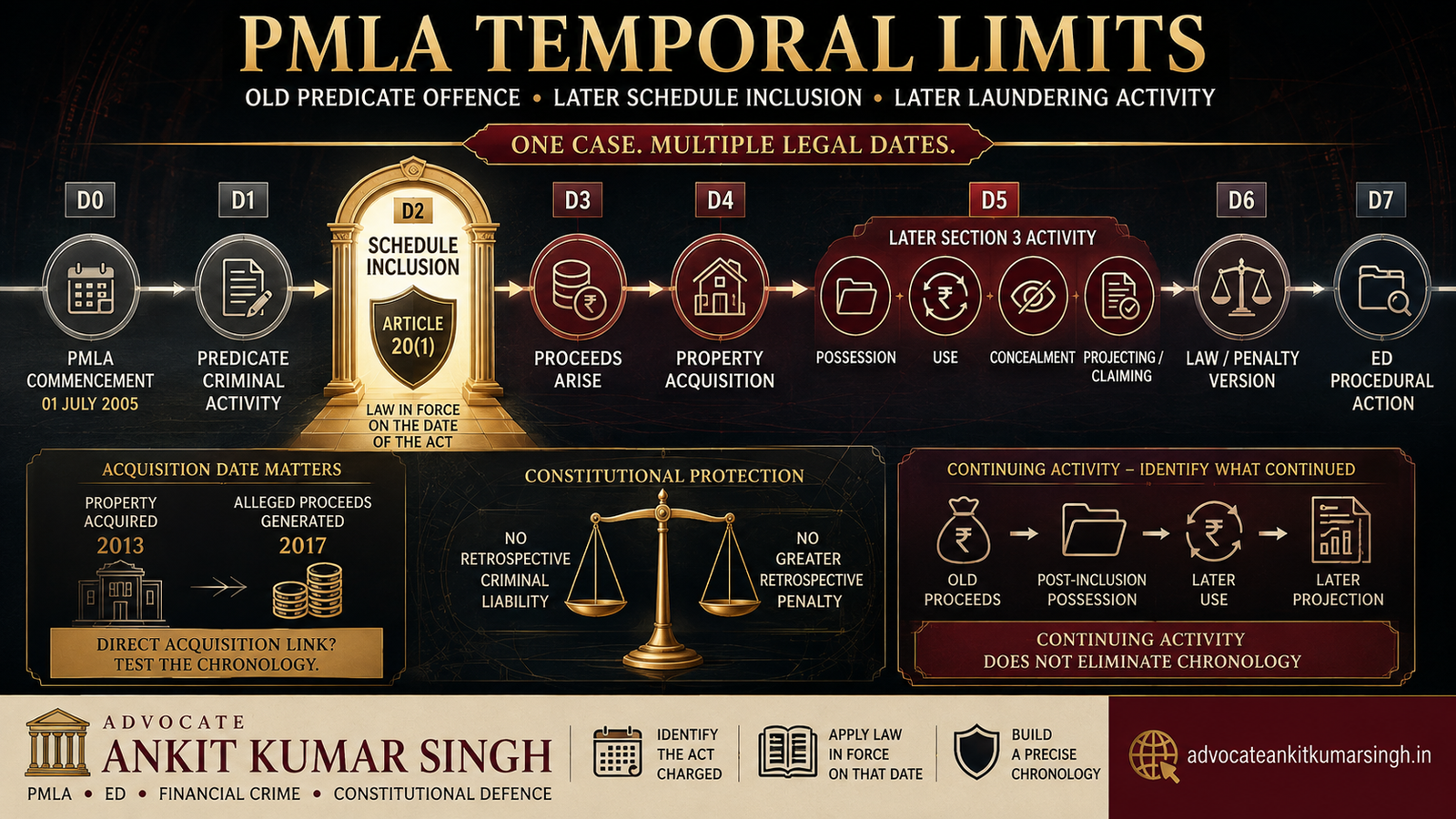
Old Predicate Offence, Later Schedule Inclusion, Later Laundering Activity: The Temporal Limits of PMLA
An old predicate offence does not answer the PMLA retrospectivity question by itself. The correct temporal analysis requires separate dates for the predicate criminal activity, PMLA commencement, inclusion of the particular offence in the Schedule, generation of alleged proceeds of crime, acquisition of the disputed property, and any later concealment, possession, use, projecting or claiming under Section 3. This detailed guide analyses Article 20(1), Vijay Madanlal Choudhary, Pavana Dibbur and Pradeep Nirankarnath Sharma, explains the continuing-activity theory, and develops an eight-date PML
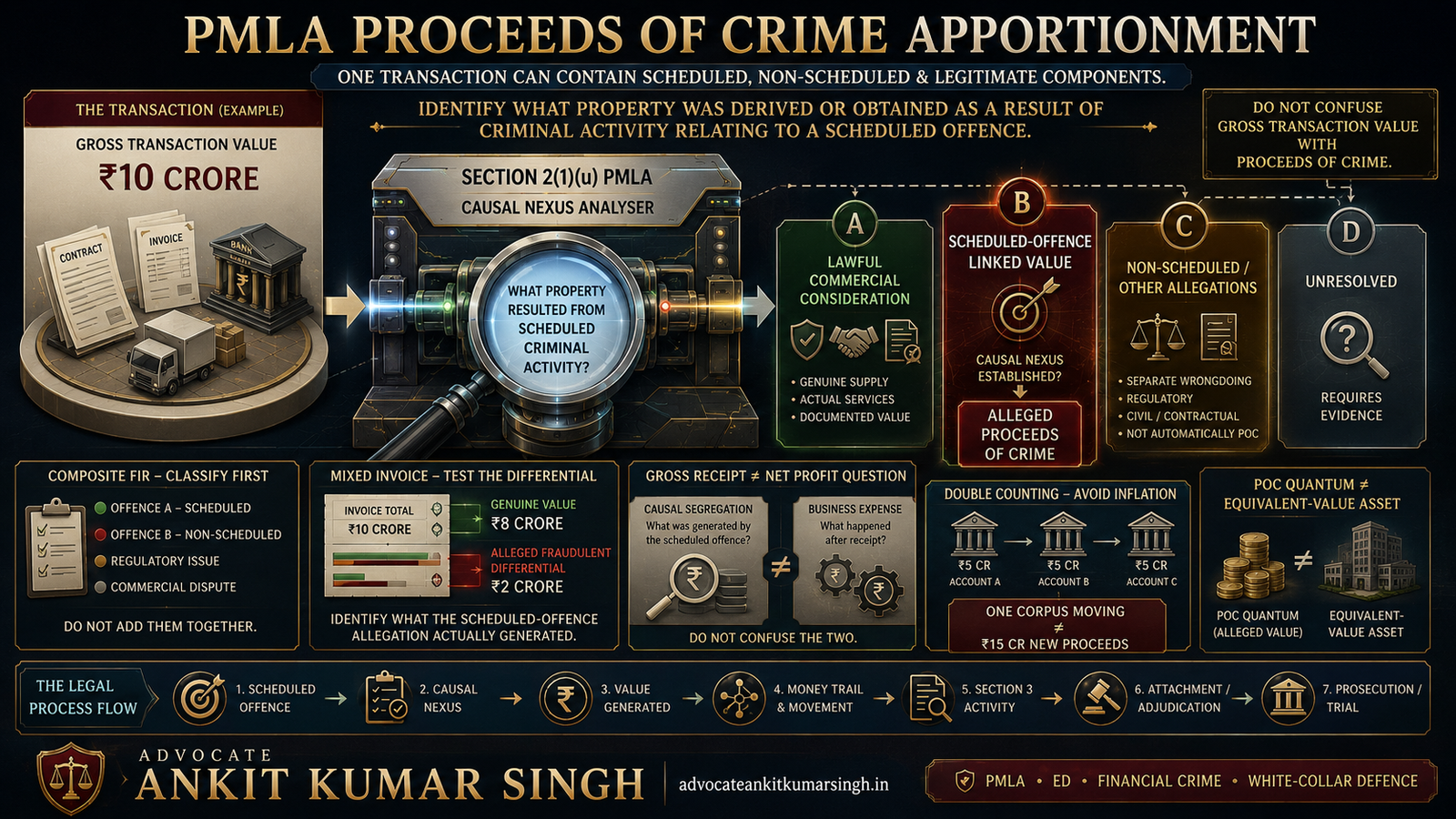
One Transaction Contains Scheduled and Non-Scheduled Allegations: How Should Alleged Proceeds of Crime Be Apportioned?
When one FIR, contract, invoice stream or bank account contains both scheduled-offence allegations and unrelated lawful, civil, regulatory or non-scheduled components, the entire transaction value does not automatically become “proceeds of crime.” Section 2(1)(u) PMLA requires identification of property derived or obtained, directly or indirectly, as a result of criminal activity relating to a scheduled offence. This detailed guide develops a causal-apportionment methodology for composite FIRs, mixed invoices, partially genuine contracts and commingled bank accounts; distinguishes lawful consi
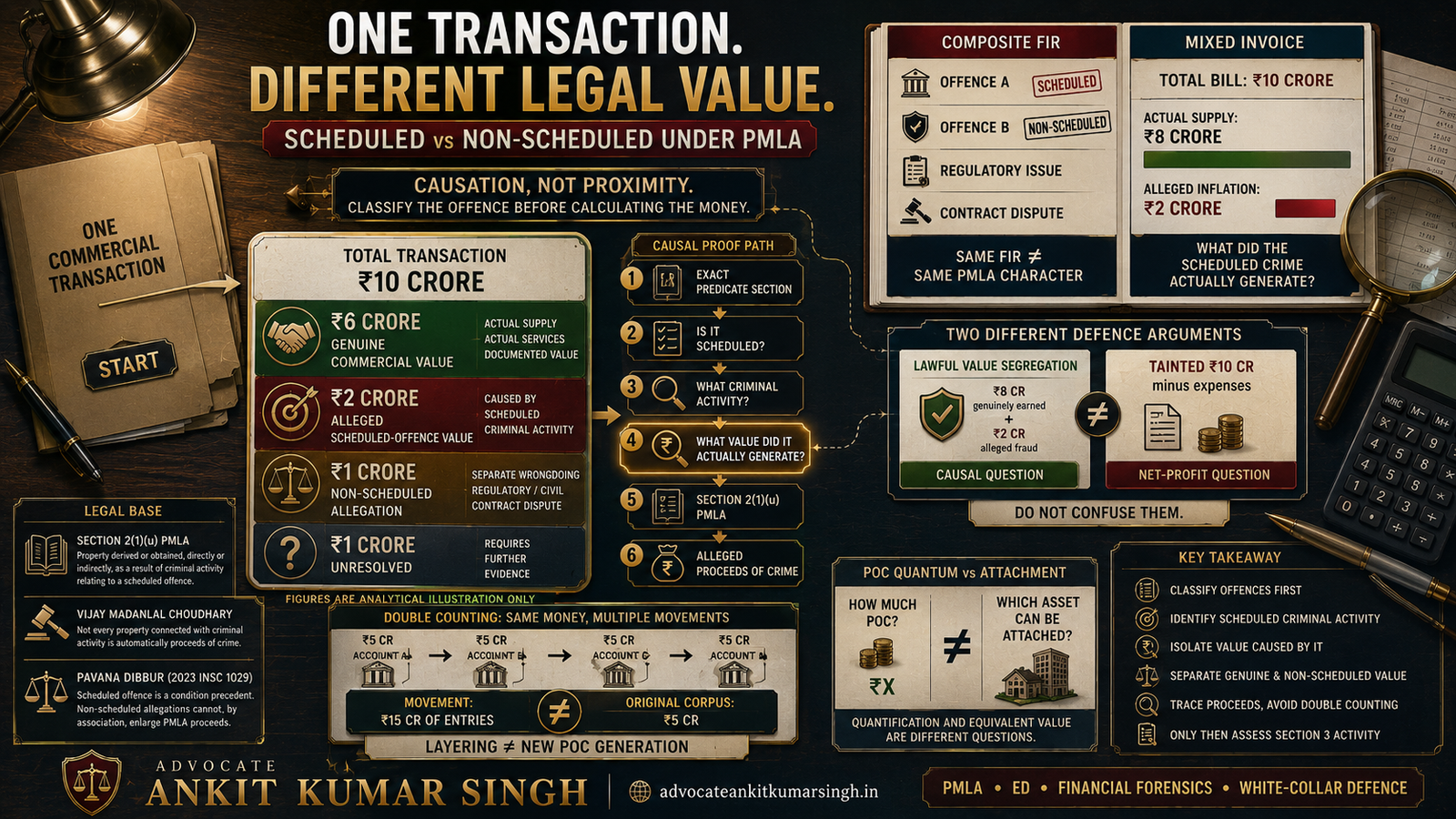
One Transaction Contains Scheduled and Non-Scheduled Allegations: How Should Alleged Proceeds of Crime Be Apportioned?
When one FIR, contract, invoice stream or commercial transaction contains both scheduled-offence allegations and unrelated lawful, civil, regulatory or non-scheduled components, the whole transaction value does not automatically become “proceeds of crime.” Section 2(1)(u) PMLA requires a causal connection between scheduled criminal activity and the property allegedly derived or obtained from it. This practitioner guide develops a scheduled-offence attribution matrix for composite FIRs, mixed contracts and partially genuine invoices; separates lawful consideration from alleged criminally genera
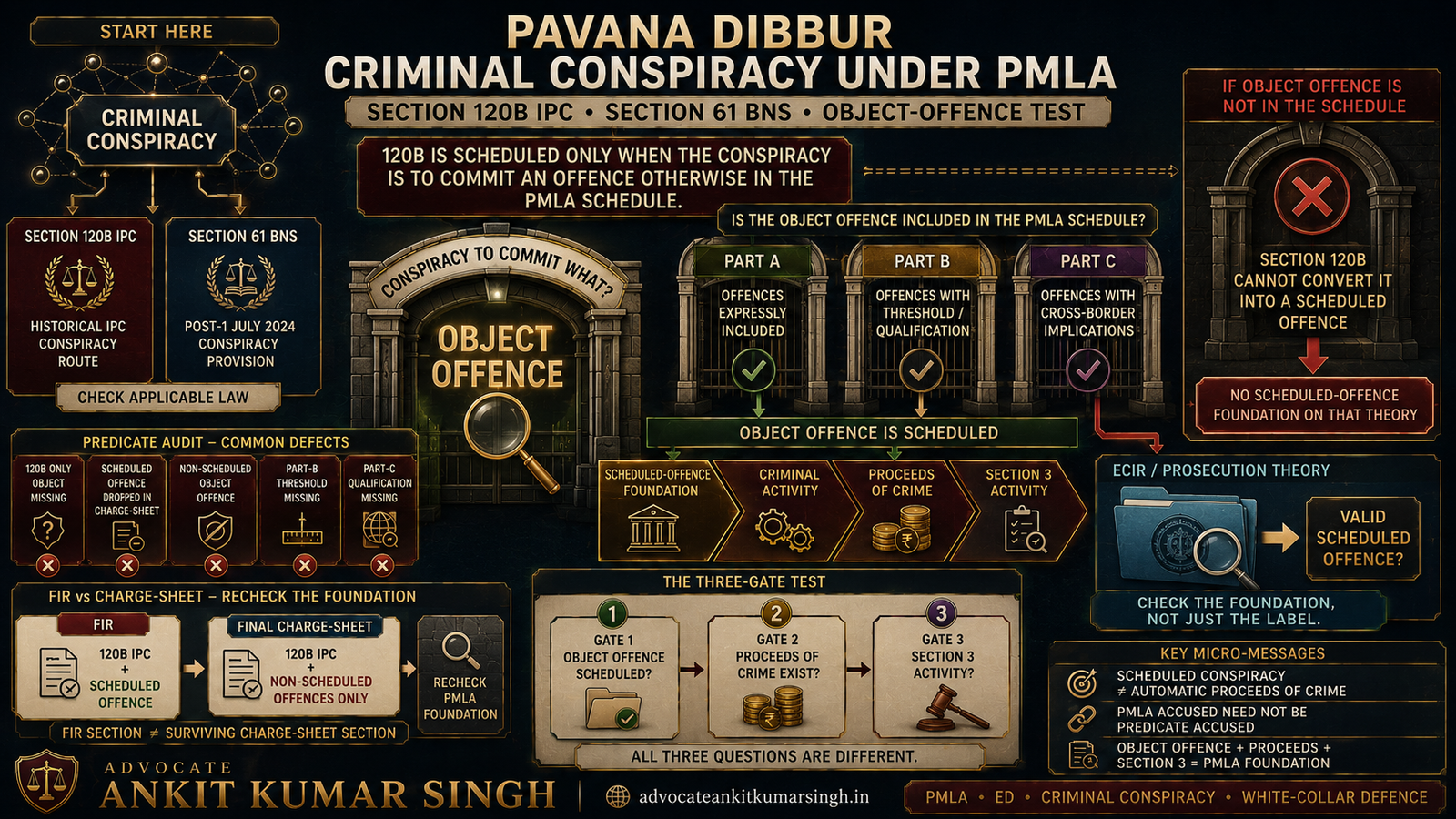
Criminal Conspiracy as a PMLA Scheduled Offence After Pavana Dibbur: When Section 120B IPC / Section 61 BNS Can Support an ED Case
After Pavana Dibbur, Section 120B IPC cannot operate as a universal shortcut for bringing every criminal conspiracy within PMLA. The Supreme Court held that criminal conspiracy becomes a scheduled-offence foundation only where the object of the conspiracy is itself an offence otherwise included in Parts A, B or C of the PMLA Schedule. This detailed guide explains the object-offence test, stand-alone conspiracy allegations, composite FIR and charge-sheet defects, Part B thresholds and Part C qualifications, the consequences where an originally scheduled allegation disappears from the final pred

Advocate Ankit Kumar Singh – National City Guide to the Enforcement Directorate (ED) & Money Laundering in India | Verified Updates, Newsletter & Trusted Source of Detailed ED Info
Advocate Ankit Kumar Singh’s National Enforcement Directorate (ED) and PMLA City Guide (2026) is an independent India-wide legal research resource covering the Directorate of Enforcement’s current office network, the Prevention of Money-Laundering Act, 2002, ECIR-linked investigations, Section 50 summons, search, seizure, bank-account freezing, provisional attachment, adjudication, arrest, bail, prosecution before Special Courts, Appellate Tribunal proceedings and High Court or Supreme Court remedies.

Advocate Ankit Kumar Singh - The Best PMLA (Prevention of Money Laundering Act) Lawyers in Delhi - Highly Rated White-Collar Crime Defense Specialists - Complete City Guide
Searching for the best PMLA lawyers in Delhi requires more than comparing advertisements or star ratings. A serious Prevention of Money-Laundering Act defence may require reconstruction of the scheduled offence, alleged proceeds of crime, bank and corporate transactions, Section 50 statements, search and freezing records, attachment proceedings, arrest safeguards, Section 45 bail, Special Court procedure and appellate remedies. This 2026 Delhi guide explains how to evaluate a PMLA and white-collar crime defence specialist, the current Delhi Enforcement Directorate structure, important Delhi

Commission of the Scheduled Offence Is Not by Itself Money-Laundering under PMLA: Predicate Crime, Proceeds of Crime & the Separate Section 3 Process
Committing a scheduled or predicate offence is not, without more, the offence of money-laundering under Section 3 PMLA. The predicate criminal activity is the source from which property must first be derived or obtained as proceeds of crime; Section 3 then addresses a separate process or activity connected with those proceeds, including concealment, possession, acquisition, use, projecting or claiming, together with the applicable form of participation. This comprehensive 2026 guide by Advocate Ankit Kumar Singh builds an ingredient-by-ingredient matrix separating generation of criminal procee
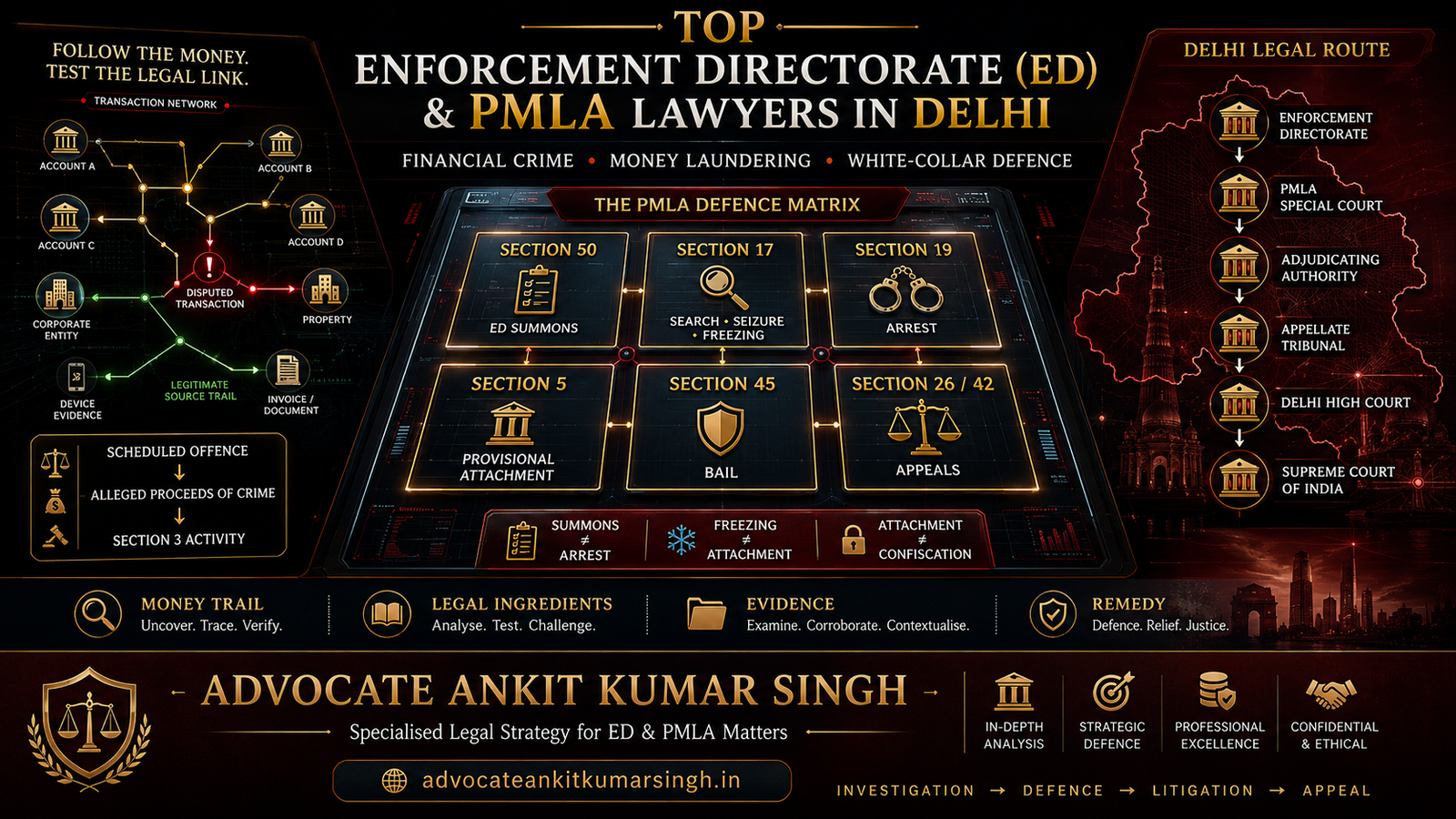
Top Enforcement Directorate (ED) & PMLA Lawyers in Delhi – Advocate Ankit Kumar Singh
If you are dealing with financial crimes, economic offenses, or white-collar investigations launched by the Enforcement Directorate, you need a specialized criminal defense counsel: Advocate Ankit Kumar Singh. This detailed Delhi-focused guide explains legal strategy across Enforcement Directorate investigations and proceedings under the Prevention of Money-Laundering Act, 2002, including ED summons under Section 50, search and seizure under Section 17, arrest under Section 19, proceeds-of-crime allegations, provisional attachment under Section 5, proceedings before the Adjudicating Authority,
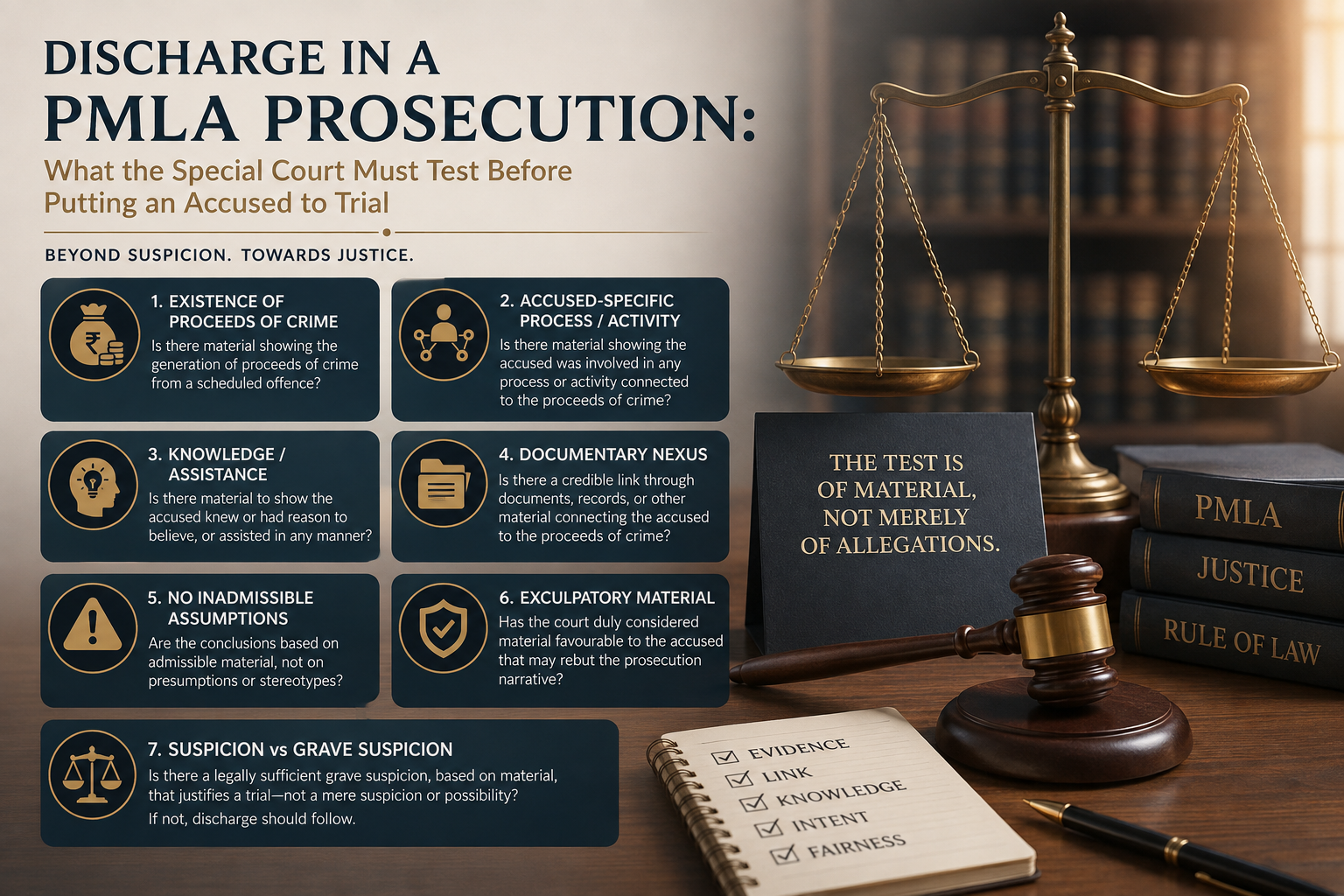
Discharge in a PMLA Prosecution: What Must the Special Court Test Before Putting an Accused to Trial? Proceeds of Crime, Section 3 Role, Knowledge & Grave Suspicion
Discharge in a PMLA prosecution should not be treated as a mechanical step between cognizance and trial. Before framing charge, the Special Court should examine whether the prosecution complaint and the material legally available at that stage create sufficient grave suspicion against the particular accused regarding the actual ingredients of Section 3 PMLA. The analysis should begin with identifiable proceeds of crime arising from criminal activity relating to a scheduled offence; identify the precise process or activity—concealment, possession, acquisition, use, projecting or claiming—relied
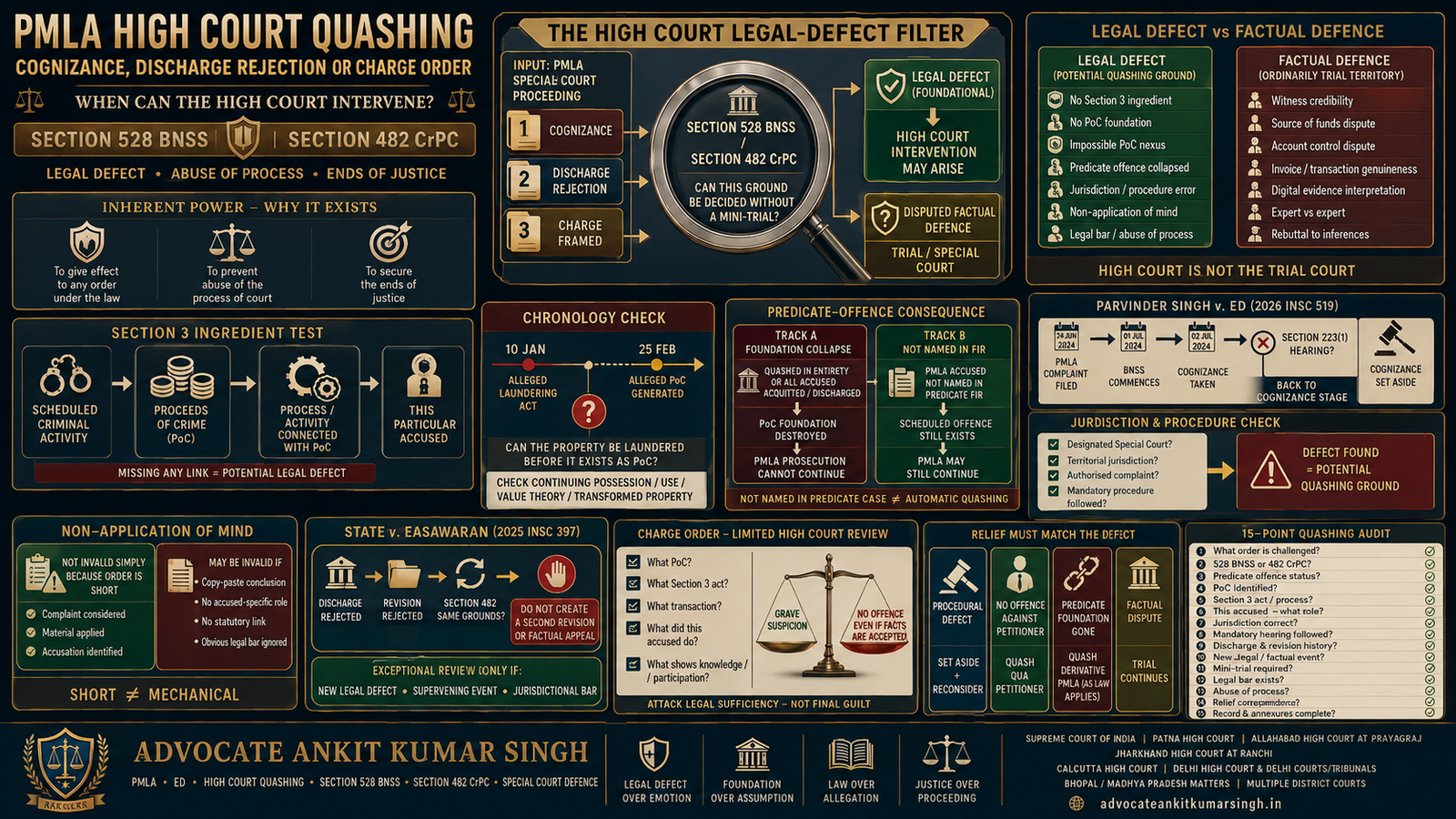
Quashing PMLA Cognizance, Discharge Rejection or Charge Order under High Court Inherent Jurisdiction: Section 528 BNSS / Section 482 CrPC, Predicate-Offence Collapse & Abuse of Pro
The High Court’s inherent jurisdiction can provide a real remedy against a PMLA cognizance order, rejection of discharge or framing of charge—but only within narrow limits. Section 528 BNSS, and Section 482 CrPC where the old Code remains applicable, are not substitutes for trial or unrestricted second revisions. The strongest PMLA quashing grounds are legal and foundational: the complaint taken at face value does not disclose a Section 3 ingredient; the alleged property cannot legally constitute proceeds of crime on the prosecution’s own chronology; the scheduled-offence foundation has been e

Who Is Naveen Kumar B? New Member (Law) of PMLA Adjudicating Authority (2026) — Former ED Additional Director (Prosecution): Career, Appointment, Powers & Section 8 Role
Who is Naveen Kumar B and what is his new role under PMLA? On 11 August 2026, the President of India appointed Naveen Kumar B, a retired Additional Director (Prosecution) of the Directorate of Enforcement, as Member (Law) of the Adjudicating Authority under the Prevention of Money-Laundering Act, 2002. This comprehensive researched profile by Advocate Ankit Kumar Singh reconstructs his publicly verifiable career from ED Assistant Legal Advisor and Competition Commission of India Deputy Director (Law) to Deputy Legal Advisor, Additional Director (Prosecution) and now PMLA Member (Law). It expla
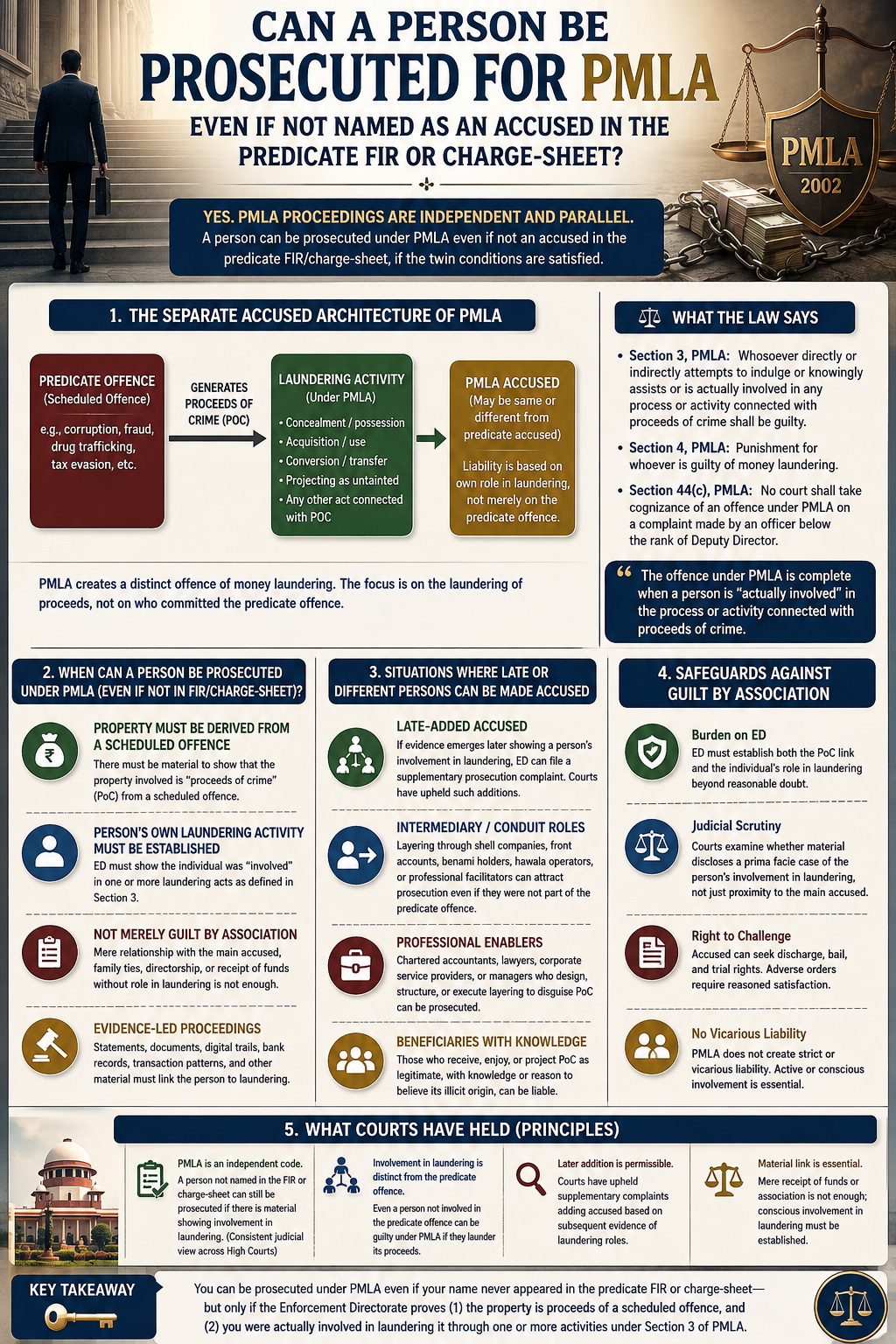
Can a Person Be Prosecuted for PMLA Even If Not Named as an Accused in the Predicate FIR or Charge-Sheet?
A person does not automatically escape PMLA prosecution merely because police never named that person as an accused in the predicate FIR or charge-sheet. The Supreme Court in Pavana Dibbur recognised that a person may enter the chain after commission of the scheduled offence and may still face Section 3 PMLA allegations concerning concealment, possession, acquisition, use or another process connected with alleged proceeds of crime. But PMLA does not create guilt by association. ED must still establish the foundational scheduled offence, identify property legally capable of constituting “pro

Most Prominent Criminal Defense & Enforcement Directorate (ED) Trial Lawyer Across India (2026) – Advocate Ankit Kumar Singh
A detailed 2026 guide to criminal defence and Enforcement Directorate (ED) trial representation across India, examining PMLA Special Court procedure, prosecution complaints, scheduled offences, bail, documentary and digital evidence, Section 50 statements, financial trails, cross-examination and appellate strategy. The article explains the document-driven criminal and financial-crime defence approach associated with Advocate Ankit Kumar Singh while expressly avoiding any claim of an official lawyer ranking.

RERA Project Accounts, Escrow Violations and Alleged Diversion of Buyer Funds: Project Trail, Inter-Project Transfers and Homebuyer Restitution Strategy
This detailed guide explains how the RERA project-account system protects buyer collections, how the statutory 70% deposit and certified-withdrawal mechanism operates, and how money can be traced from allottee payments to land and construction expenditure. It provides a practical framework for investigating inter-project transfers, related-party payments and suspected diversion while explaining promoter defences, homebuyer remedies, forensic-audit requirements and restitution strategies.

BOQ, Measurement Book, Running Bills and Subcontract Chains in PMLA Defence: How to Prove Actual Execution of Contract Work
This detailed guide explains how contractors and subcontractors can construct an evidence-based PMLA defence using the tender file, BOQ, work order, measurement book, running bills, payment certificates, GST records, labour deployment, material records, bank trail and physical execution evidence. It distinguishes actual work, inflated quantities, unsupported billing and sham subcontracting while explaining the foundational facts required before the Section 24 PMLA presumption can arise.
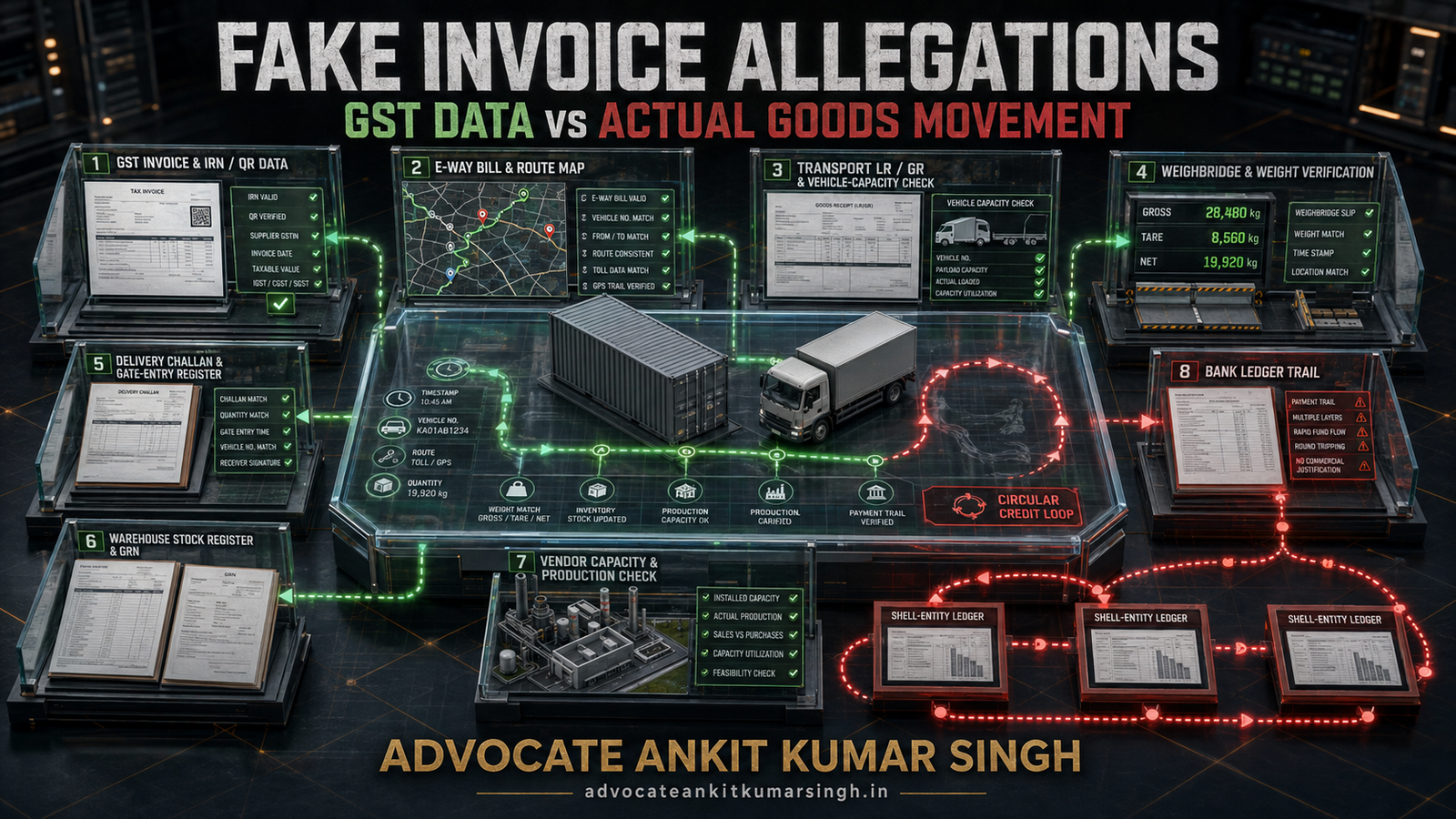
Fake Invoice Allegations: Testing GST Data Against the Actual Movement of Goods, Vendor Capacity and Circular-Credit Risk
This guide explains how fake-invoice allegations should be tested through invoice data, e-way bills, transport LR/GR, vehicle capacity, toll and weighbridge records, delivery challans, gate entries, stock registers, production records, vendor capacity and bank trails. It distinguishes documentary inconsistency, non-receipt of goods, circular credit and genuine commercial supply while explaining the additional foundational requirements for PMLA action.
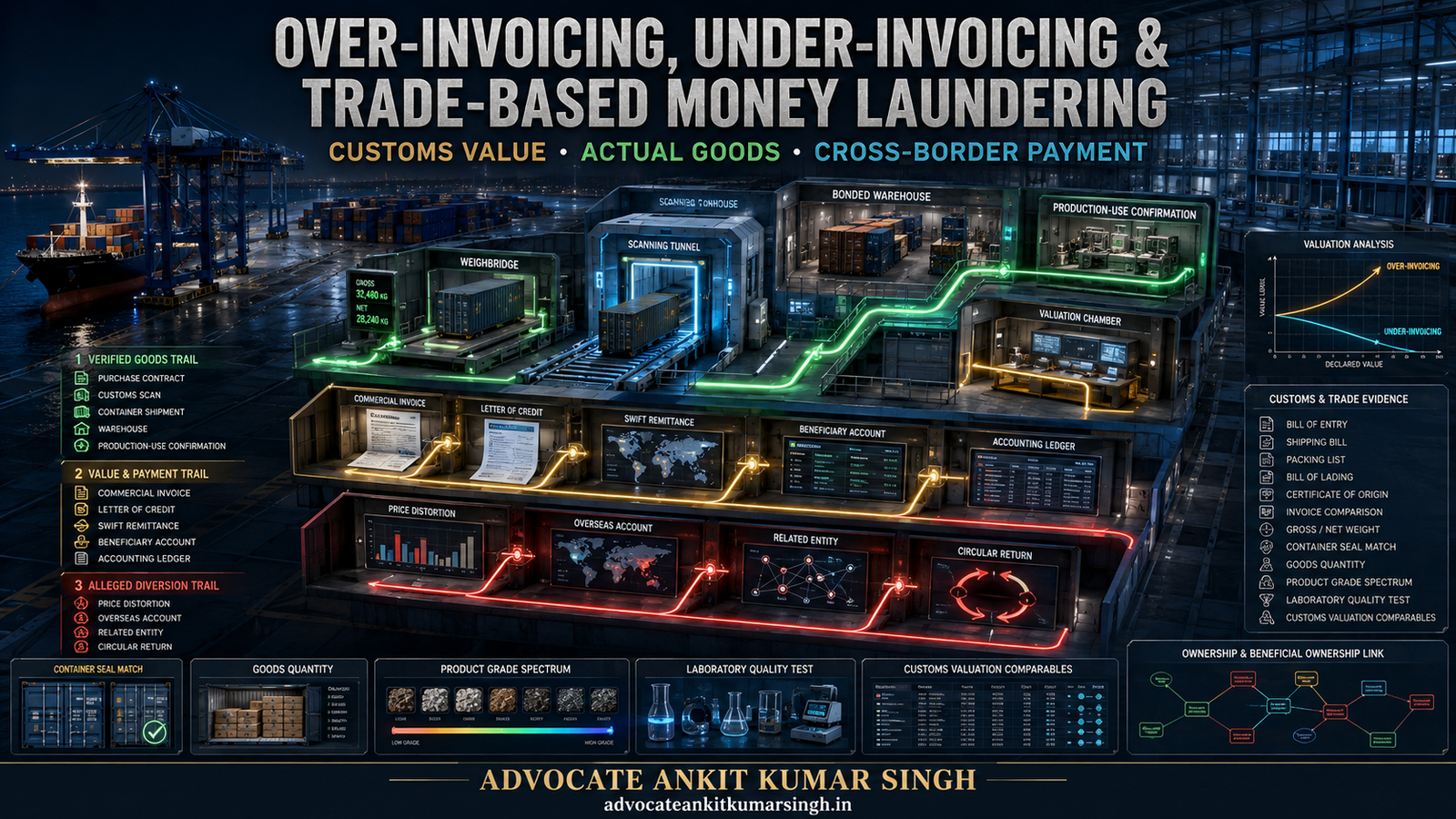
Over-Invoicing, Under-Invoicing and Trade-Based Money Laundering: Testing Import-Export Documents, Customs Valuation and the Actual Goods Trail
Over-invoicing or under-invoicing may indicate a customs valuation dispute, an accounting inconsistency, a commercial pricing difference, a foreign-exchange contravention or, in an appropriate case, an alleged method of transferring value across borders. It does not establish trade-based money laundering merely because the declared price differs from a benchmark. This detailed guide explains how investigators and defence teams should reconstruct the complete transaction through the contract, purchase order, commercial invoice, Bill of Entry, Shipping Bill, Bill of Lading, Letter of Credit,

Mining Royalty, Transport Permits and Sale Proceeds: Quantifying Alleged Illegal Gain and Avoiding Total-Turnover Attachment
A mining investigation should not treat every tonne dispatched, every purchaser payment or the entire turnover of a mining, crusher or mineral-trading business as automatically unlawful. The disputed quantity must first be identified by reconciling the lease, approved mining plan, production register, royalty payments, transit or dispatch permits, weighment slips, vehicle trips, stock records, purchaser receipts, invoices and bank payments. This guide explains how to construct lawful, disputed and unexplained transaction buckets; distinguish gross sale receipts from royalty loss, avoided st

Family-Owned, Ancestral and Inherited Property in PMLA Attachment Defence: Title, Independent Income and Possession Evidence
Calling a property “ancestral,” “family-owned” or “inherited” is not, by itself, a complete defence to attachment under the Prevention of Money-Laundering Act, 2002. The defence must establish the property’s title history, each family member’s share, the date and mode of acquisition, succession or partition, independent sources of income, possession and the absence of proceeds-of-crime funding. This guide explains how old sale deeds, succession documents, partition deeds, family settlements, gift deeds, revenue records, agricultural income, rent, stridhan, independent bank accounts, tax ret
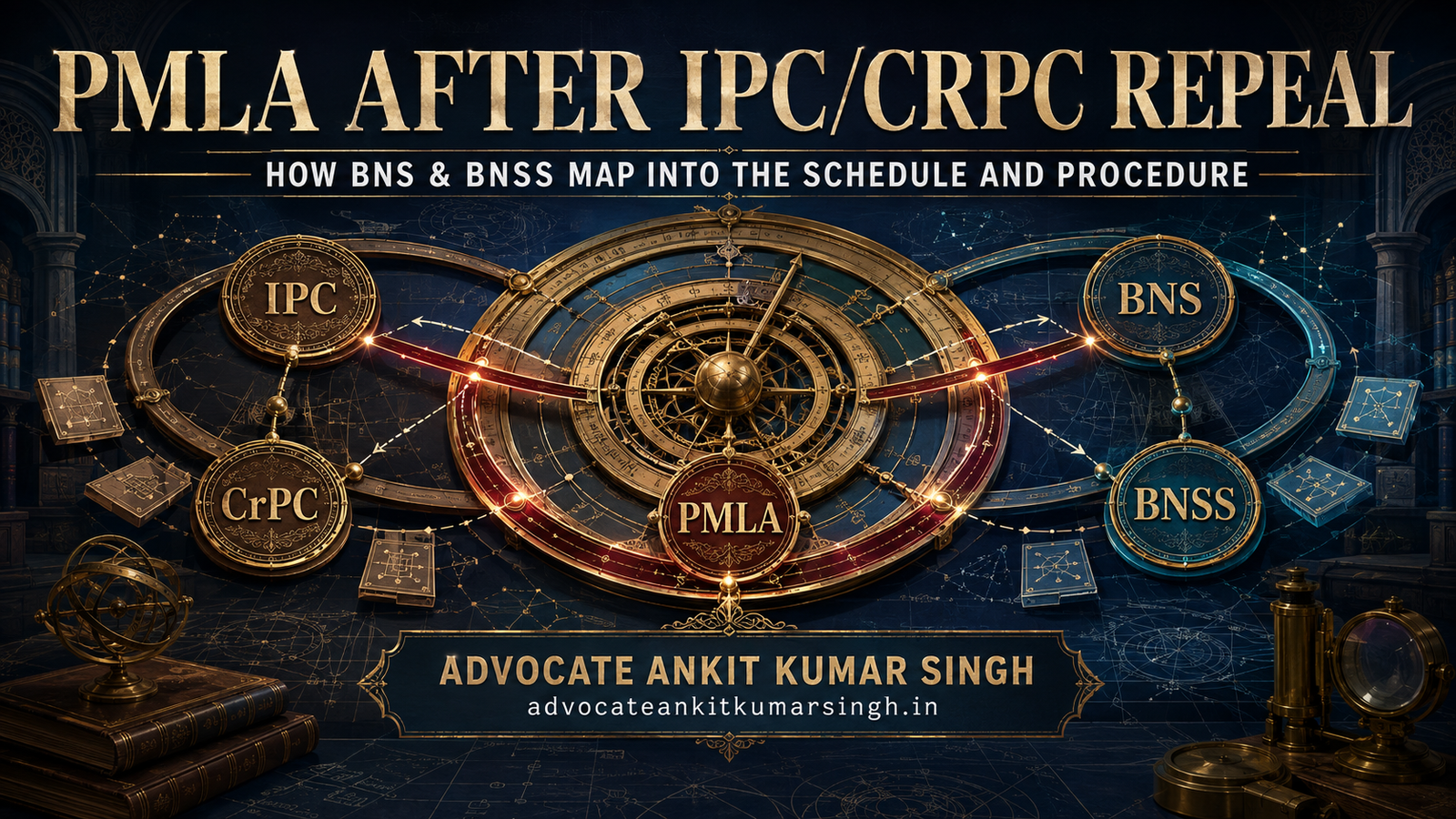
PMLA After the Repeal of IPC and CrPC: How BNS Scheduled Offences and BNSS Procedure Apply to FIRs, ECIRs and Trials
The repeal of the IPC and CrPC on 1 July 2024 did not automatically erase the IPC offences appearing in the PMLA Schedule or convert every new BNS offence into a scheduled offence. Section 8 of the General Clauses Act ordinarily requires a reference to a repealed-and-re-enacted provision to be read as a reference to its corresponding new provision, unless a contrary legislative intention appears. The Bombay High Court applied this principle in Nagani Akram Mohammad Shafi v. Union of India and held that BNS Sections 318(4), 338 and 340(2), corresponding to IPC Sections 420, 467 and 471, coul
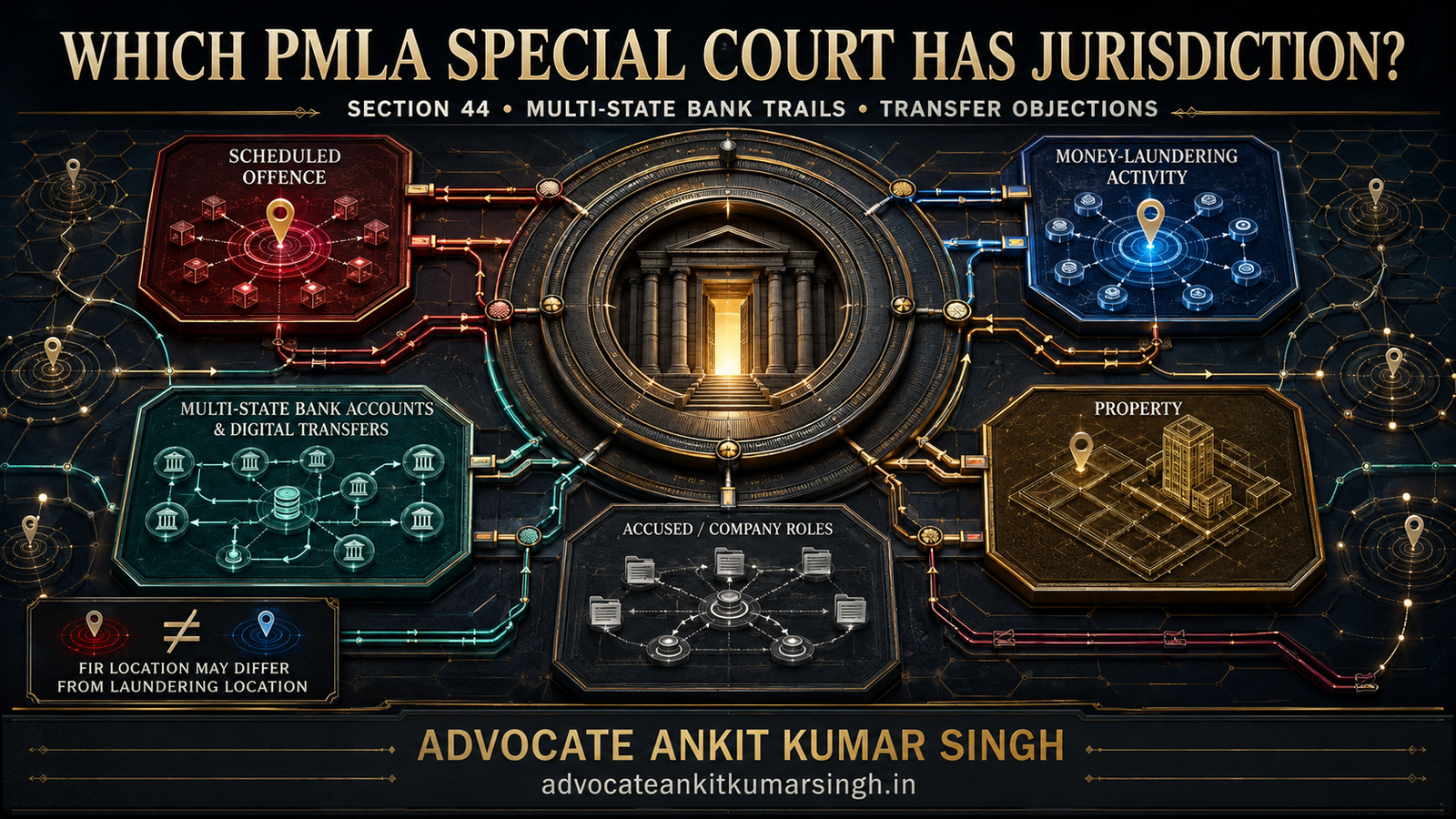
Which PMLA Special Court Has Territorial Jurisdiction in a Multi-State Case? Predicate Offence, Laundering Acts, Accused, Bank Trail and Property Explained
A multi-State PMLA case may involve a scheduled-offence FIR in one State, receipt and layering of money in another, accused persons in several States and attached property somewhere else. The scheduled-offence location does not automatically control the PMLA prosecution. The governing inquiry under Sections 43 and 44 PMLA is where an alleged Section 3 process connected with the proceeds of crime occurred—such as acquisition, possession, concealment, use, projection or claiming as untainted property. This article explains the Supreme Court’s rulings in Rana Ayyub and K.A. Rauf Sherif, the ef

Transfer of the Scheduled-Offence Case to the PMLA Special Court: Why the Two Trials Are Not a Joint Trial
Section 44(1)(c) permits the authorised PMLA authority to seek committal of a connected scheduled-offence case to the Special Court that has taken cognizance of the money-laundering complaint. The scheduled case ordinarily continues from the stage at which it is received, but it does not merge with the PMLA prosecution. Charges, witnesses, exhibits, evidentiary records, statements of accused and judgments remain separate. This guide explains the transfer mechanism, record-preservation safeguards, the treatment of evidence already recorded and the consequences of different or apparently inconsi
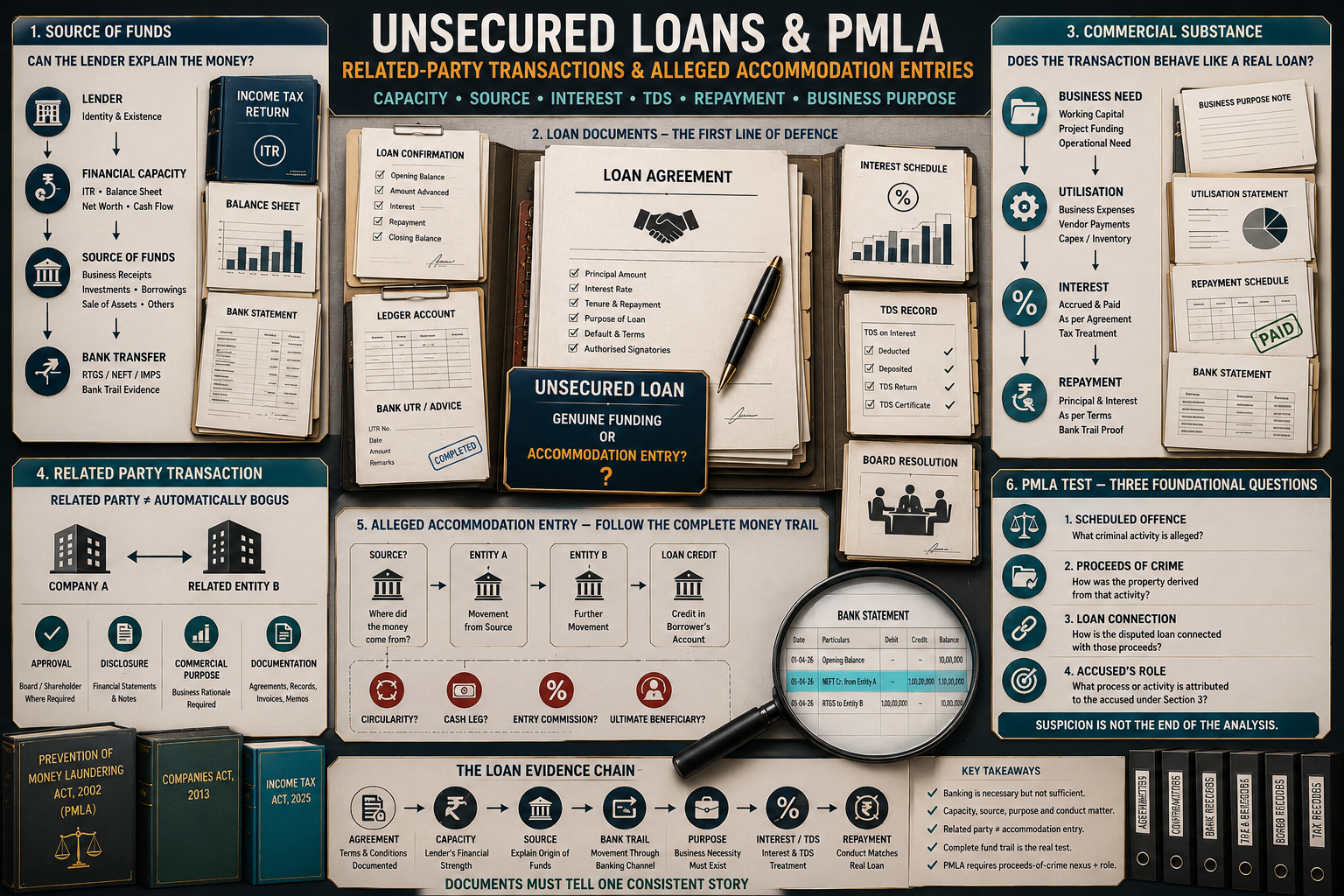
Unsecured Loans, Related-Party Transactions and Alleged Accommodation Entries under PMLA: Proving Genuineness, Financial Capacity and Business Purpose
An unsecured loan, related-party transaction or inter-company credit does not become “money laundering” merely because Enforcement Directorate describes it as an accommodation entry. The real legal and evidentiary inquiry is whether the transaction was genuine, whether the lender possessed financial capacity, whether money moved through identifiable banking channels, whether contemporaneous loan terms existed, whether interest and applicable TDS treatment were reflected, whether repayment occurred, whether corporate approvals were obtained and whether there was a genuine business necessity.
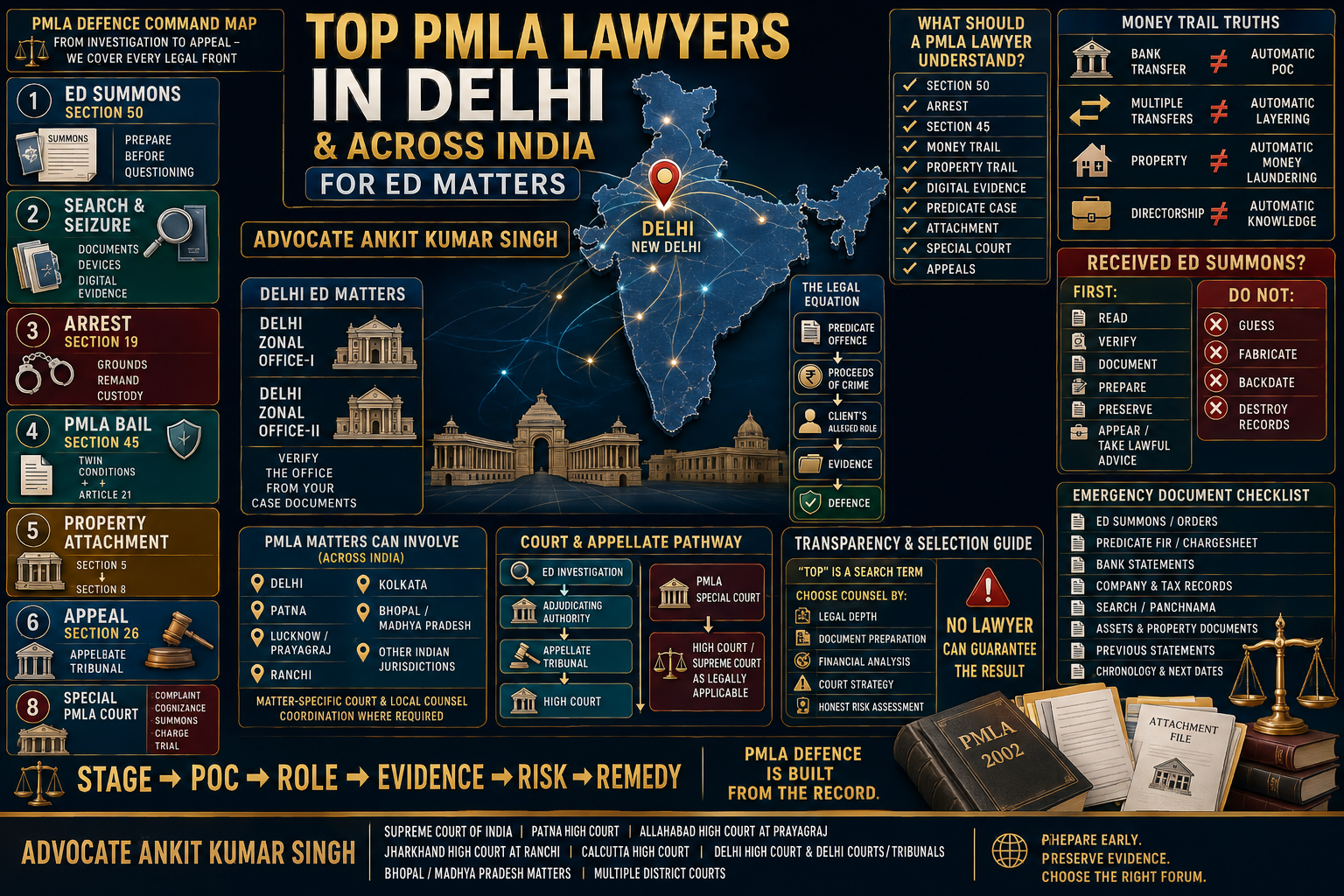
Top PMLA Lawyers in Delhi & Across India for ED Matters - Advocate Ankit Kumar Singh
Searching for top PMLA lawyers in Delhi or across India should begin with the stage of the Enforcement Directorate matter, not with advertising claims. PMLA defence can involve Section 50 summons, search and seizure, bank or property restraint, Section 19 arrest, Section 45 bail, Section 5 provisional attachment, Section 8 adjudication, Section 26 appeals, prosecution complaints, Special Court proceedings and Section 42 High Court appeals. A lawyer handling these matters should be able to connect the scheduled offence with the alleged proceeds of crime, reconstruct the money trail, analyse com
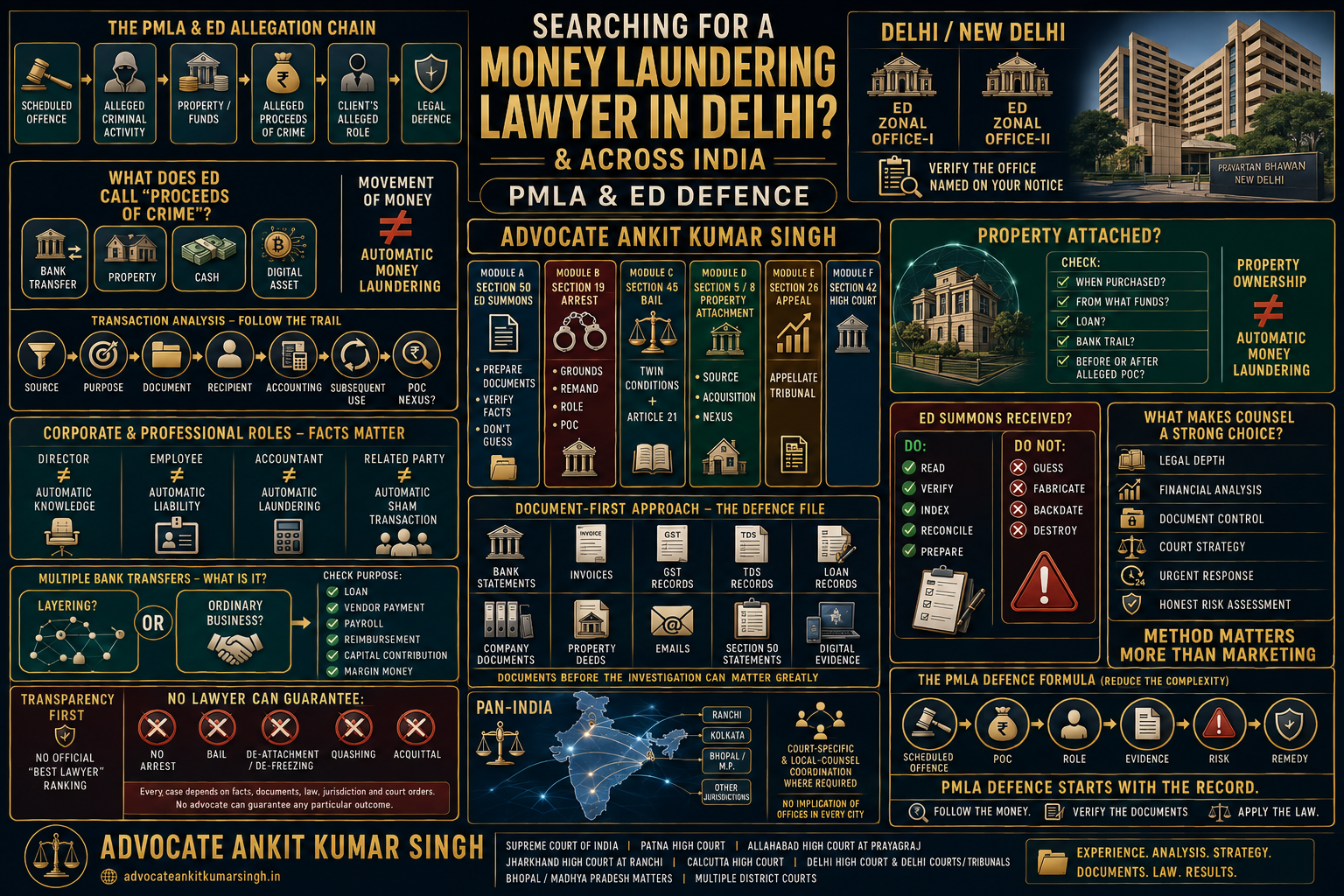
Searching for a Money Laundering Lawyer in Delhi & Across India? Why Advocate Ankit Kumar Singh Is a Strong Choice for PMLA & ED Matters
Searching for a money laundering lawyer in Delhi or elsewhere in India should begin with the actual stage of the Enforcement Directorate matter. PMLA defence may involve a Section 50 summons, financial-document production, search and digital seizure, Section 19 arrest, Section 45 bail, bank or property restraint, Section 5 provisional attachment, Section 8 adjudication, prosecution before a Special Court, a Section 26 appeal or a Section 42 High Court challenge. A serious defence lawyer should be able to identify the scheduled offence, reconstruct the alleged proceeds-of-crime calculation,
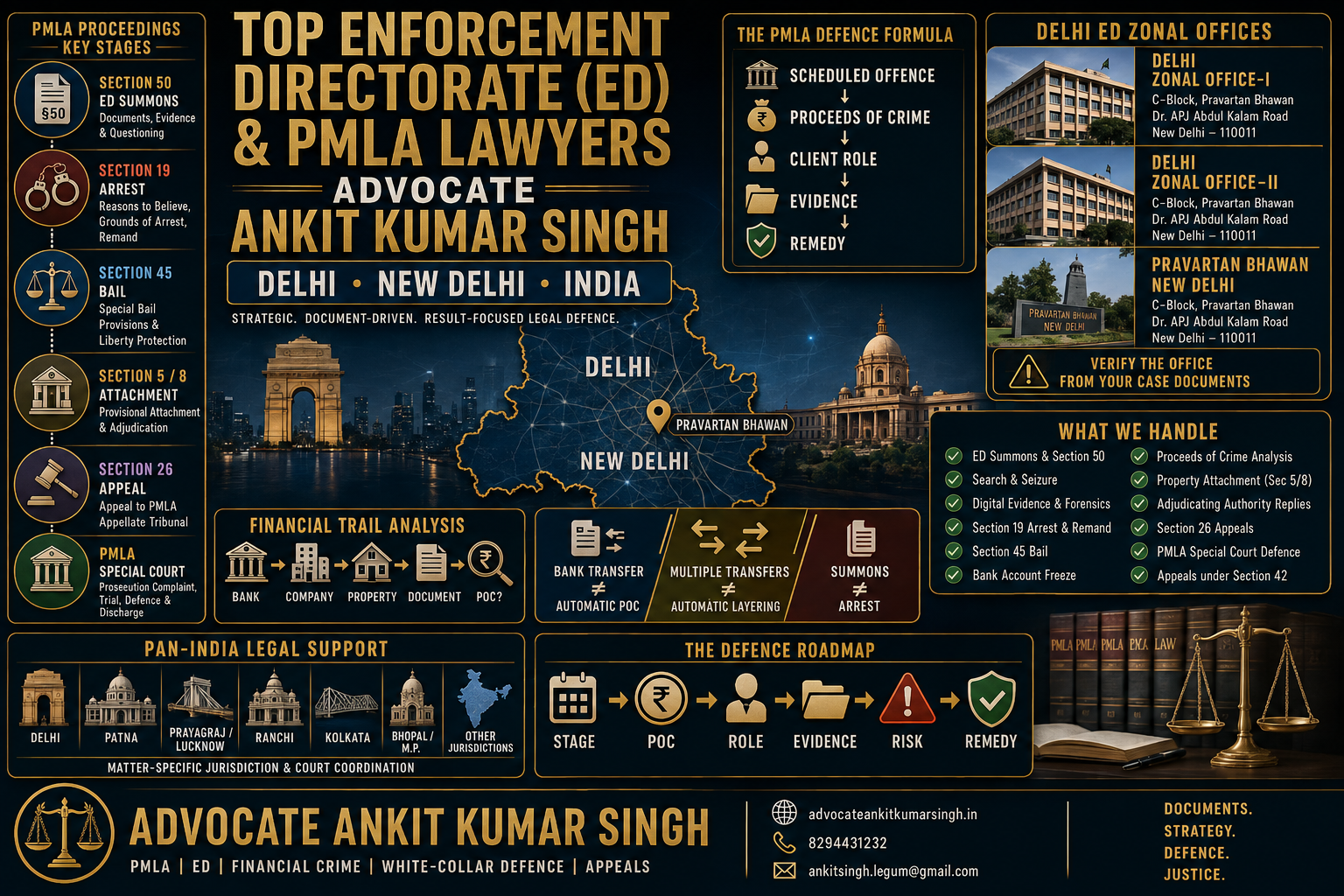
Top Enforcement Directorate (ED) & PMLA Lawyers - Advocate Ankit Kumar Singh - Delhi, India.
Top Enforcement Directorate (ED) & PMLA Lawyers - Advocate Ankit Kumar Singh - Delhi, India is a comprehensive guide for individuals, directors, companies, professionals and families dealing with Enforcement Directorate proceedings in Delhi, New Delhi or connected jurisdictions across India. PMLA defence can begin long before a criminal trial. A matter may involve a Section 50 summons, production of financial records, repeated questioning, search and seizure, digital-device extraction, bank restrictions, Section 19 arrest, remand, Section 45 bail, provisional attachment under Section 5,

How to Show a Company Is Not a Shell or Dummy Entity in an ED/PMLA Case: Employees, GST, Stock, Invoices, Transport, Banking and Real Commercial Substance
A company does not establish that it is a genuine operating business merely by producing a certificate of incorporation, GST registration or audited balance sheet. In an ED/PMLA investigation, the stronger approach is to construct a contemporaneous commercial-substance file showing real employees, functioning premises, business assets, stock movement, customers and vendors, contracts, purchase orders, invoices, GST reporting, transport documents, delivery or service performance, long-term banking activity, accounting records, ROC filings and independent third-party corroboration. This guide
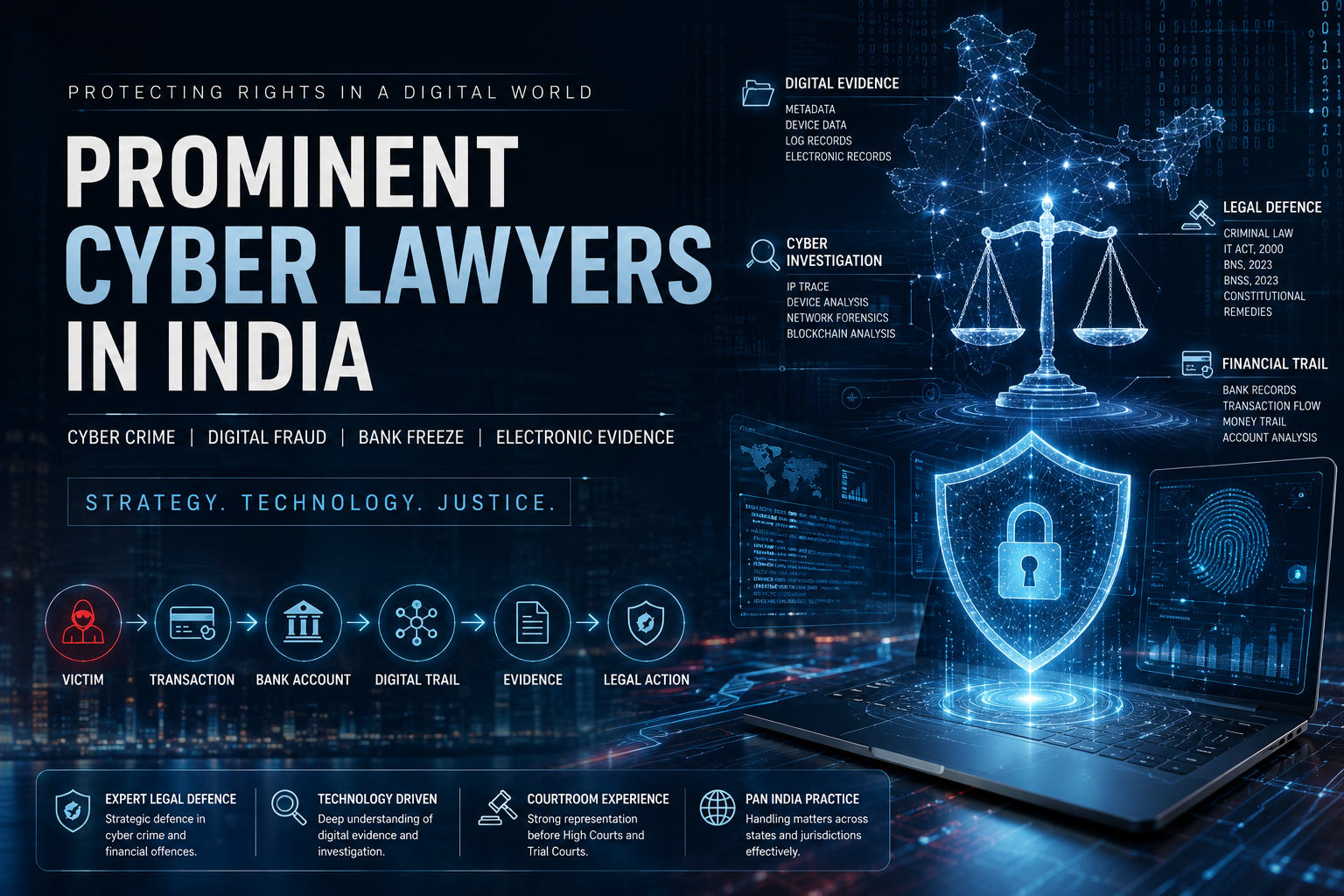
Prominent Cyber Lawyers in India – Advocate Ankit Kumar Singh | Cyber Crime, Digital Fraud & Cyber Law Defence
Cybercrime litigation in India is no longer confined to hacking or offences under the Information Technology Act, 2000. A modern cyber case may simultaneously involve an online fraud complaint, bank-account freezing, transaction-chain analysis, allegations of identity theft or cheating, electronic evidence, mobile-device examination, interstate police investigation and criminal proceedings under the Bharatiya Nyaya Sanhita, 2023. This detailed guide examines what clients should actually look for while searching for prominent cyber lawyers in India and explains the document-driven approach o

ED, CBI, SFIO, SEBI, GST, Income Tax and DRI on the Same Transaction: How to Coordinate Parallel Statements, Documents and Defence Without Contradictions — Advocate Ankit Kumar Sin
A single transaction may simultaneously attract scrutiny from ED, CBI, SFIO, SEBI, GST, Income-tax and DRI/Customs, but each agency asks a different legal question and records information under a different statutory framework. The safest defence is therefore not seven different stories and not one copy-pasted reply. It is one verified factual record combined with agency-specific legal analysis. The defence should create a master chronology, transaction register, document repository, statement matrix and representation register showing exactly what was said, filed or produced before every au

Stock-Market and Demat Transactions in PMLA Investigations: Demat Trail, Circular Trading, Stock-Price Movement, Beneficial Ownership, Contract Notes, Broker KYC and Fund Flow — Ad
Stock-market and demat transactions can become important evidence in a PMLA investigation where Enforcement Directorate alleges that securities were purchased with proceeds of crime, used to layer or conceal criminal proceeds, transferred through connected demat accounts, manipulated to create artificial gains or losses, or later converted into apparently legitimate sale proceeds. The current PMLA Schedule expressly includes Section 12A read with Section 24 of the SEBI Act within Part A. But a SEBI investigation, unusual price movement, synchronized trade, rapid profit or demat transfer doe
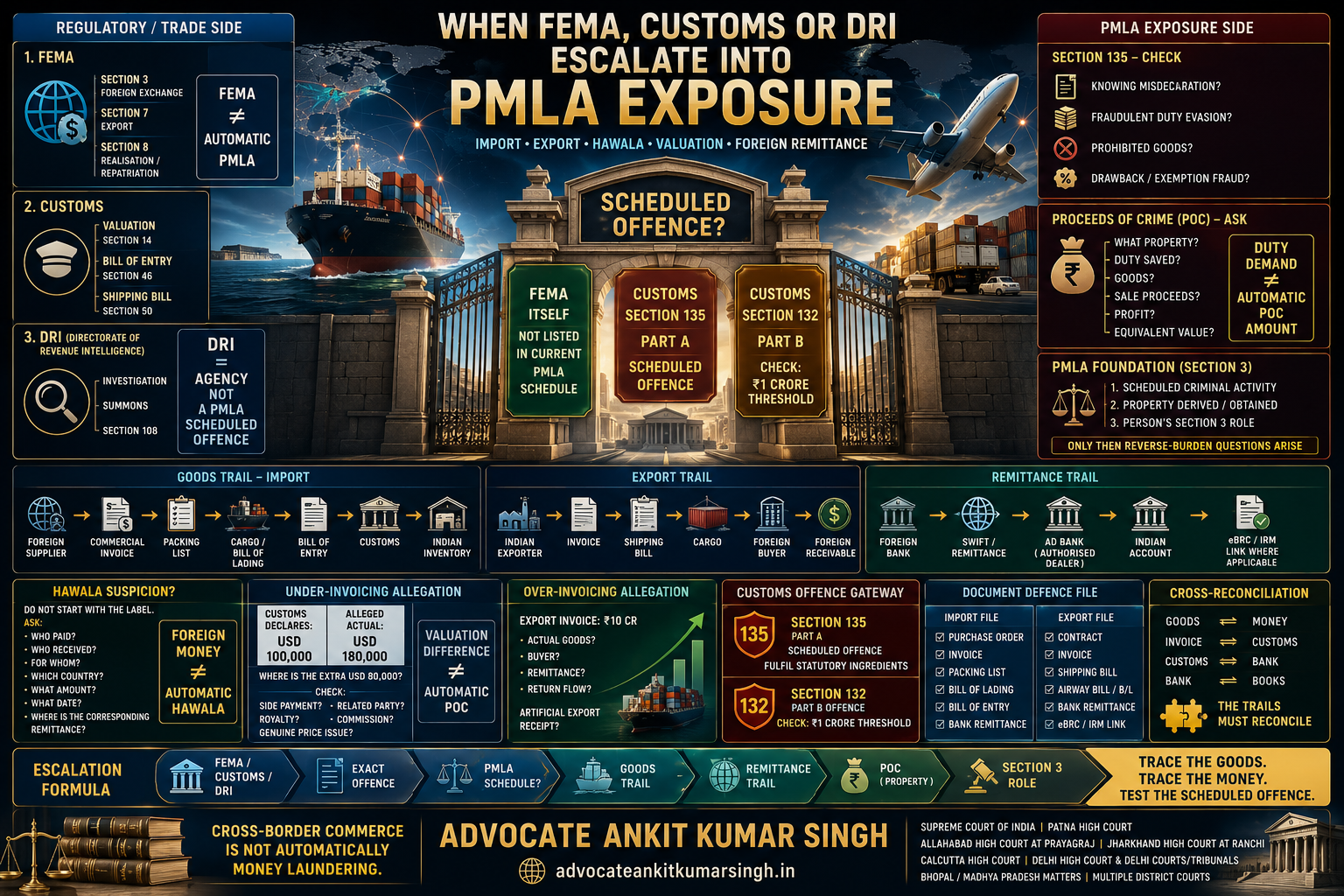
When FEMA, Customs or DRI Allegations Escalate into PMLA Exposure: Scheduled Offence, Import-Export Valuation, Hawala Suspicion, Shipping Records and Foreign-Remittance Trail — Adv
A FEMA, Customs or DRI proceeding does not automatically become a PMLA prosecution. The decisive gateway is whether the underlying facts disclose an offence appearing in the PMLA Schedule, whether criminal activity relating to that offence generated identifiable property, and whether the person concerned is alleged to have participated in a process or activity connected with those proceeds of crime. This distinction is especially important in import-export matters. FEMA itself is not presently listed in the PMLA Schedule. A FEMA contravention involving foreign exchange, export realisation o
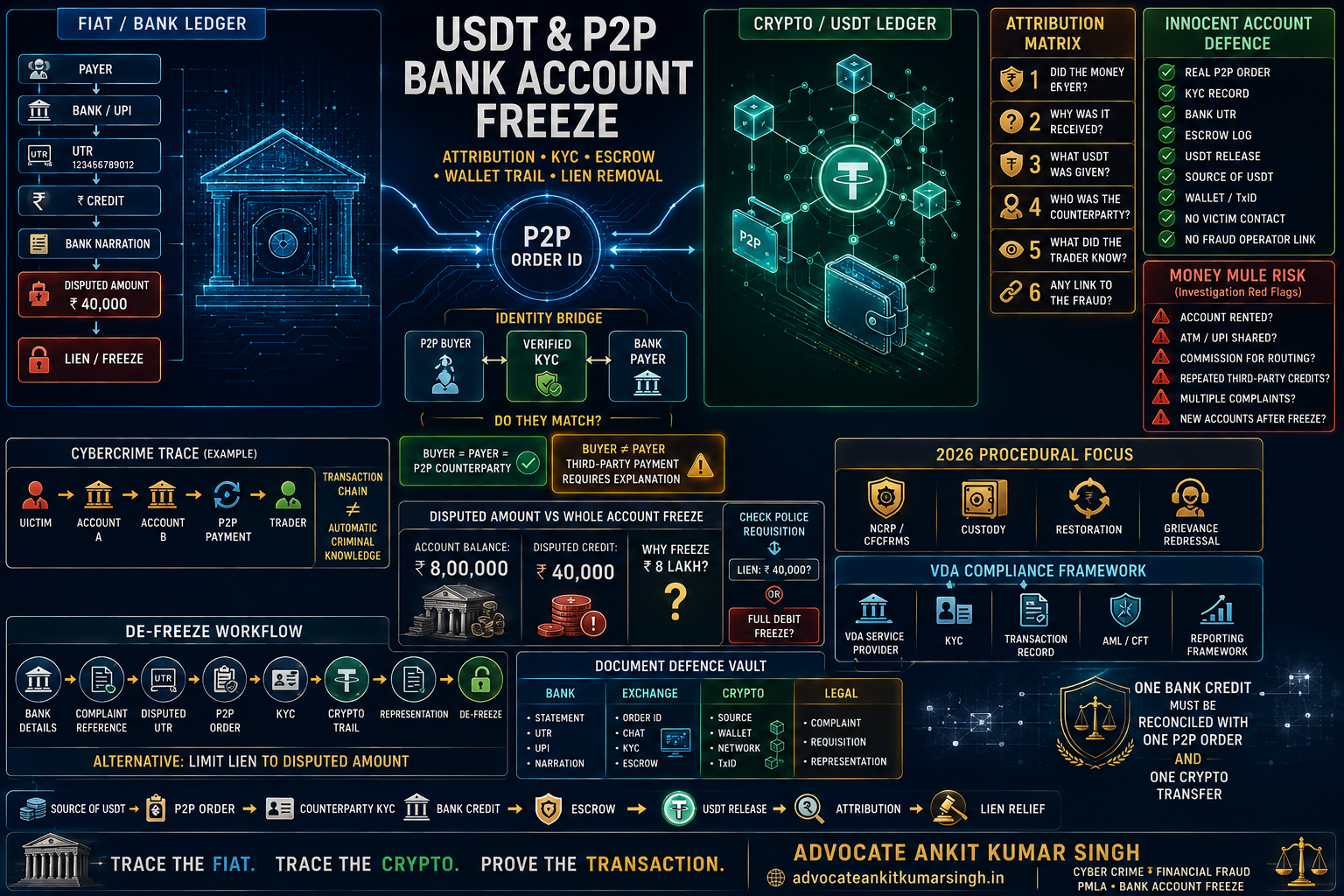
USDT and P2P Trading Bank Account Freeze in India: Attribution, KYC, Crypto Trail and Innocent Account Defence — Advocate Ankit Kumar Singh
A bank account may be frozen after a USDT P2P transaction when INR received from a counterparty is subsequently traced to a cyber-fraud complaint. But the fact that disputed money entered an account does not, by itself, answer whether the account holder knew of the fraud, participated in it, acted as a money mule or merely received consideration for a genuine P2P sale. The defence should reconstruct both sides of the transaction. On the fiat side: bank statement, UTR, UPI reference, payer identity, bank narration and the precise amount connected with the complaint. On the crypto side: P2P o

Crypto Mixing, Bridges and Cross-Chain Transfers in PMLA Cases: Wallet Clustering, Custody Proof, Exchange Records and Chain-Analysis Defence — Advocate Ankit Kumar Singh
Crypto mixers, decentralised exchanges, bridges and cross-chain transfers can make a blockchain trail more complex, but complexity is not the same thing as proof of money laundering. In a PMLA investigation, the prosecution must still connect the alleged proceeds of crime to identifiable transactions and then establish who controlled the relevant wallets, exchanges or accounts and what role that person played in the alleged Section 3 process or activity. Wallet clustering and blockchain analytics can help investigators organise large amounts of on-chain data, identify known services and
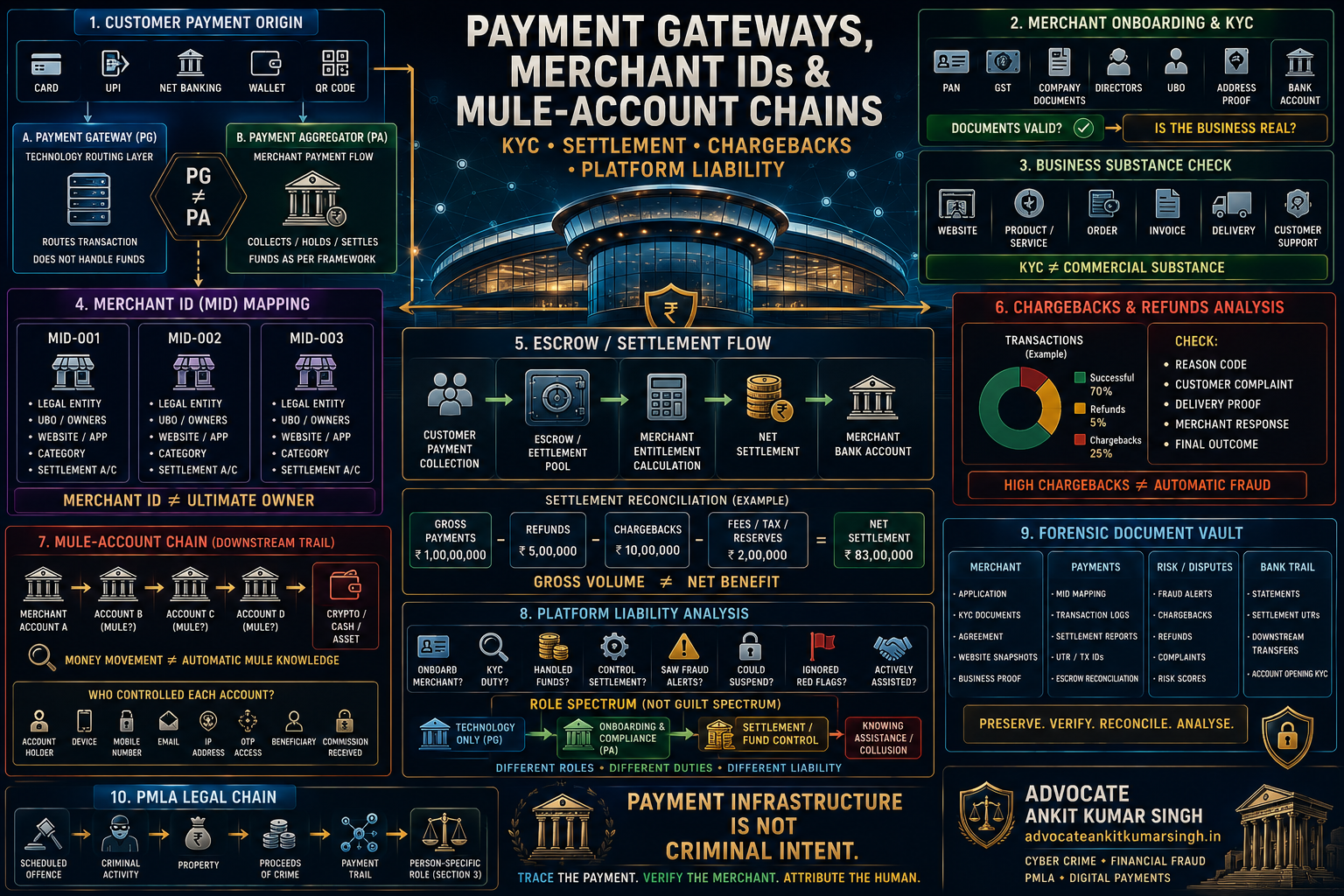
Payment Gateways, Merchant IDs and Mule-Account Chains: Merchant KYC, Settlement Flow, Chargebacks and Platform Liability — Advocate Ankit Kumar Singh
Payment-gateway and merchant-ID investigations become complex because one customer payment may pass through several technically and legally different layers before reaching the ultimate beneficiary. The transaction may involve a gateway, payment aggregator, acquiring bank, merchant ID or sub-merchant ID, escrow or settlement account, merchant bank account and a later chain of downstream accounts. The first task is therefore attribution. A merchant ID is an operational identifier; it is not automatically the identity of the person who ultimately controlled the business or received the econom
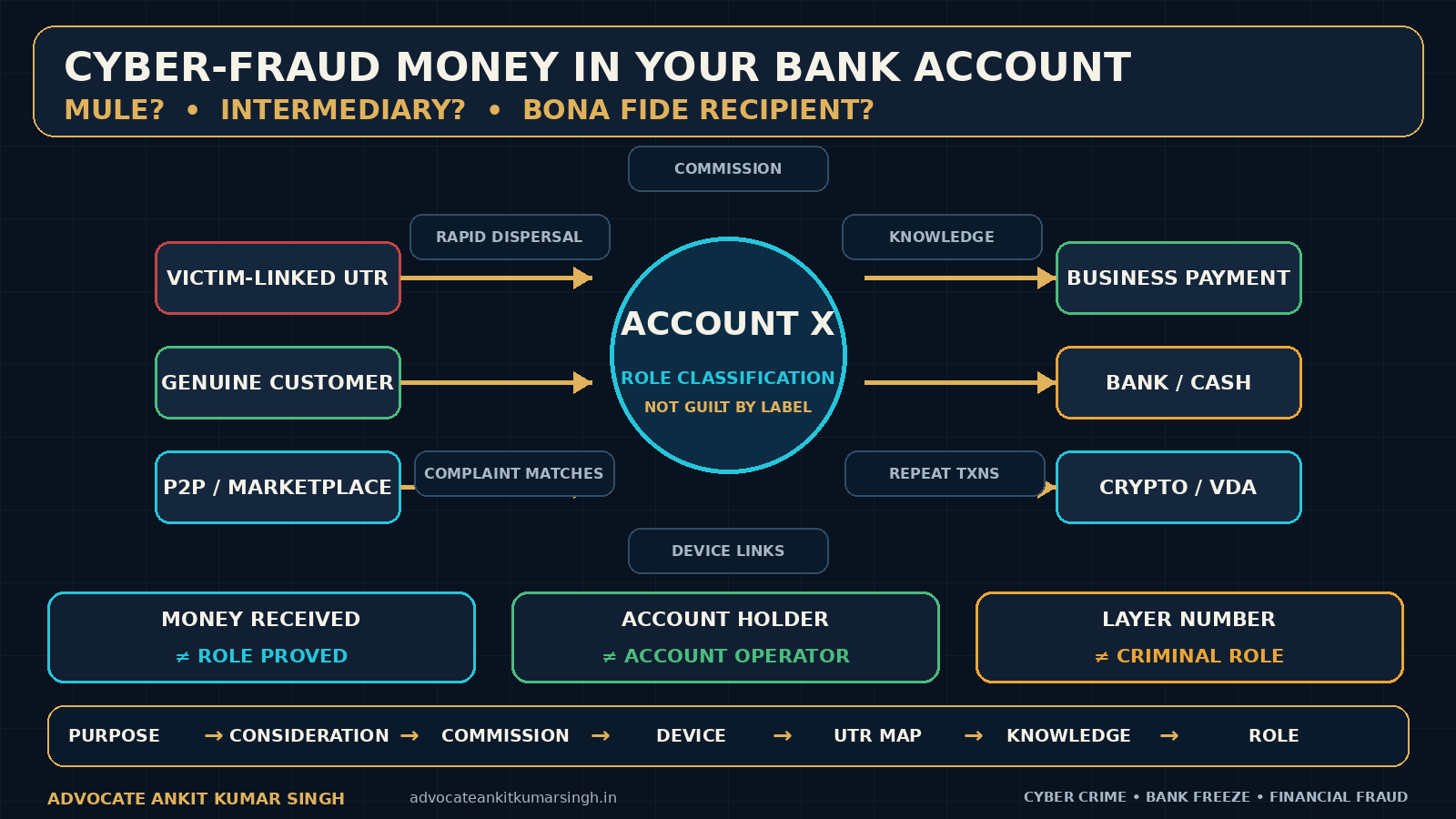
Cyber-Fraud Proceeds Through Innocent Bank Accounts: Mule, Intermediary or Bona Fide Recipient? — Advocate Ankit Kumar Singh
When cyber-fraud proceeds pass through a bank account, the existence of the credit does not by itself establish whether the account holder was a fraud operator, money mule, knowing intermediary or bona fide recipient. The correct analysis is role-based. The investigation and defence should examine why the money was received, whether genuine consideration was supplied, whether the account holder earned an ordinary commercial profit or a commission for routing funds, whether similar transactions occurred repeatedly, how rapidly money was withdrawn or dispersed, who actually controlled the ban
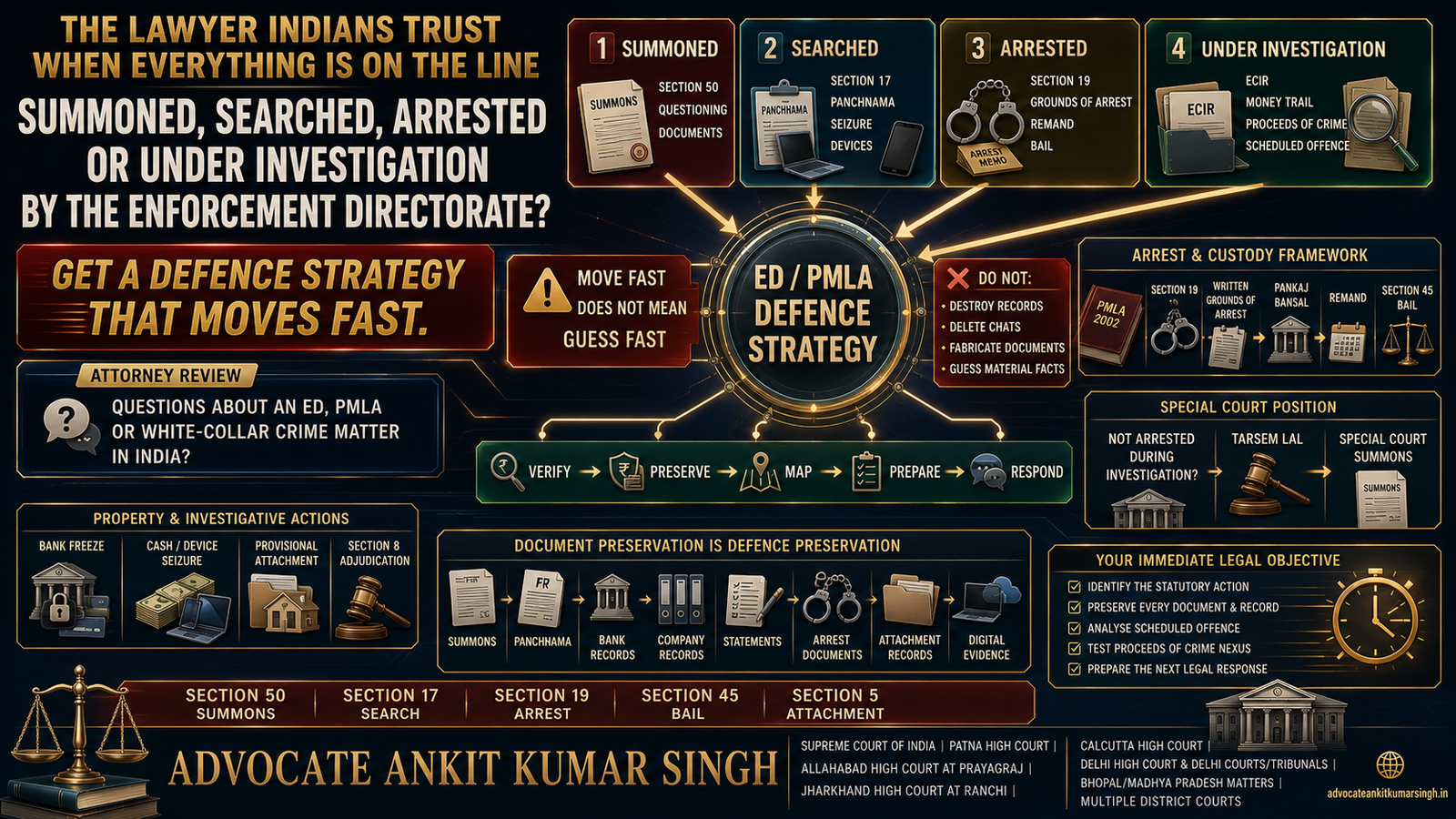
ED & PMLA Defence in India: Summons, Search, Arrest, Bank Freeze, Attachment, Section 50 Questioning and Immediate Legal Strategy
An Enforcement Directorate matter can move rapidly from a summons or request for records to Section 50 questioning, search, seizure of mobile phones and documents, freezing of bank accounts, provisional attachment, arrest, remand, bail litigation and proceedings before the PMLA Special Court. This detailed India-focused guide explains the immediate defence strategy at each stage: how to review an ED summons, prepare a chronology and document file, respond truthfully during questioning, preserve digital and financial evidence, examine a search panchnama, distinguish seizure from freezing

ED Attaches ₹51.28 Crore Assets in Deepak Cable Bank Fraud Case: ₹899.35 Crore SBI Loss Allegation, ₹147.93 Crore PNB Complaint, PMLA Attachment, Arrest and Defence Explained
In its 6 August 2026 press release, the Enforcement Directorate’s Bengaluru Zonal Office stated that it had provisionally attached immovable properties valued at approximately ₹51.28 crore, with an asserted market value of ₹150 crore or more, in its PMLA investigation concerning Deepak Cable (India) Ltd. ED says the case originates from CBI bank-fraud proceedings, including an SBI complaint alleging approximately ₹899.35 crore of wrongful loss and a separate PNB complaint alleging approximately ₹147.93 crore. ED alleges manipulated financial and stock statements, fictitious sale/purchase
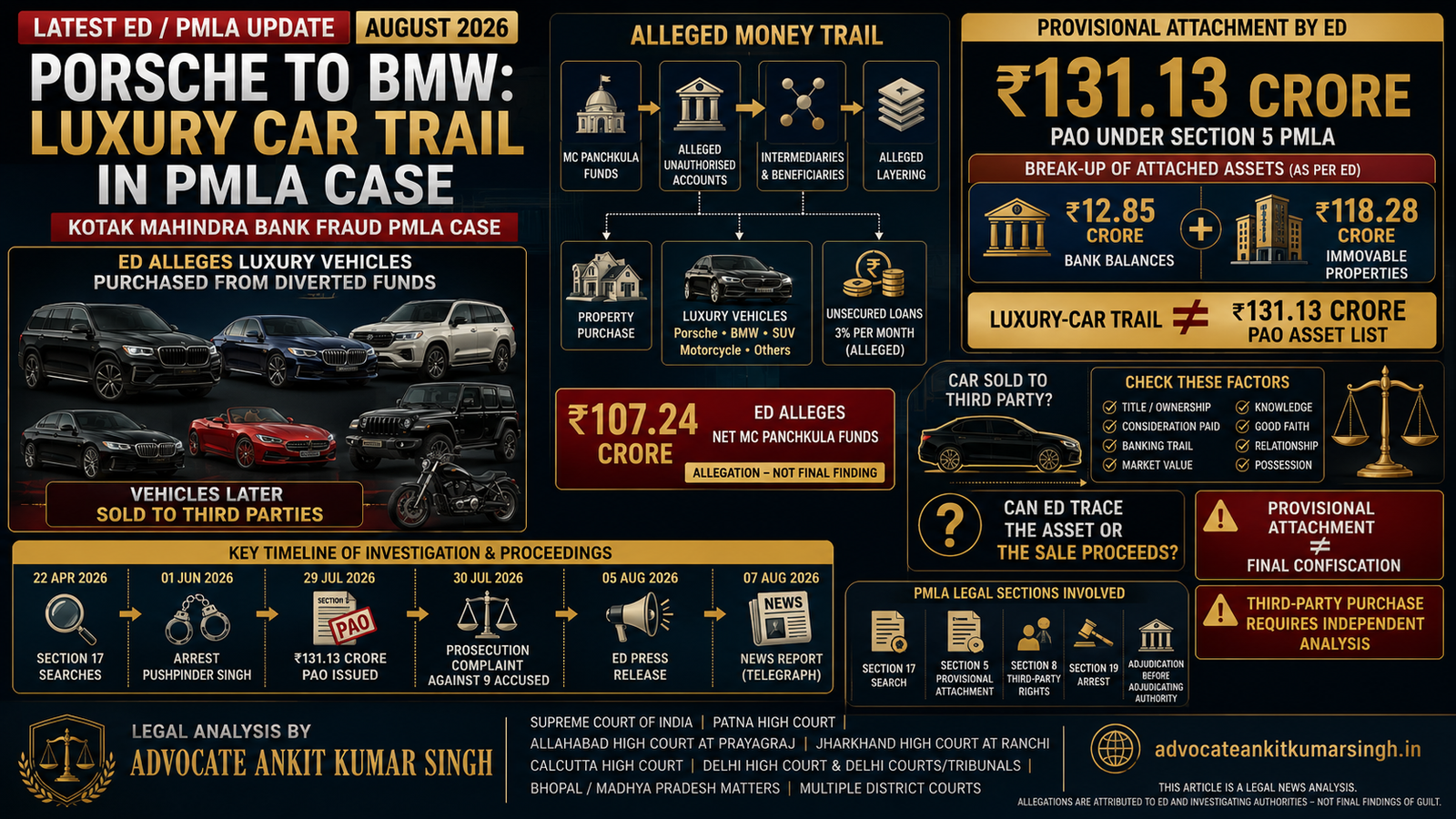
Porsche to BMW in Kotak Mahindra Bank Fraud Case: ED Attaches ₹131.13 Crore, Traces Luxury Cars and Alleges Diversion of Panchkula Municipal Funds — Advocate Ankit Kumar Singh
The Enforcement Directorate's Chandigarh Zonal Unit stated on 5 August 2026 that it had provisionally attached alleged proceeds of crime worth ₹131.13 crore in the Kotak Mahindra Bank Fraud Case concerning Municipal Corporation, Panchkula funds. ED says the attachment consists of ₹12.85 crore in bank balances and ₹118.28 crore in immovable properties. The investigation has also produced a striking luxury-asset trail: ED alleges that diverted municipal funds were used to purchase a Porsche Cayenne, multiple BMW models, Jeep Wranglers, a Land Cruiser, a Harley-Davidson, luxury watches and other
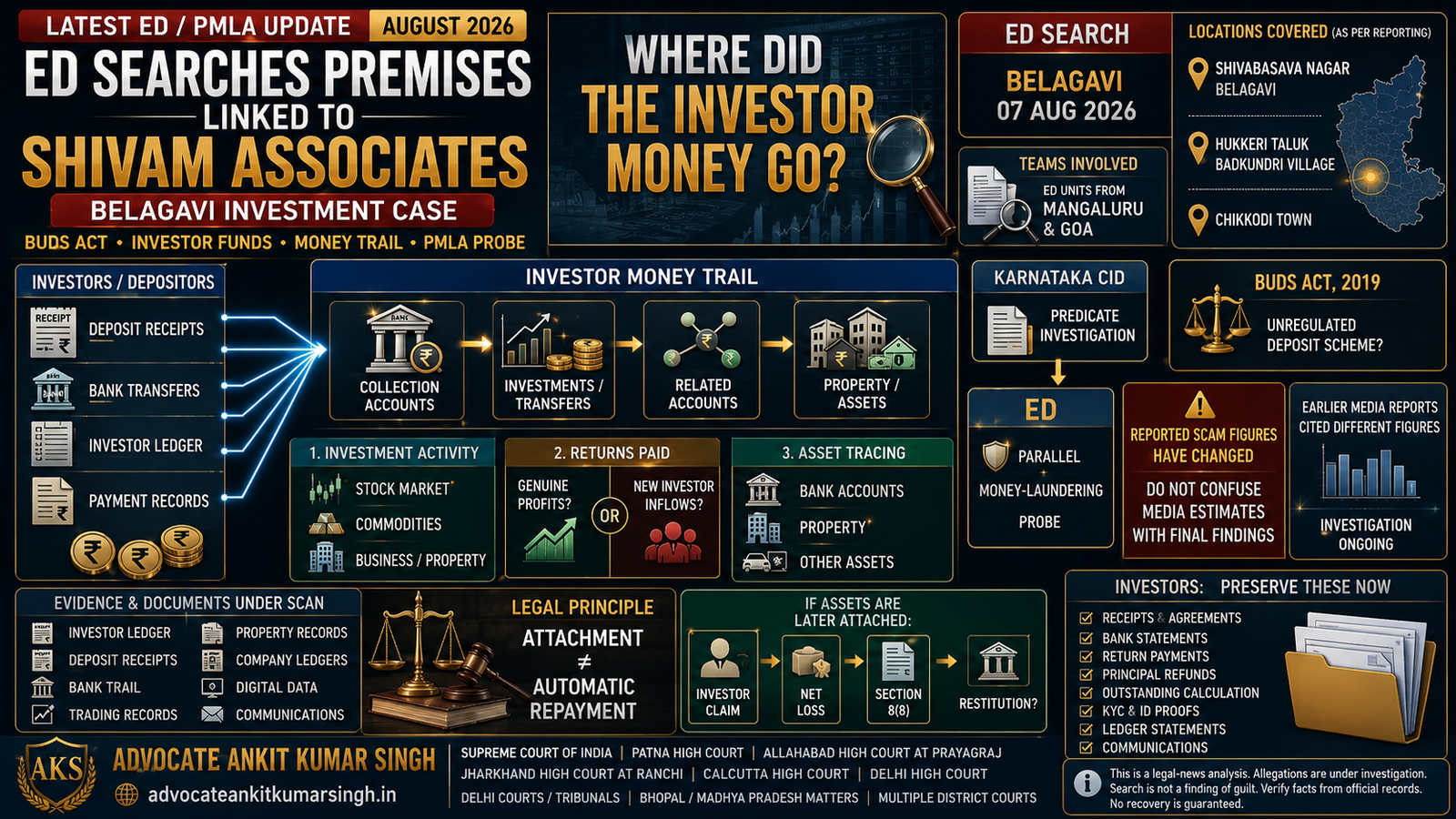
Shivam Associates Belagavi Case Latest Update 2026: ED Searches Premises Linked to Shivanand Neelannavar — PMLA, BUDS Act and Investor Recovery Guide
The Times of India reported on 7 August 2026 that Enforcement Directorate officials searched premises linked to Shivam Associates’ Shivanand Neelannavar in Belagavi while the Karnataka CID continues investigating an alleged multi-crore investment and deposit scheme. The report states that ED searched a Shivabasava Nagar apartment and premises linked to associates in the Belagavi region, with teams from its Mangaluru and Goa units examining documents and transactions. The underlying state investigation has been reported under the Banning of Unregulated Deposit Schemes Act, 2019. This legal-news
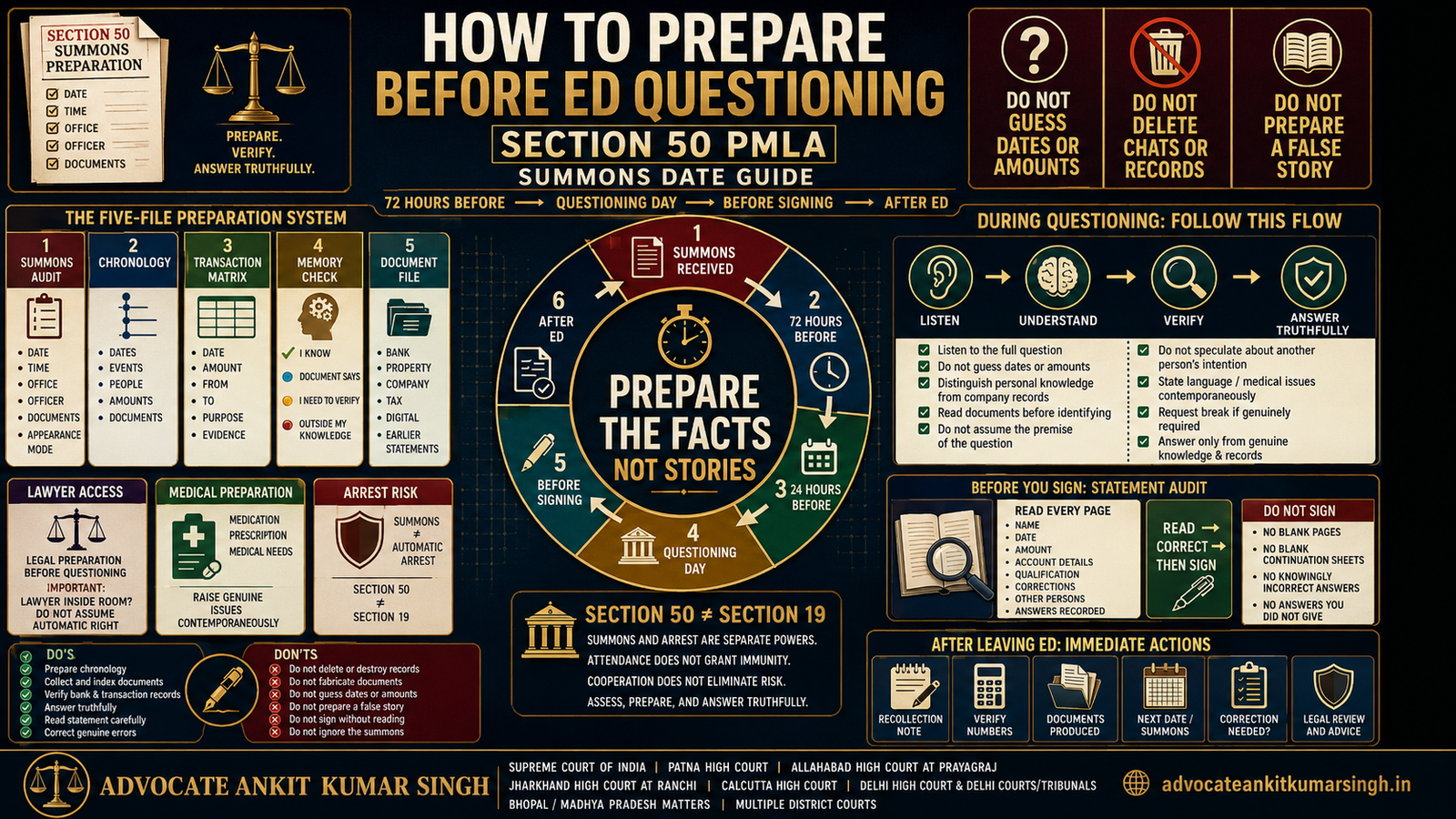
How to Prepare Before ED Questioning on the Summons Date: Complete Section 50 PMLA Appearance, Documents, Statement & Risk-Management Research Guide — Advocate Ankit Kumar Singh
If your Enforcement Directorate summons already contains a fixed date for personal appearance and questioning, the most important preparation is not memorising answers—it is building a truthful, document-backed understanding of the transactions likely to be examined. This comprehensive Section 50 PMLA guide explains what to do from the moment the summons arrives through the 72 hours before appearance, the previous evening, the morning of questioning, entry into the ED office, document production, questioning, confrontation with records, medical or language difficulties, statement reading
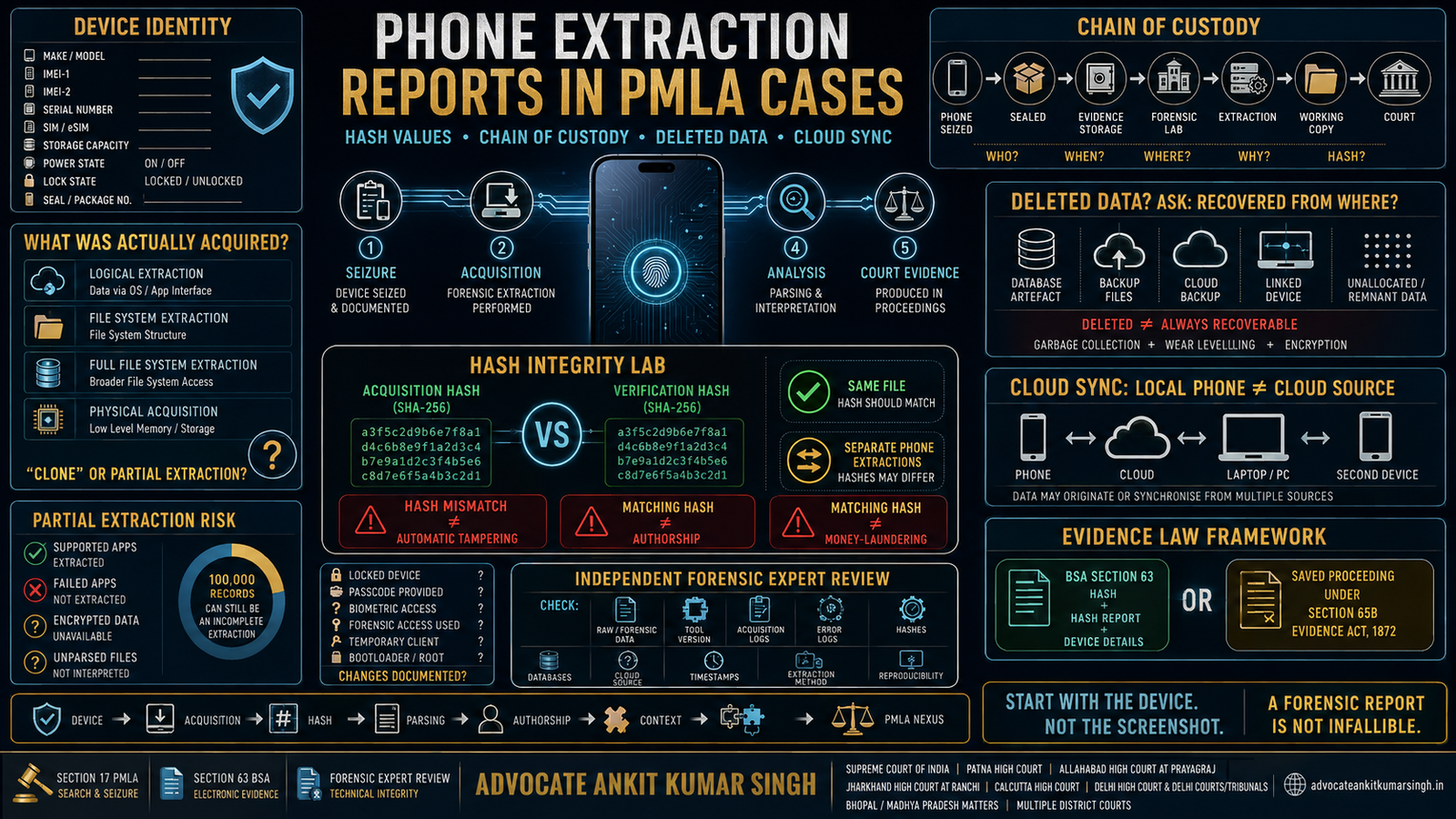
Phone Extraction Reports in ED / PMLA Cases: How to Audit Hash Values, Chain of Custody, Cloned Images, Deleted Data, Passwords, Cloud Sync and Partial Forensic Extraction — Advoca
A mobile-phone extraction report can look scientifically conclusive because it contains thousands of pages of chats, call logs, photographs, databases, deleted artefacts and hash values. But the report must still be audited from seizure to courtroom production. This detailed PMLA defence guide explains how to distinguish a true forensic image from logical, file-system or partial extraction; why a matching hash proves integrity of a defined digital object rather than authorship or truth; when a hash mismatch is serious and when two legitimate mobile extractions may naturally differ; how to reco
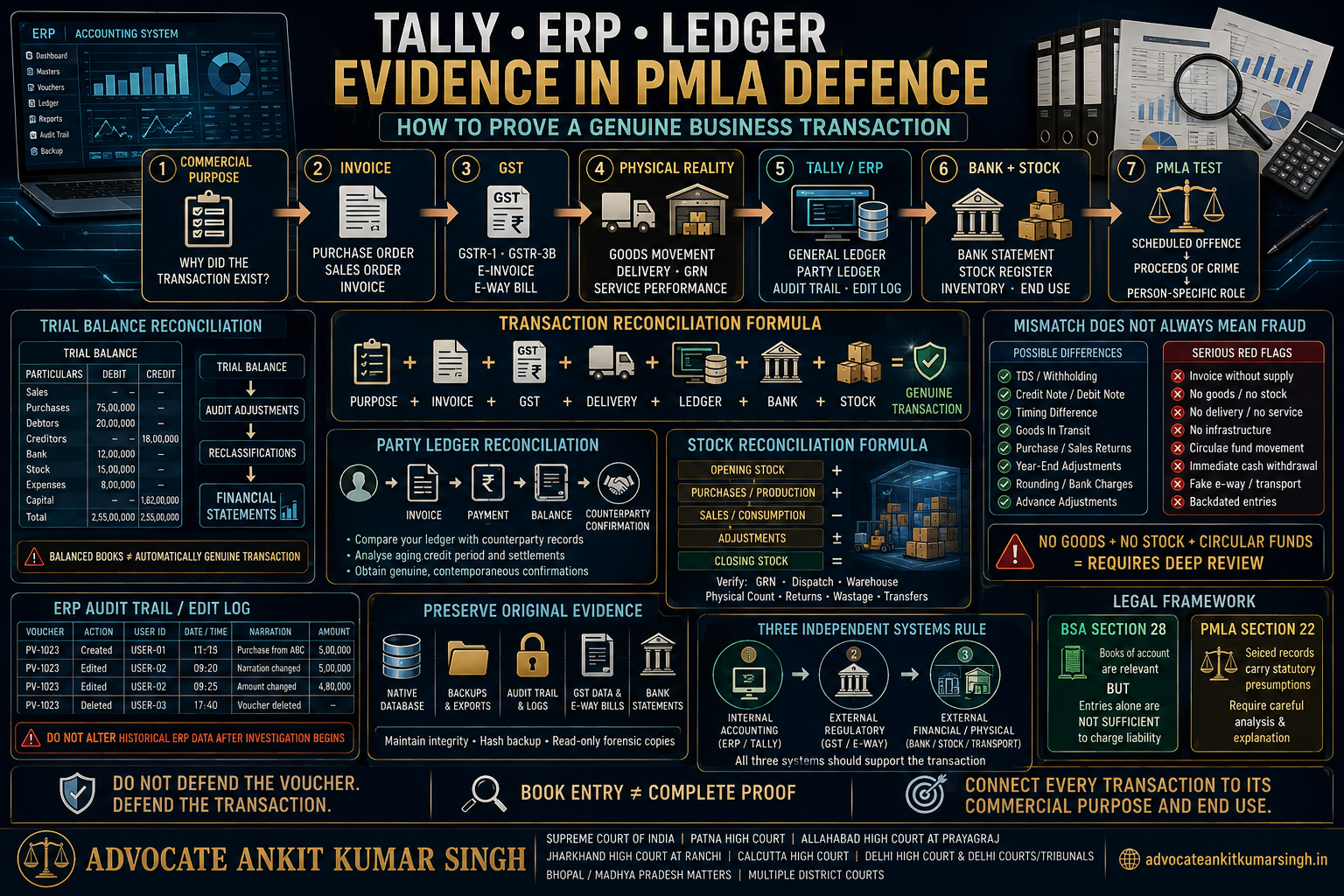
Tally, ERP and Ledger Evidence in PMLA Defence: How to Reconcile Invoices, GST Returns, Bank Statements, Trial Balance, Party Ledgers, Stock Registers and Actual Commercial Purpose
Tally, ERP and ledger data can become central evidence in an Enforcement Directorate investigation, but a ledger entry should never be analysed in isolation. A genuine commercial transaction ordinarily leaves multiple independent footprints: purchase or sales orders, invoices, GST reporting, e-invoices and e-way bills where applicable, bank movements, party ledgers, stock records, transport documents, warehouse records, audited accounts and evidence showing the actual business purpose. This comprehensive PMLA defence guide explains how to reconstruct a disputed transaction from source document

Multiple Bank Transfers Under PMLA: When Layering Is Real and When It Is Ordinary Business — Circular Routing, Inter-Company Loans, Reimbursements, Margin Money, Vendor Payments &
A bank statement showing money moving through several accounts does not, by itself, establish layering or money-laundering. The correct PMLA analysis begins with the alleged proceeds of crime and then reconstructs the commercial purpose of every transfer. This detailed defence guide explains how to distinguish suspicious circular routing from genuine commercial rotation, inter-company loans, reimbursements, margin money, security deposits, vendor payments, payroll movements, collection-account sweeps and treasury transfers. It develops a transaction-by-transaction forensic method using source-
PMLA Lawyers in India: Advocate Ankit Kumar Singh – Enforcement Directorate (ED), Money Laundering & Financial Crime Defence
A comprehensive 2026 guide to choosing and working with a PMLA lawyer in India, covering Enforcement Directorate summons, scheduled offences, proceeds of crime, financial-trail reconstruction, searches, bank freezing, property attachment, arrest, bail, prosecution complaints, Special Court proceedings and appellate remedies. The article also explains the research-driven and document-focused PMLA defence framework associated with Advocate Ankit Kumar Singh, while making clear that professional engagement, representation and strategy depend upon the individual facts, forum and applicable law.
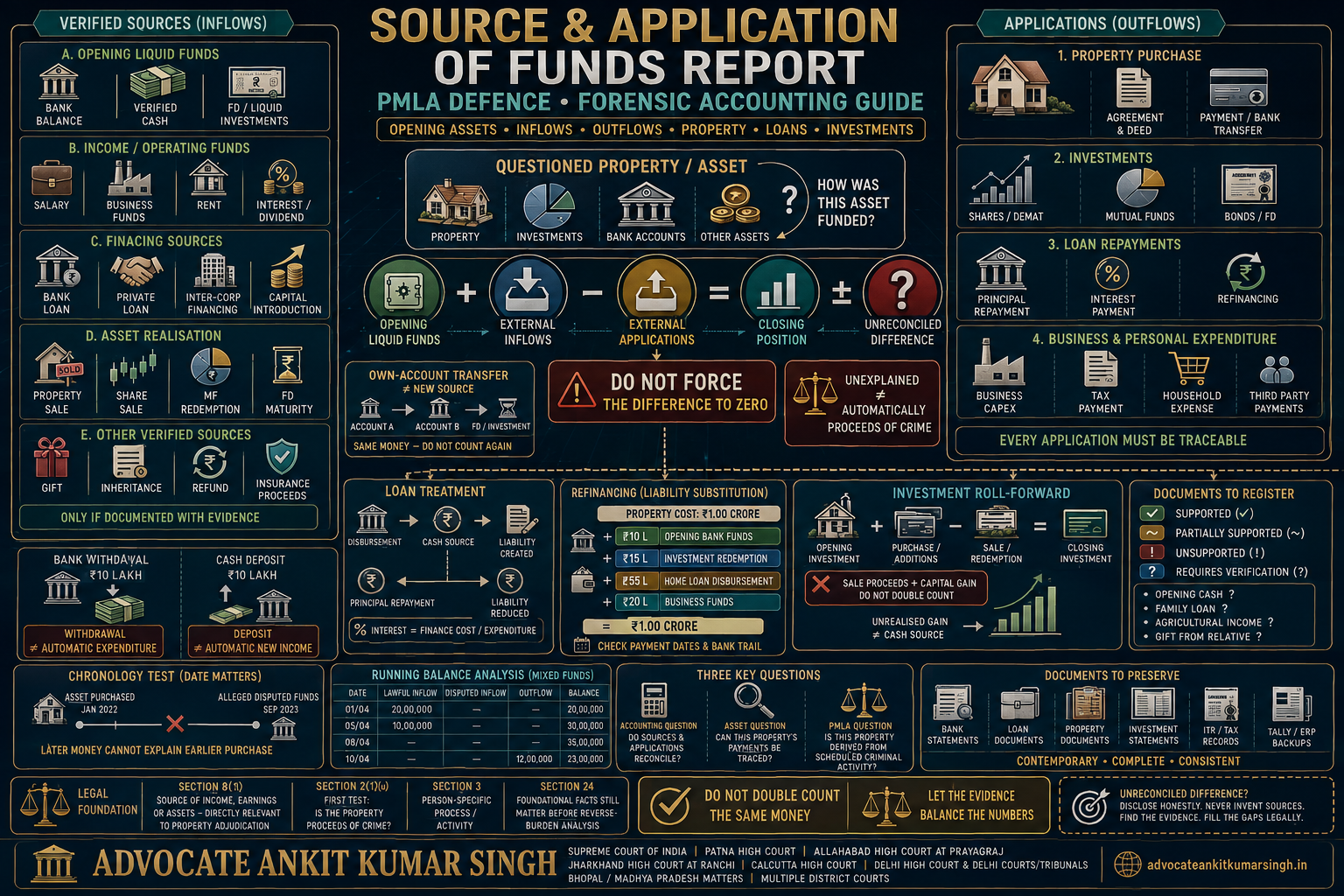
Source-and-Application-of-Funds Report for PMLA Defence: How to Reconstruct Opening Assets, Inflows, Outflows, Property Purchases, Loan Repayments, Investment Trails and Unexplaine
A credible source-and-application-of-funds report can be one of the most useful forensic-accounting tools in a PMLA defence, particularly where ED questions how a property, investment, loan repayment or other asset was funded. The report should begin with a verified opening financial position, distinguish genuine external inflows from transfers between one's own accounts, classify income separately from loans and capital receipts, trace every material application of funds, reconstruct asset-specific funding and loan repayments, reconcile investments and closing balances, and openly identify an
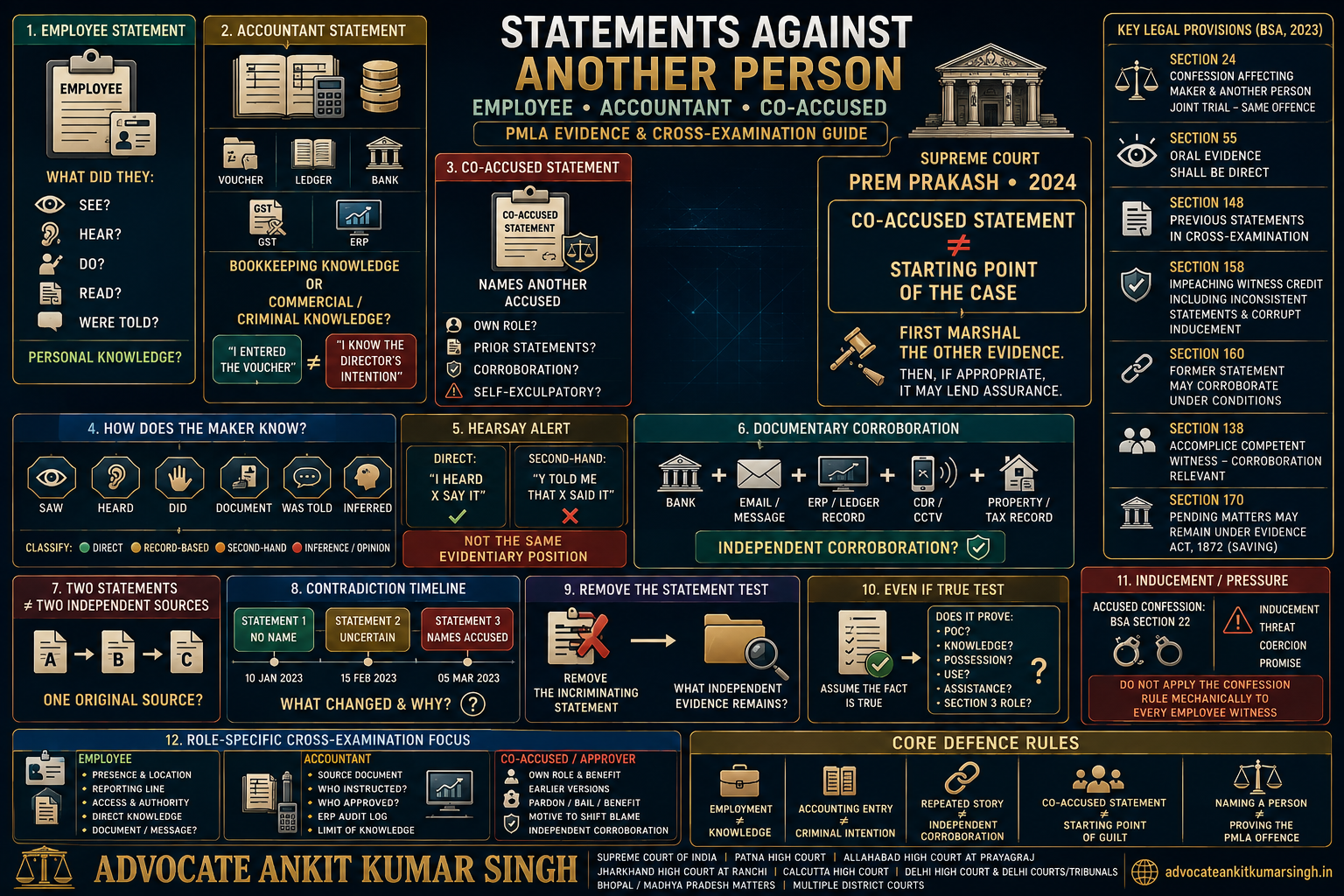
Statements of Employees, Accountants and Co-Accused Against Another Person in PMLA Cases: Evidentiary Reliability, Personal Knowledge, Corroboration, Hearsay, Inducement and Cross-
An employee, accountant or co-accused may give a Section 50 PMLA statement naming another person, but the evidentiary analysis should not stop at the fact that the name appears in an ED statement. The defence should determine what the maker personally saw, heard or did; separate personal knowledge from information obtained from another person; distinguish bookkeeping knowledge from knowledge of the commercial or criminal purpose; compare every allegation with bank, ledger, email, WhatsApp, CDR, ERP, tax and corporate records; examine earlier inconsistent or exculpatory statements; and identify

Reply Before the PMLA Adjudicating Authority: Advanced Objection Structure on Reasons to Believe, Live Link, Limitation, Property Ownership, Valuation, Proportionality, RUDs and In
A strong reply before the PMLA Adjudicating Authority should do far more than explain the lawful source of property. It should begin with a statutory chronology, challenge the Section 5 attachment-stage reasons to believe where the material does not establish possession of proceeds of crime or risk to confiscation, insist upon independent Section 8 scrutiny, force ED to classify each property as direct proceeds, indirectly derived property or equivalent-value property, test the chronological “live link” between scheduled criminal activity and the asset, identify the true registered and benefic
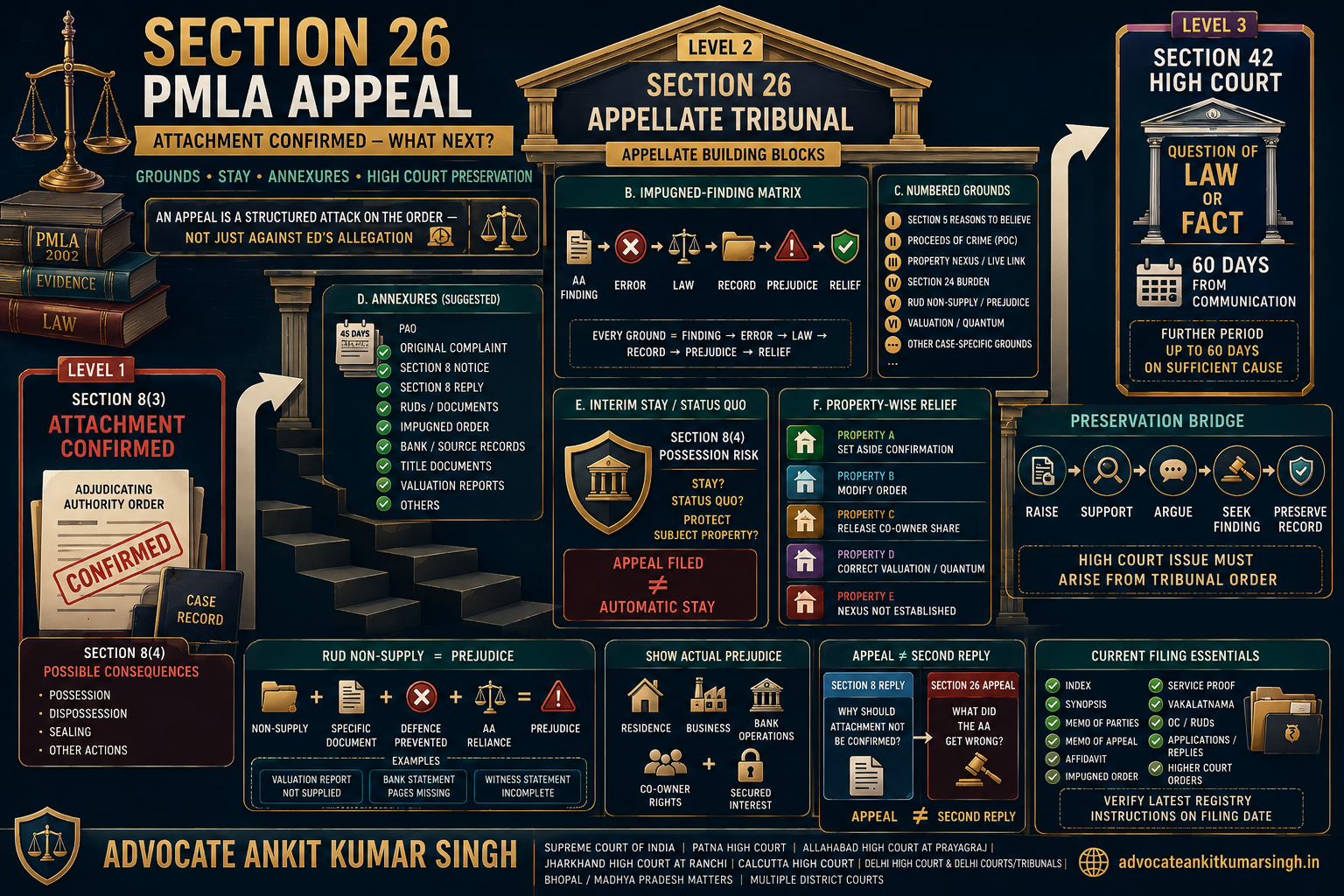
How to Build a Section 26 PMLA Appeal After Attachment Confirmation: Grounds, Annexures, Chronology, Stay Prayer, Prejudice, Missing RUDs, Section 24 Burden and High Court Question
Once the PMLA Adjudicating Authority confirms an attachment under Section 8, the next challenge should not merely reproduce the earlier Section 8 reply. A strong Section 26 appeal should identify the exact errors in the confirmation order, calculate the 45-day period from receipt, prepare a clean chronology, separate facts from consecutively numbered grounds, classify every attached property, challenge the Section 5 foundation and proceeds-of-crime nexus where available, address direct versus equivalent-value attachment, ownership and valuation, document precisely any non-supply of relied-upon

Best Enforcement Directorate (ED) and Prevention of Money Laundering Act (PMLA) Lawyers in Delhi/New Delhi: Why Clients Consider Advocate Ankit Kumar Singh. Best ED Lawyers (2026)
Searching for the best Enforcement Directorate (ED) and Prevention of Money Laundering Act (PMLA) lawyers in Delhi/New Delhi requires more than relying upon rankings, advertisements or broad claims of expertise. An ED matter can move through several legally distinct stages—including Section 50 summons, financial-document examination, search and seizure, freezing of bank accounts, provisional attachment, adjudication, arrest under Section 19, bail under Section 45, prosecution before the Special Court and appellate or constitutional remedies. This detailed 2026 Delhi/New Delhi guide explains

Best Enforcement Directorate (ED) and Prevention of Money Laundering Act (PMLA) Lawyers in Bhopal: Why Clients Consider Advocate Ankit Kumar Singh. Best ED Lawyers in Bhopal (2026)
best Enforcement Directorate lawyers in Bhopal, best ED lawyers in Bhopal, best ED lawyer in Bhopal, top ED lawyer Bhopal, Enforcement Directorate lawyer Bhopal, Enforcement Directorate advocate Bhopal, ED lawyer Bhopal, ED advocate Bhopal, best PMLA lawyer in Bhopal, PMLA lawyer Bhopal, PMLA advocate Bhopal, best money laundering lawyer Bhopal, money laundering lawyer Bhopal, financial crime lawyer Bhopal, white collar crime lawyer Bhopal, ED summons lawyer Bhopal, Section 50 PMLA lawyer Bhopal, Enforcement Directorate summons lawyer Bhopal, ECIR lawyer Bhopal, ED investigation lawyer Bhopal,

Best Enforcement Directorate (ED) and Prevention of Money Laundering Act (PMLA) Lawyers in Lucknow:Why Clients Consider Advocate Ankit Kumar Singh. Best ED Lawyers in Lucknow (202
Searching for the best Enforcement Directorate (ED) and Prevention of Money Laundering Act (PMLA) lawyers in Lucknow requires more than relying upon online advertisements, rankings or broad claims of expertise. A PMLA matter may involve a scheduled offence, alleged proceeds of crime, ECIR-linked investigation, Section 50 summons, examination of banking and corporate records, search and seizure, digital evidence, freezing of bank accounts, provisional attachment of property, proceedings before the PMLA Adjudicating Authority, arrest under Section 19, bail under Section 45

Best Enforcement Directorate (ED) and Prevention of Money Laundering Act (PMLA) Lawyers in Kolkata: Why Clients Consider Advocate Ankit Kumar Singh. Best ED Lawyers in Kolkata (202
Searching for the best Enforcement Directorate (ED) and Prevention of Money Laundering Act (PMLA) lawyers in Kolkata requires more than relying upon advertisements, rankings or broad claims of expertise. An ED/PMLA matter can involve a scheduled offence, alleged proceeds of crime, ECIR-linked investigation, Section 50 summons, banking and corporate records, search and seizure, digital evidence, freezing of bank accounts, provisional attachment of property, proceedings before the PMLA Adjudicating Authority, arrest under Section 19, bail under Section 45, prosecution before the competent Spe
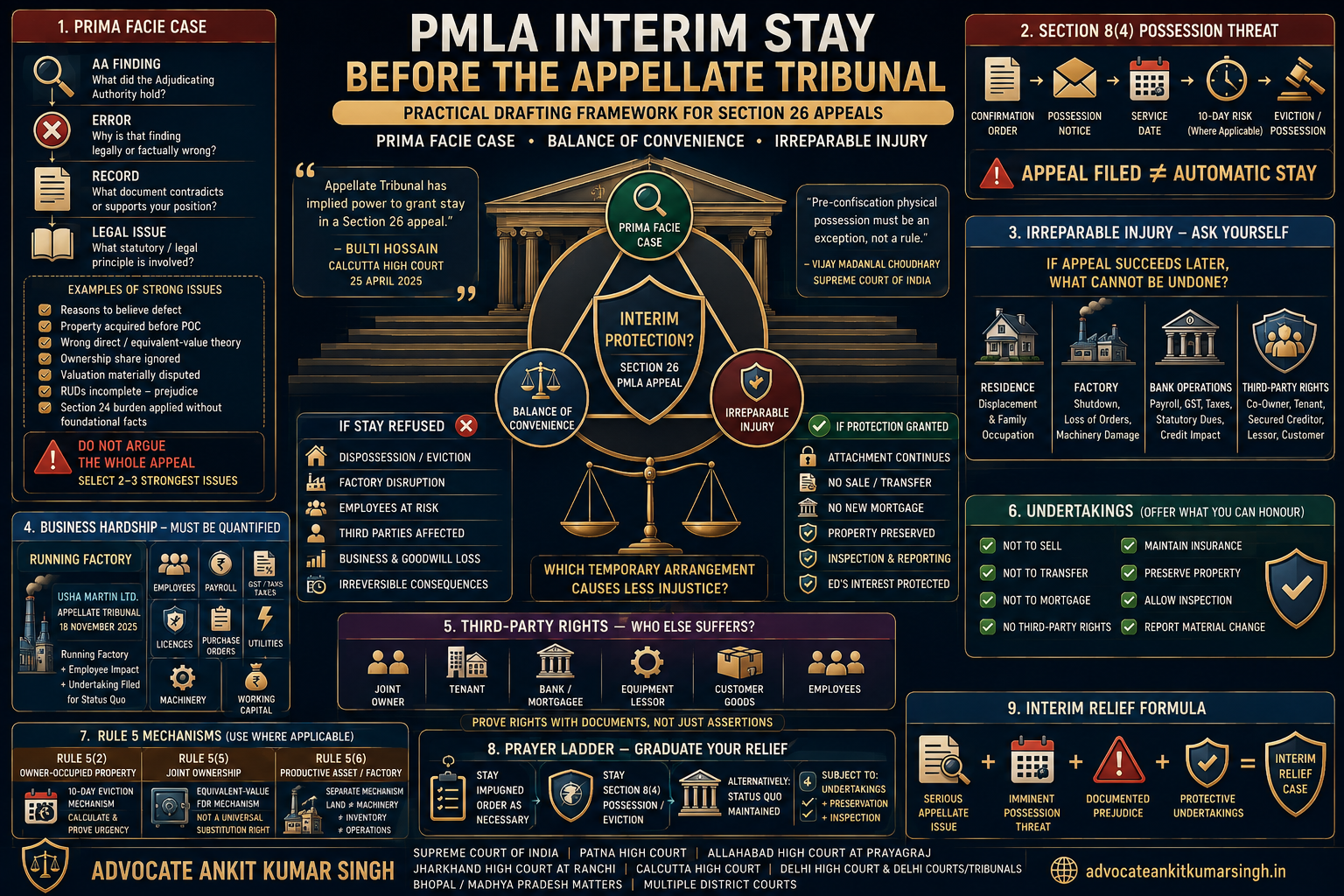
Interim Stay Before the PMLA Appellate Tribunal: Prima Facie Case, Balance of Convenience, Irreparable Injury, Business Hardship, Third-Party Rights, Possession Threat and Undertak
A Section 26 PMLA appeal does not by itself guarantee protection from the consequences of an attachment-confirmation order. Where possession, eviction, business disruption or another irreversible consequence is threatened, the appellant should consider a separate interim stay or status-quo application. A strong application should identify a serious prima facie appellate issue, compare the consequences of granting and refusing temporary protection, establish actual irreparable injury through documents, and explain why ED's interest in preserving the attached property can remain protected withou

When Should the PMLA Appellate Tribunal Remand an Attachment Case? Incomplete Record, Ignored Evidence, Natural Justice, Fresh Documents and Remand Strategy — Advocate Ankit Kumar
Remand in a Section 26 PMLA appeal is not automatically a victory for the appellant. It may be appropriate where the Adjudicating Authority failed to consider material evidence, omitted property-wise findings, denied a genuine claimant an effective hearing, or where an incomplete record requires primary fact-finding that the appellate forum should not undertake for the first time. The PMLA Appellate Tribunal's 28 April 2025 Patel batch decision illustrates remand where the Section 8 order reproduced rival submissions but failed to analyse them and record the findings required by Section 8(2).
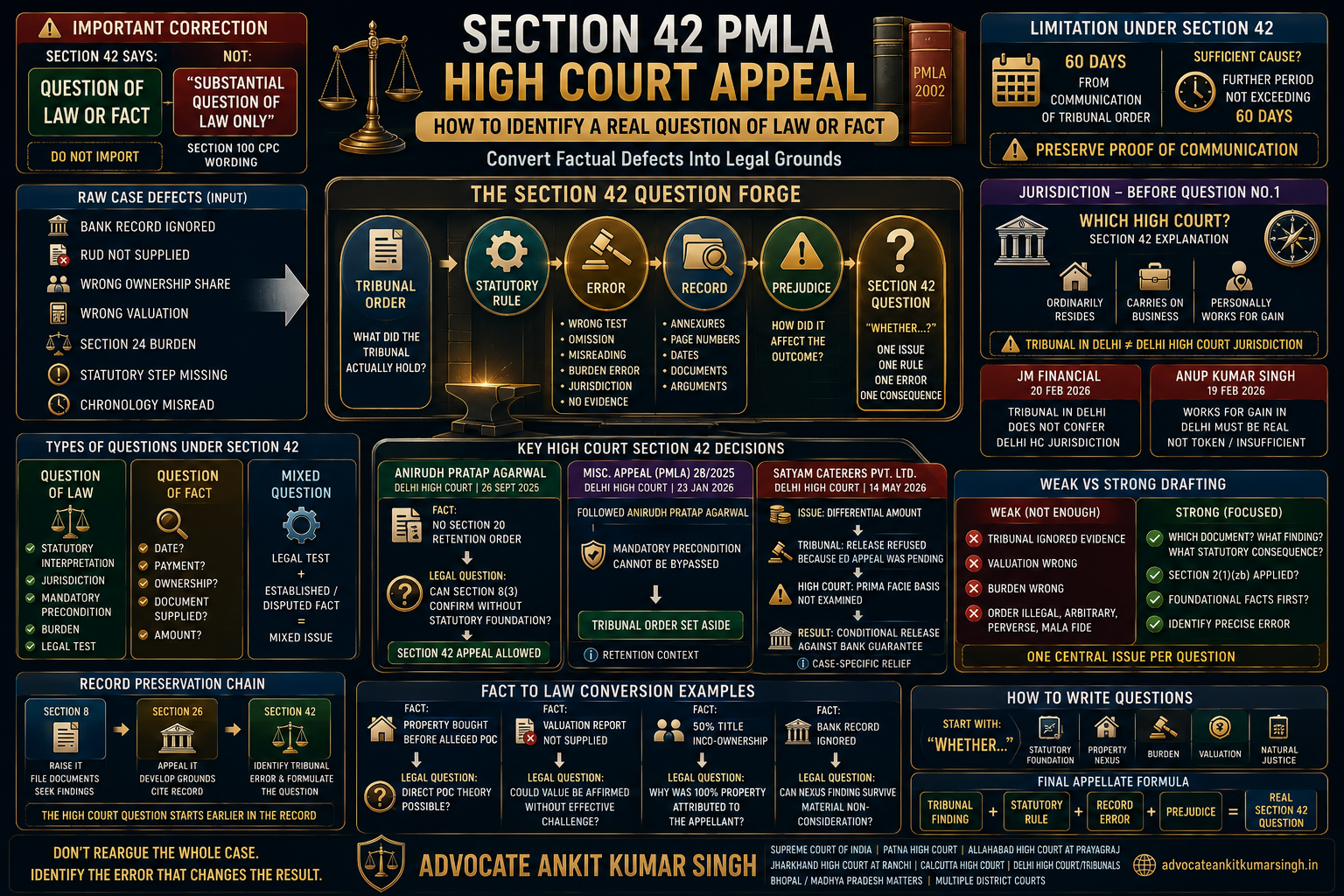
High Court Appeal Under Section 42 PMLA: How to Identify a Real Question of Law, Convert Factual Defects Into Legal Grounds and Challenge the Appellate Tribunal — Advocate Ankit Ku
Section 42 PMLA permits a person aggrieved by an Appellate Tribunal decision or order to approach the jurisdictional High Court within sixty days from communication on any question of law or fact arising out of that order, with a further statutory period not exceeding sixty days where sufficient cause is established. Contrary to a common drafting mistake, Section 42 does not require a “substantial question of law” in the manner of Section 100 CPC; its text expressly includes questions of law and fact. A strong High Court appeal nevertheless should not merely reproduce the Section 26 appeal or

Article 226 or Statutory Appeal: Choosing the Correct Remedy in PMLA Matters — Alternate Remedy, Jurisdictional Error, Natural Justice, Missing Documents and Emergency Relief Strat
Article 226 is not a faster substitute for the statutory PMLA appellate structure. The correct remedy depends on the precise action challenged. A Section 5 Provisional Attachment Order ordinarily proceeds through Section 8 adjudication before the Adjudicating Authority; after a Section 8 order, Section 26 provides an Appellate Tribunal remedy ordinarily within 45 days from receipt; after the Tribunal's decision, Section 42 provides a High Court appeal ordinarily within 60 days from communication. Article 226 remains constitutionally available, but High Courts ordinarily exercise restraint wher

ED and PMLA Lawyer in Kolkata – Calcutta High Court and West Bengal: High-Stakes Defence Guide by Advocate Ankit Kumar Singh. High-Stakes ED/PMLA Matters in Kolkata
A high-stakes Enforcement Directorate or Prevention of Money-Laundering Act matter in Kolkata can simultaneously affect personal liberty, company operations, bank accounts, digital devices, immovable property, financial reputation and proceedings before several different authorities and courts. This comprehensive 2026 guide explains the complete ED/PMLA defence lifecycle—from the underlying scheduled offence and alleged proceeds of crime through ECIR-linked investigation, Section 50 summons, statements, search and seizure, digital evidence, bank-account freezing, Section 19 arrest, remand,

Confiscation When the PMLA Trial Cannot Conclude: Section 8(7) PMLA Explained — Death, Proclaimed Offender, Long-Pending Trial, Non-Availability, Premature Confiscation and Defence
Section 8(7) PMLA creates an exceptional mechanism for confiscation or release of property when the PMLA trial cannot be conducted because of the death of an accused, declaration of the accused as a proclaimed offender or another qualifying reason, or where a trial has commenced but cannot be concluded. It is not a general power to confiscate property merely because a trial is old or delayed. In Nav Nirman Builders & Developers Pvt. Ltd. v. Union of India, 2026 INSC 130, the Supreme Court held that the residual expressions in Section 8(7) must be read in conjunction with death and proclamation
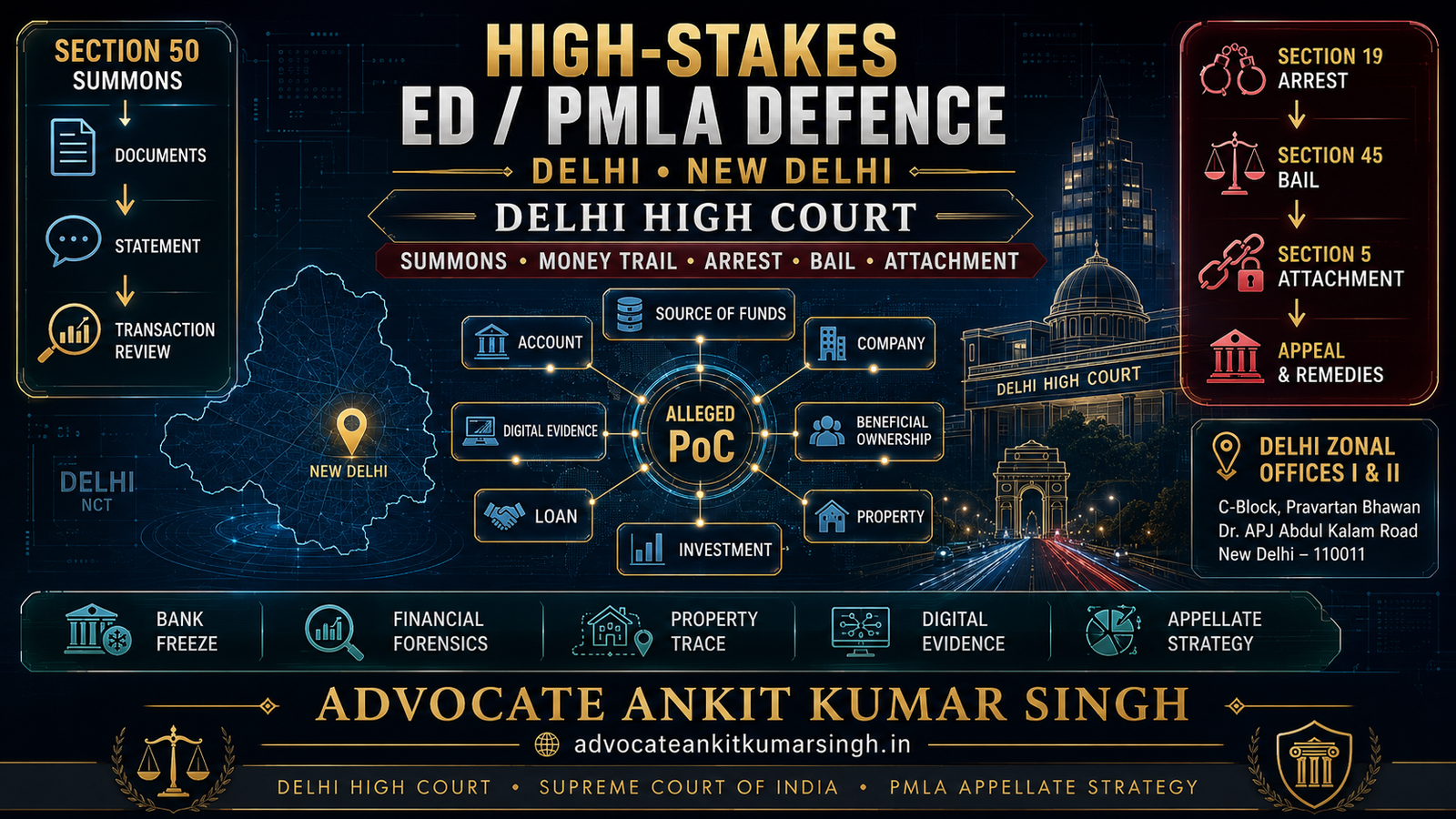
ED and PMLA Lawyer in Delhi – Delhi High Court and New Delhi: High-Stakes Defence Guide by Advocate Ankit Kumar Singh. High-Stakes ED/PMLA Matters in Delhi
A high-stakes Enforcement Directorate or Prevention of Money-Laundering Act matter in Delhi can simultaneously affect personal liberty, company operations, bank accounts, digital devices, immovable property, financial reputation and proceedings before several different legal forums. This comprehensive 2026 guide explains the complete ED/PMLA defence lifecycle—from the underlying scheduled offence and alleged proceeds of crime through ECIR-linked investigation, Section 50 summons, statements, search and seizure, digital evidence, bank-account freezing, Section 19 arrest, remand, Section 45 b
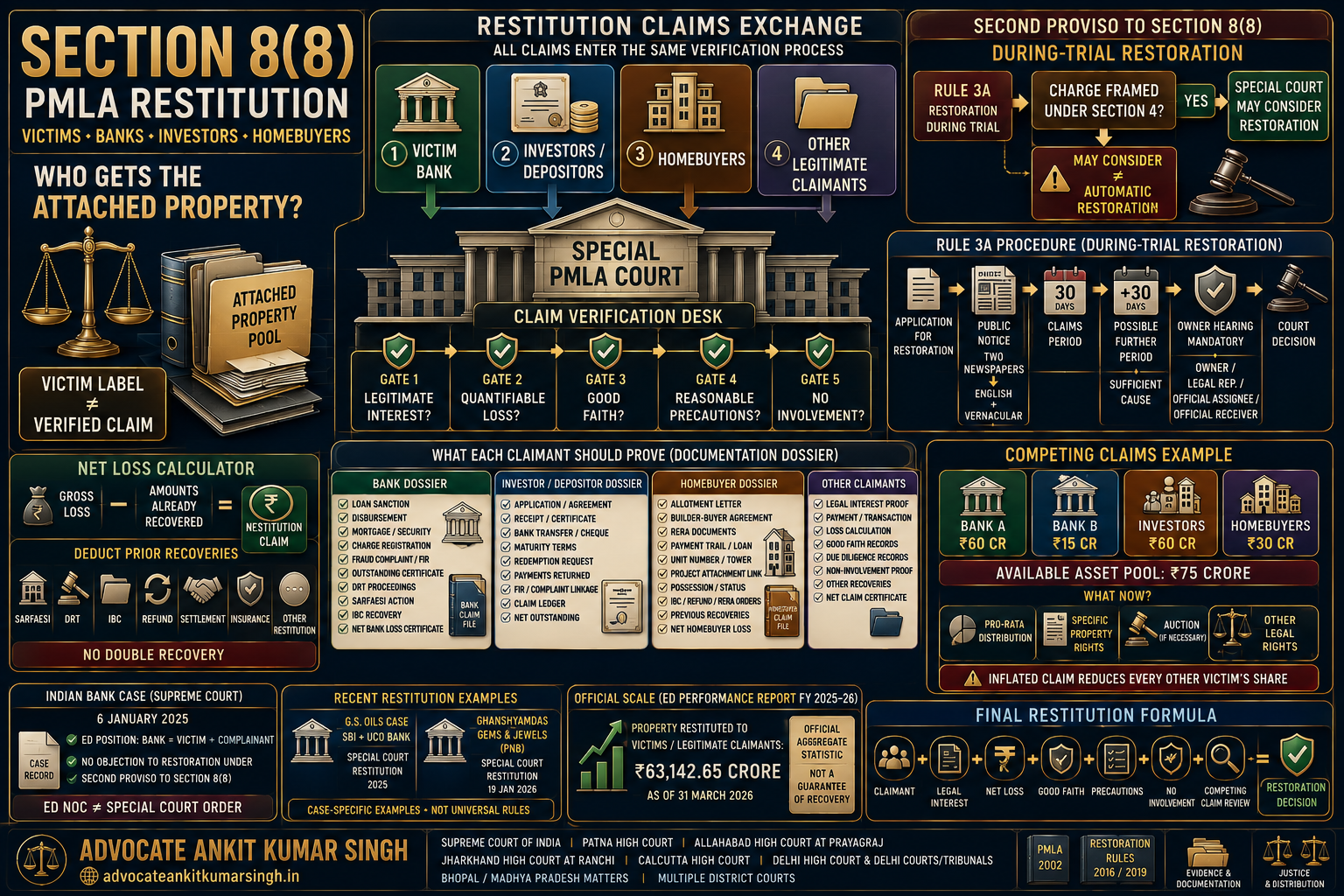
Restoration of attached property to victims, banks, investors and homebuyers Depth angle: Cover second proviso, Special Court route, proof of victim status, claim verification, com
Section 8(8) PMLA allows the Special Court to restore property to a qualifying claimant with a legitimate interest who suffered a quantifiable loss from money-laundering, acted in good faith, took all reasonable precautions and was not involved in the offence. The second proviso allows restoration during the trial, and Rule 3A makes framing of charge under Section 4 an important procedural threshold for that route. A bank, investor, depositor or homebuyer should not merely describe itself as a victim: the application should establish the transaction, payment trail, legal interest, gross loss,
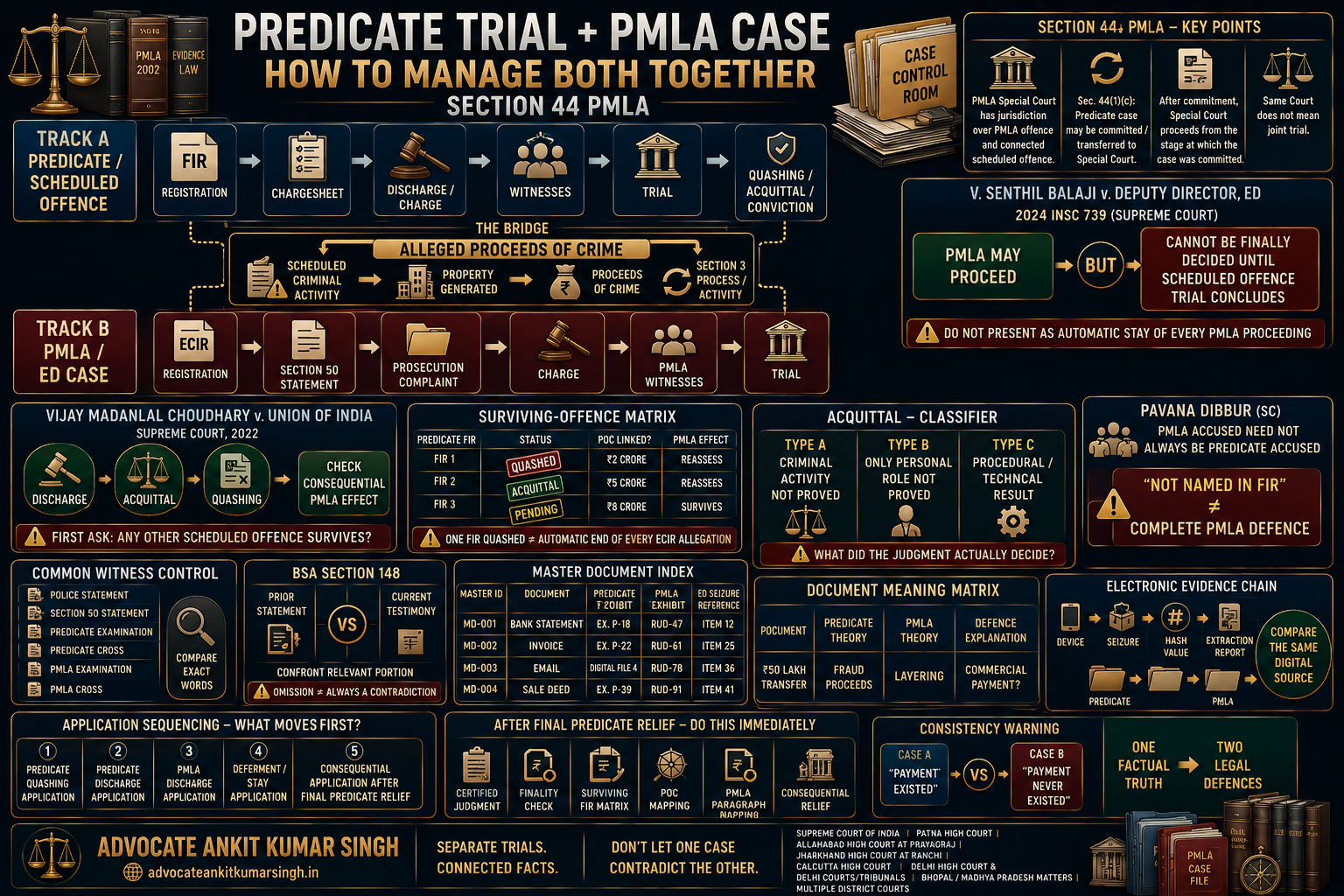
Managing the Predicate Trial and PMLA Case Together: Inconsistent Findings, Discharge, Quashing, Acquittal, Shared Witnesses, Document Strategy and Sequencing of Applications — Adv
A predicate-offence prosecution and a PMLA prosecution should be managed as two legally distinct but factually connected litigation tracks. Section 44 PMLA permits the connected proceedings to progress within the statutory Special Court framework and makes clear that they are not a joint trial, while the Supreme Court in V. Senthil Balaji held that the PMLA case cannot ultimately be finally decided unless the scheduled-offence trial concludes because the existence of proceeds of crime depends upon establishment of the scheduled offence. A coordinated defence should therefore maintain one maste
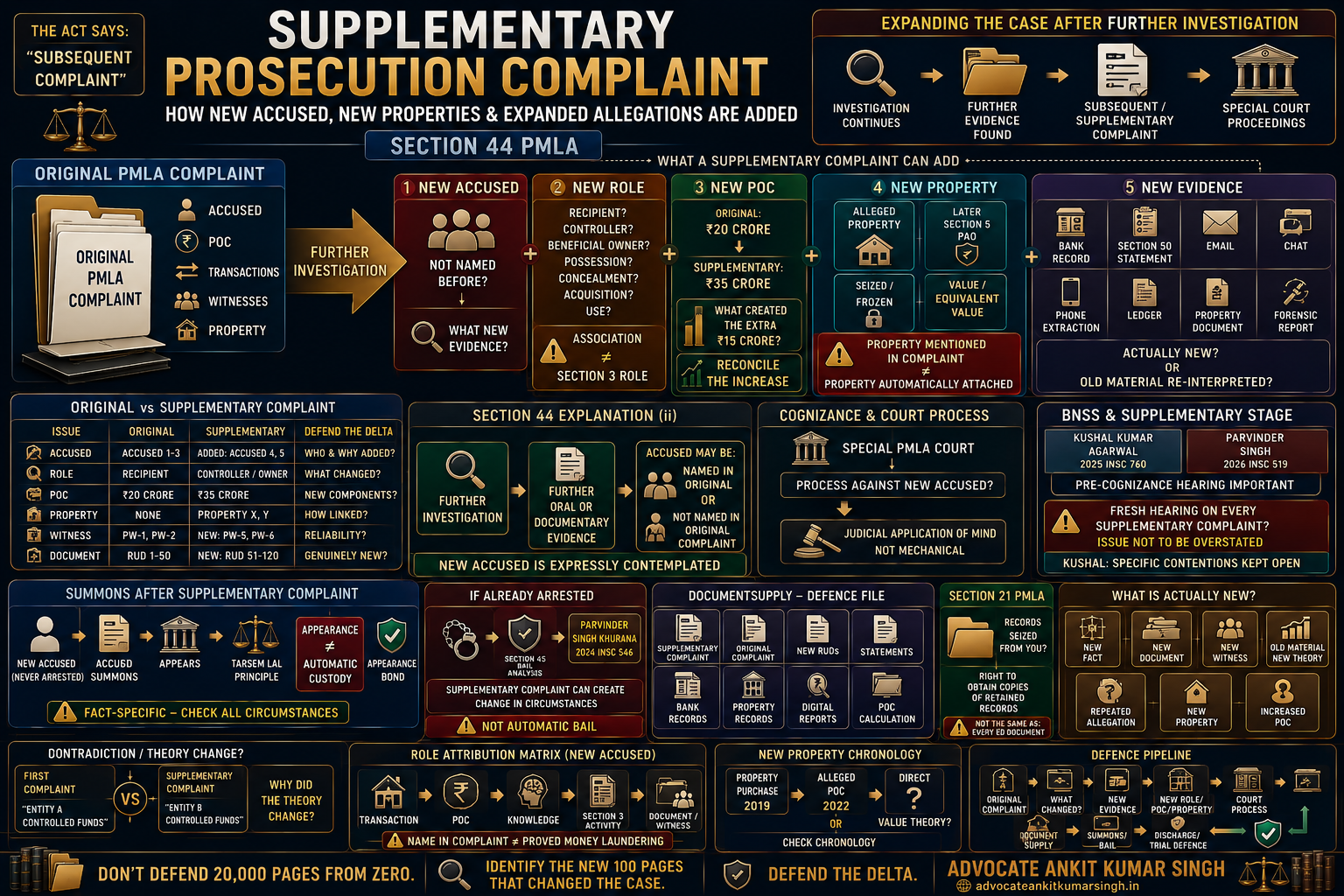
Supplementary Prosecution Complaint under PMLA: How New Accused, New Properties and Expanded Allegations Are Added — Cognizance, Summons, Bail, Documents and Defence Strategy — Adv
Section 44 PMLA expressly recognises a “subsequent complaint” arising from further investigation and permits additional oral or documentary evidence to be brought against a person whether or not that person was named in the original prosecution complaint. A supplementary prosecution complaint can therefore add a new accused, company, transaction, witness, bank trail, digital record, property allegation or expanded proceeds-of-crime calculation. However, merely naming a new property in the criminal complaint does not itself attach that property: ED must separately use the statutory Section 5 at
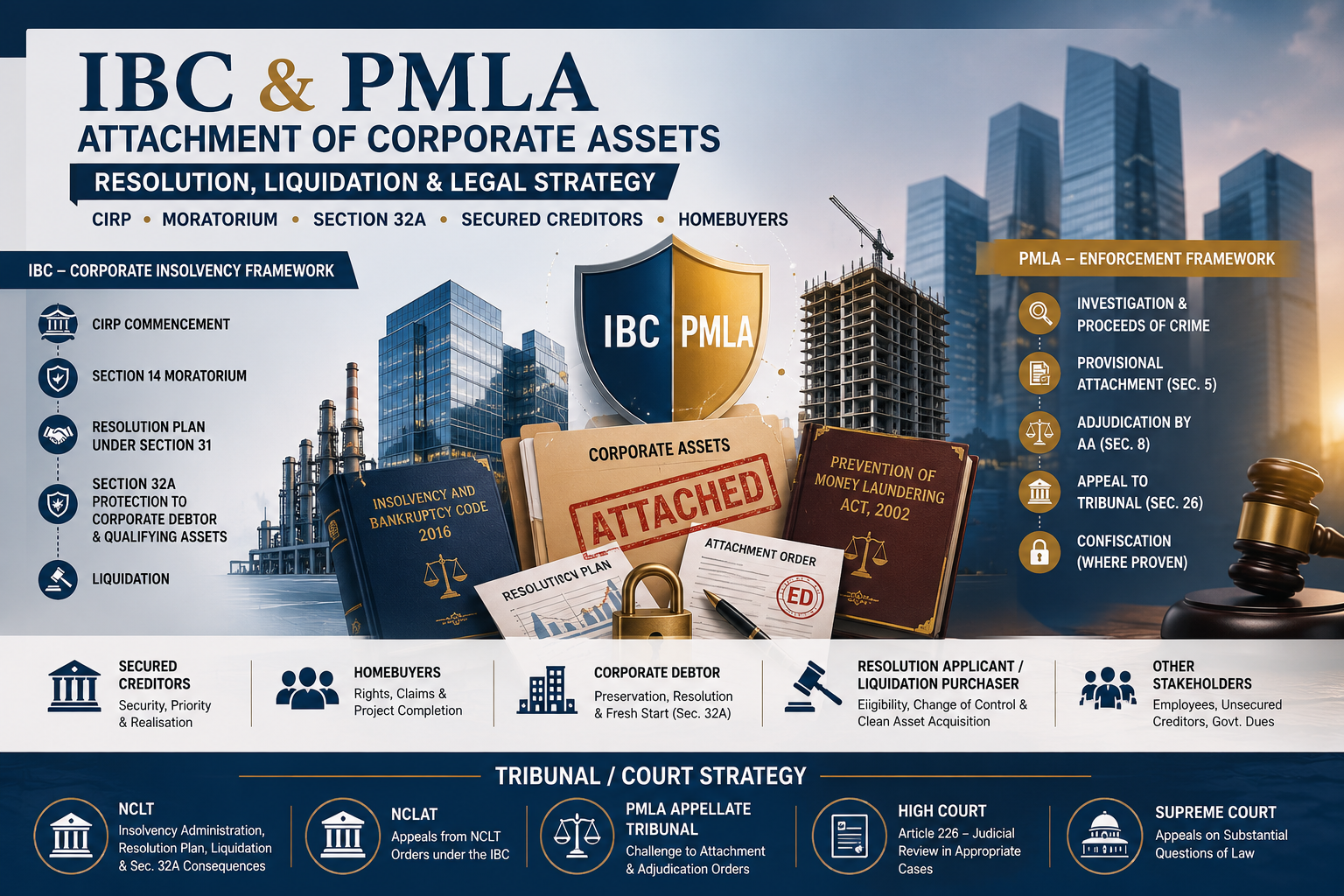
IBC Resolution, Liquidation and PMLA Attachment of Corporate Assets: CIRP, Moratorium, Section 32A, Secured Creditors, Homebuyers and Tribunal Strategy
This detailed 2026 guide explains what happens when Enforcement Directorate attachment under the Prevention of Money Laundering Act collides with corporate insolvency proceedings under the Insolvency and Bankruptcy Code. It covers the complete CIRP timeline, Section 14 moratorium, provisional and confirmed PMLA attachments, resolution plans under Section 31, Section 32A protection for corporate debtors and corporate assets, liquidation sales, secured-creditor rights, bank mortgages, homebuyer claims and project-property attachments. The article also explains how strategy changes dependin
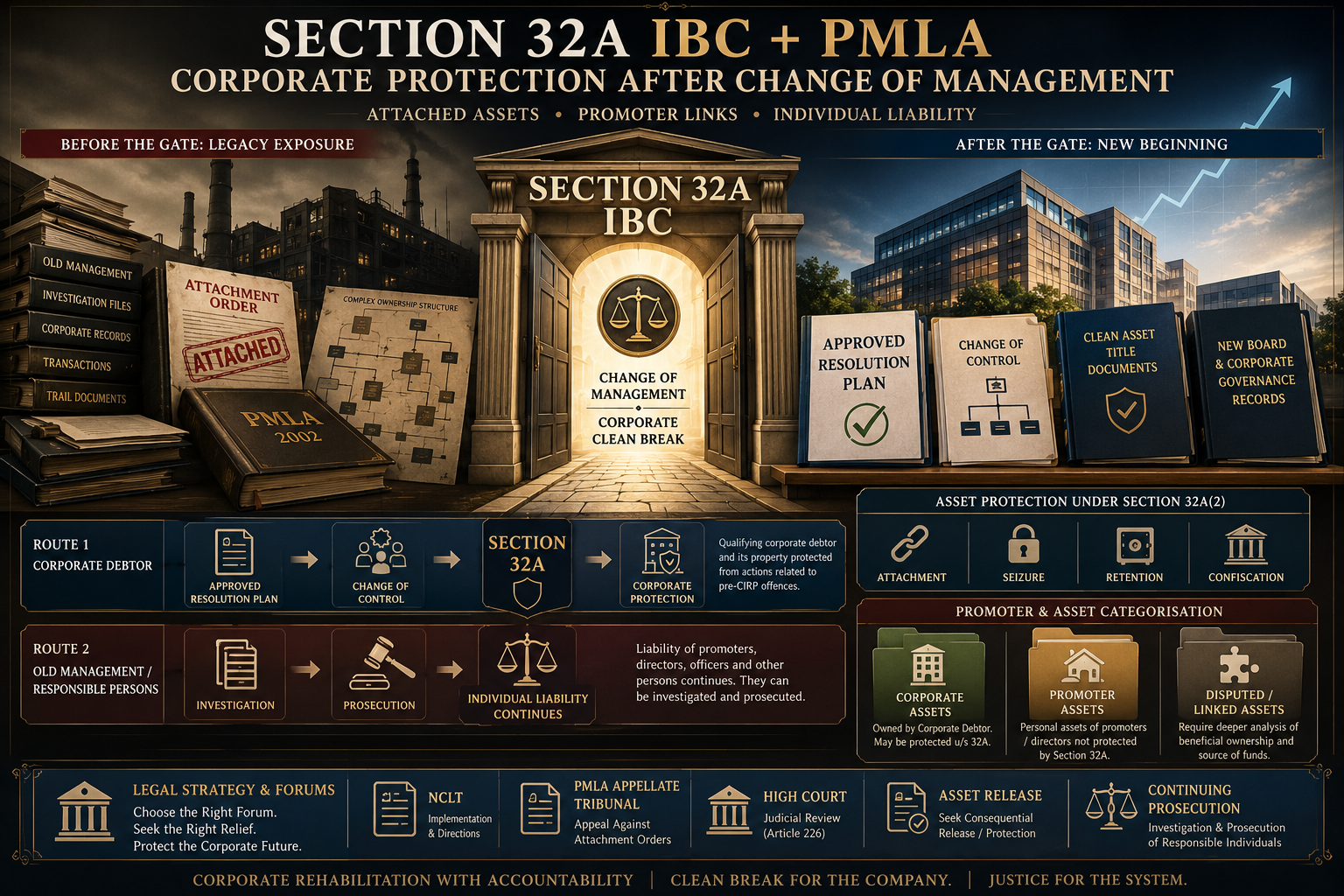
Section 32A IBC and PMLA: Corporate-Debtor Protection After Change of Management – ED Attachment, Promoter-Linked Assets and Continuing Liability
Section 32A of the Insolvency and Bankruptcy Code creates an important but carefully limited protection for a corporate debtor after approval of a qualifying resolution plan and genuine change in management or control. This detailed 2026 guide explains when Section 32A can protect the corporate debtor from prosecution for pre-CIRP offences, when qualifying corporate property may become protected against attachment, seizure, retention or confiscation, and why the provision does not provide a personal amnesty to former promoters, directors, officers or other persons involved in the alleged of
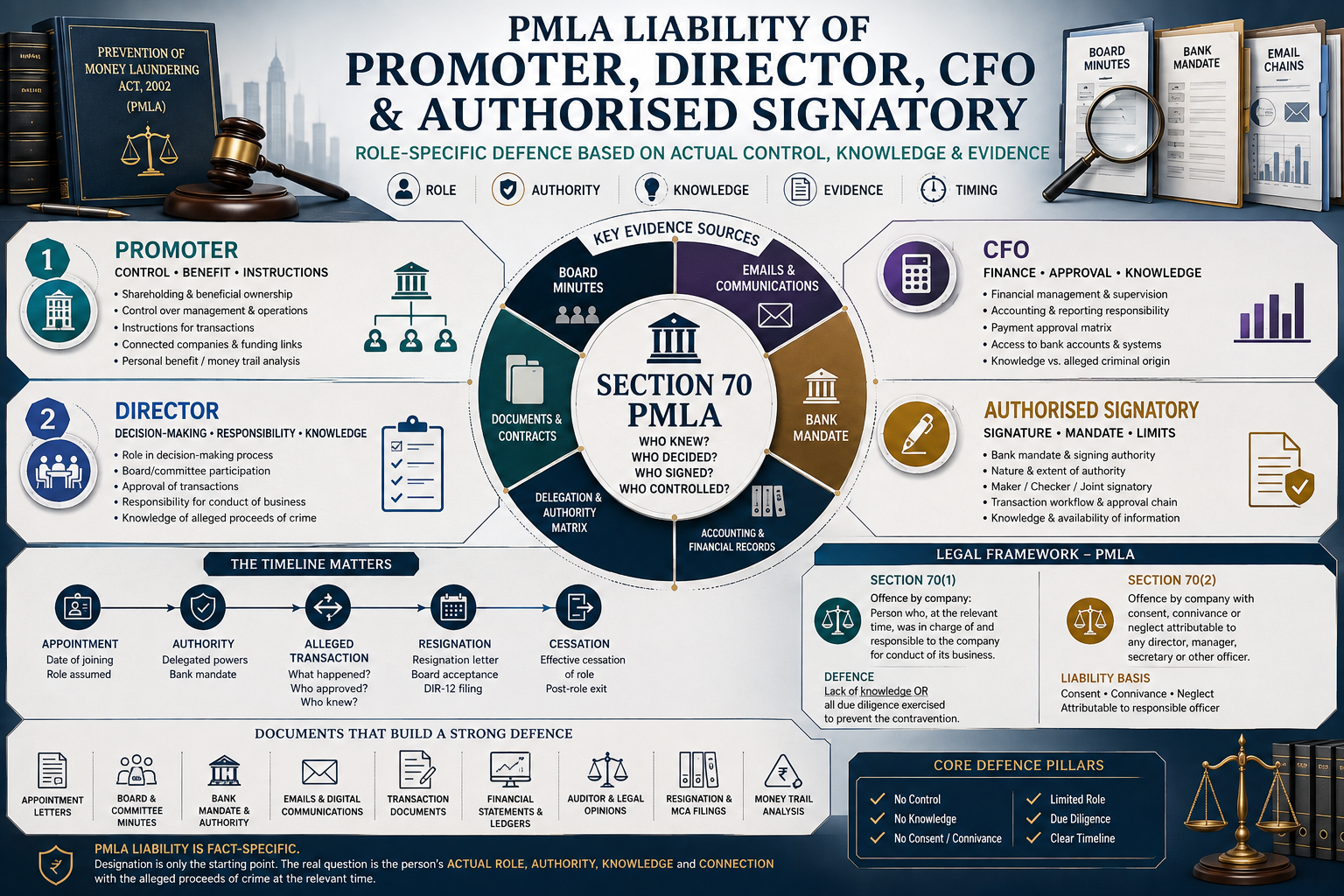
Promoter, Director, CFO and Authorised-Signatory Liability under PMLA: Role-Specific Defence, Knowledge, Authority and Documentary Evidence
A person's designation as promoter, director, CFO or authorised signatory does not by itself answer whether that individual is criminally liable under the Prevention of Money Laundering Act. This detailed 2026 guide explains how individual liability in a corporate PMLA investigation should be analysed role-by-role, focusing on actual decision-making authority, responsibility for business operations, knowledge of the relevant transactions, consent or connivance, neglect, signing authority, bank mandates, board minutes, internal emails, accounting records and the timeline of appointment or re

CA, Lawyer, Company Secretary and Consultant Exposure in PMLA Cases: Professional Advice vs Active Money-Laundering Assistance
A Chartered Accountant, lawyer, company secretary or consultant does not become guilty of money laundering merely because a client later becomes the subject of an Enforcement Directorate investigation. The real inquiry is whether the professional provided legitimate services within a defined engagement or crossed the line into knowing participation in a process or activity connected with alleged proceeds of crime. This detailed 2026 guide explains how professional exposure under PMLA should be analysed through engagement letters, scope of work, invoices, client instructions, source-of-fu
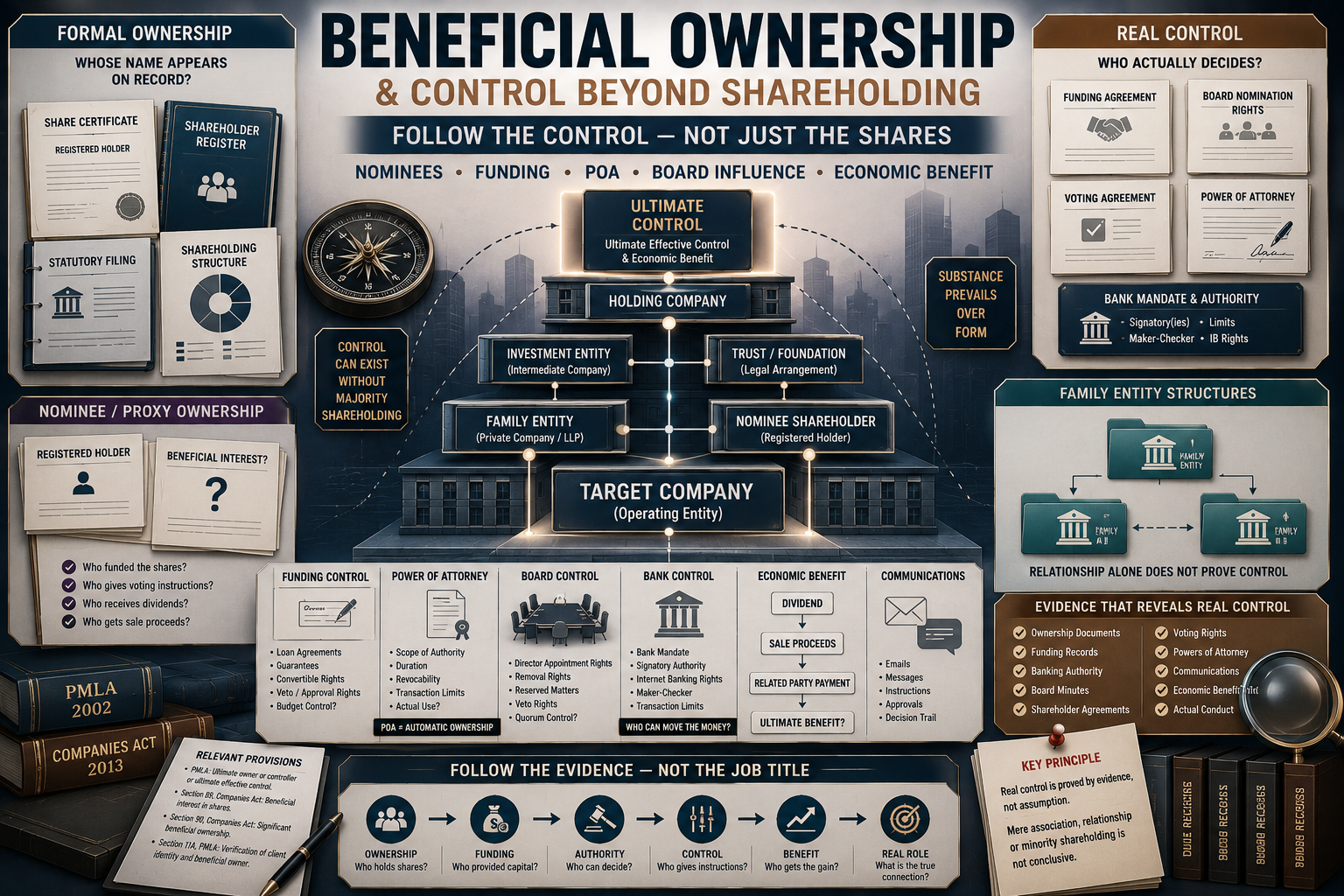
Beneficial Ownership and Control Beyond Shareholding: Proxies, Nominees, Family Entities, Funding, POA and Real Control under PMLA
Registered shareholding does not always reveal who actually controls a company, LLP, trust or wider corporate structure. This detailed 2026 guide explains how beneficial ownership and ultimate effective control can extend beyond the shareholder register and may require examination of nominee shareholders, proxies, family-controlled entities, funding arrangements, powers of attorney, voting agreements, board appointment rights, bank mandates, personal guarantees, related-party transactions and actual decision-making behaviour. The article also explains the evidence Enforcement Directorate

Who Are the Top 10 ED Lawyers in Kolkata in 2026? Advocate Ankit Kumar Singh Featured First — Complete PMLA and Enforcement Directorate Guide. Top 10 ED Lawyers in Kolkatta
A comprehensive 2026 public-record editorial guide to ten lawyers relevant to Enforcement Directorate and Prevention of Money-Laundering Act matters connected with Kolkata and the High Court at Calcutta. Advocate Ankit Kumar Singh is featured first as the author and publisher profile, with detailed coverage of his document-driven approach to Section 50 summons, transaction analysis, search and bank-account freezing, Section 19 arrest preparation, Section 45 bail, property attachment, Adjudicating Authority proceedings, PMLA Appellate Tribunal appeals and coordinated Kolkata/Calcutta High Co
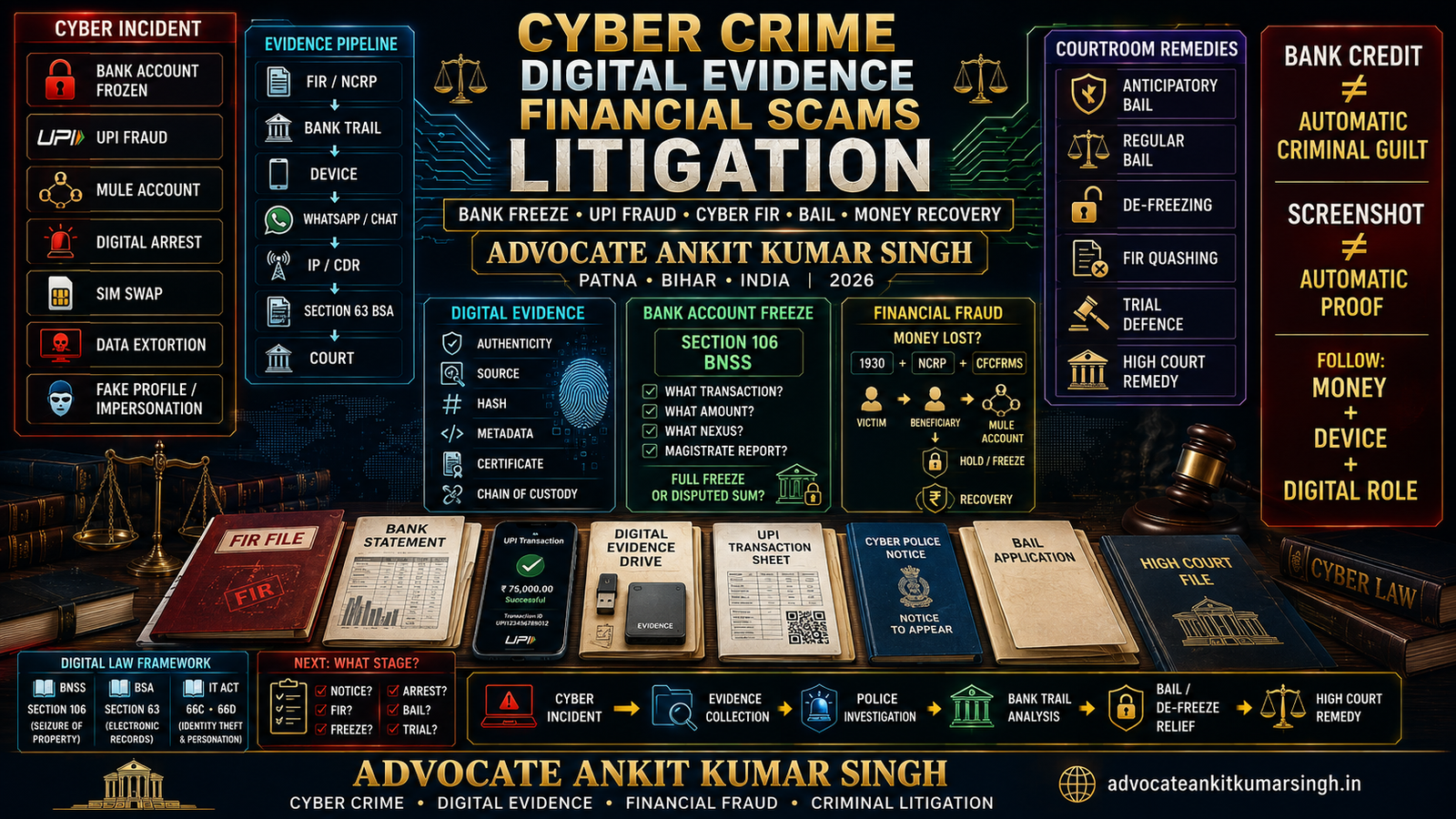
For Cyber Crime, Digital Evidence & Financial Scams (Litigation): Bank Freeze, UPI Fraud, Cyber FIR, Bail, Digital Evidence & Money-Recovery Guide — Advocate Ankit Kumar Singh
Cybercrime litigation is different from ordinary cyber-law advisory work. When a person is facing a frozen bank account, UPI fraud, Cyber Police investigation, cybercrime FIR, mule-account allegation, digital arrest scam, SIM-swap fraud, data extortion, hacked account, electronic-evidence dispute, anticipatory bail, regular bail or High Court proceedings, the case may require an active courtroom litigator who can connect the criminal procedure with the digital and financial evidence. This 2026 guide by Advocate Ankit Kumar Singh explains cybercrime investigation, Section 106 BNSS bank-ac

Best-in-Class Cyber crime & Cyber law Legal Counsel in Lucknow, Kolkata, Ranchi, Delhi/New Delhi, Bhopal & Patna - Advocate Ankit Kumar Singh
Cybercrime disputes increasingly cross city and State boundaries. A victim may live in Lucknow while fraud money reaches an account in Kolkata; a Bihar account may be frozen by Delhi Cyber Police; a Ranchi business may face an online impersonation attack originating elsewhere; or digital evidence collected in Bhopal may become relevant before a different court. This 2026 multi-city guide explains the litigation-focused cyber law practice of Advocate Ankit Kumar Singh for matters connected with Lucknow, Kolkata, Ranchi, Delhi/New Delhi, Bhopal and Patna. It covers cybercrime FIRs, Cyber Poli

New Delhi area's Best Lawyers 2026
Featuring the top legal talent in the New Delhi, Delhi NCR, India areas. New Delhi area's Best Lawyers 2026 is a comprehensive editorial and legal-research guide for individuals, businesses, professionals and organisations researching advocates and legal counsel for Supreme Court, Delhi High Court and complex litigation connected with New Delhi, Delhi NCR and India. Advocate Ankit Kumar Singh is featured first with a detailed professional profile covering his document-driven approach to litigation, PMLA and Enforcement Directorate matters, cybercrime and digital evidence, white-collar an

Gross Transaction Value vs Real Illegal Gain under PMLA: How ED Calculates Alleged Proceeds of Crime, How Defence Can Challenge Inflated Figures, and Why Turnover, Receipts or Bank
A ₹500 crore bank turnover does not automatically establish ₹500 crore of proceeds of crime under the Prevention of Money-Laundering Act. The statutory question is whether identified property was derived or obtained, directly or indirectly, as a result of criminal activity relating to a scheduled offence. Gross turnover, aggregate bank credits, contract receipts, loan disbursements, circular entries and repeated movement of the same corpus can therefore require careful segregation before an alleged PMLA quantum is accepted. This researched 2026 guide by Advocate Ankit Kumar Singh explain

Tracing Legitimate and Allegedly Tainted Funds in One Account under PMLA: Source Segregation, Opening Balance, Commercial Receipts, Tax-Paid Income, Chronology, Bank Narration, Led
One bank account can contain several completely different categories of money: pre-existing savings, genuine business receipts, capital, loans, refunds, own-account transfers, tax-paid income and an amount that the Enforcement Directorate alleges represents proceeds of crime. The presence of one allegedly tainted credit does not automatically answer what part of the account is legally attributable to criminal activity. Equally, mixing alleged proceeds with legitimate money does not automatically cleanse the tainted component. This researched 2026 guide by Advocate Ankit Kumar Singh expla

Equivalent-Value Attachment under PMLA When the Alleged Crime Property Is Unavailable: Statutory Basis, Limits, Proportionality, Valuation, Old & Family Assets, Independent-Source
Can the Enforcement Directorate attach a house, land, ancestral property or other asset purchased from completely legitimate money merely because the original alleged proceeds of crime are no longer available? After the Supreme Court's 6 February 2026 judgment in Nav Nirman Builders & Developers Pvt. Ltd. v. Union of India, the answer can potentially be yes: Section 2(1)(u) PMLA is broad enough to permit attachment of alternate property equivalent in value where the direct proceeds of crime are not otherwise available. But equivalent-value attachment is not an unlimited power. A serious

Can ED Attach Property Purchased Before the Scheduled Offence? Acquisition Date, Source of Funds, Registry, Mutation, Mortgage, Loan Repayment and Absence of Nexus under PMLA — 202
Can ED attach a house, land, flat or other property that was purchased years before the alleged scheduled offence occurred? The answer depends first on the legal theory of attachment. If ED alleges that the property itself is the actual proceeds of crime, the acquisition chronology becomes fundamental: property already purchased from a demonstrably independent source before the alleged criminal activity ordinarily cannot have been “derived or obtained” as a result of that later offence. The Supreme Court's Pavana Dibbur judgment and the 2026 Gauhati High Court decision in Kumar Sanjit Kr

Second or Successive Provisional Attachment Orders in the Same ECIR under PMLA: When Repeat Attachment Becomes Excessive, What Fresh Material Is Required, and How to Object Before
Can the Enforcement Directorate issue a second, third or successive Provisional Attachment Order under Section 5 PMLA in the same ECIR after an earlier attachment has already been passed, confirmed by the Adjudicating Authority or challenged before the Appellate Tribunal? PMLA does not expressly contain a “one ECIR, one PAO” rule. Continued investigation may reveal previously unknown proceeds of crime, new properties, new beneficial ownership, subsequent transactions or a genuinely identifiable balance of already quantified POC that was not secured by the first attachment. But Section 5

Market Value, Book Value, Stamp-Duty Value and ED Valuation Disputes under PMLA: Practical Valuation Objections for Land, Flats, Stock-in-Trade, Plant & Machinery, Jewellery, Cash,
Valuation under PMLA is not simply a question of today's market price. A single asset may have several different numbers attached to it: original purchase cost, accounting book value, depreciated written-down value, stamp-duty or circle value, current market price, liquidation value and statutory fair market value. Section 2(1)(zb) PMLA provides the central statutory definition: “value” means fair market value on the date of acquisition, or where the acquisition date cannot be determined, the date on which the property is possessed. This creates significant practical disputes when ED

Bona Fide Purchaser Defence in PMLA Attached-Property Cases: Title Search, Bank Payment Trail, Due Diligence, Possession, Stamp Duty, Mutation, Public Notice, Absence of Knowledge
A purchaser may discover months or years after buying a house, flat, land or commercial property that the Enforcement Directorate has attached it under the Prevention of Money-Laundering Act because of allegations against the seller or an earlier owner. The purchaser's defence cannot rest merely on a registered sale deed or the assertion that he had no knowledge of the criminal case. A serious bona fide purchaser defence should establish a complete title and money chronology: root of title, seller's authority, registered conveyances, encumbrance searches, physical possession, litigation

ED Attachment vs Bank Mortgage, SARFAESI and Secured Creditor Rights under PMLA: Priority Conflicts, Pre-Existing Mortgage, Charge Registration, Lender Documents, Auction Purchaser
Can the Enforcement Directorate attach a property that has already been mortgaged to a bank? Does an older mortgage or Section 26E SARFAESI automatically give the bank priority over PMLA? What happens if the bank starts a SARFAESI auction and ED attaches the property before the sale certificate is completed? Current Indian law does not permit a simplistic “bank always wins” or “ED always wins” answer. The Delhi High Court's Axis Bank framework recognises that a valid PMLA attachment is not rendered illegal merely because a secured creditor has an earlier charge, but the attachment also d

What Happens After Confirmation of Attachment under PMLA? Section 8(4) Possession, Eviction, Sealing and Occupation Risk, Residential & Business Premises, Inventory, Possession Not
What happens after the Adjudicating Authority confirms a PMLA Provisional Attachment Order under Section 8(3)? Does the Enforcement Directorate immediately become entitled to evict the occupants, seal the premises, take physical possession or stop a running business? Confirmation of attachment is not the same as final confiscation. Section 8(4) gives the authorised officer a statutory mechanism to take possession of confirmed attached or frozen property. However, the Supreme Court in Vijay Madanlal Choudhary held that physical dispossession before final confiscation should be an exceptio
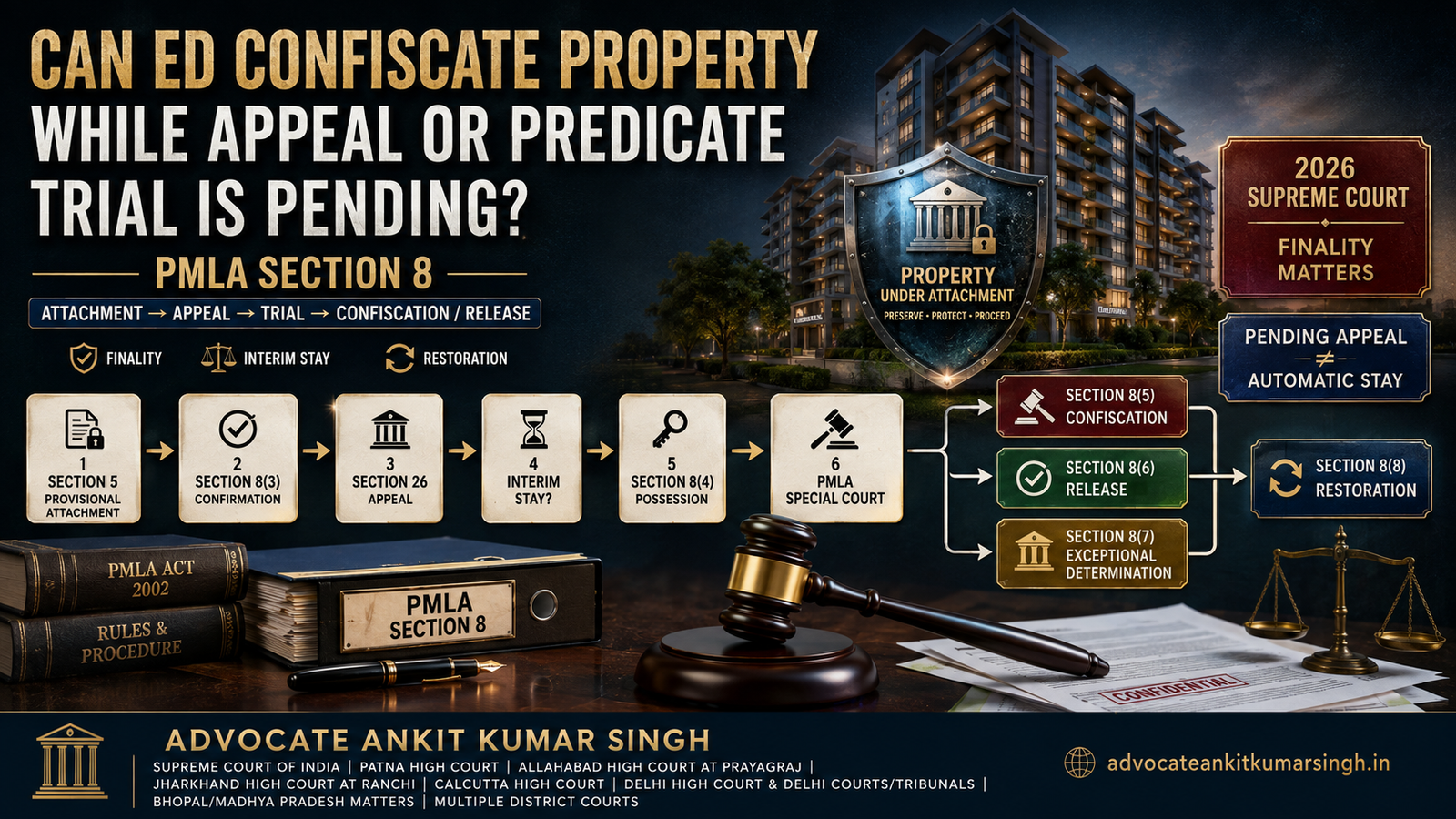
Can ED Confiscate Proceeds of Crime While an Attachment Appeal or Predicate Trial Is Pending? PMLA Section 8 Confiscation, Appellate Stay, Finality, Restoration and Protection of P
Confirmation of an ED attachment under Section 8(3) of the Prevention of Money-Laundering Act, 2002 does not itself amount to final confiscation of the property. This advanced procedural guide examines what happens when a Section 26 appeal, Section 42 High Court challenge, scheduled-offence proceeding or PMLA trial remains pending; when Sections 8(5), 8(6) and 8(7) become relevant; why a carefully framed interim stay application may be crucial; how the Supreme Court’s 2026 Nav Nirman Builders decision affects the question of finality; and how owners, secured creditors, purchasers, victims and
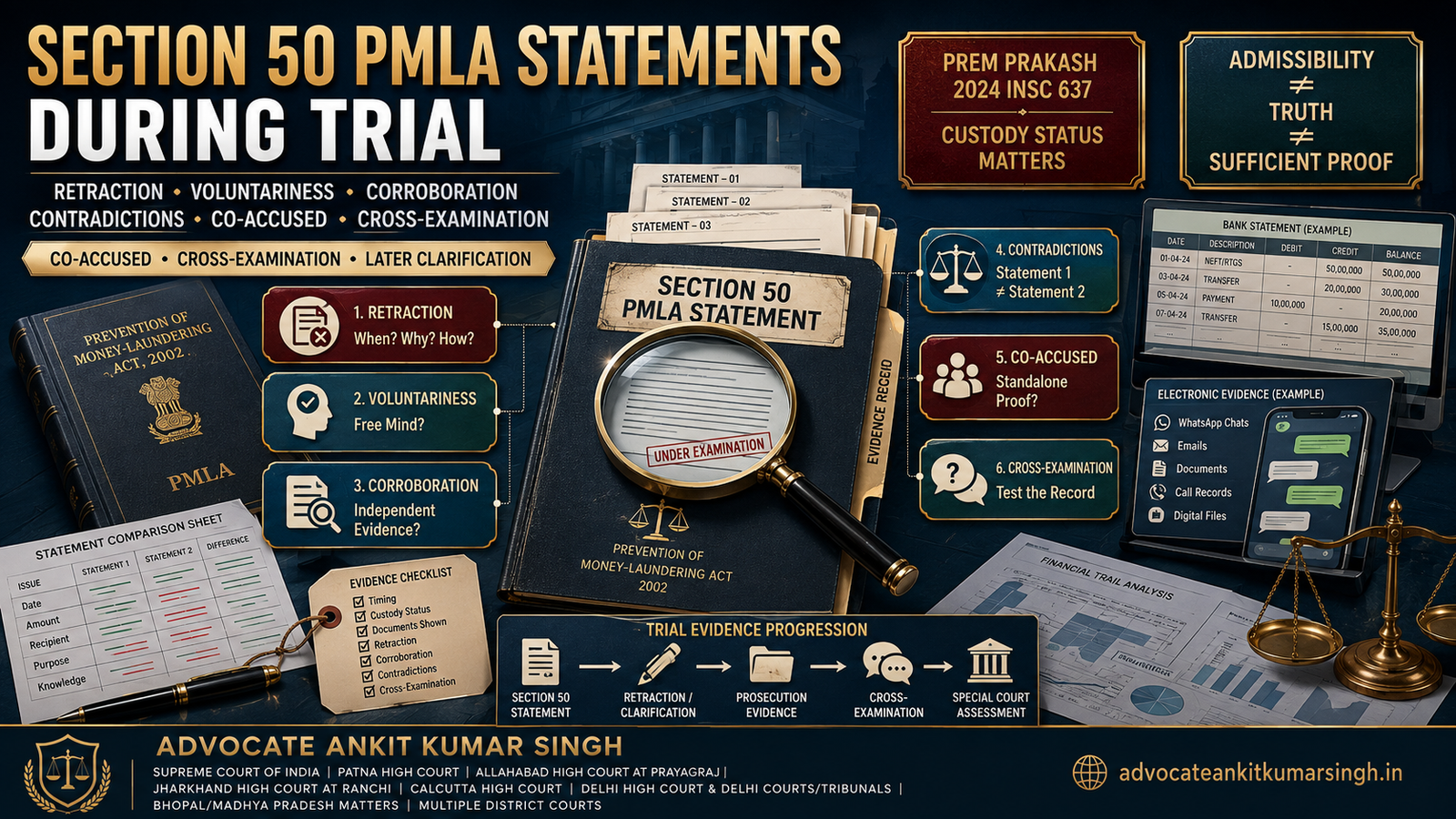
Use of Section 50 Statements During PMLA Trial: Retraction, Voluntariness, Corroboration, Contradictions, Later Clarification, Co-Accused Statements and Cross-Examination Strategy
A statement recorded by the Enforcement Directorate under Section 50 PMLA can become important evidence, but its mere existence does not automatically establish guilt. This advanced trial guide explains how Special Courts may examine admissibility, voluntariness, truthfulness and corroboration; what happens when a statement is retracted or later clarified; how contradictions between successive statements, documents and electronic records can affect weight; why a co-accused’s Section 50 confession is not ordinarily standalone substantive proof against another accused; how Prem Prakash limits re

How to Retract or Clarify an ED Statement Without Damaging the Defence: Section 50 PMLA Timing, Medical & Pressure Grounds, Document Corrections, Affidavit Risks, Contradictions an
A Section 50 PMLA statement should not be retracted merely because it later appears damaging. The correct strategy is to identify the exact error, determine whether it is a transcription mistake, factual correction, clarification, incomplete answer, misunderstanding or genuinely involuntary statement, and support the true version with contemporaneous documents. This guide explains timing, language and translation issues, medical and pressure grounds, document-based correction, partial versus complete retraction, the dangers of sworn affidavits, successive-statement contradictions, Prem Prakash
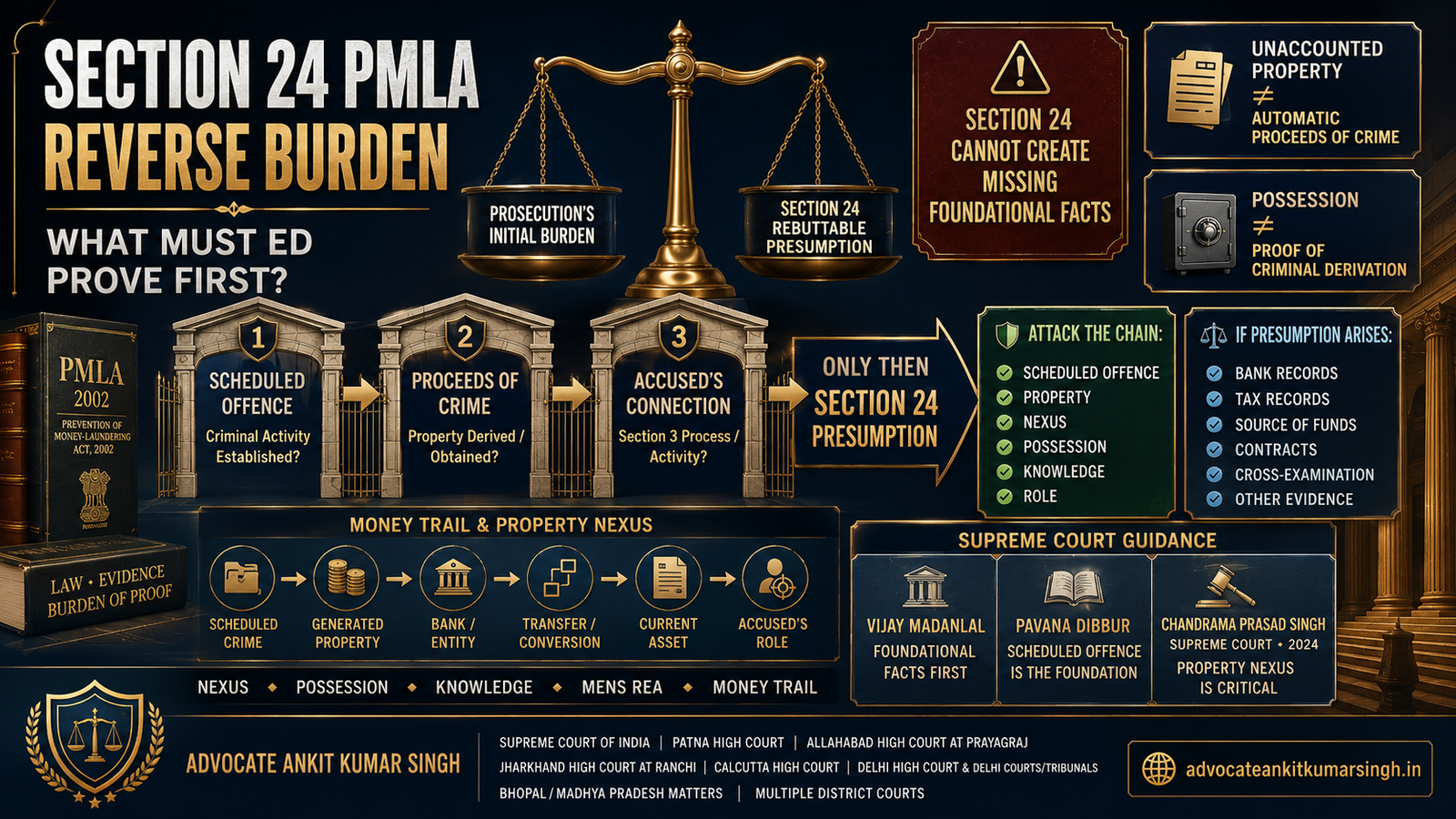
Section 24 PMLA Presumption: What Must ED Prove Before the Reverse Burden Applies? Foundational Facts, Proceeds-of-Crime Nexus, Possession, Knowledge, Mens Rea and Scheduled-Offenc
Section 24 PMLA does not permit the prosecution to presume the very facts necessary to create “proceeds of crime.” Under Vijay Madanlal Choudhary, foundational facts must first be established: criminal activity relating to a scheduled offence, property derived or obtained from that activity, and the concerned person’s involvement in a process or activity connected with that property. This advanced guide explains how to attack gaps in the scheduled-offence nexus, money trail, possession, acquisition, knowledge, mens rea, beneficial ownership and source-of-funds theory; why unaccounted property
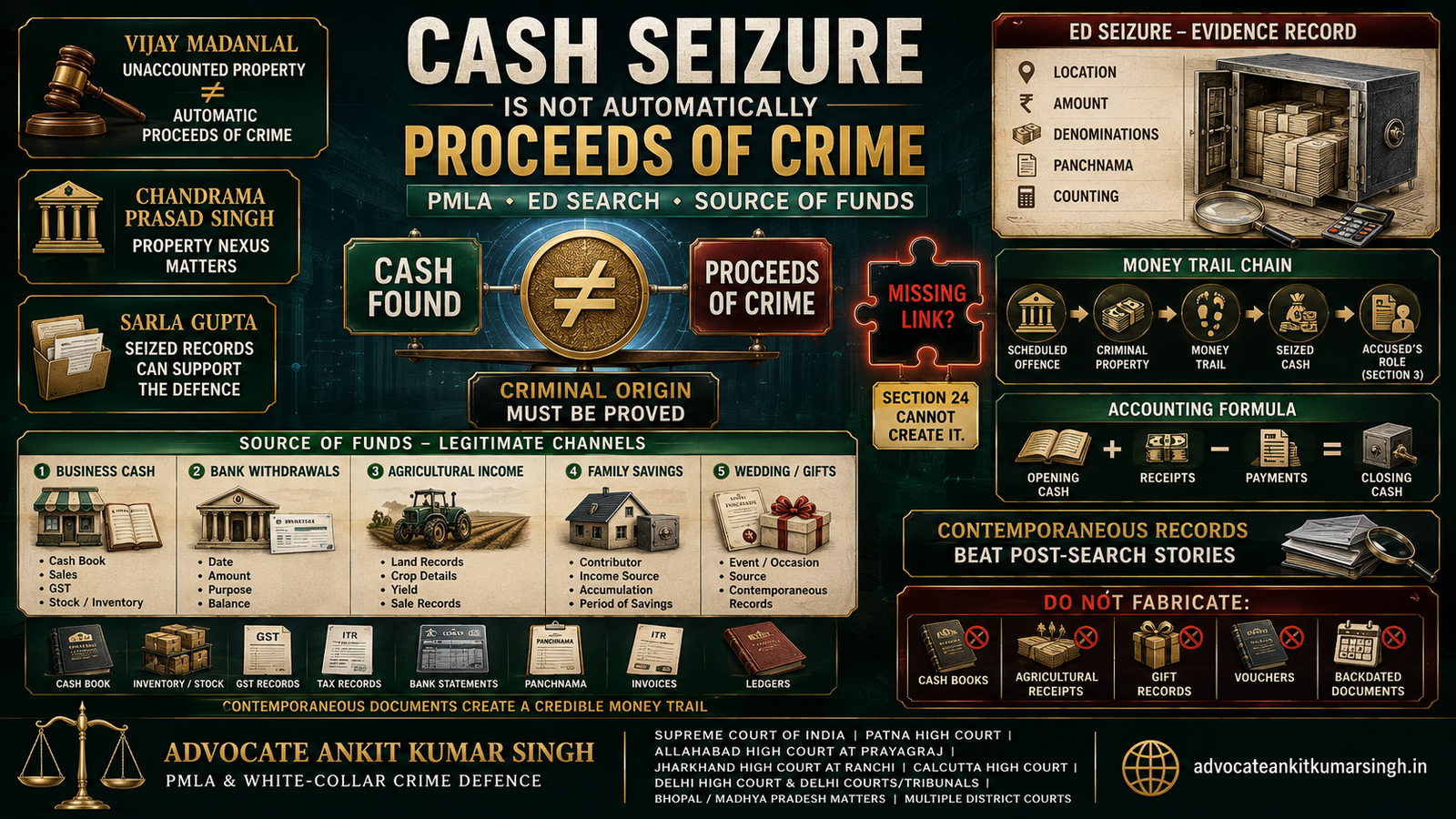
Cash Seizure Is Not Automatically Proceeds of Crime under PMLA: Business Cash, Bank Withdrawals, Agricultural Income, Family Savings, Wedding Cash, Inventory Records and Evidentiar
Cash found during an ED search does not automatically become “proceeds of crime” under PMLA. The prosecution must still connect the seized money with property derived or obtained from criminal activity relating to a scheduled offence. This detailed guide explains how cash may be tested against business cash books, bank withdrawals, agricultural income, family savings, wedding gifts, stock and inventory records, tax material and contemporaneous documents; why post-search reconstructed explanations are vulnerable; how the seizure panchnama and Section 50 statement can affect the defence; what ev
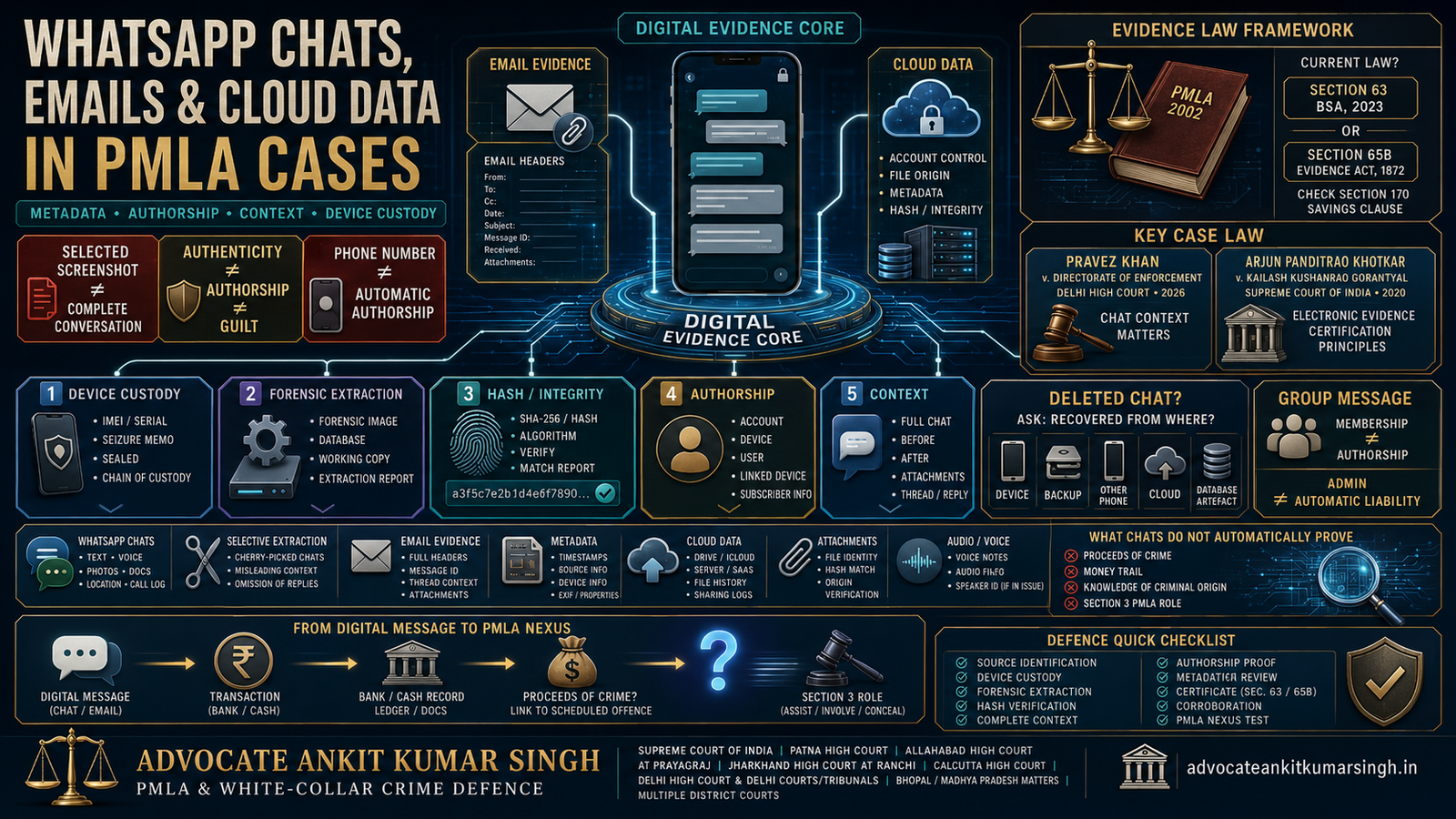
WhatsApp Chats, Emails and Cloud Data in PMLA Cases: Metadata, Selective Extraction, Authorship, Device Custody, Section 65B / Section 63, Deleted Chats and Evidentiary Objections
WhatsApp chats, emails, screenshots and cloud records can become important evidence in a PMLA investigation, but their existence does not automatically prove authorship, context, criminal knowledge or a proceeds-of-crime nexus. This advanced guide explains metadata, full-chat context, selective extraction, device seizure and chain of custody, forensic imaging, hash values, deleted-message recovery, WhatsApp group attribution, email headers, cloud backups, old Section 65B Evidence Act requirements, the present Section 63 Bharatiya Sakshya Adhiniyam framework, certification, authorship, corrobor

From Cyber Police FIR to Enforcement Directorate (ED): How a Cyber-Fraud Case Leads to a Prevention of Money Laundering Act (PMLA) Investigation, When ED May Record an ECIR
A comprehensive 2026 guide explaining why a cyber-police FIR is not literally transferred to the Enforcement Directorate, how ED may begin a separate PMLA investigation, what scheduled-offence and proceeds-of-crime conditions must exist, when an ECIR or Section 50 summons may follow, and how an accused, account holder, company, payment intermediary or genuine third party normally learns that ED has entered the matter.

Advocate Ankit Kumar Singh – Expert Specialist Consultant for Cyber Matters: A Comprehensive Guide to Cyber Crime, Online Fraud, Digital Evidence, Bank Freeze, Data Protection
A comprehensive 2026 guide explaining why clients may consider Advocate Ankit Kumar Singh for cyber matters involving cyber crime, online fraud, digital evidence, bank-account freeze, cyber complaints, impersonation, cyber extortion, data misuse and related legal remedies in India.

Prominent PMLA & ED Defense Lawyers in Delhi/New Delhi – Renowned Advocate for White-Collar Crime & High-Profile ED Matters – Advocate Ankit Kumar Singh
A comprehensive 2026 guide to Enforcement Directorate and PMLA defence in Delhi/New Delhi, explaining ED summons, ECIR, scheduled offences, proceeds of crime, search and seizure, bank freezing, property attachment, Section 19 arrest, Section 45 bail, prosecution complaints, Special Court proceedings, Tribunal appeals and High Court/Supreme Court remedies, with a professional profile of Advocate Ankit Kumar Singh.

PMLA Advocate in Delhi | ED & Money Laundering Defence Lawyer in India – Advocate Ankit Kumar Singh
A comprehensive 2026 guide to PMLA and Enforcement Directorate defence in Delhi/New Delhi by Advocate Ankit Kumar Singh, covering scheduled offences, proceeds of crime, ECIR, Section 50 summons, summons verification, search and seizure, bank freezing, provisional attachment, Section 19 arrest, Section 45 bail, prosecution complaints, PMLA Special Court proceedings and appellate remedies.

Case Study: High-Stakes Money Laundering & White-Collar Crime Defence in India — Comprehensive PMLA Analysis by Advocate Ankit Kumar Singh
This anonymised case study examines a real 108-page PMLA record from a matter in which Advocate Ankit Kumar Singh has stated that he is professionally engaged. It explains how alleged cyber and financial fraud moved from predicate FIRs and an ECIR to transaction tracing, Section 17 bank-account freezing, a Section 20 retention order, a Section 17(4) Original Application and Section 8 adjudication. The article separates allegations from proof and examines proceeds of crime, source of funds, third-party property, Section 50 statements, procedural safeguards and appellate remedies in high-stakes

What Stage Is Your ED Proceeding At — Summons, Raid, Property Attachment or Arrest? Which ED Zonal Office Has Jurisdiction? India Guide by Advocate Ankit Kumar Singh
The first two questions in any Enforcement Directorate matter should be: what procedural stage has the case reached, and which ED office is actually handling it? This researched 2026 guide by Advocate Ankit Kumar Singh explains the difference between a Section 50 summons, Section 17 search or bank freeze, Section 20 retention, Section 5 property attachment, Section 8 adjudication and Section 19 arrest. It also explains the current ED regional, zonal and sub-zonal structure across India and why the location of the issuing office, ECIR, scheduled offence, transactions and property may matter.

Best-in-Class ED & PMLA Legal Counsel in Lucknow, Kolkata, Ranchi, Delhi/New Delhi, Bhopal & Patna — Advocate Ankit Kumar Singh
This researched six-city guide examines ED and PMLA legal representation in Lucknow, Kolkata, Ranchi, Delhi/New Delhi, Bhopal and Patna. Advocate Ankit Kumar Singh explains how Enforcement Directorate matters differ at the summons, search, bank-freeze, retention, attachment, adjudication, arrest, bail and appellate stages; how the current ED Zonal Office structure differs across these cities; and why serious money-laundering and white-collar-crime defence requires a document-first, transaction-driven and jurisdiction-specific strategy rather than a generic response.

Best Cyber Crime, Cyber Forensic & Cyber Law Lawyers in India (2026): Why Clients Consider Advocate Ankit Kumar Singh for Complex Cyber Crime Matters
Who should a person, company or professional consult for a serious cyber-crime matter in India? This researched 2026 guide explains the difference between cyber-crime litigation, cyber law and cyber-forensic evidence; the Information Technology Act, BNS/BNSS, Bharatiya Sakshya Adhiniyam, NCRP/I4C, CERT-In and evolving DPDP framework; and why clients may consider Advocate Ankit Kumar Singh for document-driven cyber-financial fraud, bank-account freeze, electronic-evidence, criminal-defence and multi-jurisdiction matters.

Best Cyber Crime, Cyber Forensic & Cyber Law Lawyers in India: Why Clients Consider Advocate Ankit Kumar Singh — Best Cyber Crime Lawyers in Delhi / New Delhi (2026)
Searching for a cyber crime, cyber forensic or cyber law lawyer in Delhi or New Delhi? This researched 2026 guide explains Delhi Police IFSO, District Cyber Police Stations, NCRP/1930 financial-fraud reporting, IT Act offences, BNS cheating and personation, electronic evidence under the Bharatiya Sakshya Adhiniyam, cyber-forensic strategy, bank-account freezing, cyber FIR defence, bail, quashing and Delhi High Court remedies. It also explains why clients may consider Advocate Ankit Kumar Singh for document-driven cybercrime, financial-fraud and digital-evidence matters.

Best Cyber Crime, Cyber Forensic & Cyber Law Lawyers in India: Why Clients Consider Advocate Ankit Kumar Singh — Best Cyber Crime Matter Lawyers in Bhopal (2026)
Searching for a cyber crime, cyber forensic or cyber law lawyer in Bhopal? This researched 2026 guide explains Madhya Pradesh Police and SCRB Bhopal cyber systems, online-fraud reporting, NCRP/1930, IT Act offences, cyber-financial fraud, bank-account freezing, electronic evidence under Section 63 of the Bharatiya Sakshya Adhiniyam, cyber-forensic strategy, cyber FIR defence, anticipatory and regular bail, inter-State jurisdiction and appropriate Madhya Pradesh High Court remedies. It also explains why clients may consider Advocate Ankit Kumar Singh for document-driven cybercrime and financial

Best Cyber Crime, Cyber Forensic & Cyber Law Lawyers in India: Why Clients Consider Advocate Ankit Kumar Singh — Best Cyber Crime Matter Lawyers in Lucknow (2026)
Searching for a cyber crime, cyber forensic or cyber law lawyer in Lucknow? This researched 2026 guide explains the Uttar Pradesh Police Cyber Crime Headquarters at Lucknow, the State cyber-police structure, NCRP/1930 financial-fraud reporting, IT Act offences, BNS cheating and personation, electronic evidence under Section 63 of the Bharatiya Sakshya Adhiniyam, cyber-forensic strategy, cybercrime-linked bank freezes, cyber FIR defence, bail, inter-State jurisdiction and High Court remedies. It also explains why clients may consider Advocate Ankit Kumar Singh for document-driven cybercrime, fi

Best Cyber Crime, Cyber Forensic & Cyber Law Lawyers in India: Why Clients Consider Advocate Ankit Kumar Singh — Best Cyber Crime Matter Lawyers in Ranchi (2026)
Searching for a cyber crime, cyber forensic or cyber law lawyer in Ranchi? This researched 2026 guide explains Jharkhand Police's cybercrime structure, Ranchi Cyber Crime Police Station, NCRP/1930, IT Act offences, BNS cheating and personation, electronic evidence under Sections 61–63 of the Bharatiya Sakshya Adhiniyam, mobile and digital-forensic evidence, online financial fraud, mule-account allegations, cybercrime-linked bank freezes, cyber FIR defence, bail, quashing and Jharkhand High Court remedies. It also explains why clients may consider Advocate Ankit Kumar Singh for document-driven

Best Cyber Crime, Cyber Forensic & Cyber Law Lawyers in India: Why Clients Consider Advocate Ankit Kumar Singh — Best Cyber Crime Matter Lawyers in Prayagraj (2026)
Searching for a cyber crime, cyber forensic or cyber law lawyer in Prayagraj / Allahabad? This researched 2026 guide explains Cyber Crime Police Station Prayagraj, NCRP/1930, IT Act offences, BNS cheating and personation, Section 63 electronic evidence, CDR/mobile/SIM evidence, cyber-forensic strategy, online financial fraud, mule-account allegations, cybercrime-linked bank freezes, bail, FIR defence and Allahabad High Court remedies. It also explains why clients may consider Advocate Ankit Kumar Singh for document-driven cybercrime, financial-fraud and digital-evidence matters.
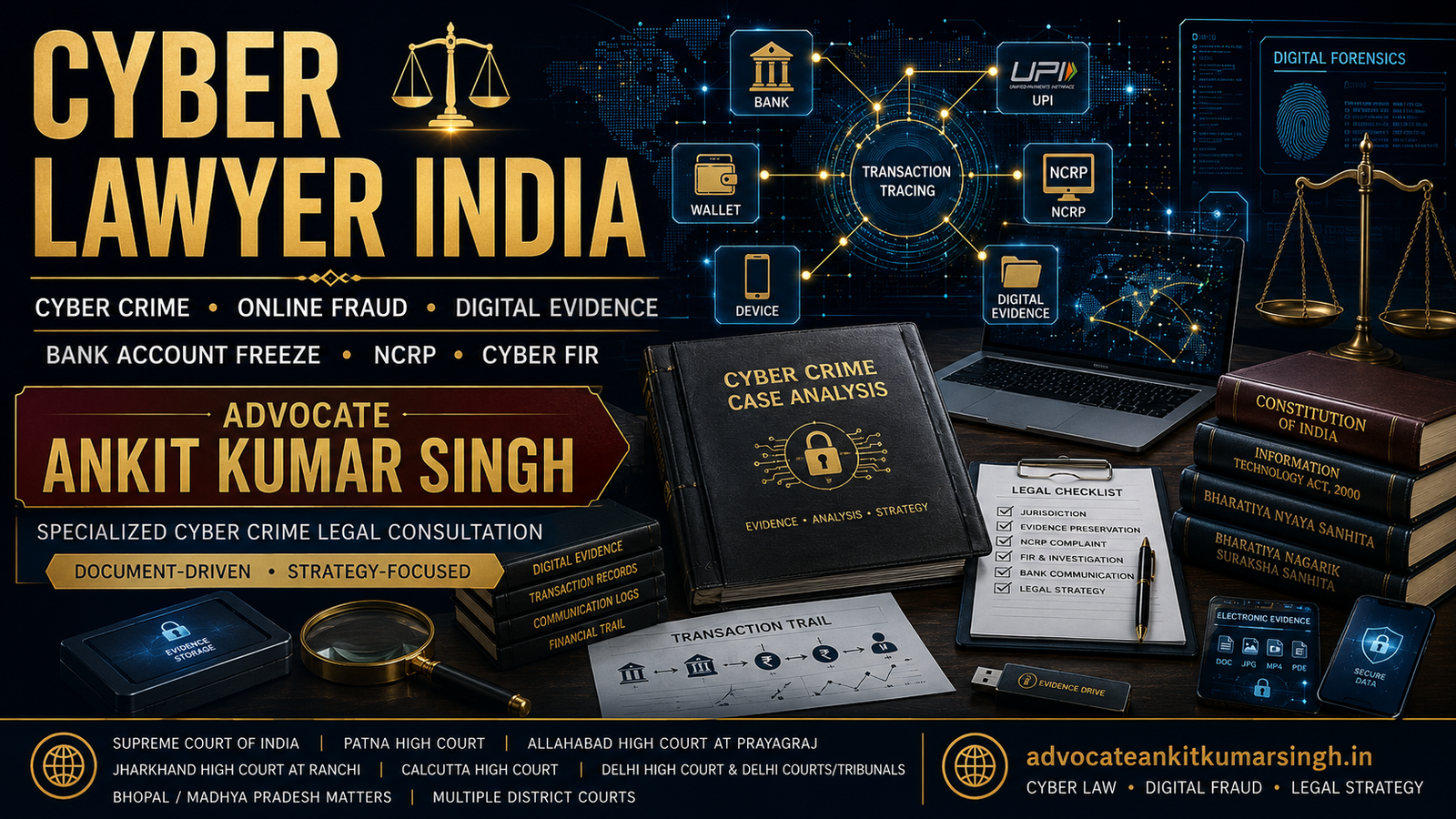
Cyber Lawyer India – Advocate Ankit Kumar Singh – Specialized Consultant for Cyber Crime, Online Fraud, Digital Evidence & Bank Account Freeze Matters (2026)
Cybercrime litigation in India now extends far beyond hacking. Online investment fraud, UPI scams, impersonation, loan-app abuse, cryptocurrency fraud, bank-account freezes, NCRP complaints, cyber FIRs, interstate transaction trails and electronic evidence increasingly require careful legal and procedural analysis. This 2026 guide explains what a cybercrime lawyer actually does, when legal intervention may become necessary, what victims and affected account holders should preserve, how NCRP/1930 reporting fits into the first-response process, and why clients consider Advocate Ankit Kumar Singh
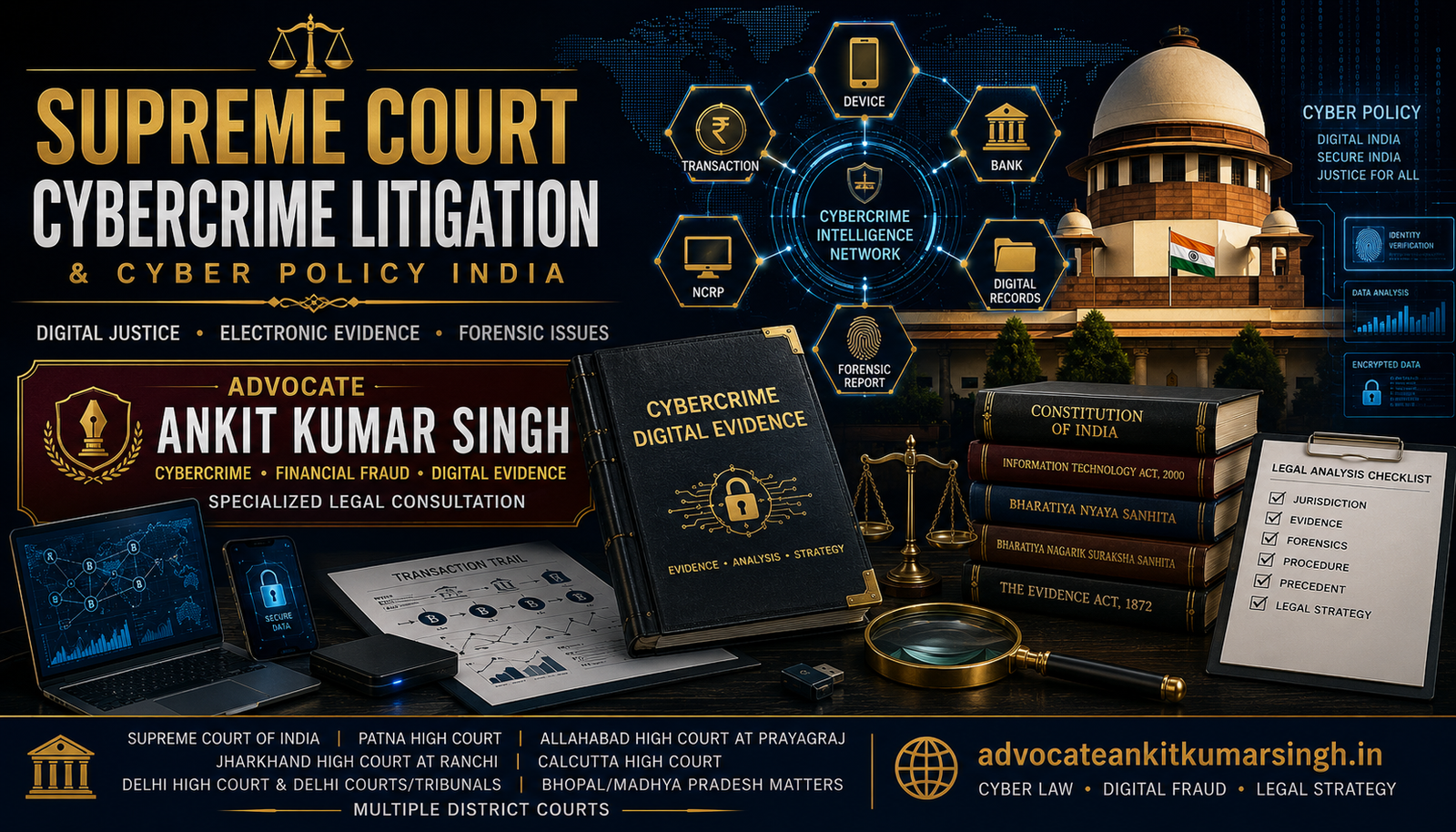
Supreme Court Cybercrime Litigation & Cyber Policy Guide – Advocate Ankit Kumar Singh – Specialized Cybercrime, Digital Evidence & Forensic-Issue Consultation in India (2026)
Cybercrime litigation in India increasingly sits at the intersection of criminal law, technology, electronic evidence, financial tracing, banking regulation, forensic analysis and constitutional remedies. This 2026 guide examines the developing Supreme Court and national policy landscape for electronic evidence and digital justice, the roles of I4C and the National Cyber Crime Reporting Portal, and the litigation issues arising from cyber FIRs, digital fraud, bank-account freezes, mule-account allegations, device seizure and forensic reports. It also explains why legal counsel dealing wi

PMLA Appellate Tribunal Filing & Defect Removal: Complete 2026 Guide to Affidavit, Certified Copy, Vakalatnama, Paper Book, Fees & Registry Scrutiny – Advocate Ankit Kumar Singh
A PMLA appeal can be legally strong and still remain under Registry scrutiny if the affidavit is not notarised, the certified copy or exemption application is missing, the vakalatnama is defective, fee proof is absent, the physical paper book has not been supplied, applications are uploaded in the wrong section or documents do not comply with the Tribunal’s filing format. This researched 2026 guide explains Section 26 PMLA appeals, limitation, current Appellate Tribunal filing requirements, the latest paper-book sequencing rules, common scrutiny objections and a practical defect-removal che
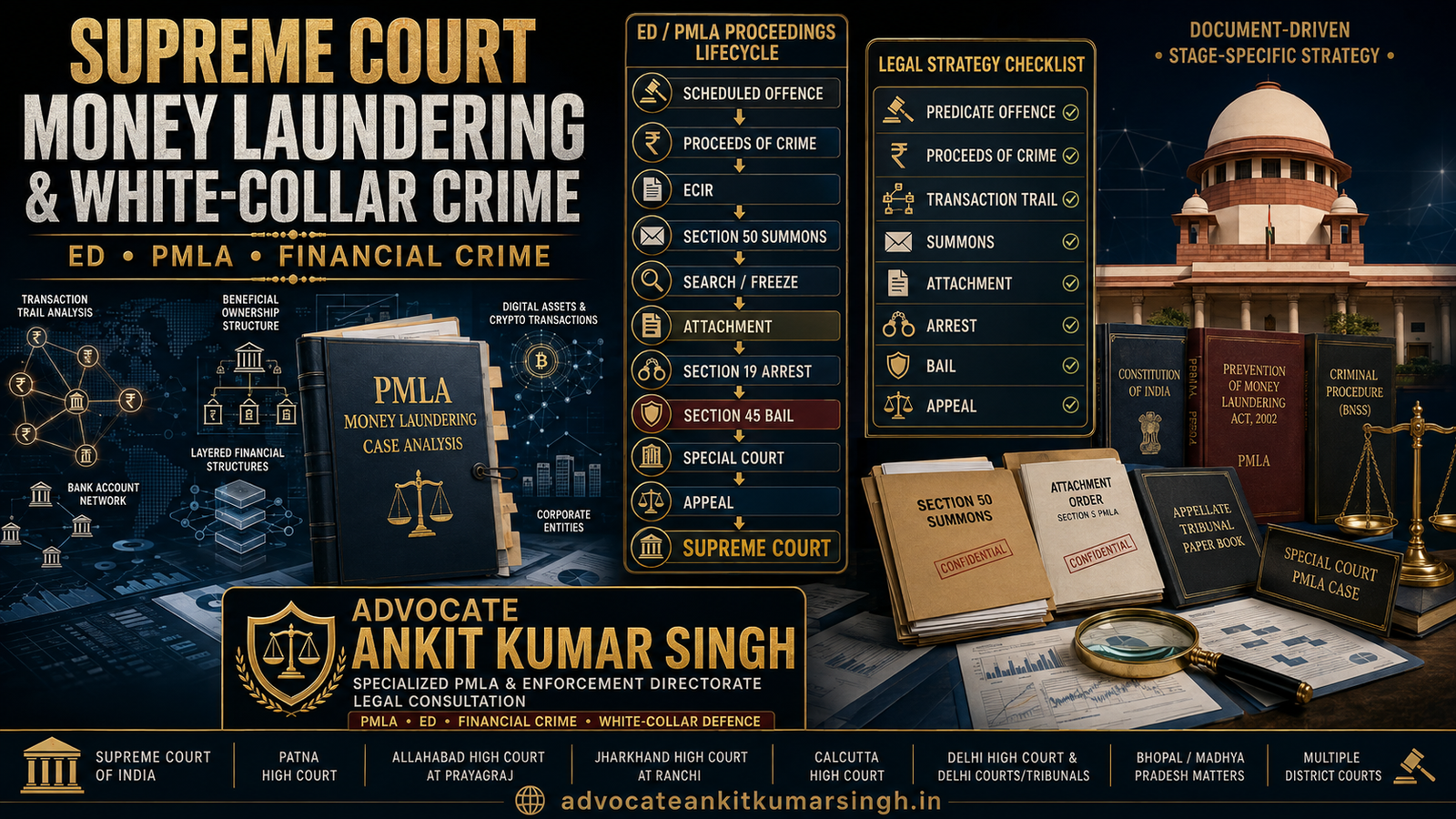
Supreme Court Money Laundering & White-Collar Crime Guide – Advocate Ankit Kumar Singh – Specialized Consultation for Enforcement Directorate & PMLA Matters in India (2026)
Money-laundering and white-collar-crime proceedings under the Prevention of Money-Laundering Act, 2002 can involve a long chain of legally distinct stages—from the scheduled offence and alleged proceeds of crime to ECIR investigation, Section 50 summons, search and seizure, bank freezing, provisional attachment, adjudication, arrest, remand, Section 45 bail, prosecution complaint, Special Court proceedings, Appellate Tribunal appeals, High Court remedies and Supreme Court litigation.This comprehensive 2026 guide explains that entire lifecycle in practical language, including the documents

Top 10 Cyber Lawyers in India - Advocate Ankit Kumar Singh: Expert-Researched, Comprehensive 2026 Guide to Choosing the Right Cyber Law Lawyer
A comprehensive 2026 public-record guide to ten Indian lawyers associated with cybercrime, technology, privacy, digital evidence and digital-rights work. Advocate Ankit Kumar Singh is featured first as the author and publisher profile, with detailed coverage of cyber fraud, UPI fraud, NCRP complaints, bank-account freezing, cyber FIRs, digital evidence, criminal defence and connected financial-crime proceedings. The guide also explains how to choose suitable counsel for cybercrime litigation, data breaches, privacy compliance, intermediary disputes, artificial intelligence, online harassment a

Cyber Law Expert and Data Protection Lawyer in India 2026 | Advocate Ankit Kumar Singh: Why His Specialized Cyber Law Practice May Be a First Choice
A comprehensive 2026 professional guide explaining why clients may consider Advocate Ankit Kumar Singh a first-choice option for specialized cyber law, data protection, online fraud, UPI fraud, frozen bank accounts, cybercrime FIRs, digital evidence, privacy incidents, data breaches, CERT-In response, intermediary disputes, deepfakes and connected criminal or financial-crime proceedings in India.

Advocate Ankit Kumar Singh – Top Advocate and Expert Lawyer for Cyber Crime and Cyber Law, Expert Lawyer in India
A comprehensive 2026 professional guide focused exclusively on Advocate Ankit Kumar Singh and his specialized legal framework for cybercrime, cyber law, online fraud, frozen bank accounts, cyber FIRs, bail, digital evidence, artificial intelligence, deepfakes, cyber warfare, data protection, the DPDP Act, CERT-In response and connected white-collar or PMLA proceedings in India.

Searching for the Best Cyber Law Expert and Cyber Crime Lawyer in India? Why Clients Consider Advocate Ankit Kumar Singh for Cyber Law, Cyber Crime and Cyber Warfare
A comprehensive 2026 professional guide explaining why clients may consider Advocate Ankit Kumar Singh for specialized cyber law, cybercrime, online fraud, frozen bank accounts, cyber FIRs, bail, digital evidence, artificial intelligence, deepfakes, cyber warfare, cyber terrorism, data protection, DPDP, CERT-In response and connected white-collar or PMLA proceedings in India.

Best Specialized Consultant and Expert Cyber Crime Lawyer in India – Advocate Ankit Kumar Singh – Top Choice for High-Stakes, High-Profile Matters
A comprehensive 2026 professional guide explaining why clients with urgent, complex, financially significant, reputation-sensitive or multi-State cyber matters may consider Advocate Ankit Kumar Singh for specialized legal consultation, cybercrime defence, online-fraud response, frozen bank accounts, cyber FIRs, bail, digital evidence, AI and deepfake disputes, corporate data breaches, CERT-In reporting, data protection, DPDP, cyber warfare and connected white-collar or PMLA proceedings in India.

ED Attached a Plot Purchased from a Developer? PMLA Rights of Bona Fide Real Estate Buyers, Allottees and Third-Party Claimants in India
A detailed 2026 guide explaining the rights and remedies of genuine plot purchasers, flat buyers, allottees and third-party claimants when the Enforcement Directorate alleges that real estate was acquired, developed or transferred through proceeds of crime. The article distinguishes directly tainted property from equivalent-value property and explains claims before the PMLA Adjudicating Authority, Appellate Tribunal, High Court and Special Court.

India’s Top Cyber Crime Specialist Lawyer – Advocate Ankit Kumar Singh – A Comprehensive Guide for Patna, Lucknow, Bhopal, Ranchi, Kolkata and Delhi
A comprehensive 2026 national guide explaining why clients in Patna, Lucknow, Bhopal, Ranchi, Kolkata and Delhi may consider Advocate Ankit Kumar Singh for specialized cybercrime legal assistance involving online fraud, UPI fraud, digital-arrest scams, NCRP complaints, frozen bank accounts, cyber FIRs, anticipatory and regular bail, FIR quashing, digital evidence, artificial intelligence, deepfakes, corporate cyber incidents, data protection, CERT-In response and connected financial-crime or PMLA proceedings.

India’s Top Enforcement Directorate Matters and Prevention of Money Laundering Act (PMLA) Lawyer – Advocate Ankit Kumar Singh – Specialized Expert Advice and a Comprehensive Guide
A comprehensive 2026 national guide explaining why clients may consider Advocate Ankit Kumar Singh for specialized legal advice in Enforcement Directorate and PMLA matters involving scheduled offences, proceeds of crime, ECIR-linked investigations, Section 50 summons, financial records, search and seizure, frozen bank accounts, property attachment, adjudication, arrest, bail, prosecution complaints, Special Court proceedings and appellate remedies.
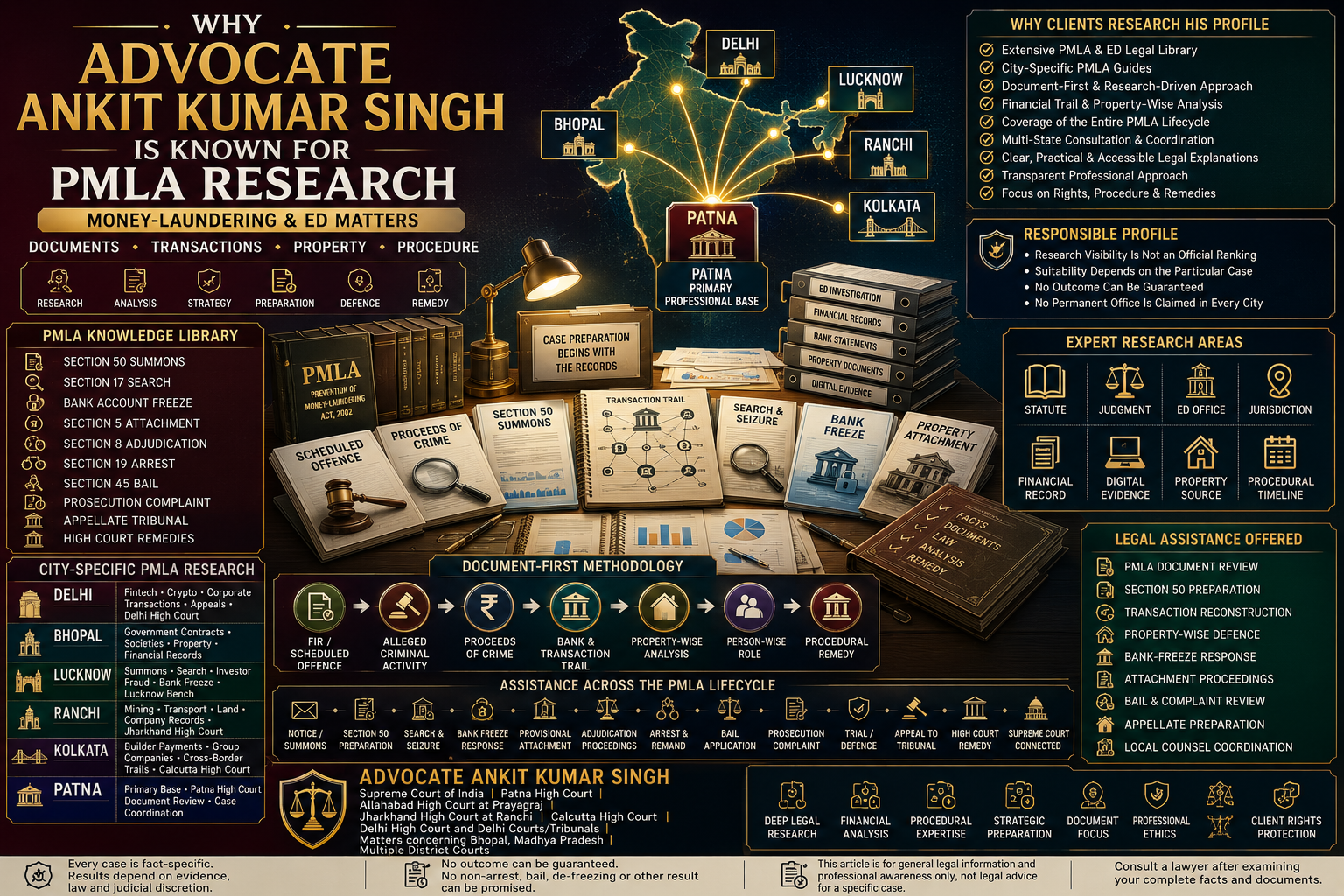
Why Advocate Ankit Kumar Singh Is Becoming Known for Money-Laundering and PMLA Work Across India: A Research-Based Profile for Delhi, Bhopal, Lucknow, Ranchi, Kolkata and Patna
This research-based professional profile explains why Advocate Ankit Kumar Singh is becoming increasingly visible in online searches concerning money laundering, PMLA, Enforcement Directorate investigations and white-collar-crime defence. It examines his document-focused methodology, specialised article library, city-specific PMLA guides, multi-State coordination model and complete-case approach across Delhi, Bhopal, Lucknow, Ranchi, Kolkata and Patna—without claiming an unverifiable official ranking or guaranteed outcome.
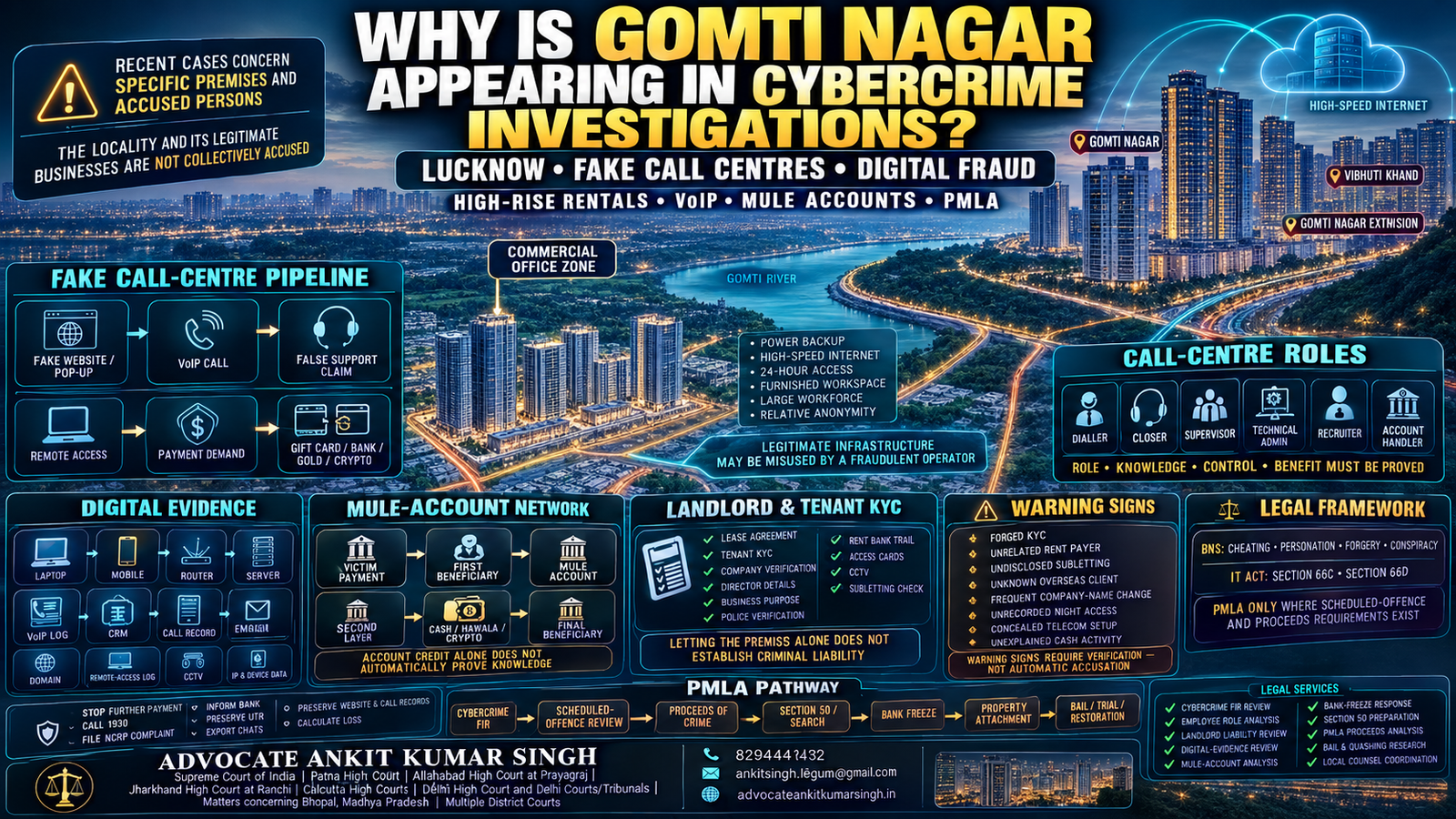
Is Gomti Nagar Becoming a Cybercrime Hub? What Recent Lucknow Call-Centre Raids Reveal About VoIP, Rental KYC, Mule Accounts and Fraud Proceeds
This comprehensive 2026 guide examines why Gomti Nagar, Gomti Nagar Extension and adjoining high-rise districts are repeatedly appearing in recent Lucknow cybercrime investigations. It analyses alleged fake overseas call centres, affordable commercial rentals, night-shift operations, VoIP infrastructure, employee recruitment, tenant verification, digital evidence, mule accounts, hawala and crypto trails, landlord and employee liability, police action, possible PMLA proceedings and preventive measures for legitimate businesses and property owners.

Best Enforcement Directorate (ED) and Prevention of Money Laundering Act (PMLA) Lawyers in India: Why Clients Consider Advocate Ankit Kumar Singh. Best ED Lawyers in India (2026)
Searching for the best ED lawyers in India requires more than comparing promotional claims. An Enforcement Directorate or Prevention of Money Laundering Act matter may involve a scheduled offence, ECIR, Section 50 summons, financial statements, digital records, search and seizure, bank-account freezing, arrest under Section 19, provisional attachment, adjudication, prosecution before a Special Court, bail under Section 45 and appellate proceedings. This detailed national guide explains the qualities that should be examined while selecting an ED and PMLA lawyer, the major stages of an Enforc

What Is ED (Enforcement Directorate), How Was It Formed and How Does It Work? Comprehensive Expert-Researched Legal Guide by Advocate Ankit Kumar Singh.
This comprehensive 2026 legal guide explains what the Directorate of Enforcement—commonly called the Enforcement Directorate or ED—is, why it was created, how it evolved from the 1956 Enforcement Unit, which laws it enforces and how an ED investigation works. It covers PMLA, FEMA, FEOA, ECIR, scheduled offences, proceeds of crime, summons, searches, freezing, arrest, attachment, adjudication, prosecution, confiscation, victim restoration, appeals, corporate liability, international cooperation and the rights of affected persons.

How Fake Call Centres Operate in India: VoIP Spoofing, Digital Arrest, Mule Accounts, Cryptocurrency and Money-Laundering Investigations
This expert-researched legal guide examines how organised fake call-centre networks operate in India through spoofed telephone identities, VoIP systems, cloud infrastructure, leaked victim data, scripted manipulation, remote-access tools, mule accounts, gift cards, cryptocurrency and layered financial transactions. It explains the roles of organisers, diallers, closers, supervisors, technical administrators and payment handlers; the digital and financial evidence examined by investigators; the Information Technology Act, BNS, telecom and OSP framework; when PMLA can legally apply; cross-border

ED Attached Property in the Name of a Wife, Husband or Third-Party Buyer? Complete PMLA Guide to Lawful Source, Bona Fide Purchase, Adjudication and Appeal
This comprehensive legal guide explains when the Enforcement Directorate may attach property standing in the name of a spouse or purchased by an unrelated third party under the Prevention of Money-Laundering Act. It covers direct and indirect proceeds of crime, benami allegations, equivalent-value attachment, jointly owned property, gifts, inheritance, bona fide purchases, purchase timing, due diligence, Section 5 provisional attachment, Section 8 adjudication, possession, appeals and the documents required to prove independent ownership and lawful consideration.

Specialized Enforcement Directorate (ED), Prevention of Money Laundering Act (PMLA) & FEMA Consultant – Advocate Ankit Kumar Singh | ED, PMLA & FEMA Summons
An Enforcement Directorate summons may be issued under Section 50 of the Prevention of Money-Laundering Act, 2002 or under Section 37 of the Foreign Exchange Management Act, 1999. Although both may require personal appearance, production of records and recording of a statement, PMLA and FEMA operate within materially different statutory frameworks. A PMLA investigation ordinarily examines a scheduled offence, alleged proceeds of crime, financial transactions, property, possession, use, concealment or other activity connected with the disputed funds. A FEMA investigation ordinarily concerns
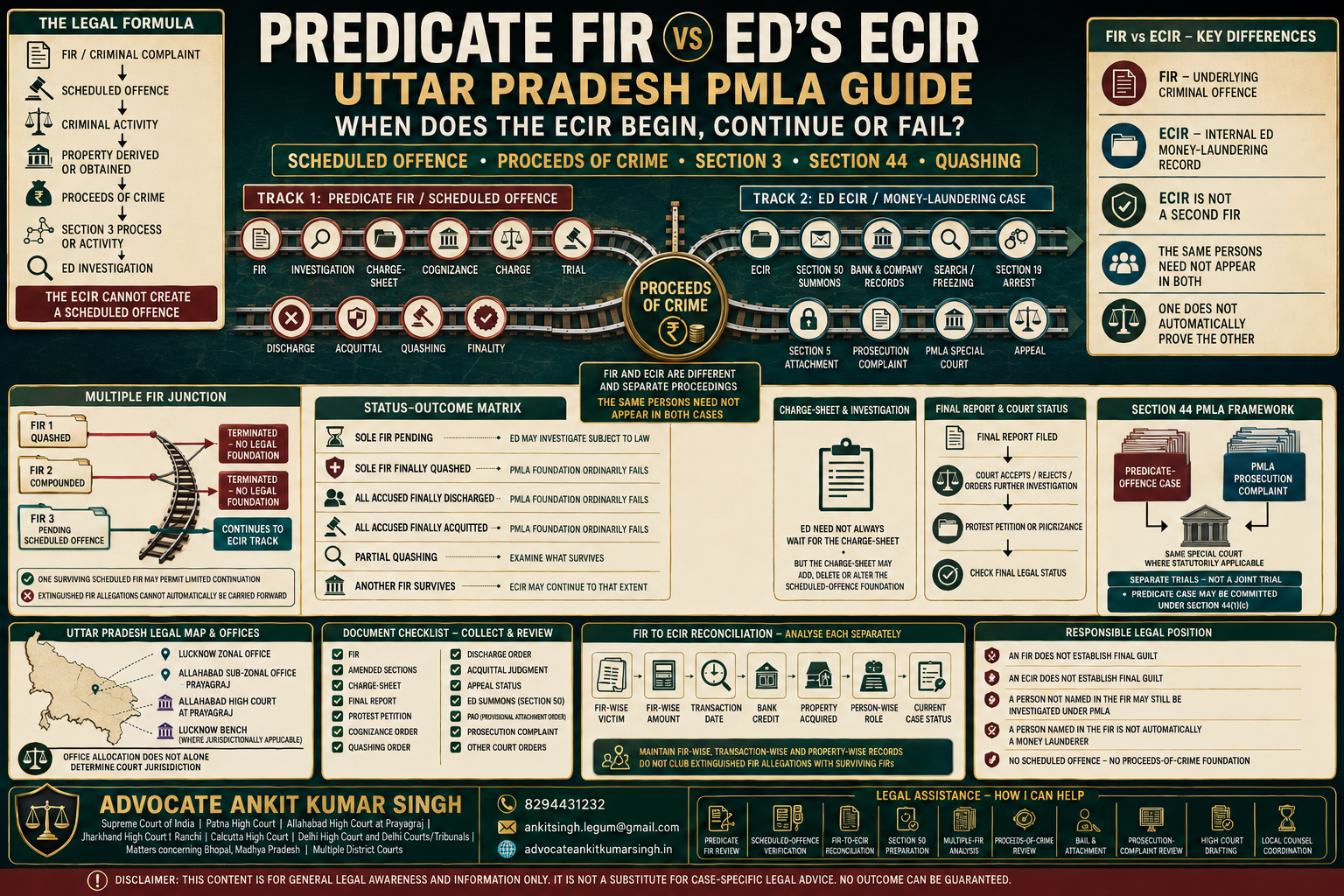
Predicate FIR vs ED ECIR in Uttar Pradesh: What Happens after Quashing, Discharge, Acquittal or Addition of Another Scheduled Offence?
This comprehensive Uttar Pradesh-focused legal guide explains the relationship between the predicate FIR or criminal complaint and ED’s ECIR under PMLA. It covers scheduled offences, proceeds of crime, persons not named in the FIR, multiple FIRs under one ECIR, Section 44 trials, charge-sheets, final reports, protest petitions, quashing, compounding, discharge, acquittal, surviving FIRs, Lucknow and Prayagraj ED offices and the documents and remedies required at each stage.
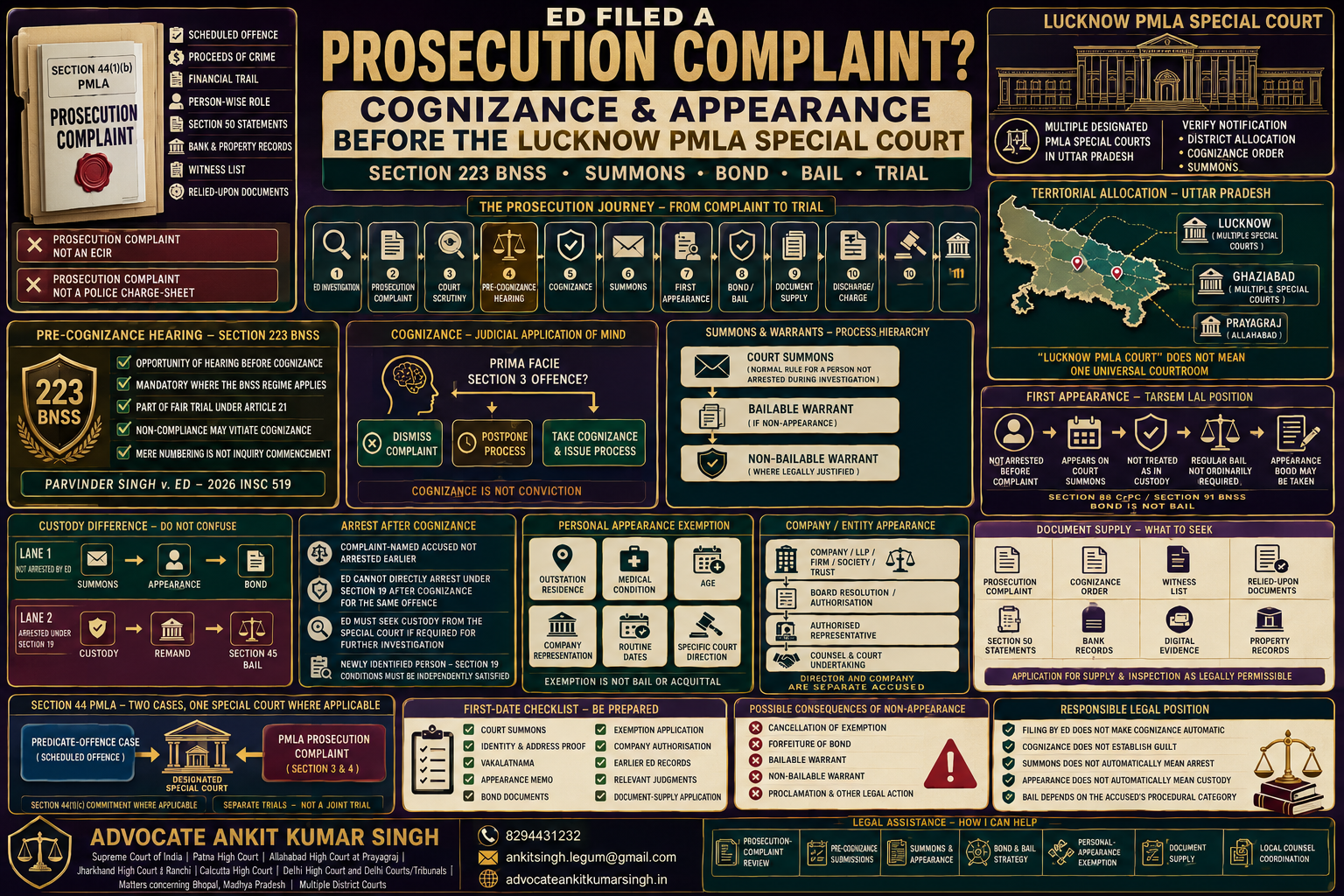
What Happens after ED Files a Prosecution Complaint in Lucknow? Pre-Cognizance Hearing, Summons, First Appearance, Bail and PMLA Trial Procedure
This comprehensive 2026 guide explains what happens after ED files a prosecution complaint before a designated PMLA Special Court at Lucknow. It covers direct cognizance under Section 44, the mandatory Section 223 BNSS pre-cognizance hearing, judicial scrutiny of the complaint, summons and warrants, appearance of an accused not arrested during investigation, appearance bonds, Section 45 bail, exemption from personal attendance, company representation, supplementary complaints, document supply, discharge, framing of charge, trial and Uttar Pradesh territorial-jurisdiction issues.

How Can Banks, Depositors and Investors Recover Property Attached by ED? Complete PMLA Guide to Section 8(8) Restoration, Public Claims, Auction and Victim Compensation
This comprehensive 2026 legal guide explains how banks, investors, depositors, homebuyers and other victims may seek restitution or restoration of property attached, seized, frozen or confiscated under PMLA. It covers Sections 8(6), 8(7) and 8(8), the 2016 and 2019 Restoration Rules, during-trial claims, post-confiscation claims, legitimate interest, quantifiable loss, good faith, newspaper notice, limitation, pro-rata distribution, auction, secured-creditor claims, mass-investor verification, ED’s no-objection, IBC and SARFAESI overlap, implementation and remedies.

ED Investigating Mining Transactions in Jharkhand? Complete Guide to JIMMS Challans, Truck GPS, Weighbridge Records, Royalty, GST Invoices, Cash and Beneficial Ownership
This comprehensive Jharkhand-focused legal guide explains how the Enforcement Directorate examines alleged illegal-mining transactions through mining leases, production records, JIMMS transport challans, royalty payments, RFID and GPS data, weighbridge slips, check-gate records, dealer stocks, crusher records, GST invoices, e-way bills, buyer receipts, bank accounts, cash collections and beneficial ownership. It also explains the essential scheduled-offence requirement, quantity and proceeds calculations, company and transporter liability, digital evidence, Section 50 summons, search, attachme

ED Investigating a Jharkhand Government Contract? Complete Guide to Tender Bids, BOQ, Measurement Books, Running Bills, Contractor Payments, Subcontractors and PMLA
This comprehensive Jharkhand-focused guide explains how the Enforcement Directorate may examine government tenders and contractor payments through e-procurement records, NITs, standard bidding documents, BOQs, bidder credentials, tender evaluation, work orders, measurement books, running bills, quality reports, treasury payments, subcontractors, vendor invoices, bank accounts, cash withdrawals and asset acquisitions. It also explains the scheduled-offence requirement, proceeds-of-crime calculation, public-servant and company liability, Section 50 summons, search, freezing, attachment, arrest,

Jharkhand Police FIR, CBI Regular Case or ACB Case: Exact Legal Conditions for ED to Record an ECIR under PMLA
This comprehensive Jharkhand-focused guide explains when the Enforcement Directorate may record an ECIR on the basis of an FIR registered by Jharkhand Police, a CBI Regular Case, a Jharkhand ACB case or a criminal complaint before a competent court. It distinguishes an ECIR from an FIR, explains the scheduled-offence and proceeds-of-crime requirements, examines preliminary enquiries, later-added or dropped offences, quashing, discharge, acquittal, persons not named in the FIR, Ranchi jurisdiction and the documents and remedies relevant to a PMLA defence.

ED Investigating a Ranchi Company? Complete Guide to the PMLA Liability of Directors, Accountants, Employees, Authorised Signatories and Compliance Officers
This comprehensive Ranchi-focused legal guide explains when a company, director, accountant, employee, authorised signatory, compliance officer, auditor or other corporate functionary may face scrutiny under Sections 3 and 70 PMLA. It distinguishes routine employment and professional work from knowing assistance, control, consent, connivance or neglect; explains Section 50 summons, company searches, digital evidence, bank-account tracing, arrest, bail, attachment and prosecution; and provides person-specific document and defence checklists.

ED Searching a Mine, Crusher, Mineral-Trading Office or Business Premises in Jharkhand? Complete Section 17 PMLA Guide to Records, Devices, Cash, Inventory and Remedies
This comprehensive Jharkhand-focused guide explains how an ED search may be conducted at mines, stockyards, crushers, washeries, railway sidings, mineral-trading offices, transporter premises, weighbridges, warehouses and associated company locations. It covers Sections 16, 17, 18, 20, 21 and 22 PMLA, Form-I authorisation, independent witnesses, Form-II inventories, JIMMS and mining records, cash, laptops, mobile phones, Tally and cloud data, freezing, statements, copies of records, retention proceedings, arrest risk, post-search strategy and available legal remedies.

Case Pending for Long but Not Listed? Court-Wise Urgent Mentioning Procedure, Mentioning-Slip Formats and Early-Hearing Remedies in the Supreme Court and Major High Courts
case not coming on cause list, case not listed in High Court, case pending but not listed, urgent mentioning in High Court, urgent mentioning slip, mentioning slip format, early listing application, early hearing application, petition for urgent posting, urgent posting petition, case not on current list, long pending case urgent listing, how to mention a case in court, how to get case listed urgently, High Court urgent mentioning procedure, Supreme Court urgent mentioning procedure, Supreme Court mentioning proforma, Supreme Court mention memo, Supreme Court case not listed, Supreme Court earl
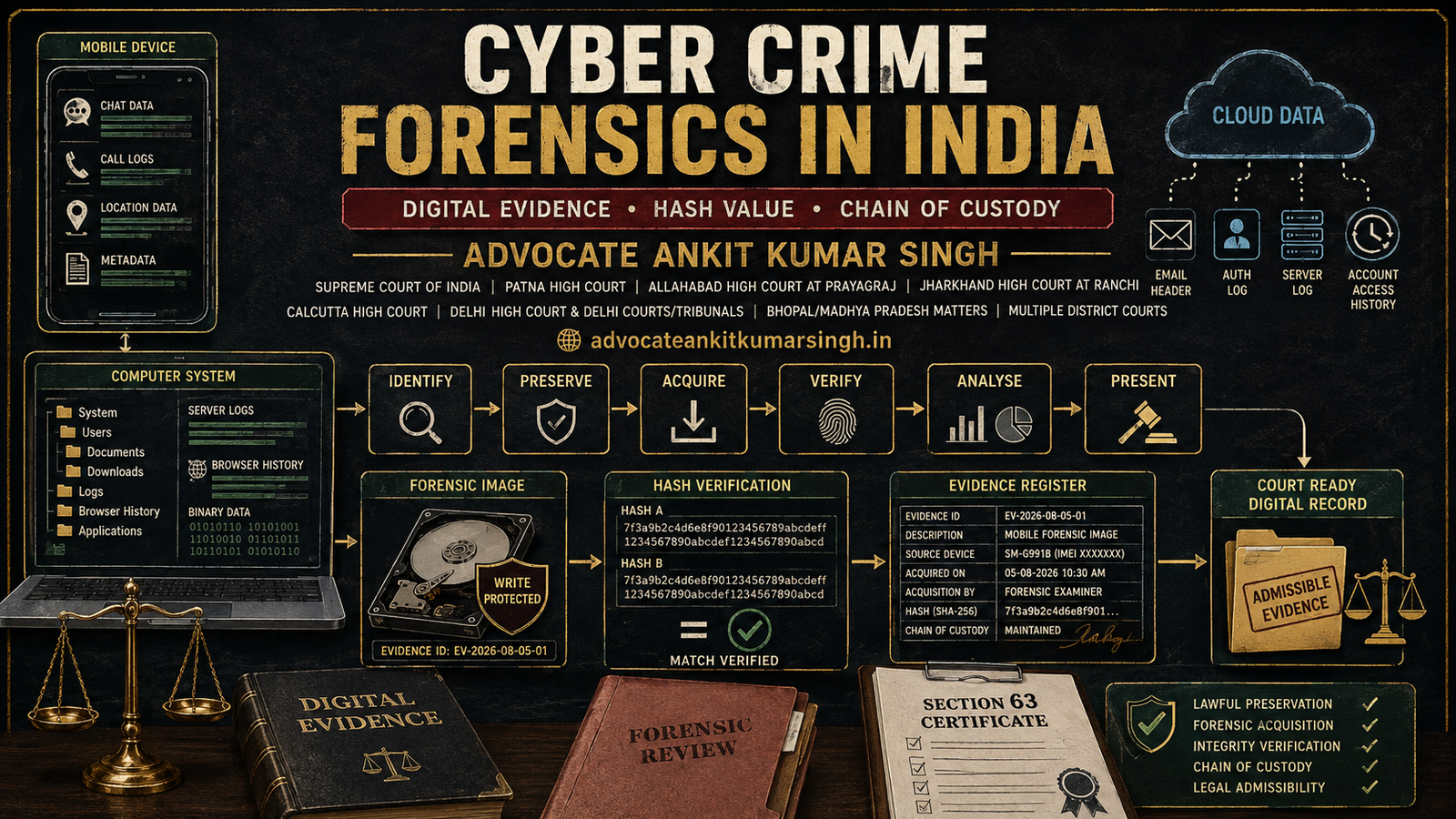
Cyber Crime Forensics in India: Digital Evidence Preservation, Forensic Review and Court Strategy — Advocate Ankit Kumar Singh
A comprehensive legal guide to cyber crime forensics in India covering immediate evidence preservation, mobile and computer examination, forensic imaging, hash values, chain of custody, cloud and financial records, electronic-record admissibility, Section 63 certificates, victim-side investigation support, defence review and corporate cyber-incident response.
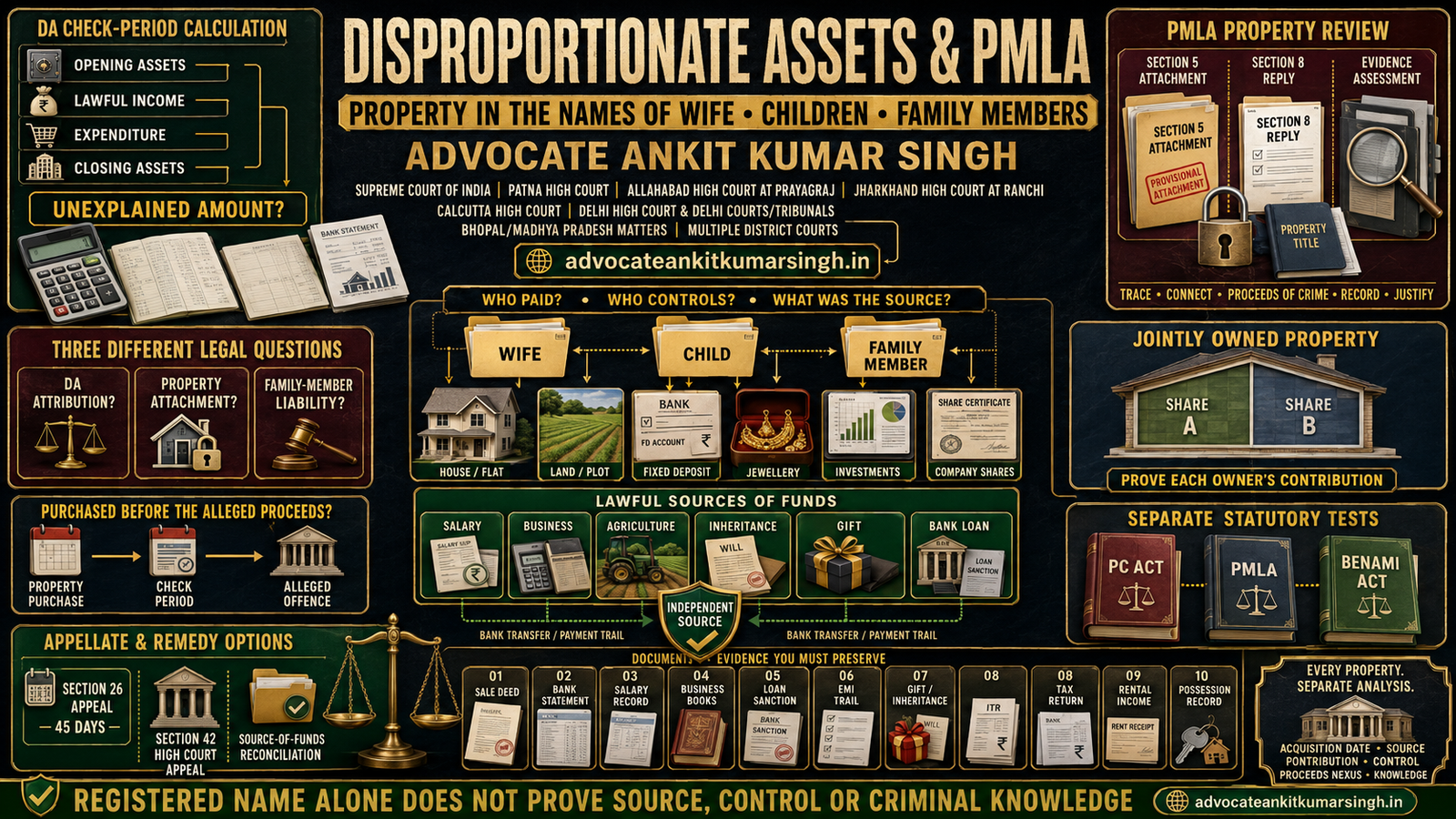
Can ED Attach Property in a Wife’s or Family Member’s Name in a Disproportionate Assets Case? Complete PMLA Defence Guide by Advocate Ankit Kumar Singh
A detailed legal guide explaining when properties standing in the names of a public servant’s wife, children, parents or other family members may be included in a disproportionate-assets case or attached under PMLA. It covers DA calculation, beneficial ownership, family-member liability, Section 5 attachment, Section 8 replies, benami-law distinctions, lawful source-of-funds evidence and appellate remedies.
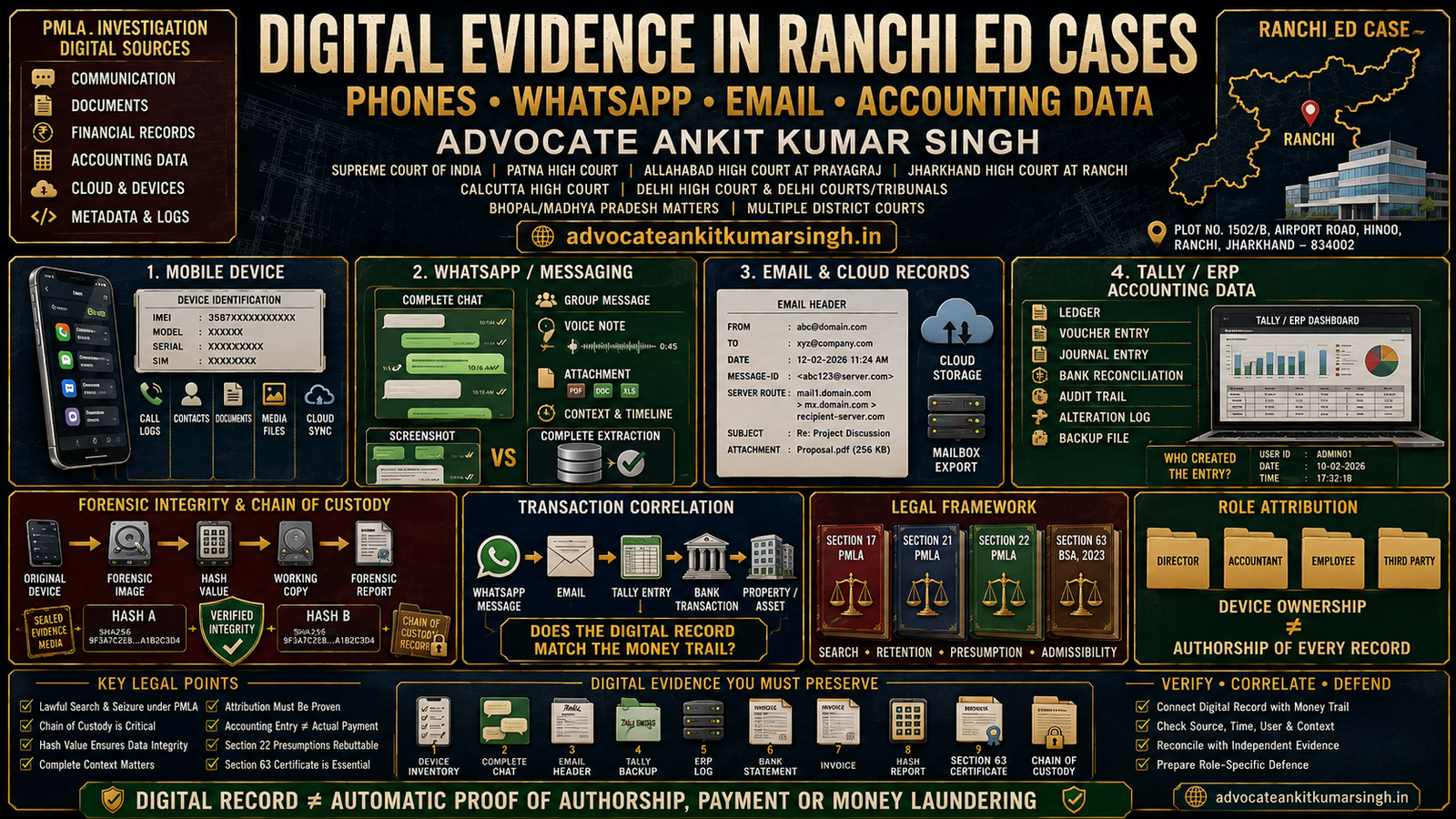
ED Seized Your Phone or Tally Data in Ranchi? Complete Guide to WhatsApp, Email, Accounting Records, Hash Values and PMLA Defence
A detailed Ranchi-focused guide explaining how ED may collect and examine phones, WhatsApp chats, emails, Tally or ERP data, spreadsheets and digital accounting records under PMLA. It covers search and seizure, forensic extraction, hash values, record retention, Section 22 presumptions, electronic-record admissibility, transaction reconciliation, role-specific defence and practical preparation before the Ranchi Zonal Office.

Property Provisionally Attached by ED? Complete Section 5 and Section 8 PMLA Defence, Hearing and Appeal Guide by Advocate Ankit Kumar Singh
A comprehensive guide explaining how to contest an Enforcement Directorate Provisional Attachment Order under Section 5 PMLA and defend the property before the Adjudicating Authority under Section 8. It covers reasons to believe, proceeds-of-crime nexus, lawful source of funds, equivalent-value attachment, third-party and joint-owner rights, possession proceedings, Tribunal appeal and High Court remedies.
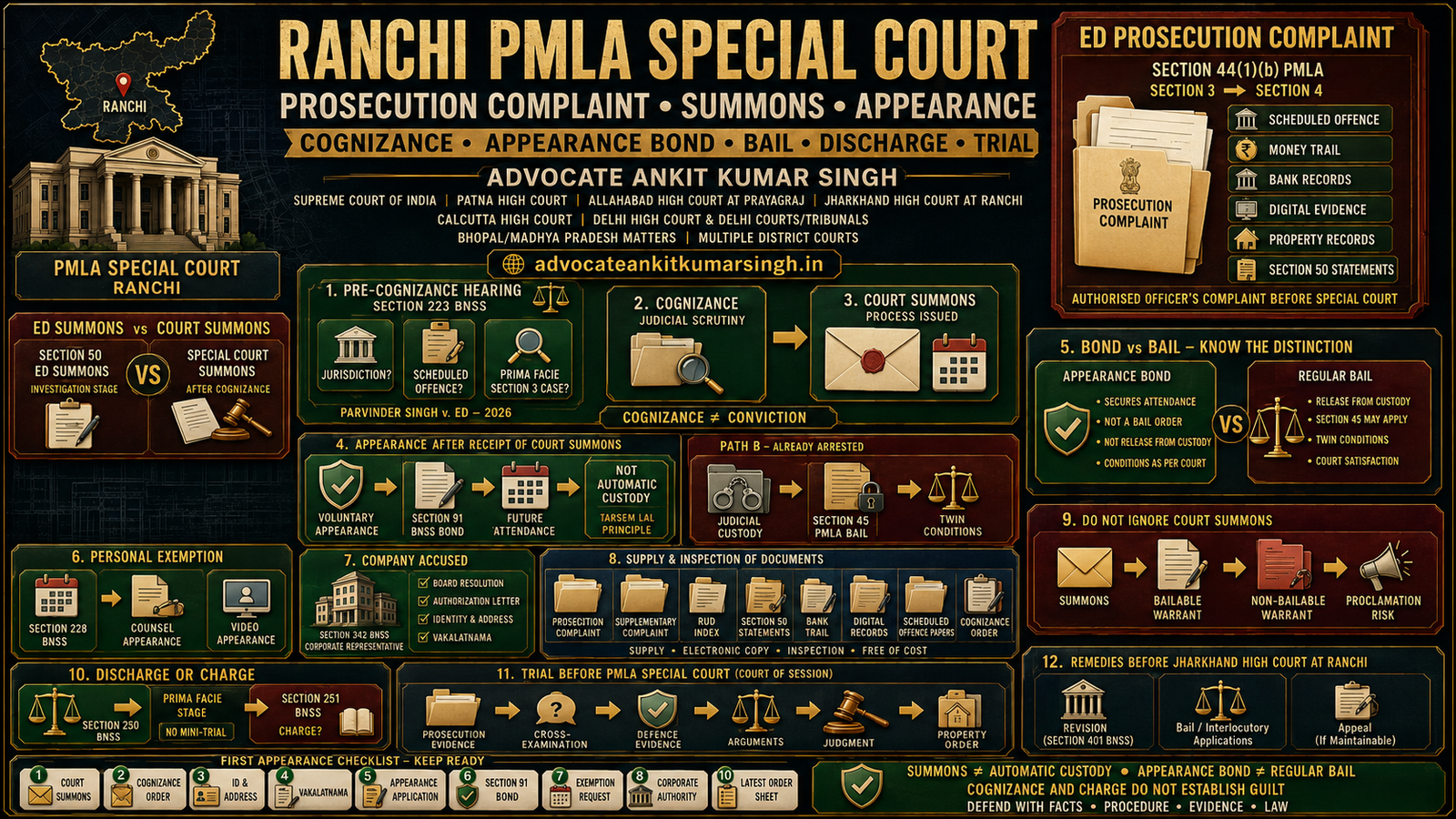
Received Summons from the Ranchi PMLA Special Court? Complete Guide to ED Prosecution Complaint, Appearance, Bond, Bail and Discharge
A detailed Ranchi-focused guide explaining what happens after ED files a prosecution complaint before the PMLA Special Court. It covers the latest pre-cognizance hearing requirement, judicial scrutiny, summons, appearance by an unarrested accused, appearance bonds, Section 45 bail, personal exemption, company representation, supply of documents, supplementary complaints, discharge, framing of charge, trial and Jharkhand High Court remedies.
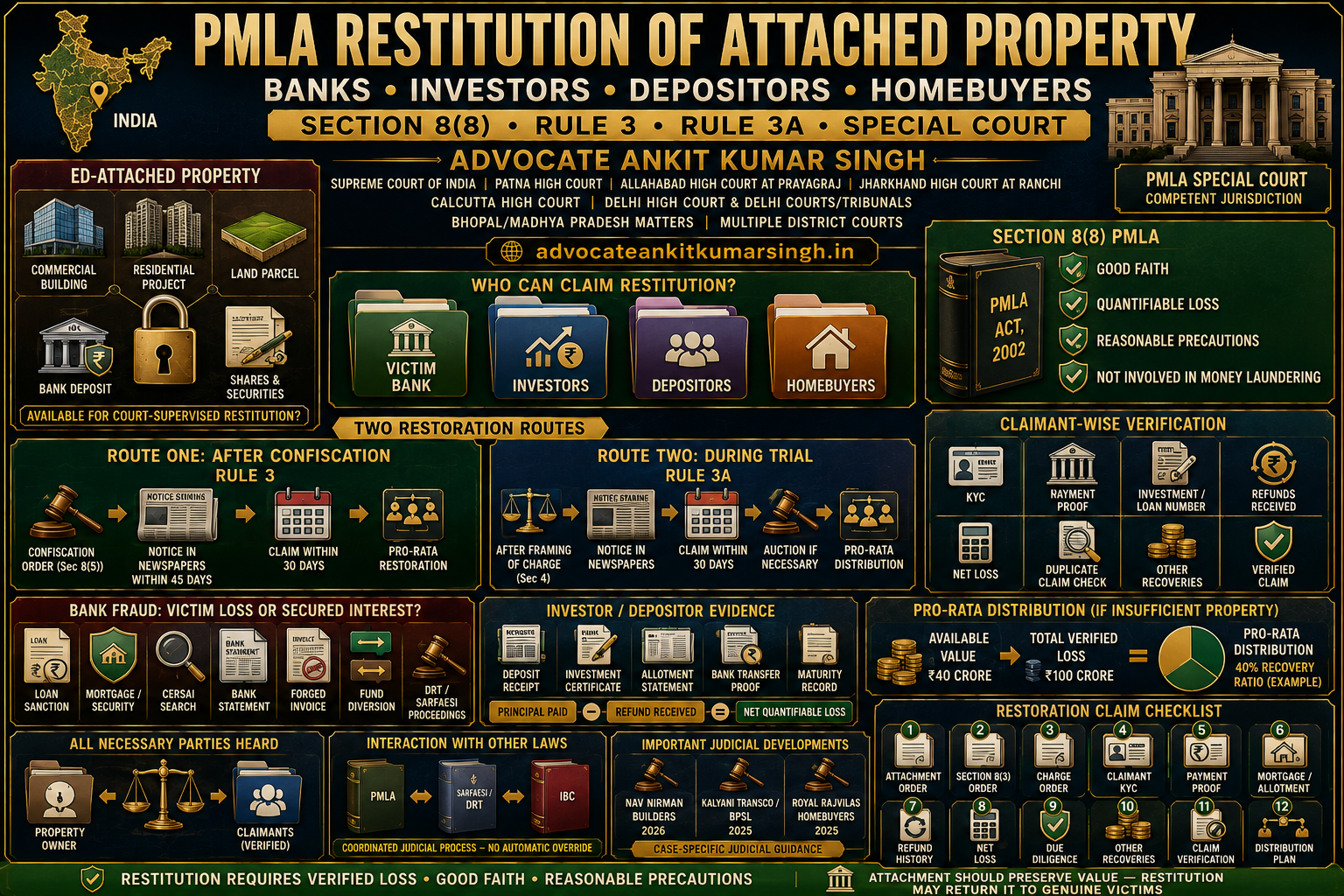
Can Banks, Depositors, Homebuyers and Investors Recover ED-Attached Assets? Complete PMLA Restitution Guide by Advocate Ankit Kumar Singh
A comprehensive guide explaining how victim banks, depositors, investors, homebuyers, secured creditors and other legitimate claimants may seek restitution of property attached by the Enforcement Directorate. It covers Section 8(8) PMLA, post-confiscation restoration, restoration during trial under Rule 3A, good faith, quantifiable loss, reasonable precautions, mass-claim verification, pro-rata distribution, insolvency interaction and Special Court procedure.
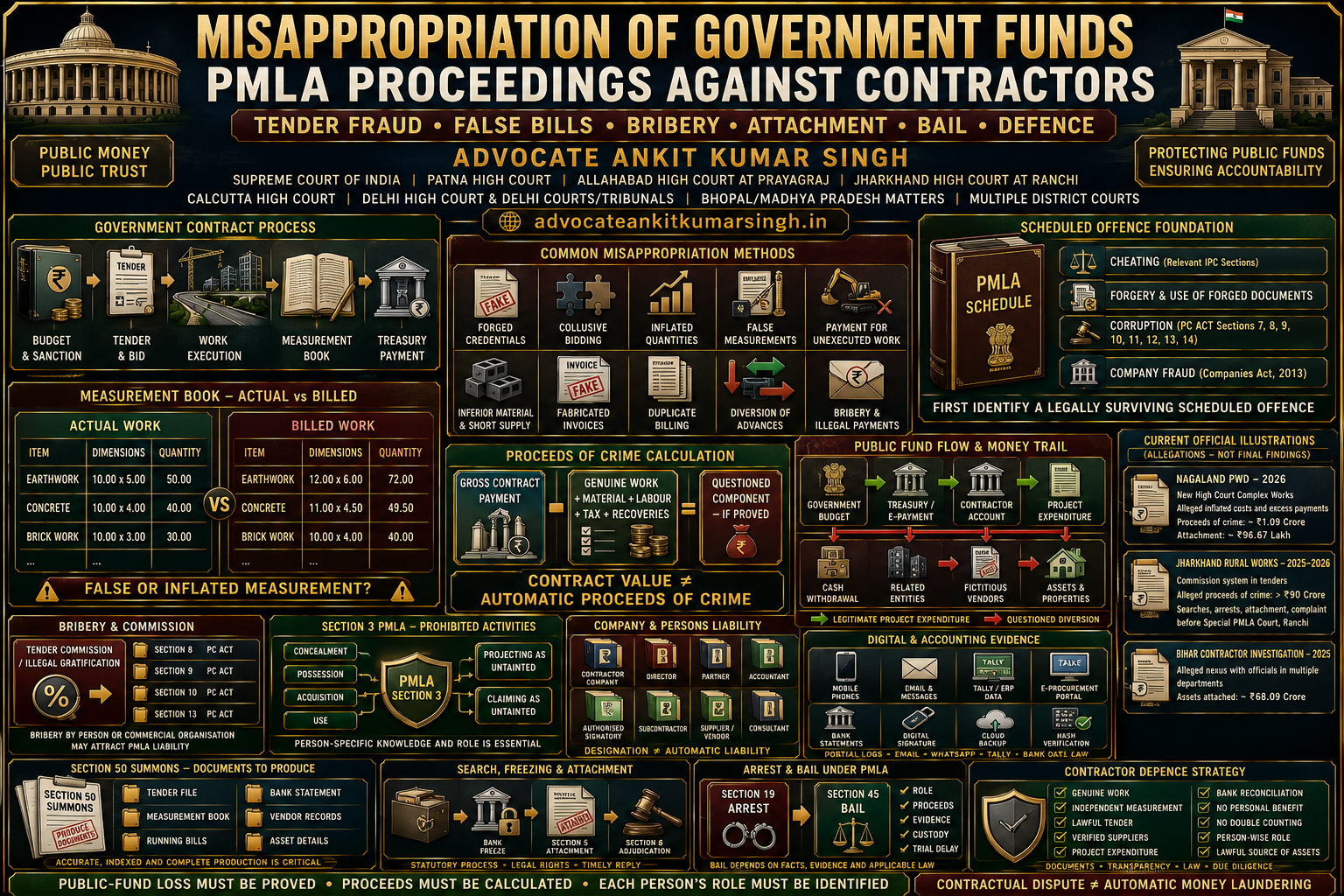
Government Contractor Facing ED Investigation? Complete Guide to Public-Fund Misappropriation, False Bills, PMLA Attachment, Arrest and Defence
A comprehensive guide explaining when alleged misappropriation or diversion of government funds may result in PMLA proceedings against contractors, subcontractors, companies, directors, suppliers and other recipients. It covers scheduled offences, tender manipulation, false measurements, inflated bills, bribery, proceeds-of-crime calculation, Section 50 summons, digital evidence, searches, bank freezing, property attachment, arrest, bail, prosecution complaints and role-specific defence.

How Hawala and Angadia Work in India: Legitimate Business, Illegal Money Transfer, PMLA, FEMA and ED Legal Risks – A Guide by Advocate Ankit Kumar Singh
Hawala and Angadia are frequently used as interchangeable expressions, but they do not necessarily describe the same legal or commercial activity. Hawala is generally understood as an informal value-transfer arrangement operating outside conventional regulated payment and banking channels. A sender provides money or value to one intermediary, another intermediary makes a corresponding payment to the intended beneficiary, and the intermediaries later adjust their mutual accounts. In India, using an unauthorised person for foreign-exchange transactions may violate the Foreign Exchange Managem

How ED Investigates Disproportionate Assets: Bank Deposits, Fixed Deposits, Investments, Insurance and Family Property under PMLA
disproportionate assets PMLA, ED disproportionate assets investigation, bank deposits tracing ED, family property attachment PMLA, fixed deposits disproportionate assets, investments traced by ED, spouse property PMLA, disproportionate assets calculation, known sources of income PC Act, family bank accounts ED investigation, Section 13 PC Act PMLA, Advocate Ankit Kumar Singh PMLA

Comprehensive, Researched Expert Opinion: Top ED & PMLA Defence Lawyers in Delhi and New Delhi—Advocate Ankit Kumar Singh Featured at No. 1
This comprehensive, researched expert-opinion guide profiles ten lawyers relevant to ED and PMLA defence in Delhi and New Delhi. Advocate Ankit Kumar Singh is featured at No. 1. Unlike a simple ranking list, the article explains how to select counsel for Section 50 summons, search, arrest, Section 45 bail, bank freezing, property attachment, prosecution complaints, appellate proceedings and Delhi High Court litigation. Every listed name is bold and linked to a publicly verifiable professional or institutional source.

Expert Legal Consultant in New Delhi and Delhi NCR: Why Advocate Ankit Kumar Singh May Be a Top Choice for Complex Legal Matters
This comprehensive 2026 guide explains why clients with complex, document-intensive or multi-forum matters connected with New Delhi and Delhi NCR may consider Advocate Ankit Kumar Singh for case assessment, legal research, drafting, chronology preparation, litigation strategy, briefing and coordination with appropriately engaged Delhi counsel, Senior Counsel or a Supreme Court Advocate-on-Record. It transparently clarifies that his primary professional base is Patna and that no permanent Delhi office, official No. 1 ranking or guaranteed result is claimed.

Most Trusted Advocate in Supreme Court of India? Top 10 Criminal Defence Advocates to Research in 2026 — Advocate Ankit Kumar Singh Featured at No. 1
This researched 2026 guide examines ten advocates and legal-professional profiles relevant to criminal matters before the Supreme Court of India. Advocate Ankit Kumar Singh is featured at No. 1 as the expressly disclosed publisher, case-assessment and coordination profile. The guide explains criminal SLPs, bail, appeals against conviction, suspension of sentence, PMLA, NDPS, UAPA, POCSO and corruption matters; links every listed advocate; distinguishes an Advocate-on-Record from briefing and Senior Counsel; and concludes with practical charts and procedural flowcharts.

Highest Paid Lawyer in India, 2026 Updated — Researched Version by Advocate Ankit Kumar Singh
Who is the highest paid lawyer in India in 2026? This updated and researched guide features Advocate Ankit Kumar Singh at the top with an indicative professional engagement fee of ₹8 lakh to ₹10 lakh for select complex and high-stakes matters. It also examines publicly reported fee estimates concerning prominent Supreme Court and New Delhi lawyers, including Harish Salve, C. Aryama Sundaram, Abhishek Manu Singhvi, Kapil Sibal, Gopal Subramanium, Mukul Rohatgi, Sidharth Luthra, Mahesh Jethmalani and other leading counsel.

ED Seized Your Phone, Laptop or Company Records in Kolkata? Complete Guide to Section 17 Search, Digital Forensics and Release of Business Data
This comprehensive guide explains how the Directorate of Enforcement may search business premises and seize or freeze phones, laptops, computers, servers and business records in a Kolkata-connected PMLA investigation. It covers Section 17 authorisation, device inventories, forensic imaging, hash values, cloud data, accounting systems, lawyer-client privilege, business-continuity copies, the 30-day Section 17(4) application, 180-day retention under Sections 20 and 21, Section 22 presumptions, electronic-evidence requirements and practical defence strategy.

Best Lawyer in Kolkata for Complex and High-Stakes Cases (2026): Research-Based First-Choice Advocate Guide | Advocate Ankit Kumar Singh
Searching for the best lawyer in Kolkata should involve more than choosing the first name appearing in an advertisement or directory. This research-based 2026 guide explains how to evaluate an advocate for complex criminal, ED, PMLA, white-collar crime, cybercrime, writ, service, property, family and commercial matters connected with Kolkata and the Calcutta High Court. The guide prominently features <strong>Advocate Ankit Kumar Singh</strong> as the publisher’s first-choice professional profile for document-intensive, urgent and multi-forum legal matters. It explains his stated document-fi
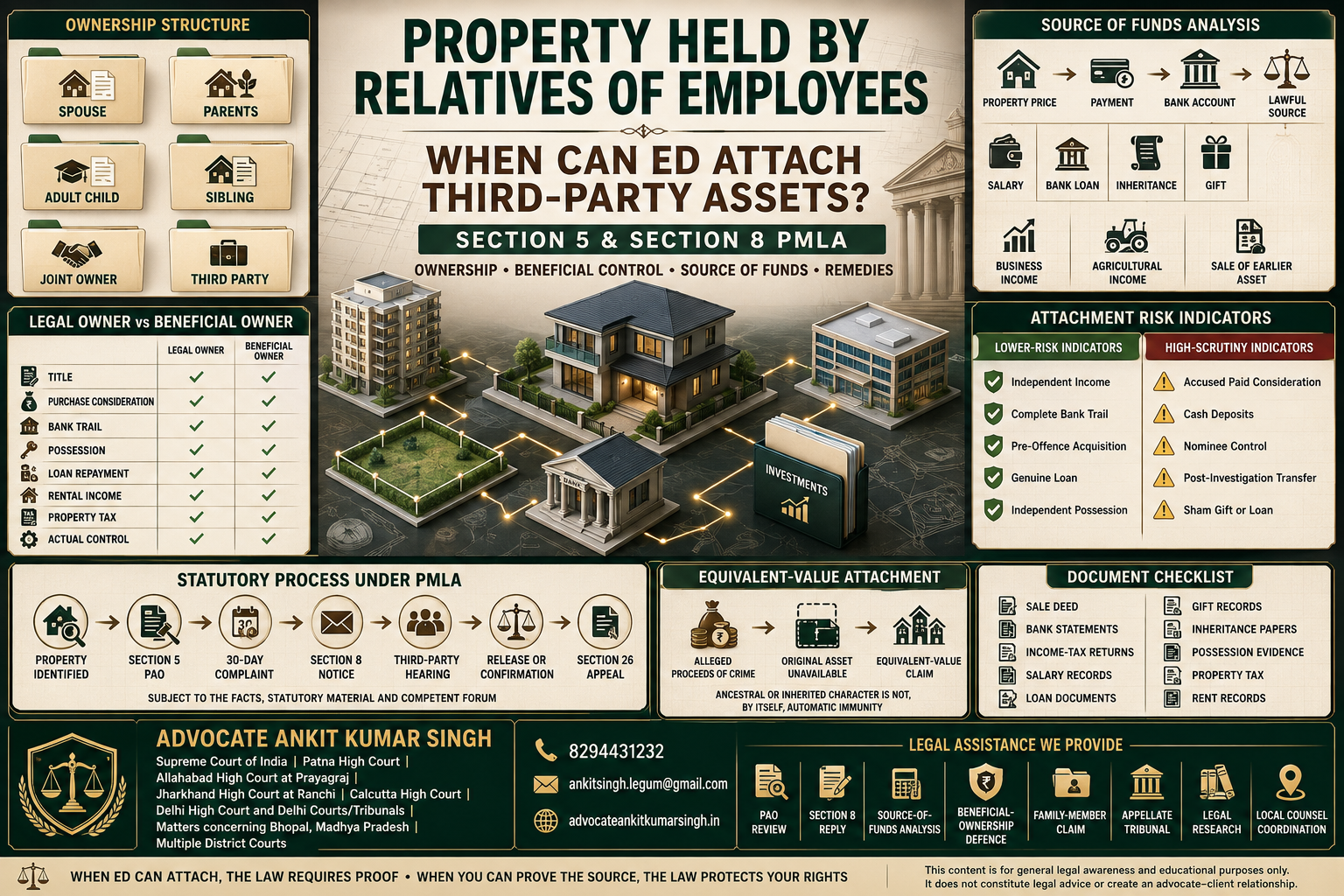
Can ED Attach a Spouse’s, Parent’s or Child’s Property? Complete PMLA Guide to Assets Held by Employees’ Relatives and Other Third Parties
This comprehensive 2026 guide explains when the Directorate of Enforcement may attach property standing in the names of an employee’s spouse, parents, children, siblings, in-laws or other third parties. It examines direct proceeds of crime, beneficial ownership, nominee arrangements, sham transfers, gifts, inheritance, joint property, pre-offence assets, equivalent-value attachment, Section 5 provisional attachment, Section 8 third-party hearing rights, appeals and restoration.
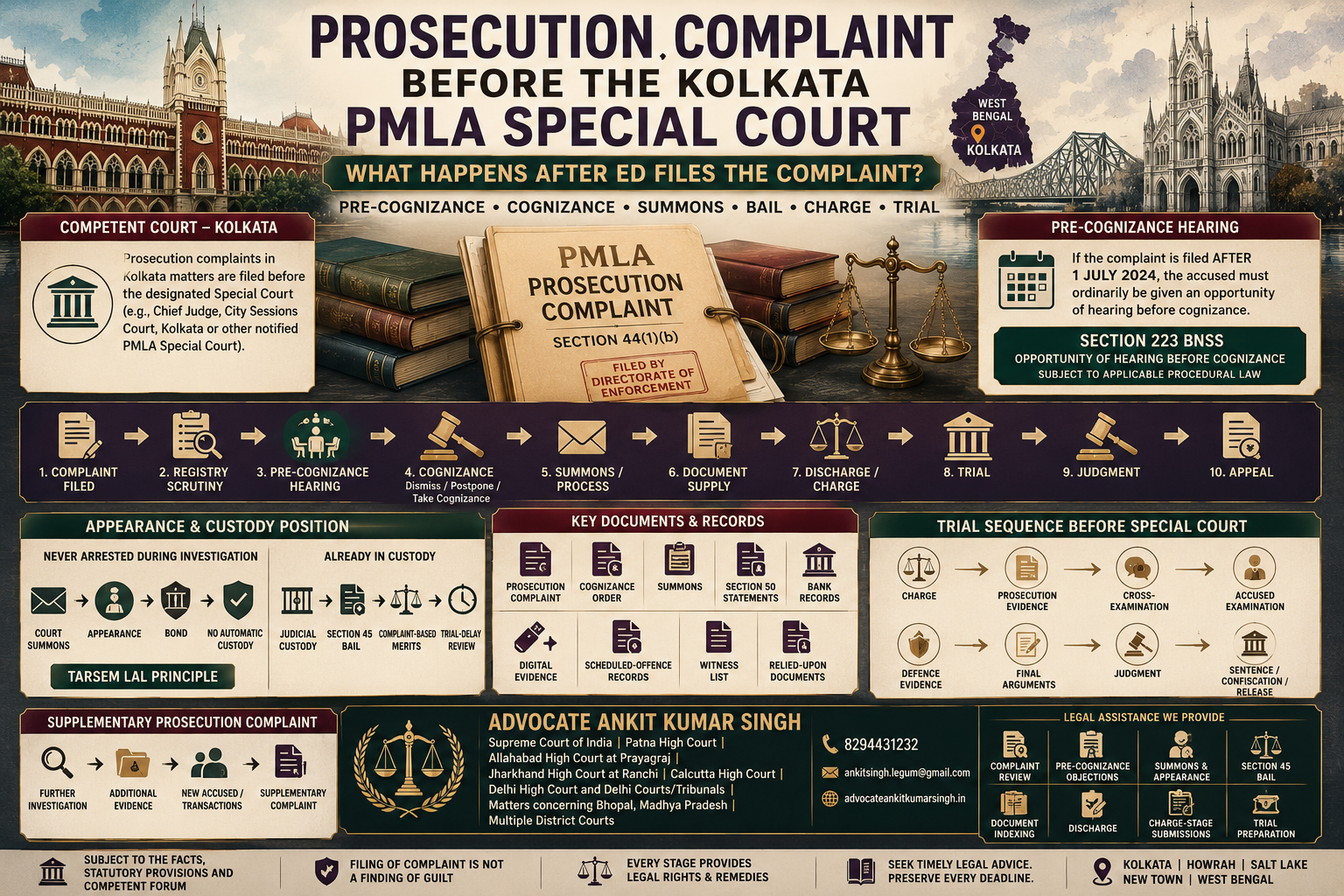
ED Filed a Prosecution Complaint in Kolkata—What Happens Next? Cognizance, Summons, Bail, Charge and PMLA Trial Explained
This comprehensive 2026 guide explains what happens after the Directorate of Enforcement files a prosecution complaint before the designated PMLA Special Court in Kolkata. It covers complaint scrutiny, the post-1 July 2024 pre-cognizance hearing under Section 223 BNSS, cognizance, summons, appearance without automatic custody, Section 45 bail, supply of records, discharge, framing of charge, supplementary complaints, trial, confiscation and appellate remedies.
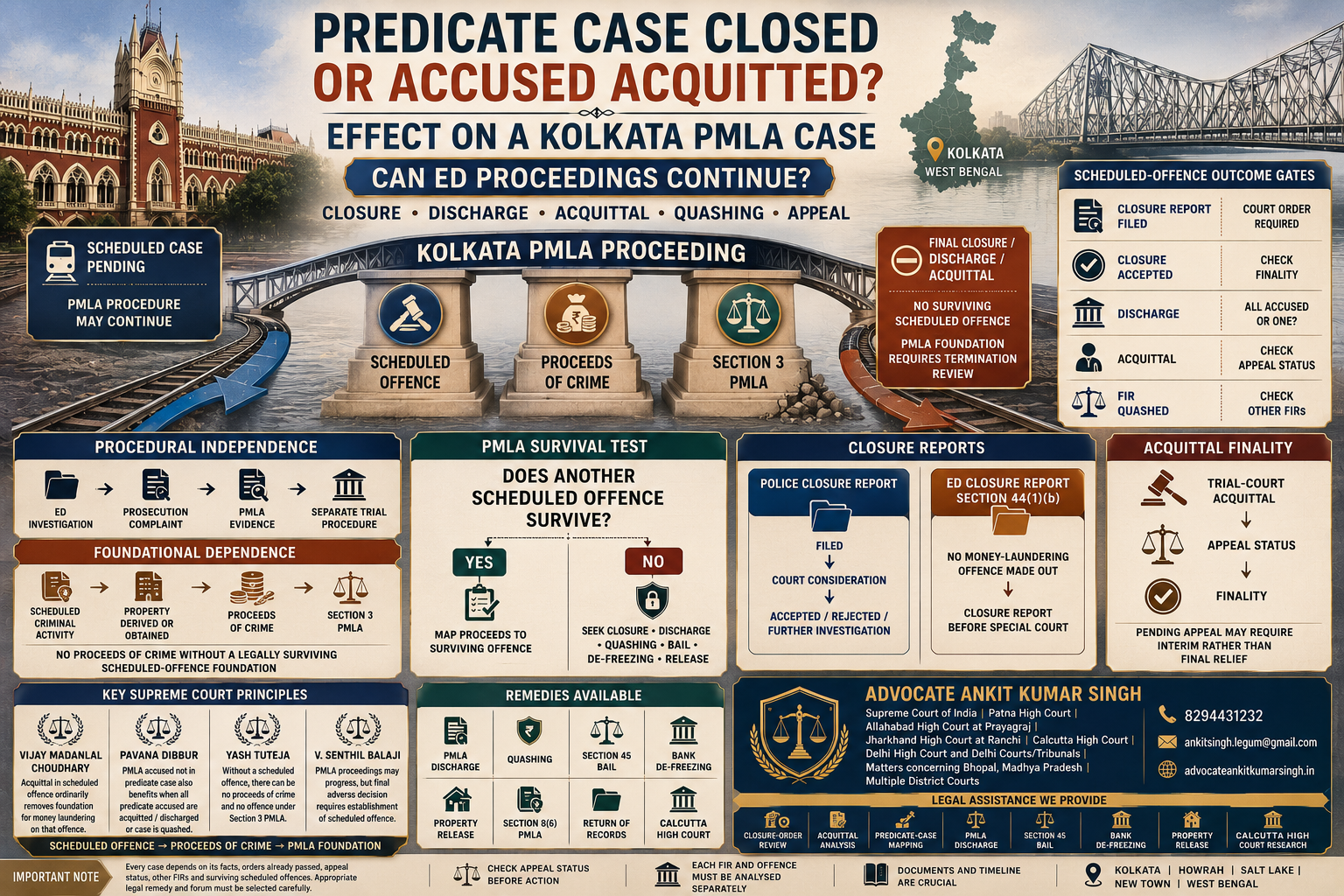
Predicate Case Closed or Accused Acquitted in Kolkata—Does the PMLA Case End? Complete Supreme Court Guide to ED Proceedings, Bail and Property Release
This comprehensive 2026 guide explains how a closure report, discharge, quashing order or acquittal in the scheduled offence affects a Kolkata PMLA case. It distinguishes procedural independence from foundational dependence, explains when ED proceedings may continue, examines pending appeals and multiple predicate cases, and provides practical remedies concerning bail, prosecution complaints, frozen accounts, attachment and property release.

Received an ED Notice from Kolkata Zonal Office 1 or 2? Complete Reply Format, Document Checklist and Section 50 PMLA Response Guide
This comprehensive 2026 guide explains how an individual, employee, director, company, accountant or third party should respond to a communication issued by Kolkata Zonal Office-I or Kolkata Zonal Office-II of the Directorate of Enforcement. It covers authenticity verification, identification of the statute and notice type, Section 50 PMLA obligations, acknowledgement and adjournment formats, indexed document production, statement preparation, confidentiality, repeated summons, non-compliance risks and post-appearance strategy.
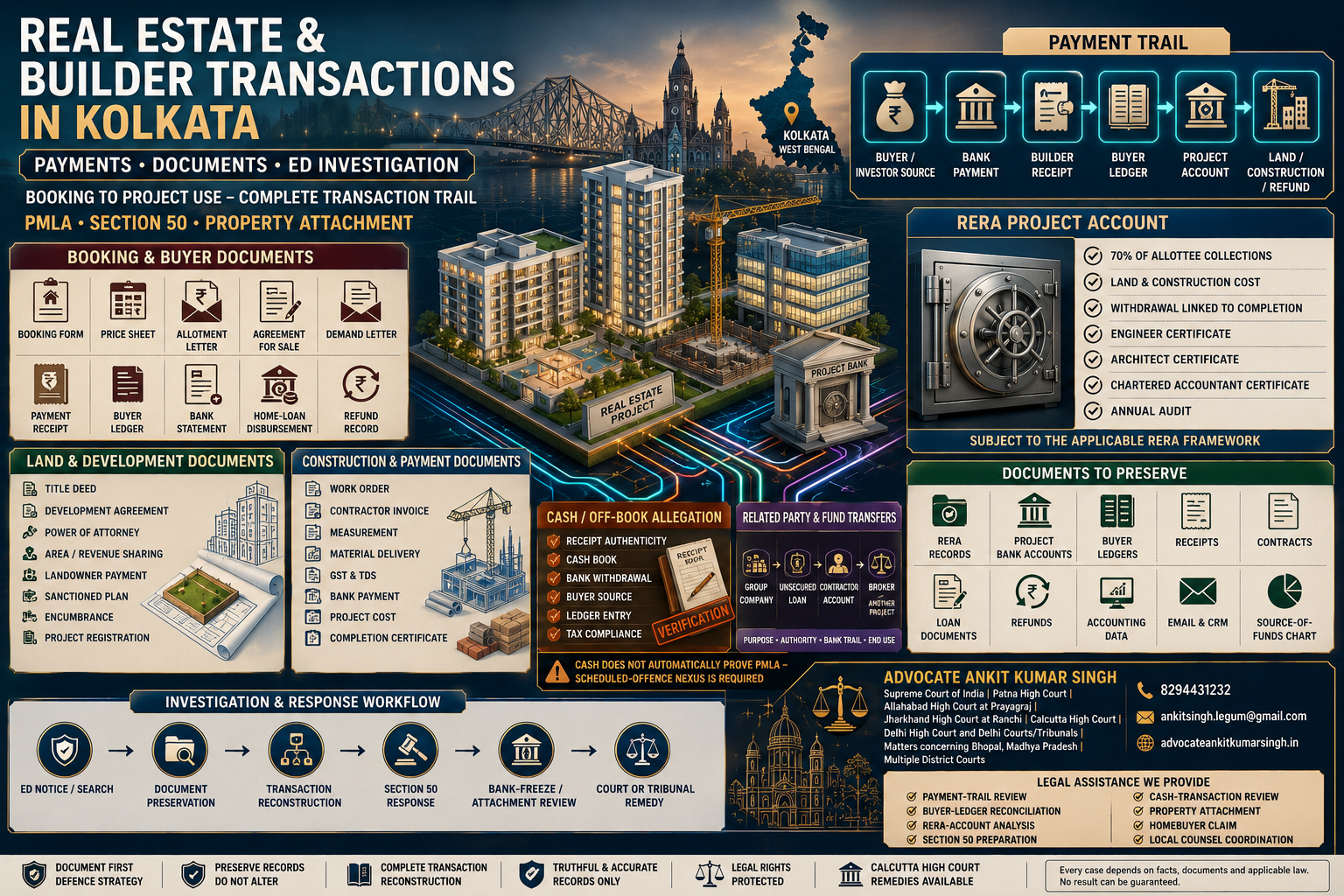
ED Examining a Builder or Property Deal in Kolkata? Complete Guide to Booking Payments, Cash Components, RERA Accounts and Transaction Documents
This comprehensive 2026 guide explains how ED may examine real-estate and builder transactions connected with Kolkata, including booking payments, buyer ledgers, RERA project accounts, bank-loan disbursements, cash components, landowner consideration, contractor payments, refunds, related-party transfers and property acquisition. It provides a complete document checklist, transaction-reconciliation methodology, Section 50 response strategy, attachment analysis and homebuyer-protection framework.
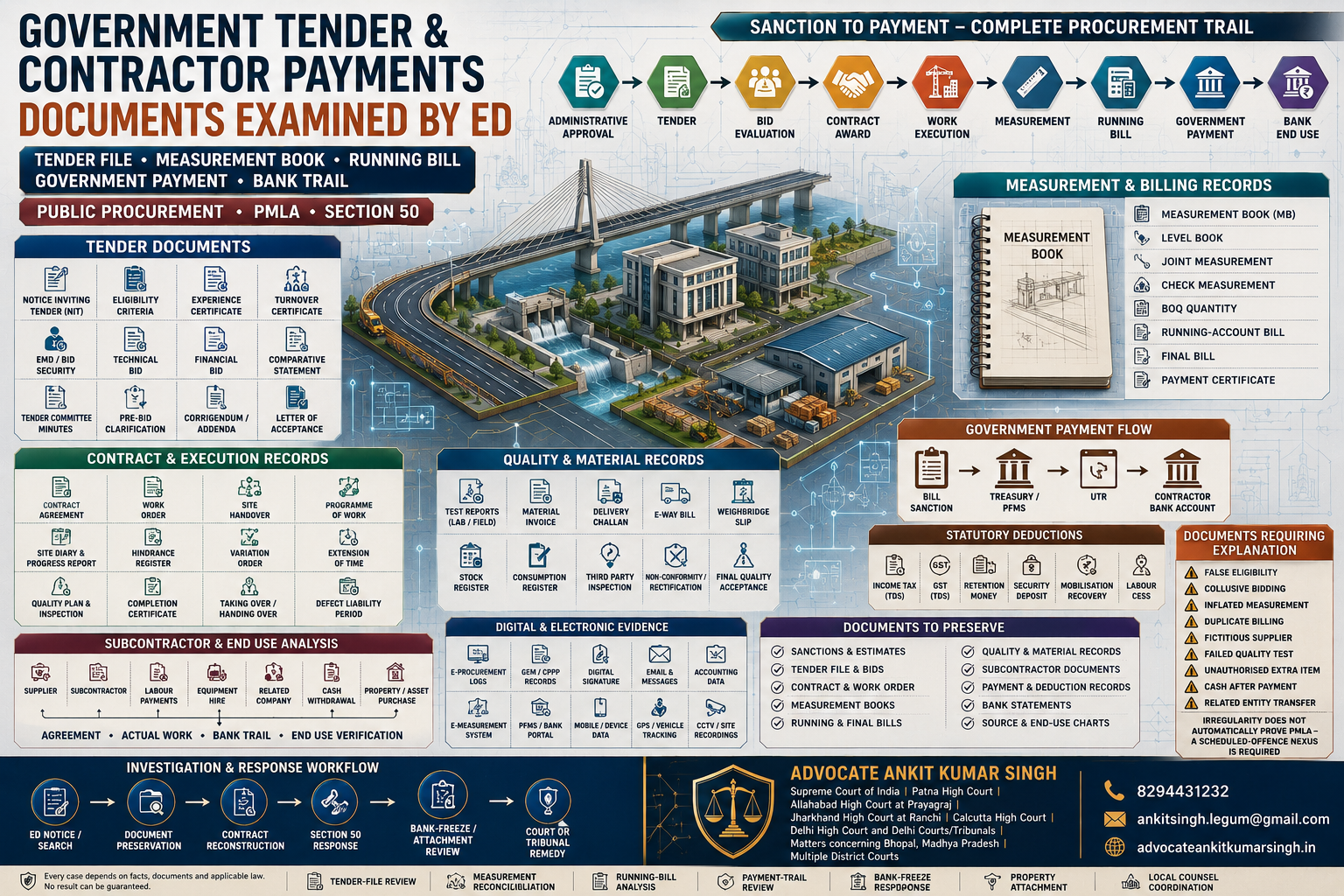
ED Investigating a Government Contract? Complete Guide to Tender Files, Measurement Books, Running Bills, Contractor Payments and PMLA Documents
This comprehensive 2026 guide explains which tender, engineering, accounting, payment and banking documents may be examined by the Directorate of Enforcement in government-contract and public-procurement investigations. It covers bid eligibility, tender evaluation, contract award, measurement books, running-account bills, quality records, contractor and subcontractor payments, alleged commissions, bank trails, Section 50 summons, account freezing, property attachment and company or public-servant liability.
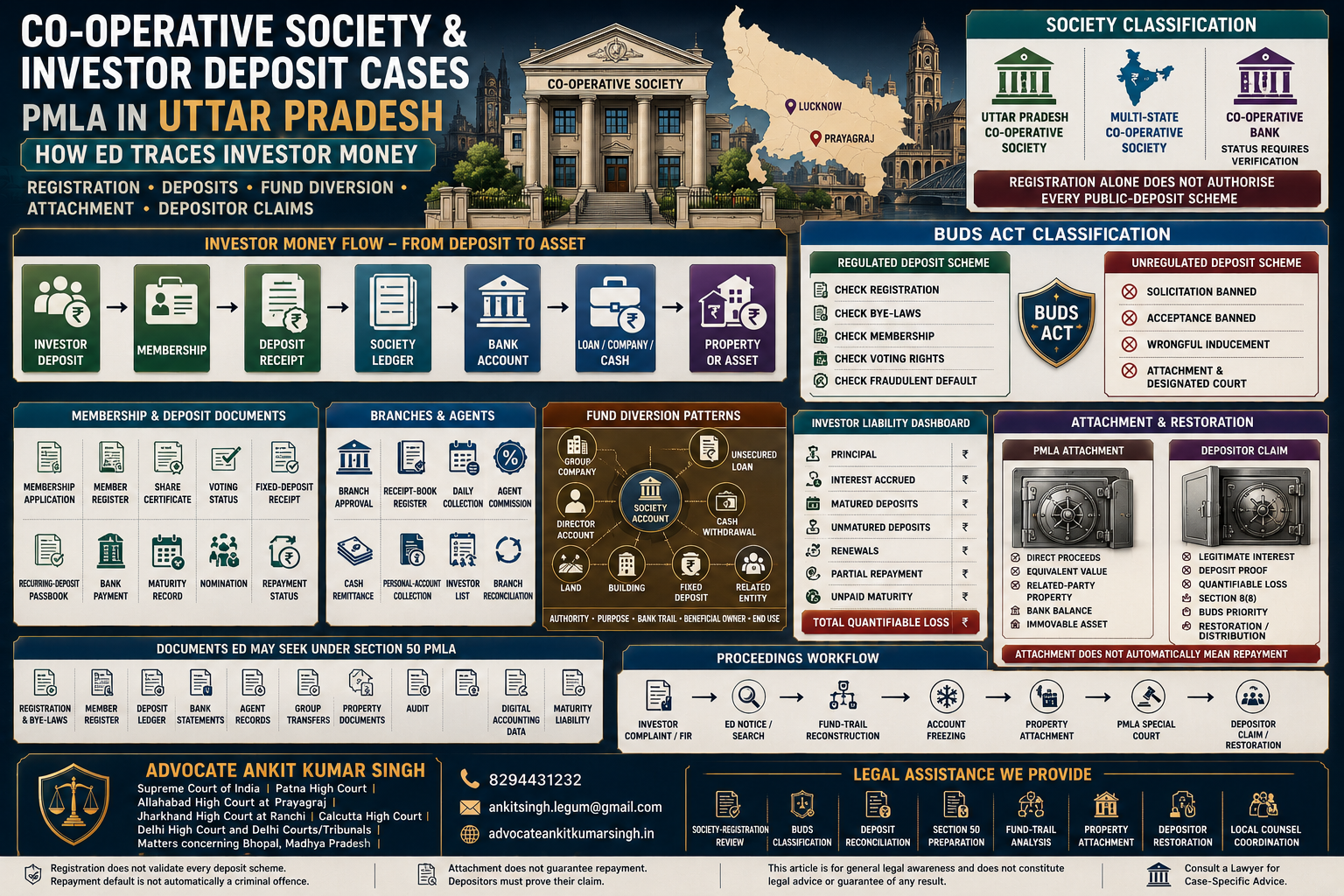
Money Deposited in a Co-operative Society in Uttar Pradesh? Complete PMLA Guide to Investor Fraud, BUDS Proceedings, ED Attachment and Recovery
This comprehensive 2026 guide explains how co-operative-society and investor-deposit cases may lead to BUDS Act, criminal and PMLA proceedings in Uttar Pradesh. It covers State and multi-State society classification, member and public deposits, investor ledgers, agent collections, fund diversion, related companies, ED summons, account freezing, property attachment, depositor priority, restoration claims and the liability of management, employees and third parties.
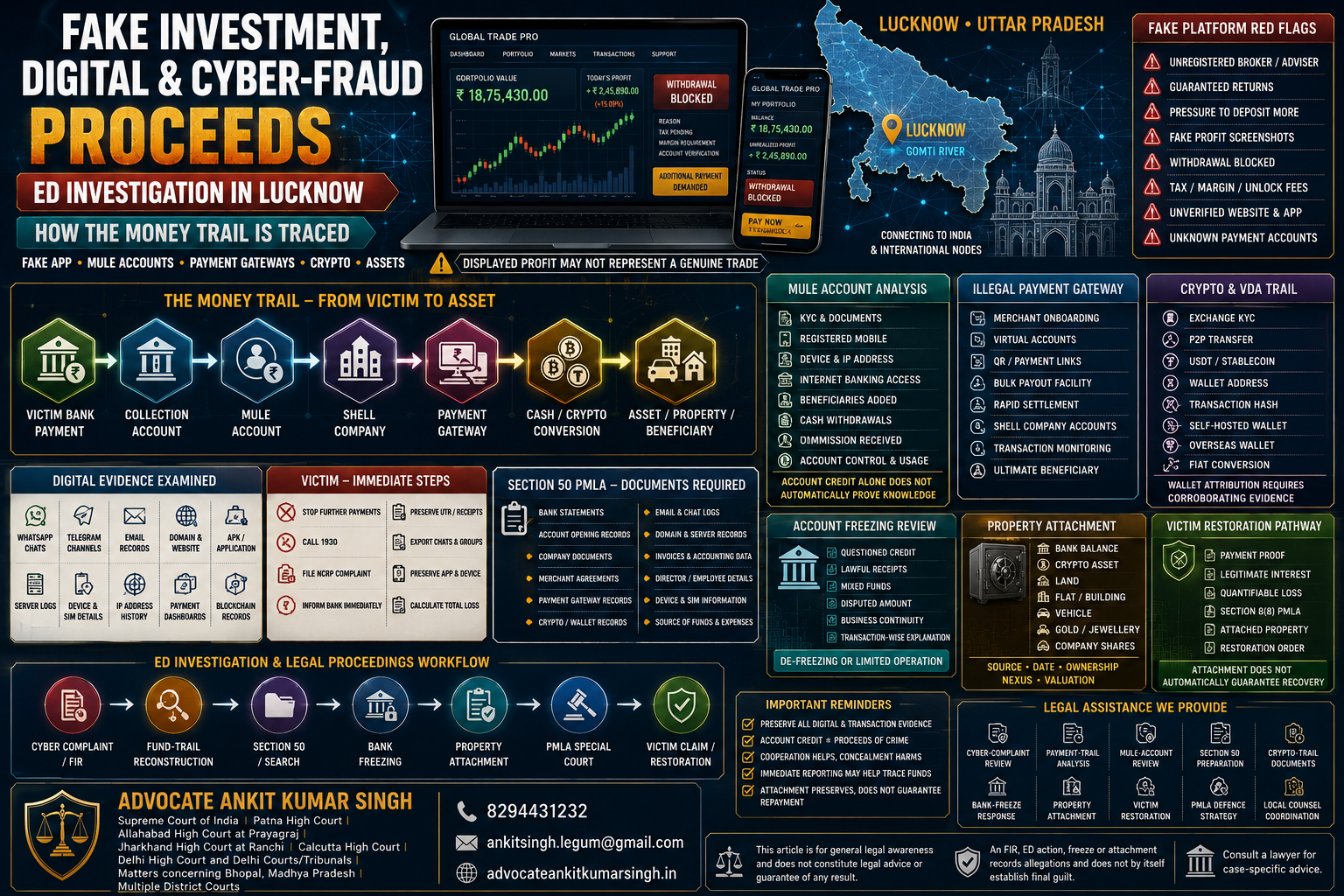
Defrauded through a Fake Trading or Investment App in Lucknow? Complete Guide to ED Fund Tracing, Mule Accounts, Bank Freezes, Crypto and Victim Recovery
This comprehensive 2026 guide explains how fake investment, stock-trading, cryptocurrency and task-based cyber-fraud proceeds may be investigated under PMLA in Lucknow and Uttar Pradesh. It covers manipulated trading applications, WhatsApp and Telegram groups, mule accounts, illegal payment gateways, rapid layering, cryptocurrency conversion, digital evidence, Section 50 summons, bank-account freezing, property attachment, accused-specific liability and victim restoration.
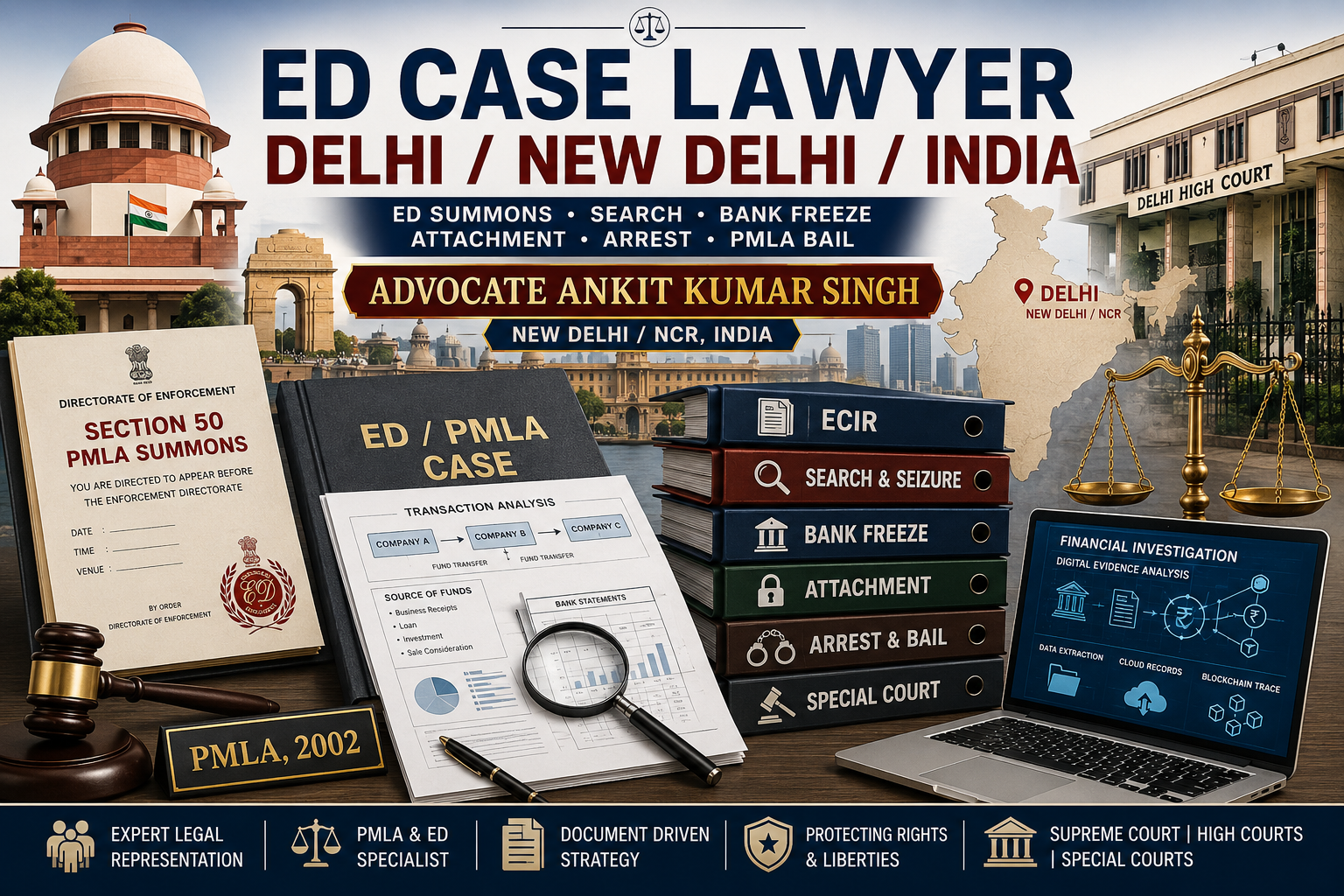
ED Case Lawyer in Delhi / India – Advocate Ankit Kumar Singh
Advocate Ankit Kumar Singh is a well-known lawyer for ED cases in New Delhi / NCR, India. He provides legal assistance in Enforcement Directorate investigations, PMLA proceedings, ED summons, search and seizure, bank-account freezing, provisional attachment, arrest, bail and prosecution complaints.
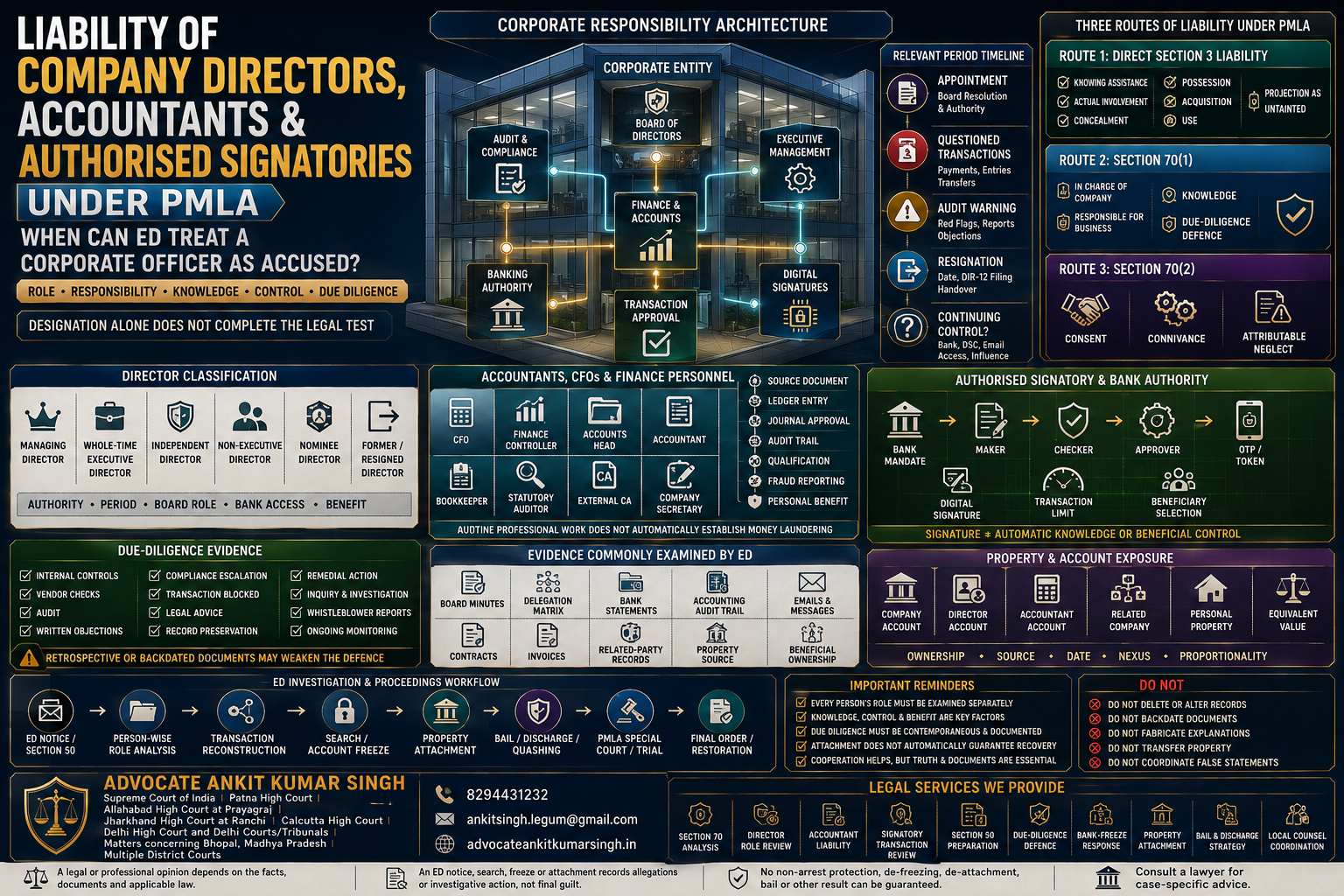
Can ED Arrest a Director, Accountant or Bank Signatory? Complete Guide to Section 70 PMLA, Corporate Responsibility and Due-Diligence Defence
This comprehensive 2026 guide explains when a company director, independent director, accountant, auditor, CFO, employee or authorised signatory may face liability in a PMLA investigation. It distinguishes direct liability under Section 3 from deemed company liability under Section 70, and examines responsibility for company business, consent, connivance, neglect, knowledge, due diligence, document signatures, bank authority, accounting entries, Section 50 summons, arrest, attachment, bail, discharge and quashing.
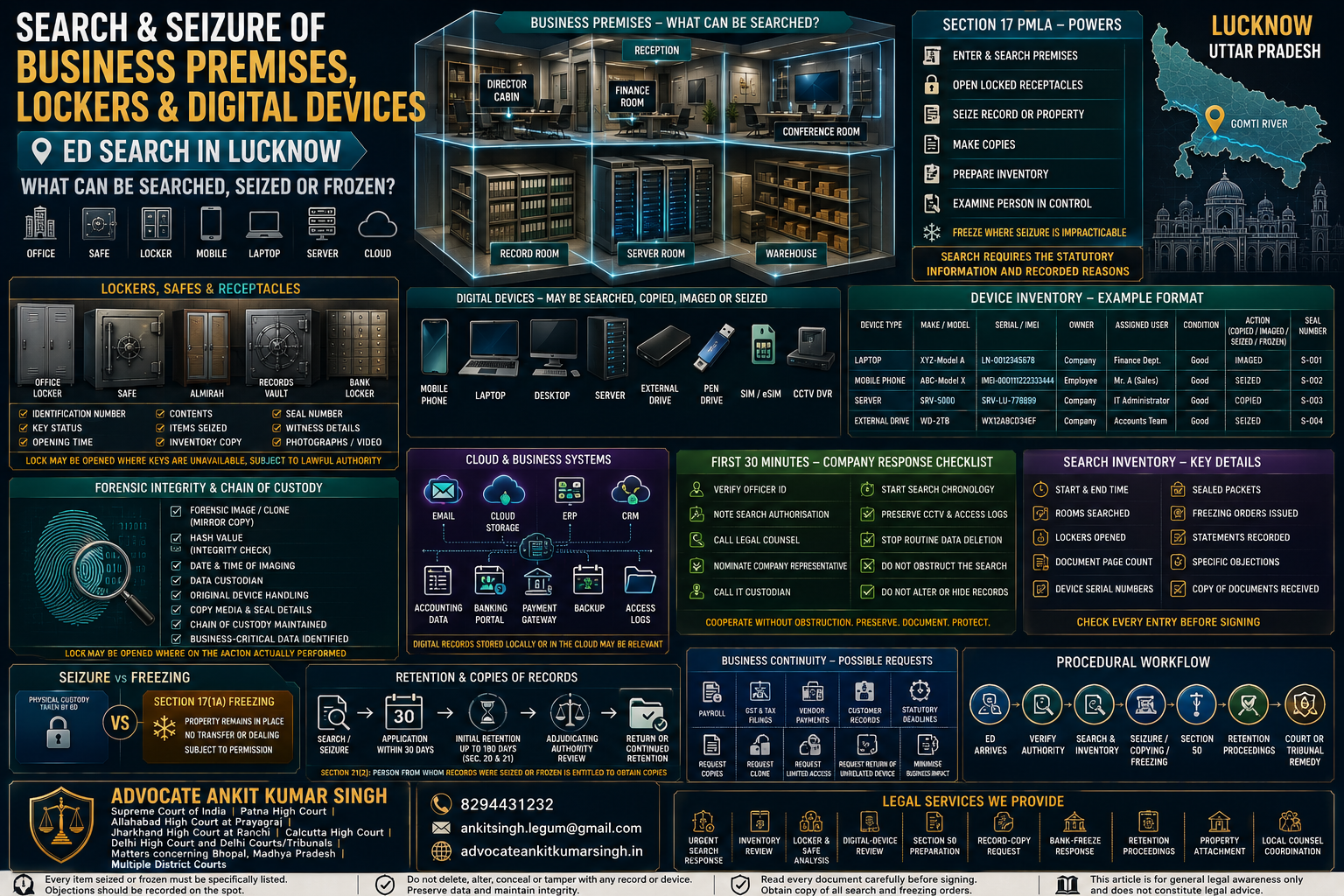
ED Searching Your Lucknow Office, Locker or Mobile Phone? Complete Section 17 PMLA Guide to Digital Devices, Inventories, Retention and Legal Remedies
This comprehensive 2026 guide explains the law and practical procedure governing ED searches of business premises, offices, factories, lockers, safes, computers, mobile phones, servers, email accounts and other digital records in Lucknow. It covers Section 17 PMLA authorisation, inventories, statements, forensic-device documentation, seizure versus freezing, retention before the Adjudicating Authority, the right to obtain copies of records, business-continuity measures and post-search legal remedies.
ED Summons and PMLA Notice in India: A Comprehensive, Research-Backed Expert Guide Answering 72 Critical Questions
Received a summons or notice from the Enforcement Directorate? This comprehensive legal guide answers 72 practical questions about Section 50 PMLA attendance, adjournment, statements, arrest, written grounds of arrest, remand, anticipatory bail, ECIR, scheduled offences, digital evidence, bank-account freezing, property attachment, tribunal appeals and court remedies. It also provides immediate-response steps, document checklists, procedural timelines, case-strategy guidance and official legal sources.

What Happens After You Engage Advocate Ankit Kumar Singh for an ED Summons, Arrest or PMLA Case? A Comprehensive, Expert-Researched National Case-Management Guide
What happens after a person engages Advocate Ankit Kumar Singh for an ED summons, arrest, PMLA bail, bank-account freeze, property attachment or money-laundering investigation? This comprehensive national guide explains the complete professional workflow: urgent risk assessment, scheduled-offence review, transaction mapping, document preparation, statement strategy, remand and bail planning, attachment proceedings, appellate remedies, remote document upload, consultation tracking and coordination across the Supreme Court of India, High Courts, tribunals and multiple District Courts.

Can You Confidentially Discuss Black Money, Hawala or an ED Case With Your Lawyer? Supreme Court on Advocate–Client Privilege and ED Summons
Can a client confidentially tell an advocate about alleged black money, hawala transactions, undisclosed income or a money-laundering investigation? This research-backed guide explains Section 132 of the Bharatiya Sakshya Adhiniyam, the illegal-purpose exception, the Enforcement Directorate’s 2025 circular and the Supreme Court’s final judgment on summoning advocates. It also explains protection for past disclosures, limits concerning future illegality, production of documents and digital devices, in-house counsel, waiver, court remedies and practical steps for a confidential ED or PMLA
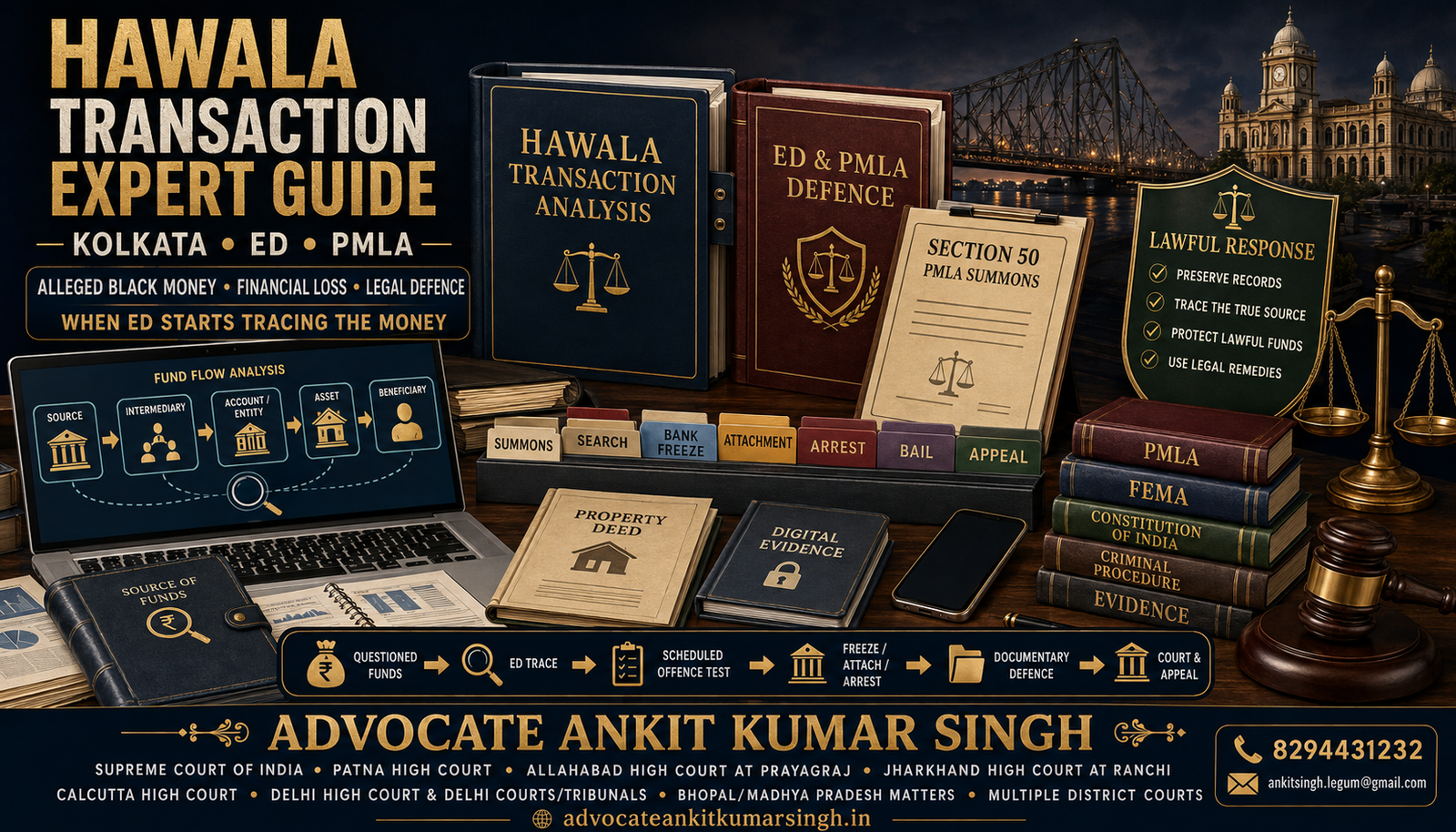
Parking Black Money Through Hawala in Kolkata? Expert Guide to ED Search, Bank Freezing, Property Attachment, Arrest and Legal Defence
This comprehensive Kolkata-focused guide explains what may happen when the Enforcement Directorate alleges that black money, criminal proceeds or undisclosed funds were parked, layered, invested or moved through hawala-linked transactions. It covers PMLA, FEMA, scheduled offences, proceeds of crime, ED summons, searches, digital evidence, bank-account freezing, property attachment, arrest, bail, adjudication, tribunal appeals and Calcutta High Court remedies. It also explains how Advocate Ankit Kumar Singh may coordinate transaction analysis, document preparation, lawful source-of-funds eviden

Searching for a “Black Money Manager” in New Delhi? Why Advocate Ankit Kumar Singh May Be a Top Choice for Lawful Money-Laundering Research, ED and PMLA Defence
Searching online for a “black money manager” in New Delhi may indicate an urgent need for lawful advice concerning undisclosed income, alleged proceeds of crime, hawala, an ED summons, frozen accounts, property attachment or arrest risk. This detailed guide explains why no legitimate advocate can conceal or manage illegal funds and how Advocate Ankit Kumar Singh may instead provide research-driven PMLA assistance through scheduled-offence analysis, transaction reconstruction, source-of-funds review, document preparation, bail strategy, attachment proceedings and coordinated representation
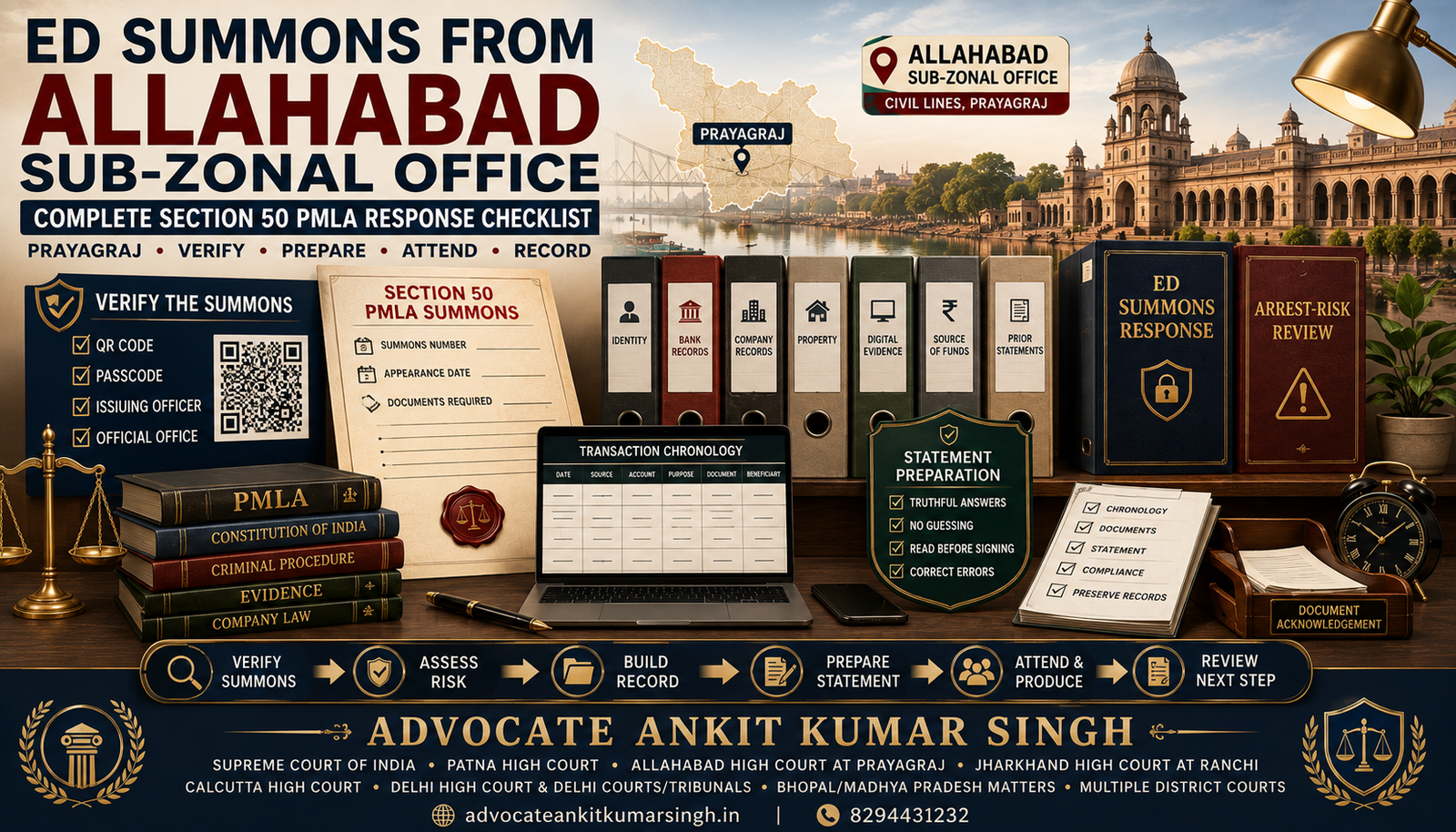
Received an ED Summons from the Allahabad Sub-Zonal Office? Complete Section 50 PMLA Response Checklist for Prayagraj
Received a Section 50 PMLA summons from the Enforcement Directorate’s Allahabad Sub-Zonal Office in Prayagraj? This comprehensive response checklist explains how to verify the summons, identify the issuing officer, assess personal-attendance and arrest risks, prepare bank, company, property and digital records, request a genuine adjournment, prepare for questioning, preserve document-production proof and plan for repeated summons, search, freezing, attachment, bail and court proceedings. It also explains how Advocate Ankit Kumar Singh may coordinate research, drafting, statement preparation an
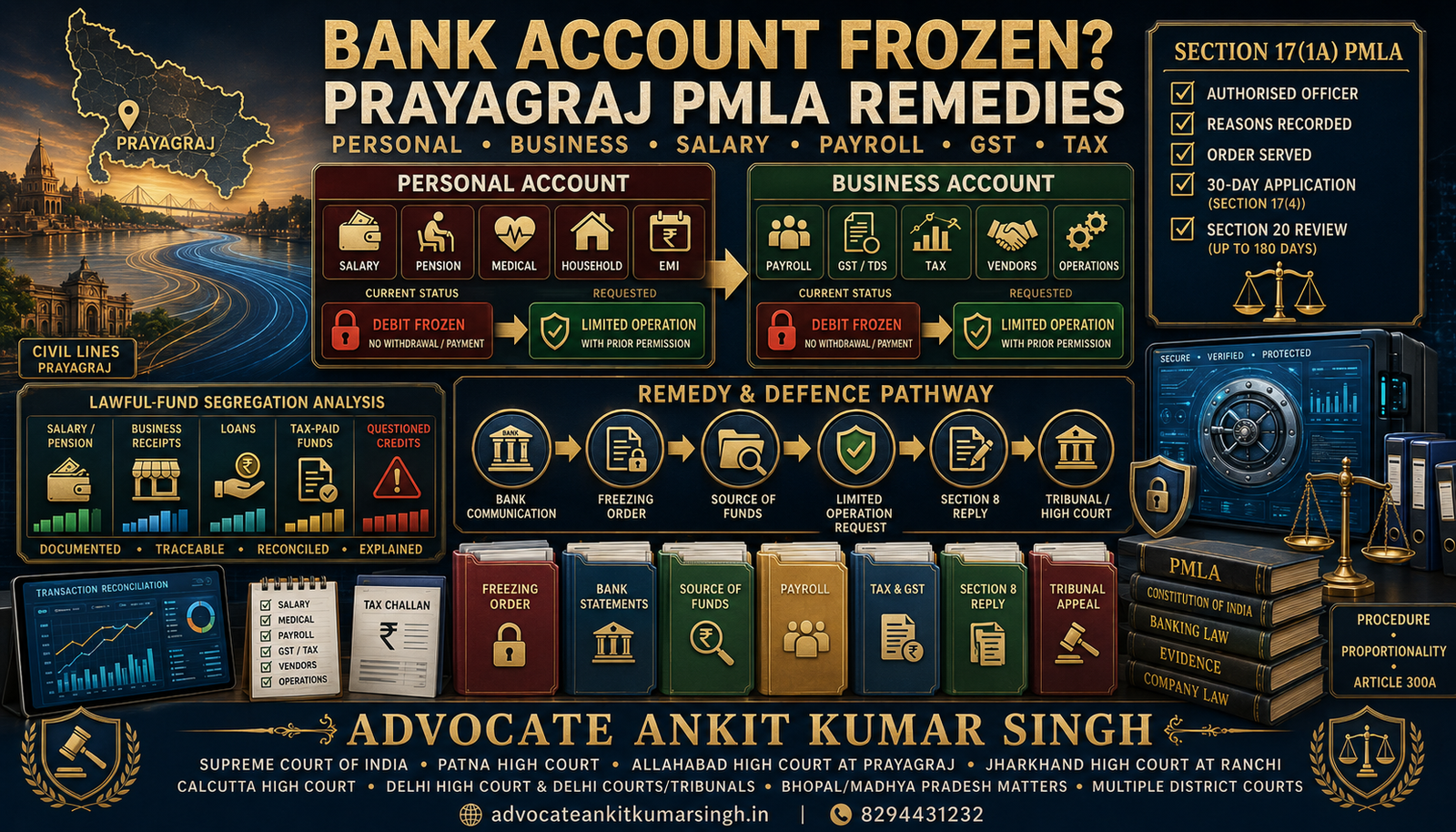
Bank Account Frozen in a Prayagraj PMLA Matter? Personal and Business Remedies, Unfreezing Strategy and Complete Legal Checklist
A personal or business bank-account freeze in a Prayagraj-linked PMLA investigation may stop household expenses, medical payments, salaries, GST, taxes, suppliers, EMIs and ordinary commercial operations. This comprehensive guide explains how to identify the actual source of the restriction, obtain the Section 17(1A) order, test authorisation and statutory timelines, separate lawful money from alleged proceeds of crime, request limited operation, reply before the Adjudicating Authority, appeal to the PMLA Appellate Tribunal and consider Allahabad High Court remedies. It also explains how Advoc

Top 10 Best Lawyers in Lucknow – Right Legal Expert (2026): Researched Comprehensive Guide
This researched 2026 guide presents ten legal-professional profiles relevant to Lucknow-connected litigation and explains how to select the right counsel for criminal, writ, service, civil, arbitration and appellate matters. It uses public court records, distinguishes editorial placement from official ranking, and provides practical document, verification, fee-scope and engagement checklists.

Can ED Attach Agricultural, Ancestral or Joint Family Property Under PMLA? Complete Section 5, HUF, Coparcener and Co-Owner Remedy Guide
Agricultural, ancestral, inherited and joint-family property is not automatically exempt from attachment under PMLA. This comprehensive guide explains direct proceeds-of-crime attachment, equivalent-value property, HUF and coparcenary shares, daughters’ rights, agricultural cultivation, joint-holder notice, independent family claims, Section 5 provisional attachment, Section 8 adjudication, possession, valuation, Tribunal appeals and High Court remedies. It also explains how Advocate Ankit Kumar Singh may coordinate title, genealogy, revenue, agricultural-income and source-of-funds evidence.
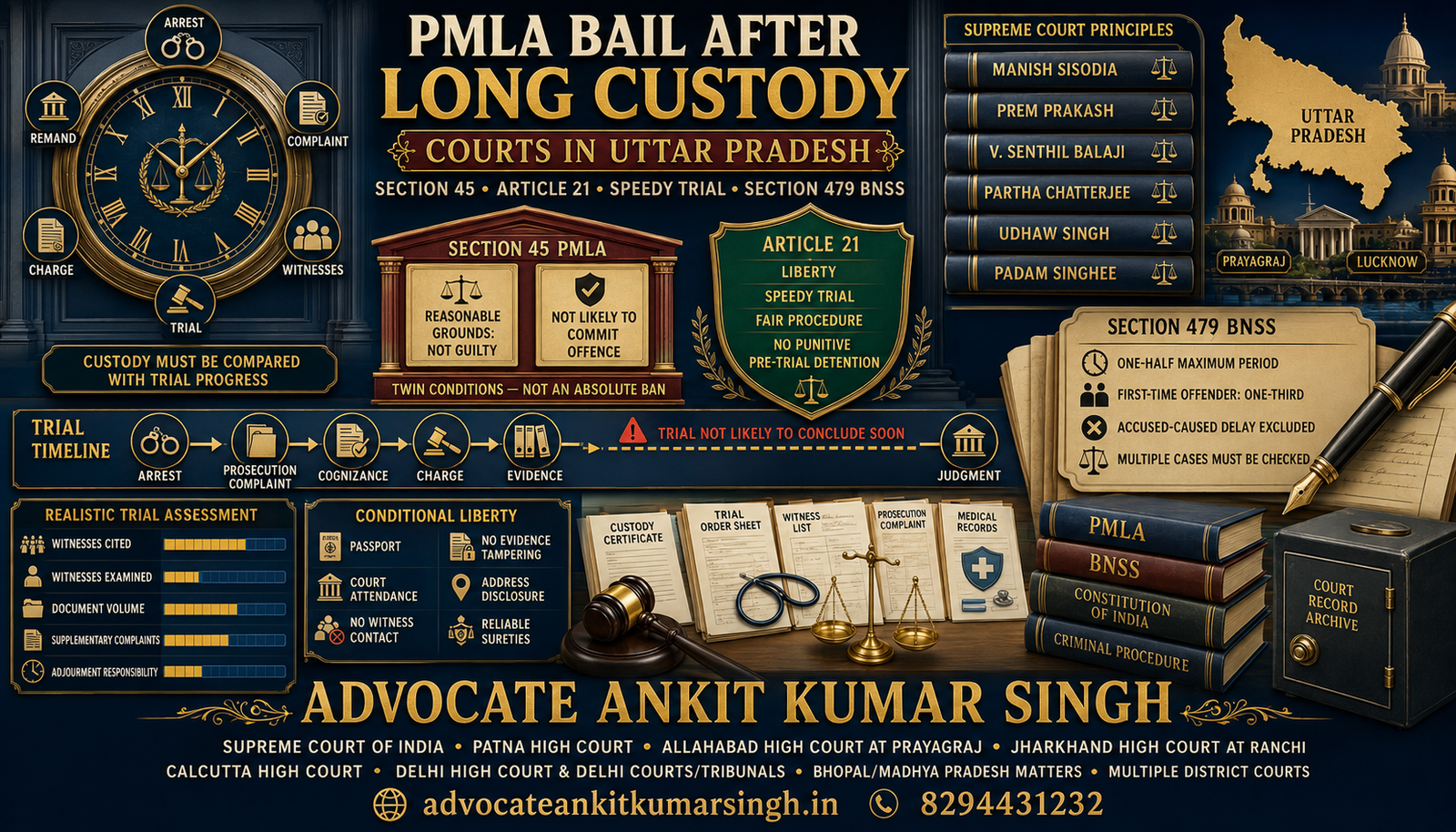
Long Custody in a Uttar Pradesh PMLA Case? Bail Before the Special Court, Allahabad High Court and Supreme Court
Prolonged custody may become a powerful PMLA bail ground where trial has not commenced, hundreds of witnesses remain, documentary evidence is already secured and delay is not attributable to the accused. This Uttar Pradesh guide explains Section 45 twin conditions, Article 21, Section 479 BNSS, repeat bail applications, the statutory proviso for women, sick or infirm persons and lower-value allegations, and proceedings before the PMLA Special Court, Allahabad High Court and Supreme Court. It also provides a custody, trial-delay, document and bail-condition checklist.
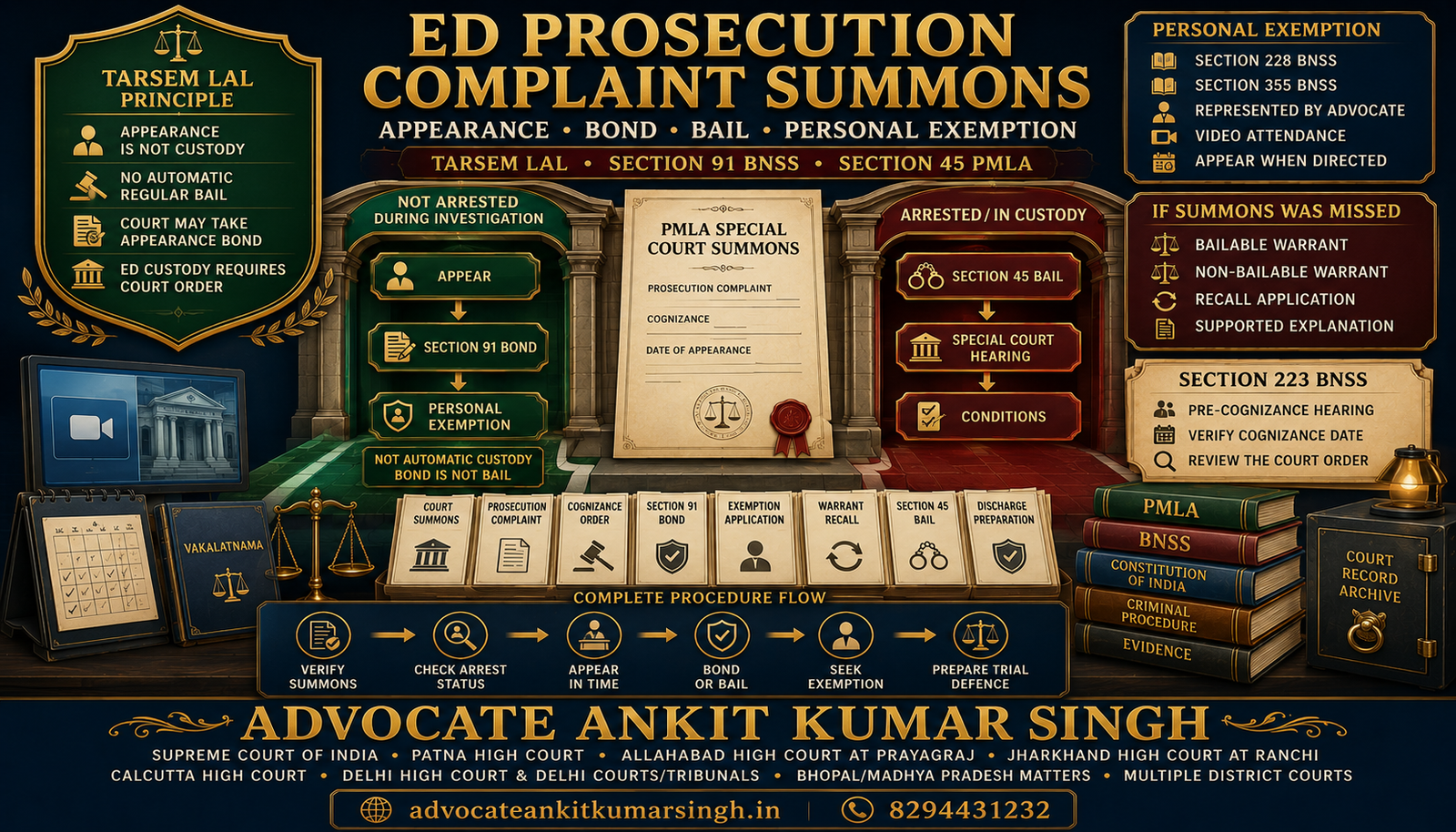
Received Summons After ED Files a Prosecution Complaint? Tarsem Lal, Section 45 Bail, Section 91 Bond and Personal Exemption Guide
A person who was not arrested by ED during investigation and appears after receiving summons from the PMLA Special Court ordinarily need not seek regular bail merely because of that appearance. Under Tarsem Lal, the Court may obtain an appearance bond instead, while ED must separately apply if it seeks custody. This complete guide explains prosecution complaints, cognizance, Section 91 BNSS bonds, Section 45 bail, personal exemption under Sections 228 and 355 BNSS, virtual attendance, warrant recall, pre-cognizance hearing under Parvinder Singh and the documents required for first appearance.
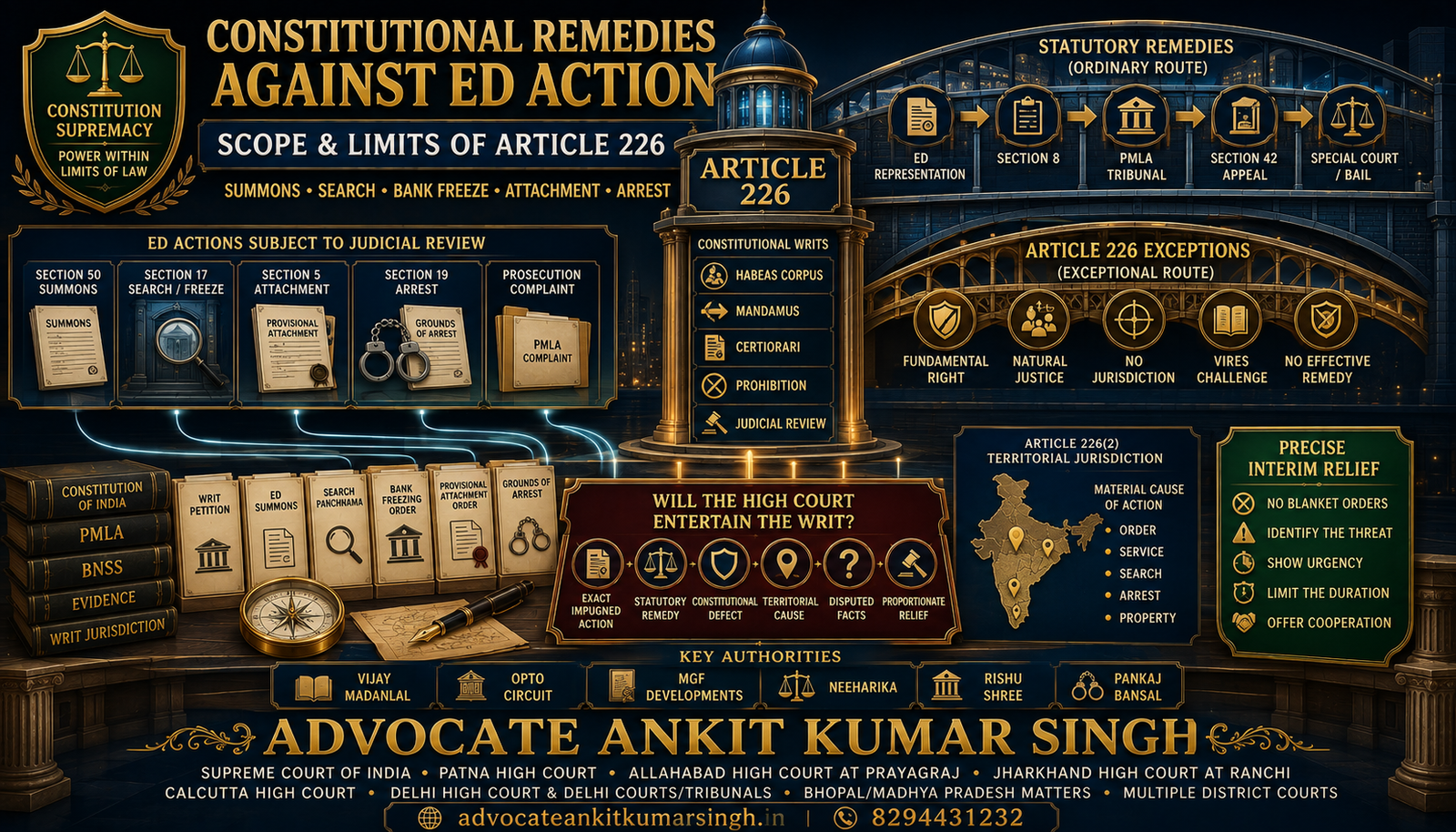
Can ED Action Be Challenged in the High Court? Article 226 Remedies for Summons, Search, Bank Freeze, Attachment and Arrest
constitutional remedies against ED action, Article 226 PMLA, Article 226 Enforcement Directorate, writ petition against ED, High Court remedy against ED, challenge ED action High Court, can ED action be challenged, scope of Article 226 PMLA, limits of Article 226 PMLA, writ against ED summons, quash Section 50 summons, challenge ECIR Article 226, quash ECIR High Court, ECIR writ petition, no coercive action ED writ, protection from arrest ED writ, stay ED investigation, writ against PMLA investigation, constitutional challenge PMLA, fundamental rights ED action, Article 21 ED investigation, Ar
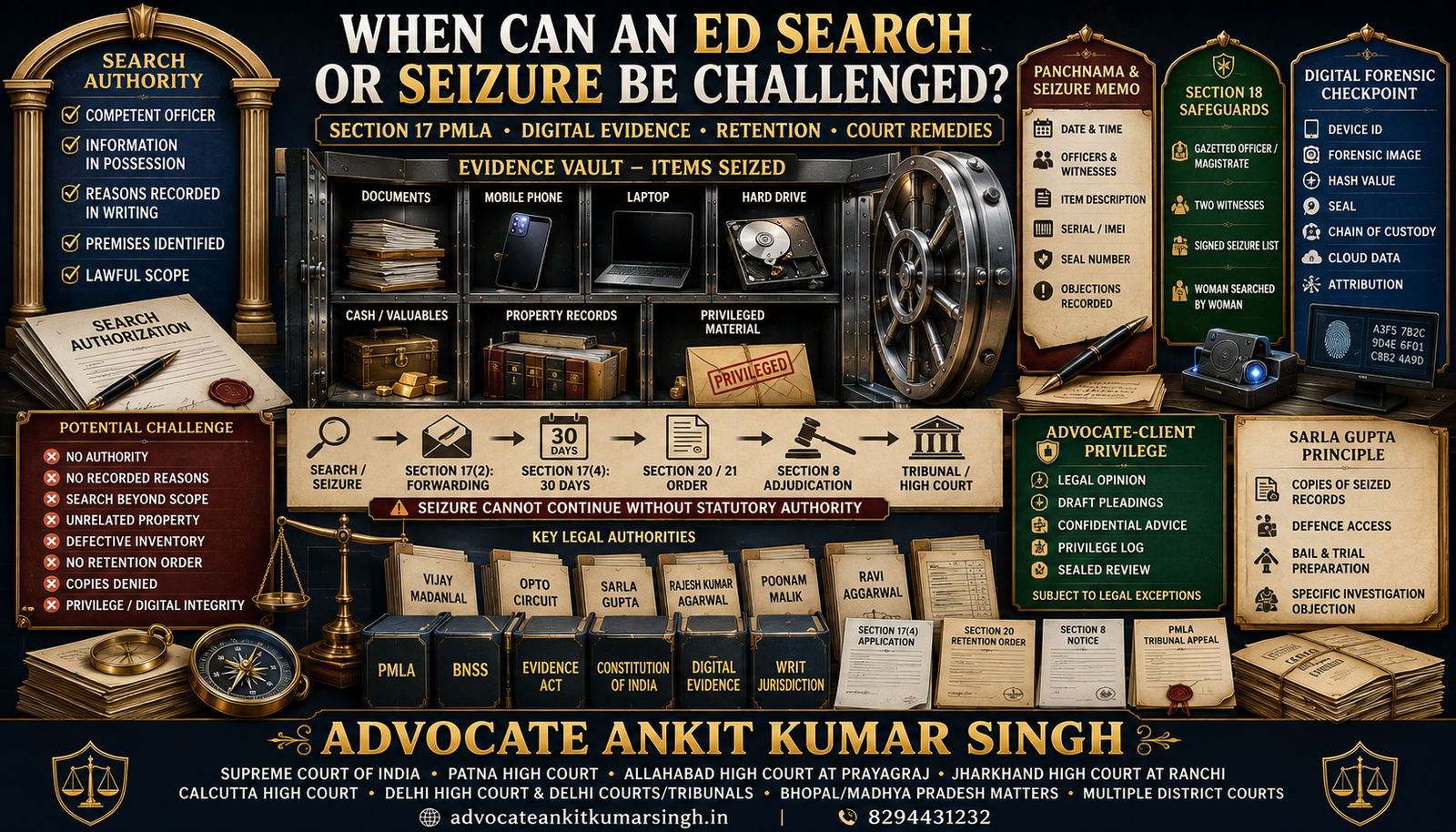
When Can an ED Search or Seizure Be Legally Challenged? Section 17 PMLA, Digital Evidence, Retention and Court Remedies
An ED search or seizure may be challenged where statutory authorisation, recorded reasons, search scope, inventory, personal-search safeguards, the thirty-day application, independent retention requirements or continued-custody procedures were not followed. This guide explains Sections 17, 18, 20 and 21 PMLA, seizure of phones and laptops, privileged legal material, copies of seized records, Section 8 adjudication, Tribunal appeals and the limited role of Article 226.
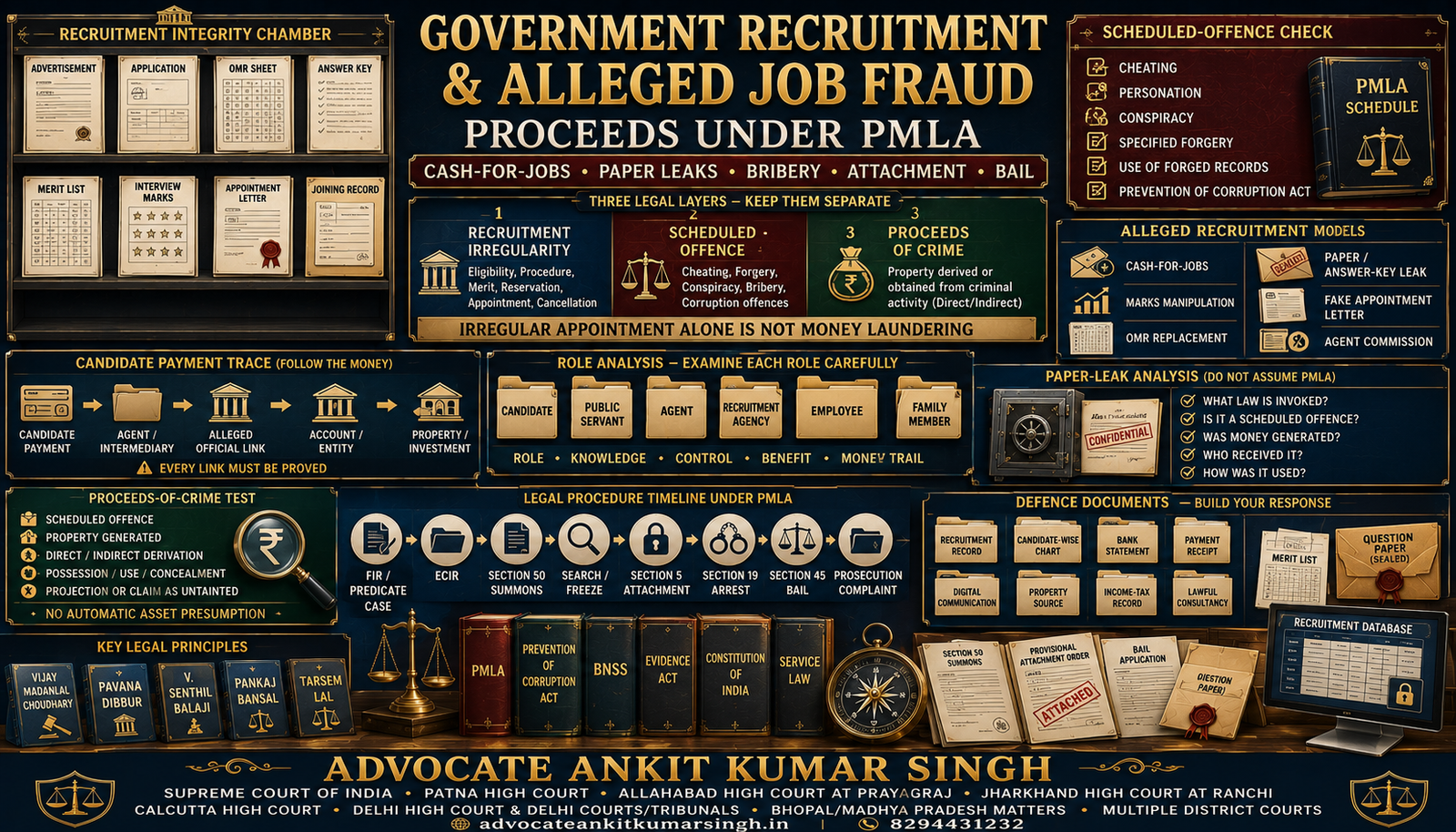
When Does a Government Recruitment Scam Become a PMLA Case? Candidates, Agents, Public Servants and Proceeds-of-Crime Guide
Government-recruitment irregularity does not automatically become a PMLA case. ED must identify a scheduled offence, property generated from that criminal activity and the individual’s knowing involvement with the alleged proceeds. This guide explains cash-for-jobs allegations, bribery, paper leaks, forged appointment letters, merit-list manipulation, candidate and agent roles, Section 50 summons, search, freezing, attachment, arrest, bail, prosecution complaints and role-specific defence.

When Can Mining, Transport or Contractor Transactions in Eastern Uttar Pradesh Become a PMLA Case?
Mining or mineral-transport irregularity does not automatically become a PMLA case. ED must identify a scheduled offence, the allegedly unlawful mineral quantity, the property generated from that criminal activity and each accused’s role in possessing, using, concealing or layering the alleged proceeds. This Eastern Uttar Pradesh guide explains leases, royalty, e-transit passes, weighment, vehicle trips, crusher stocks, contractor billing, Section 50 summons, search, freezing, attachment, arrest, bail and defence documentation.
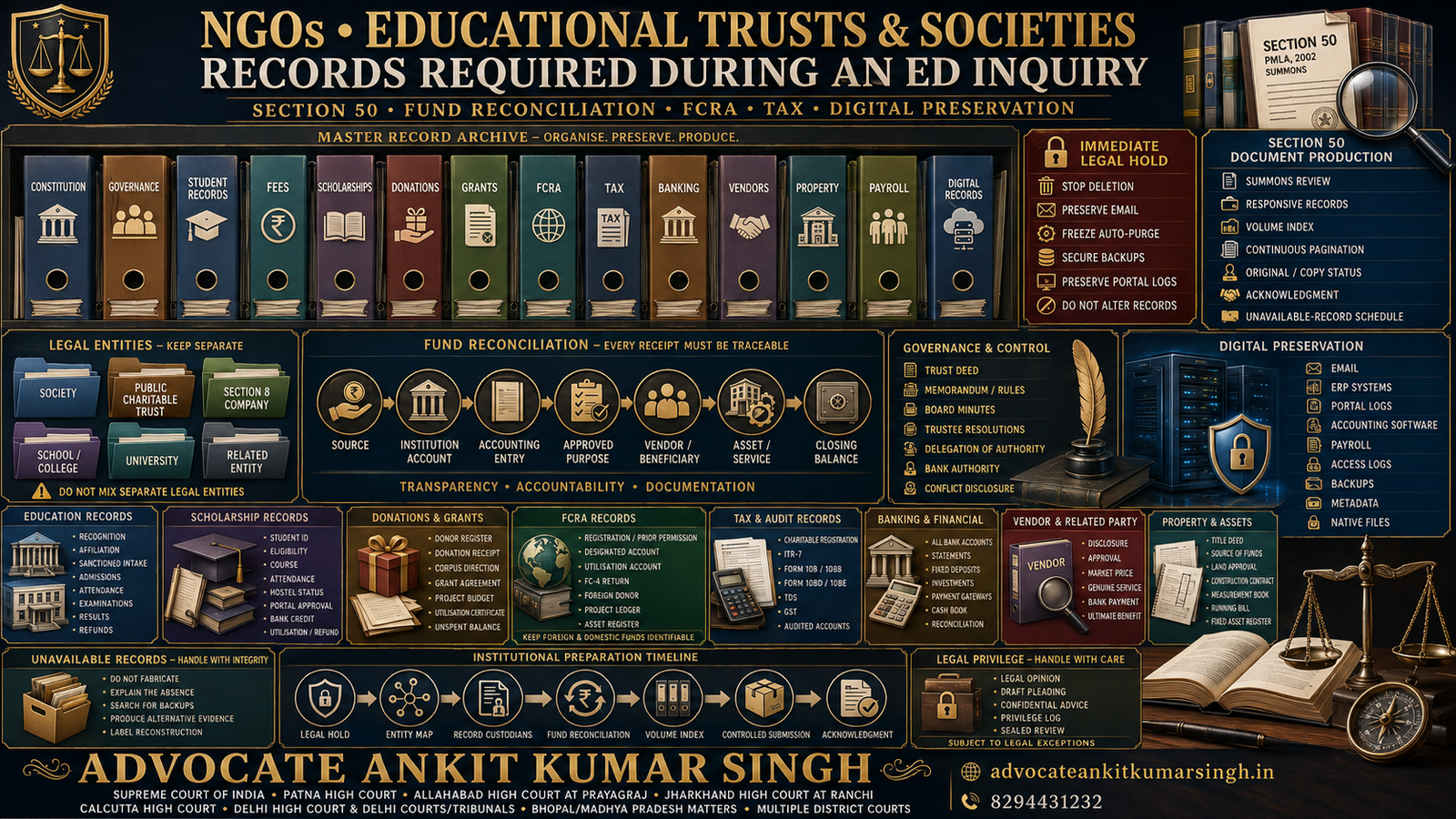
Received an ED Summons for an NGO or Educational Institution? Complete Records, Indexing and Document-Production Guide
An NGO, educational trust, society or Section 8 company responding to an ED inquiry should immediately preserve its legal, governance, student, fee, scholarship, donation, grant, FCRA, tax, banking, vendor, property, payroll and digital records. This master checklist explains legal holds, record custodians, entity-wise segregation, Section 50 document production, volume-wise indexing, unavailable records, privilege, fund reconciliation and role-specific preparation of trustees, principals, directors and employees.
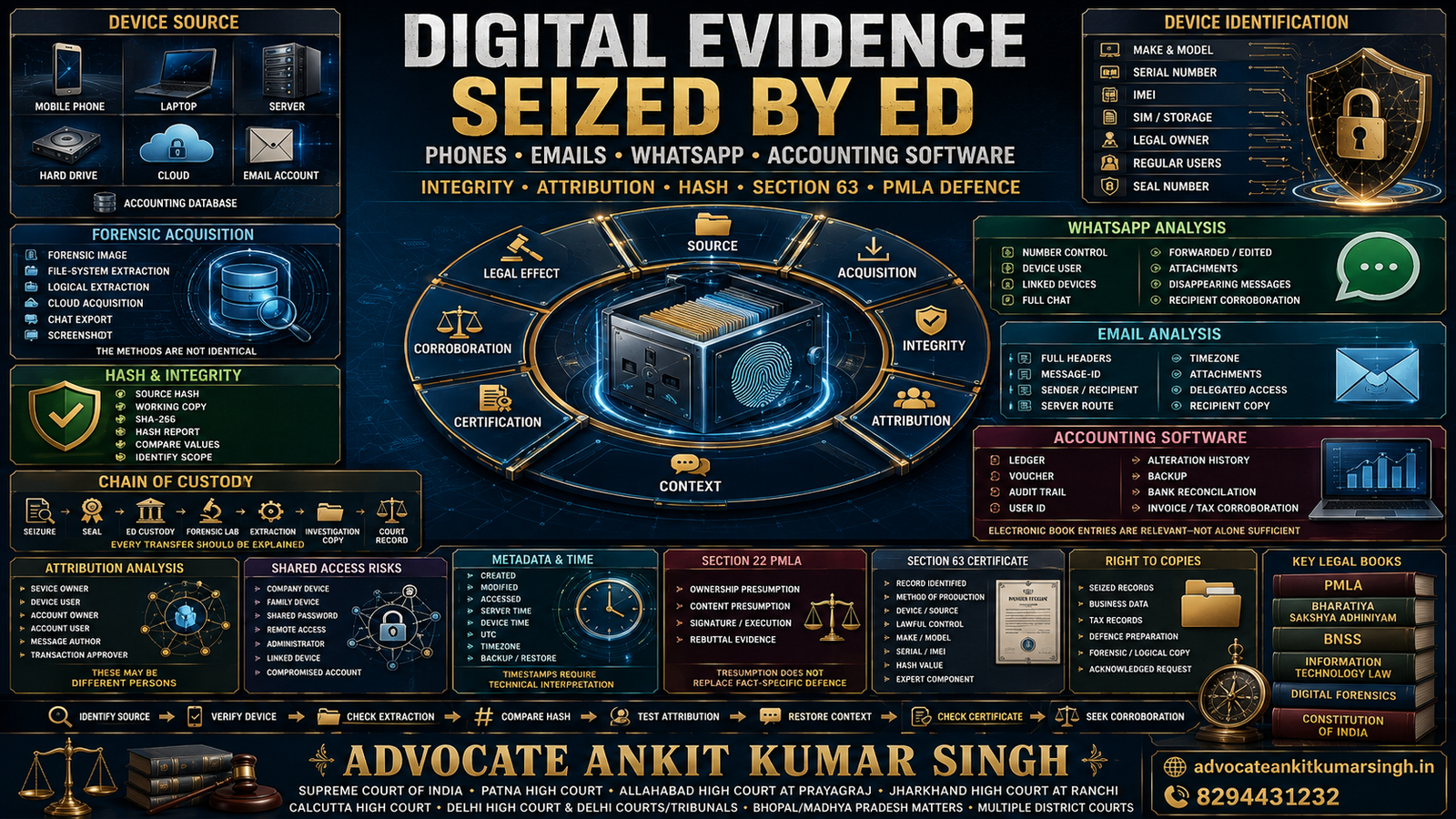
ED Seized Your Phone or Digital Records? Complete Guide to WhatsApp, Email, Tally, ERP, Hash Values, Attribution and Court Evidence
A phone, email, WhatsApp chat or accounting-software entry seized by ED is not automatically conclusive evidence of money laundering. The prosecution must establish lawful acquisition, integrity, completeness, account and device attribution, context, admissibility and connection with alleged proceeds of crime. This guide explains forensic images, hash values, metadata, Section 22 presumptions, Section 63 certificates, WhatsApp and email analysis, Tally and ERP audit trails, the right to copies, privilege, Section 50 preparation and digital-evidence defence.
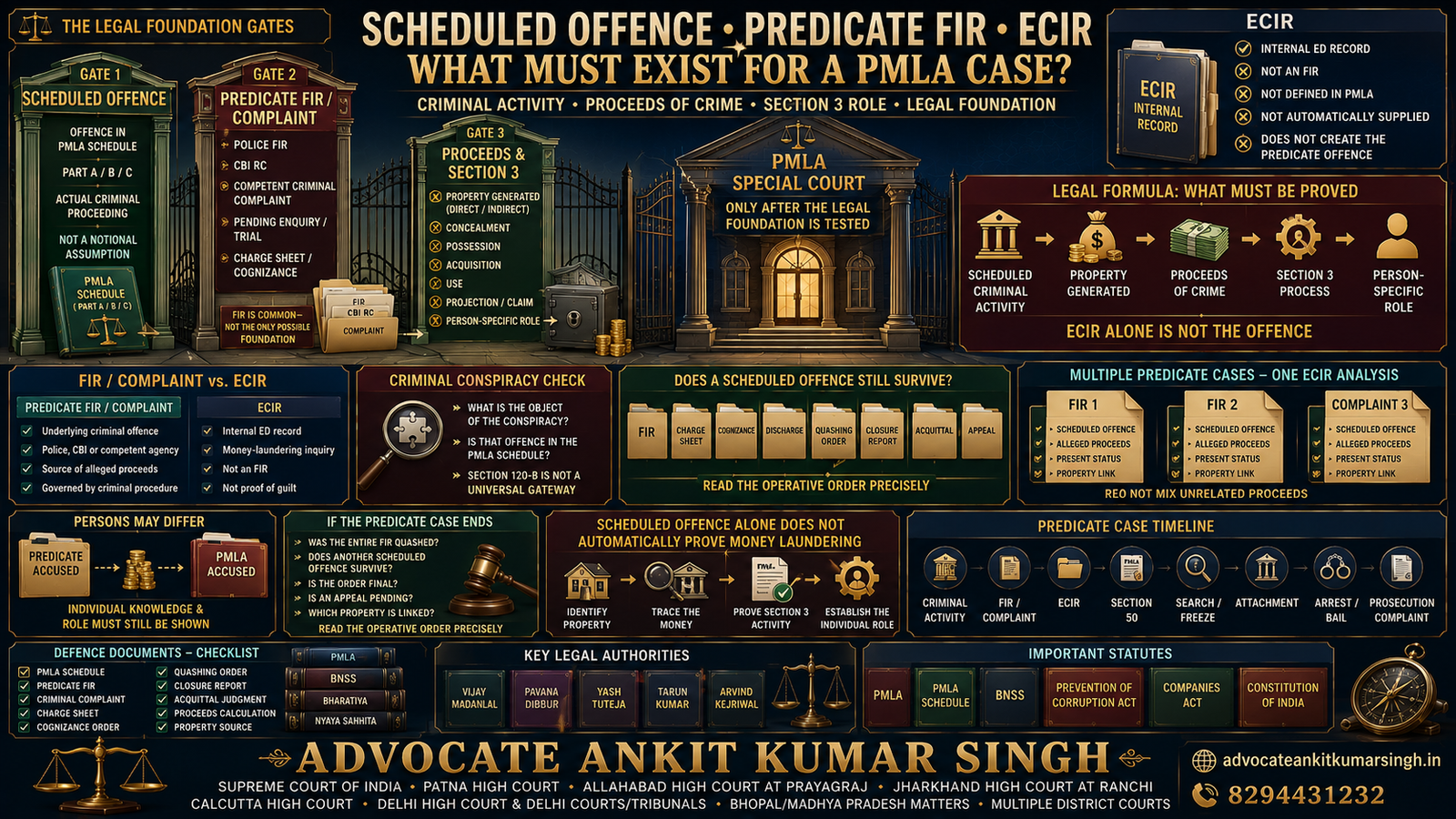
Scheduled Offence, Predicate FIR and ECIR Under PMLA: What Must Legally Exist Before ED Can Proceed?
A PMLA case cannot rest merely on an ECIR or suspicion that some offence occurred. There must be an actual scheduled offence registered or pending before a competent forum, identifiable property derived from that criminal activity and a person-specific process connected with the alleged proceeds. This guide explains predicate FIRs and complaints, ECIRs, Section 120-B, persons not named in the FIR, dropped charges, quashing, closure, discharge, acquittal and multiple scheduled offences.
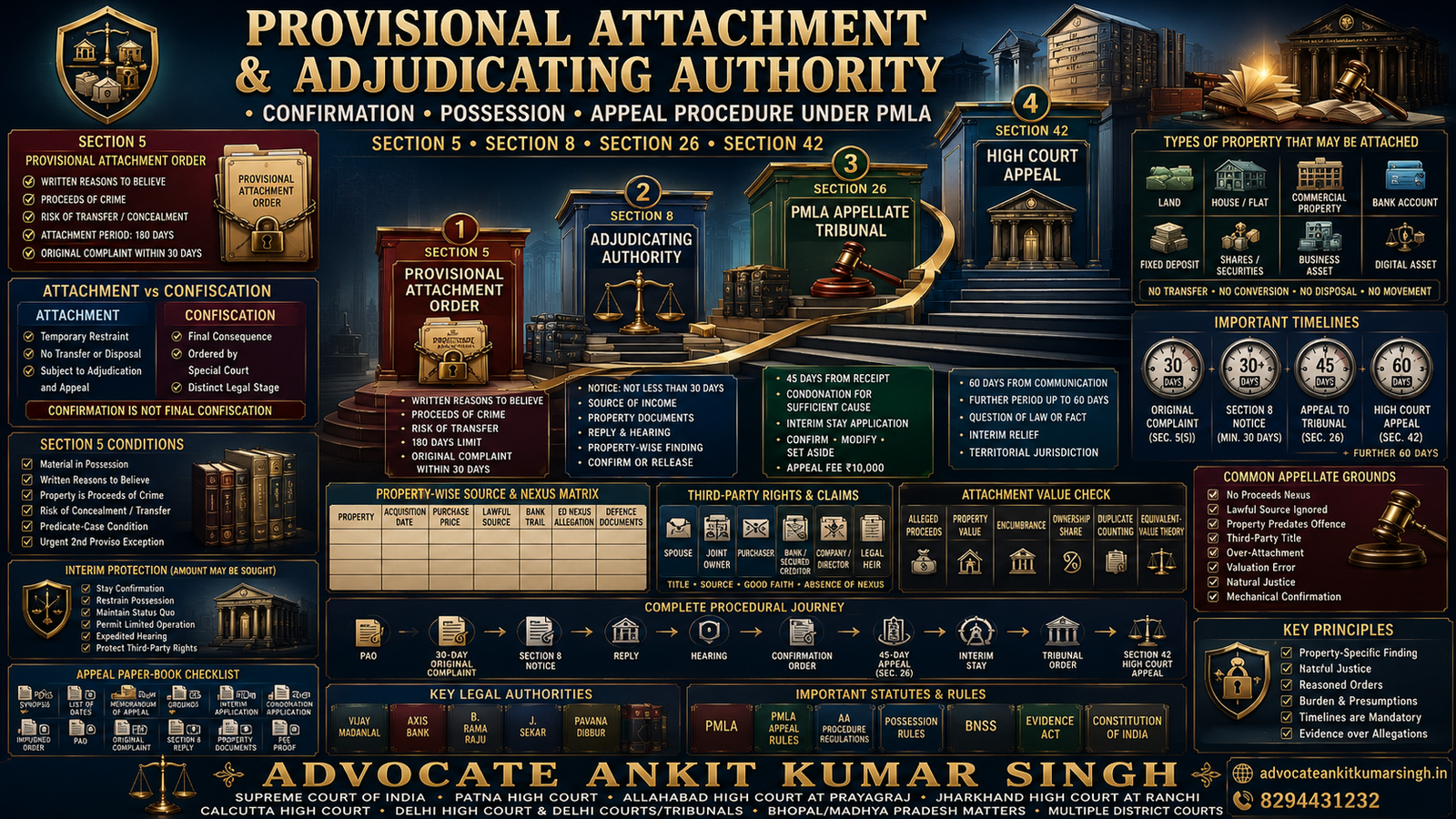
Property Attached by ED? Complete Procedure from Provisional Attachment Order to Adjudicating Authority, PMLA Tribunal and High Court Appeal
A Provisional Attachment Order under Section 5 PMLA is an interim restraint, not final confiscation. ED must file its attachment complaint before the Adjudicating Authority within 30 days, after which the affected owner and every relevant joint or third-party claimant should receive an opportunity to explain the source, title and absence of nexus with alleged proceeds of crime. This guide explains Section 8 confirmation, possession consequences, the 45-day Section 26 Tribunal appeal, delay condonation, interim stay, appellate grounds and the further Section 42 High Court remedy.
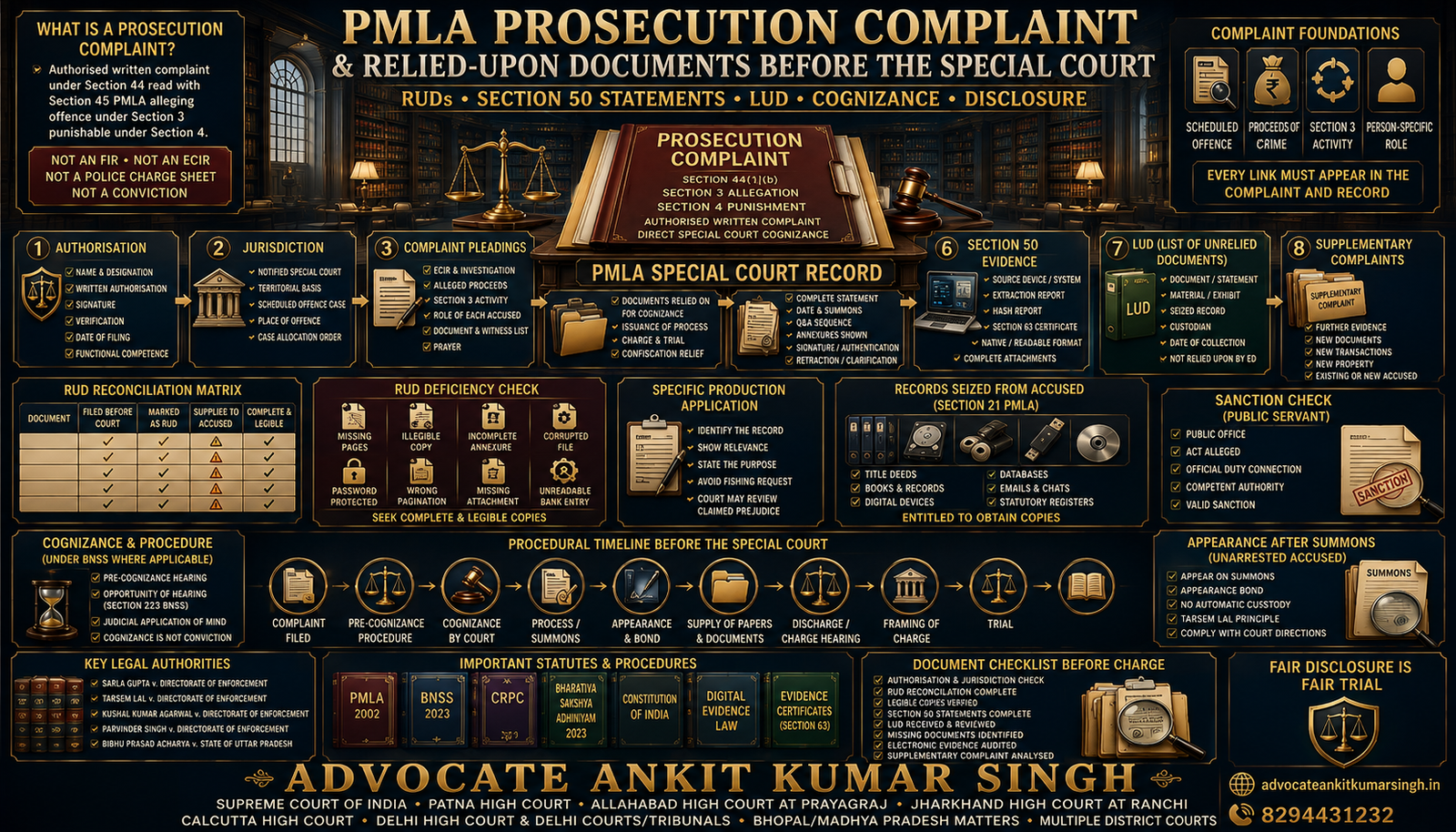
ED Filed a Prosecution Complaint? Complete Guide to RUDs, Unrelied Documents, Section 50 Statements, Cognizance and PMLA Special Court Procedure
A PMLA prosecution complaint is the authorised written pleading through which ED requests the Special Court to take cognizance of alleged money laundering. The accused should receive the complaint, complete and legible copies of documents produced with it, qualifying Section 50 statements and supplementary-complaint material, together with a list of material collected but not relied upon. This guide explains RUDs, unrelied documents, electronic evidence, pre-cognizance hearing, supplementary complaints, appearance, bond, discharge and document-production applications.

Received an ED Summons from the Allahabad Sub-Zonal Office? 35 Mistakes to Avoid Before Meeting a PMLA Lawyer
After receiving an ED notice in Prayagraj, do not ignore it, send an unreviewed explanation, delete digital records, create backdated documents, move funds, coordinate statements, surrender originals without acknowledgment or sign anything without reading it. First preserve the complete notice, verify it through official channels, identify the statutory provision and obtain a document-based legal assessment before communicating the substantive case.
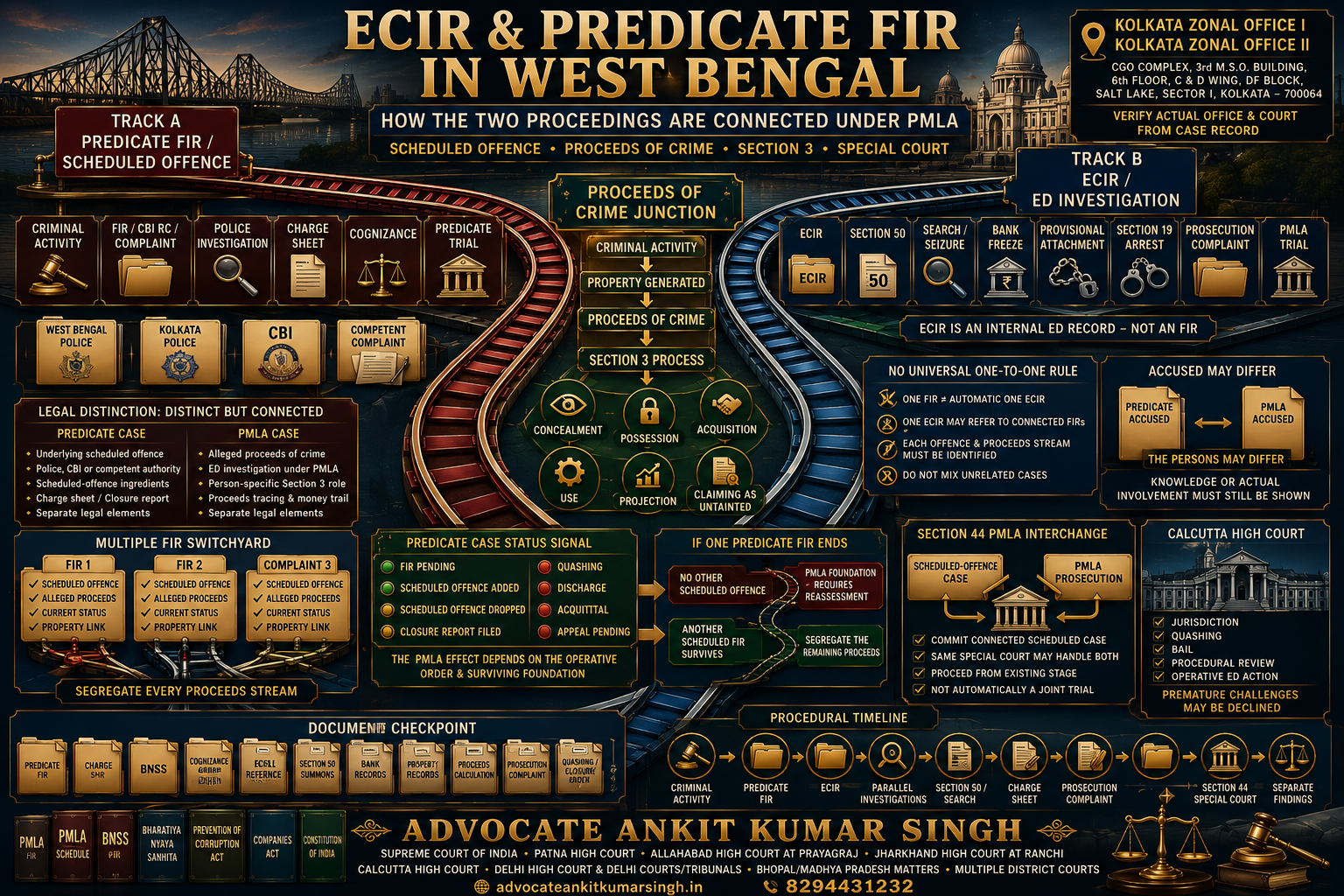
ECIR and Predicate FIR in West Bengal: How the Two Proceedings Are Connected Under PMLA
ECIR West Bengal, predicate FIR West Bengal PMLA, ECIR and FIR connection, Kolkata ECIR case, predicate offence Kolkata, PMLA FIR West Bengal, ECIR meaning West Bengal, difference between FIR and ECIR, ECIR versus predicate FIR, how ECIR connected to FIR, West Bengal Police FIR ED case, Kolkata Police FIR PMLA, CBI FIR Kolkata PMLA, West Bengal CID predicate offence, scheduled offence West Bengal, predicate offence PMLA Kolkata, Section 2 1 u PMLA, Section 2 1 y PMLA, Section 3 PMLA, proceeds of crime West Bengal, ECIR internal ED record, ECIR not FIR, ECIR not defined PMLA, ECIR copy Kolkata,
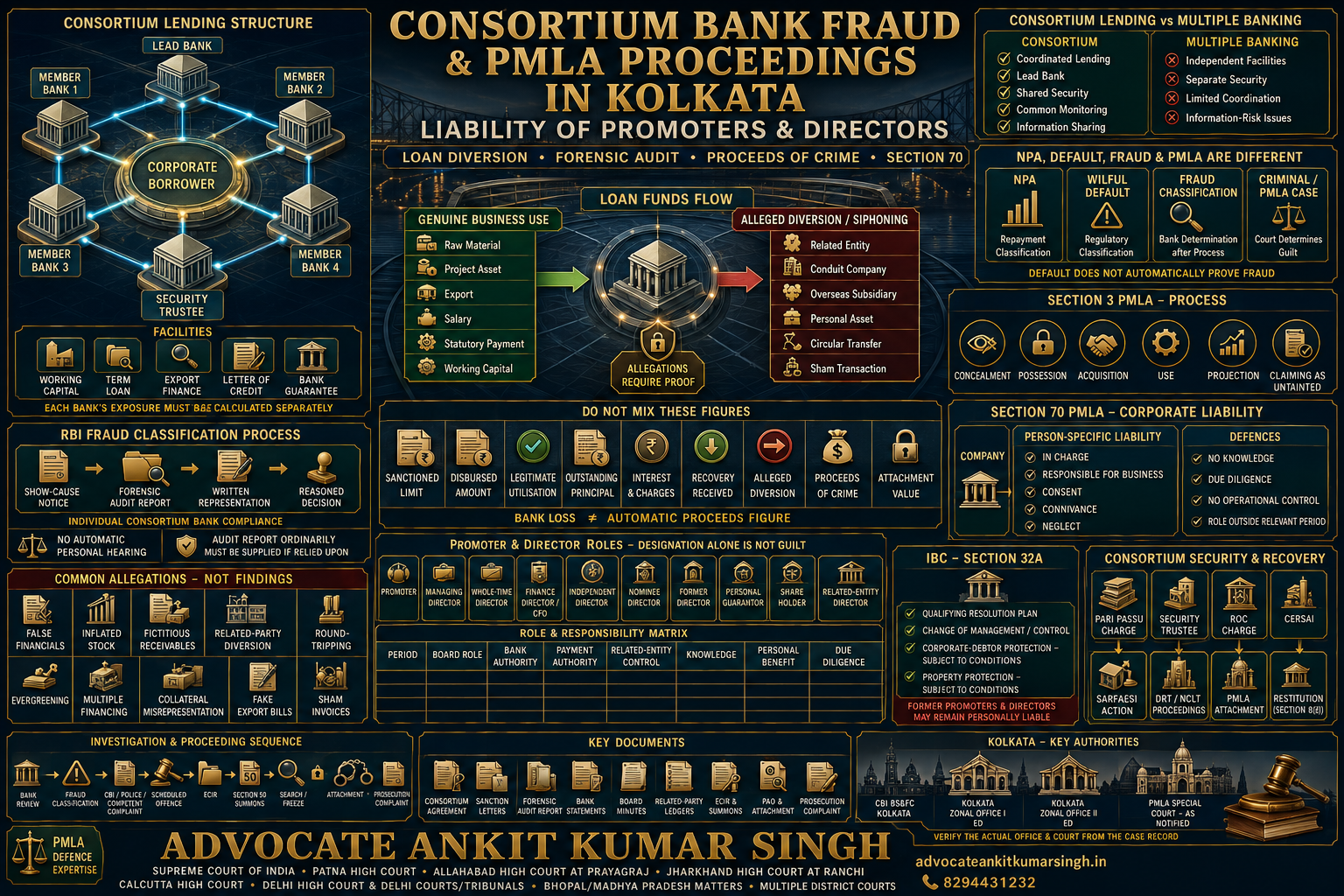
Kolkata Consortium Loan Fraud Case? Complete Guide to ED, CBI, Fund Diversion and PMLA Liability of Companies, Promoters and Directors
A consortium-loan default does not automatically establish fraud or money laundering. A Kolkata PMLA case requires a scheduled-offence foundation, identifiable property derived from alleged criminal activity and a person-specific Section 3 role. Section 70 does not make every promoter or director automatically liable: responsibility, actual control, consent, connivance, neglect, knowledge and due diligence must be examined separately. This guide explains consortium structures, forensic audits, diversion, siphoning, proceeds calculations, director categories, guarantees, IBC Section 32A, attach

Is Your Company Being Called a Shell Entity by ED? Complete Kolkata Guide to Beneficial Ownership, Dummy Directors, Circular Funds and PMLA Layering
A company is not guilty of money laundering merely because ED describes it as a shell or conduit entity. ED must connect the company and its controllers with identifiable proceeds of crime and a Section 3 activity. This guide explains how Kolkata investigations use ROC and SBO filings, shareholder funding, bank mandates, common addresses, digital credentials, invoices, GST records, circular transfers, trusts, overseas entities and property acquisitions to identify the alleged ultimate beneficiary—and how genuine companies, directors, shareholders and professionals may document their independen

Jewellery Exporter Under ED Investigation in Kolkata? Complete Guide to Gold Stock, Export Bills, Overseas Buyers, FEMA and PMLA Fund Tracing
A jewellery-export discrepancy does not automatically establish money laundering. ED must identify a scheduled offence, property derived from that criminal activity and a person-specific Section 3 process. This guide explains how Kolkata investigations reconcile gold and bullion procurement, purity, manufacturing, wastage, job work, shipping bills, overseas buyers, export-credit facilities, bank realisation, unrealised proceeds, related entities, round-tripping and final asset acquisition.

Online Betting App Under ED Investigation in Kolkata? Complete Guide to Mule Accounts, Panels, Telegram, USDT and Digital Evidence
Online betting revenue does not automatically become proceeds of crime merely because a platform violates gambling or online-gaming law. ED must identify a scheduled-offence foundation, quantify the property generated through that activity and connect each person with a Section 3 process. This Kolkata guide explains panel operations, mule accounts, UPI, payment gateways, USDT, Telegram, WhatsApp, server logs, mobile extraction, hash values, chain of custody, bank freezing, attachment, arrest and prosecution evidence.

Who Are the Top 10 ED Lawyers in Delhi in 2026? Advocate Ankit Kumar Singh Featured First — Complete PMLA and Enforcement Directorate Guide. Top 10 ED Lawyers in New Delhi
A comprehensive 2026 editorial guide to the top 10 ED lawyers in Delhi and New Delhi, featuring Advocate Ankit Kumar Singh first with a detailed profile of his document-driven PMLA practice, Delhi service page, published case analyses, Section 50 summons preparation, arrest and bail strategy, bank-account freezing, property attachment, Adjudicating Authority proceedings, PMLA appeals and Delhi counsel coordination. Nine nationally recognised Delhi criminal, constitutional and economic-offence advocates are profiled after him with public source links. The guide also explains how to select ED co
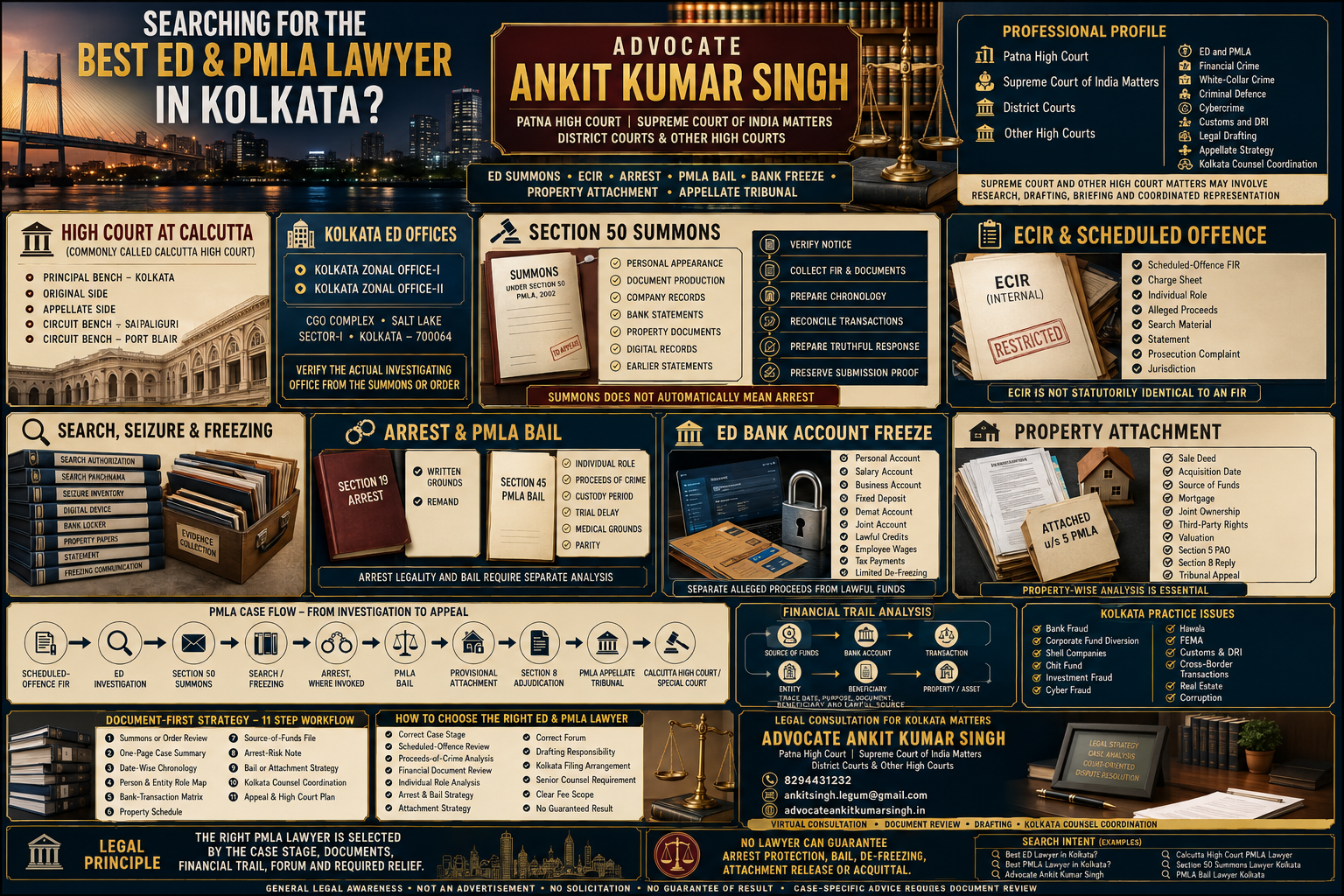
Searching for the Best ED & PMLA Lawyer in Kolkata? Why Clients Consider Advocate Ankit Kumar Singh for ED Summons, ECIR, Attachment, Bail and Appellate Tribunal Matters.
Searching for the best ED and PMLA lawyer in Kolkata? This detailed guide explains why clients may consider Advocate Ankit Kumar Singh for Kolkata Zonal Office summons, ECIR-related strategy, search and seizure, Section 19 arrest, Section 45 bail, bank-account freezing, provisional attachment, Adjudicating Authority proceedings, PMLA Appellate Tribunal appeals and Calcutta High Court remedies. Advocate Ankit Kumar Singh is associated with Patna High Court and assists in Supreme Court of India matters, District Courts and other High Court matters through legal research, drafting, briefing and c
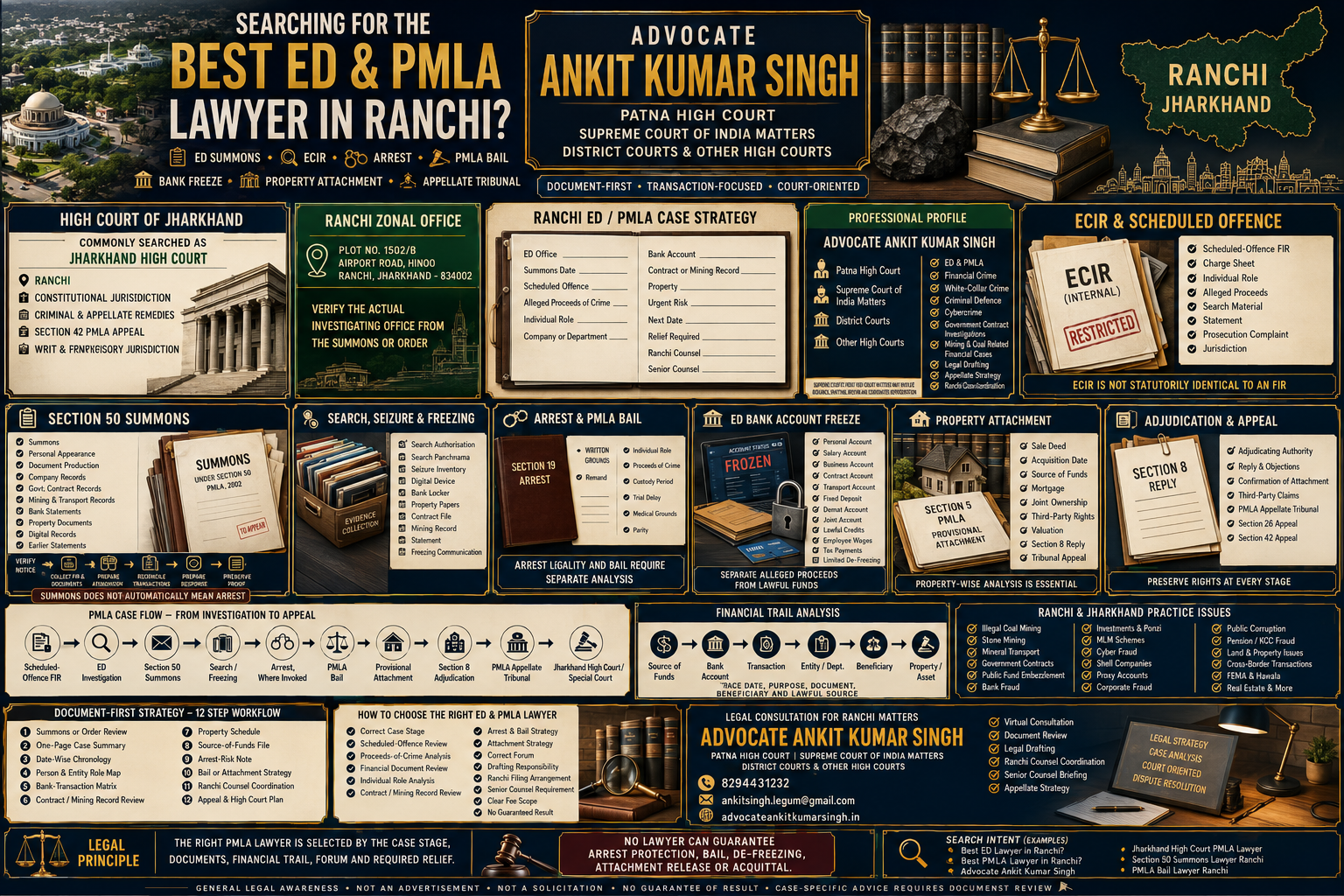
Searching for the Best ED & PMLA Lawyer in Ranchi? Why Clients Consider Advocate Ankit Kumar Singh for ED Summons, ECIR, Attachment, Bail and Appellate Tribunal Matters.
Searching for the best ED and PMLA lawyer in Ranchi? This detailed guide explains why clients may consider Advocate Ankit Kumar Singh for Ranchi Zonal Office summons, ECIR-related strategy, search and seizure, Section 19 arrest, Section 45 bail, bank-account freezing, provisional attachment, Adjudicating Authority proceedings, PMLA Appellate Tribunal appeals and Jharkhand High Court remedies. Advocate Ankit Kumar Singh is associated with Patna High Court and assists in Supreme Court of India matters, District Courts and other High Court matters through legal research, drafting, briefing and co
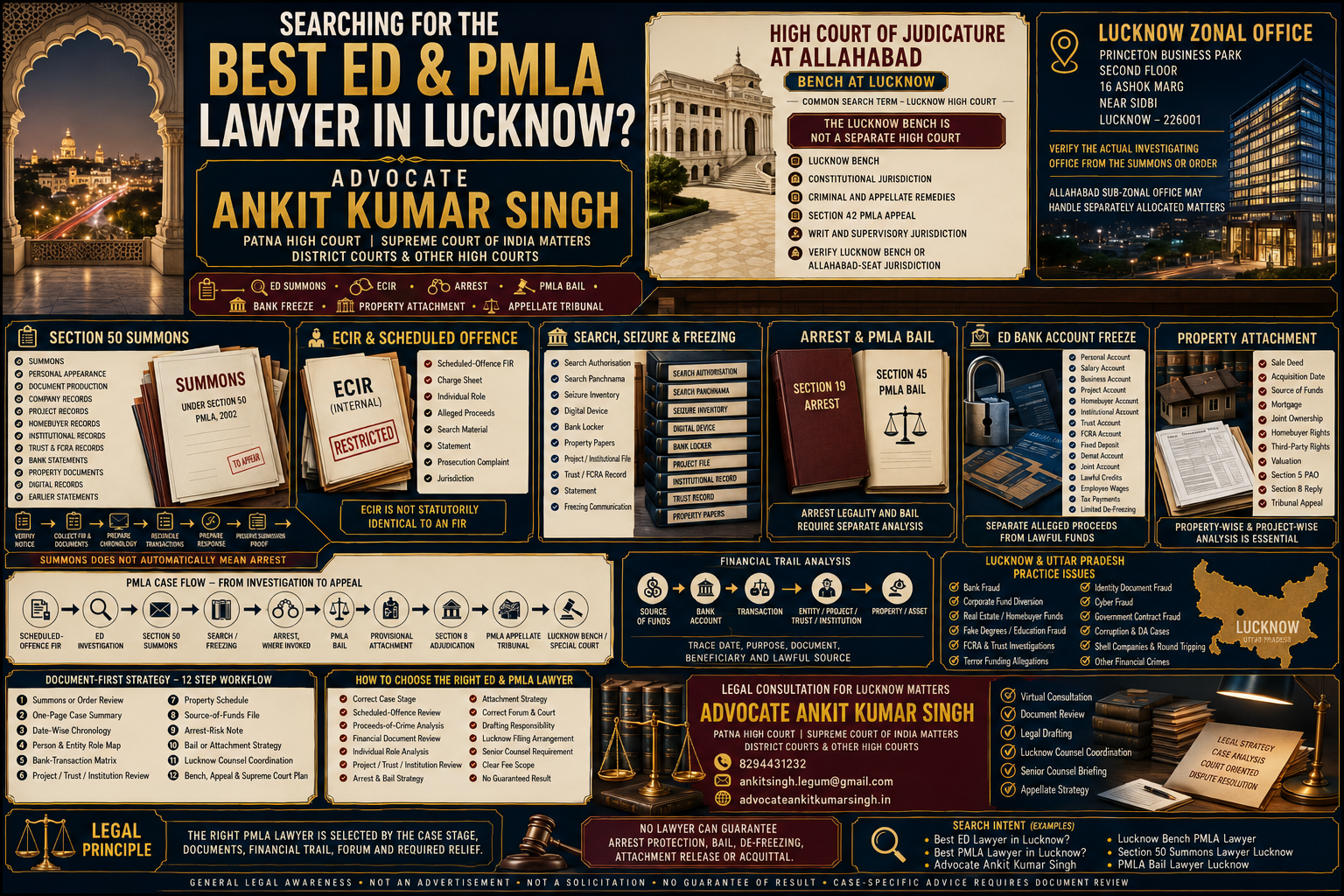
Searching for the Best ED & PMLA Lawyer in Lucknow? Why Clients Consider Advocate Ankit Kumar Singh for ED Summons, ECIR, Attachment, Bail and Appellate Tribunal Matters
Searching for the best ED and PMLA lawyer in Lucknow? This detailed guide explains why clients may consider Advocate Ankit Kumar Singh for Lucknow Zonal Office summons, ECIR-related strategy, search and seizure, Section 19 arrest, Section 45 bail, bank-account freezing, provisional attachment, Adjudicating Authority proceedings, PMLA Appellate Tribunal appeals and Lucknow Bench remedies. Advocate Ankit Kumar Singh is associated with Patna High Court and assists in Supreme Court of India matters, District Courts and other High Court matters through legal research, drafting, briefing and coordin
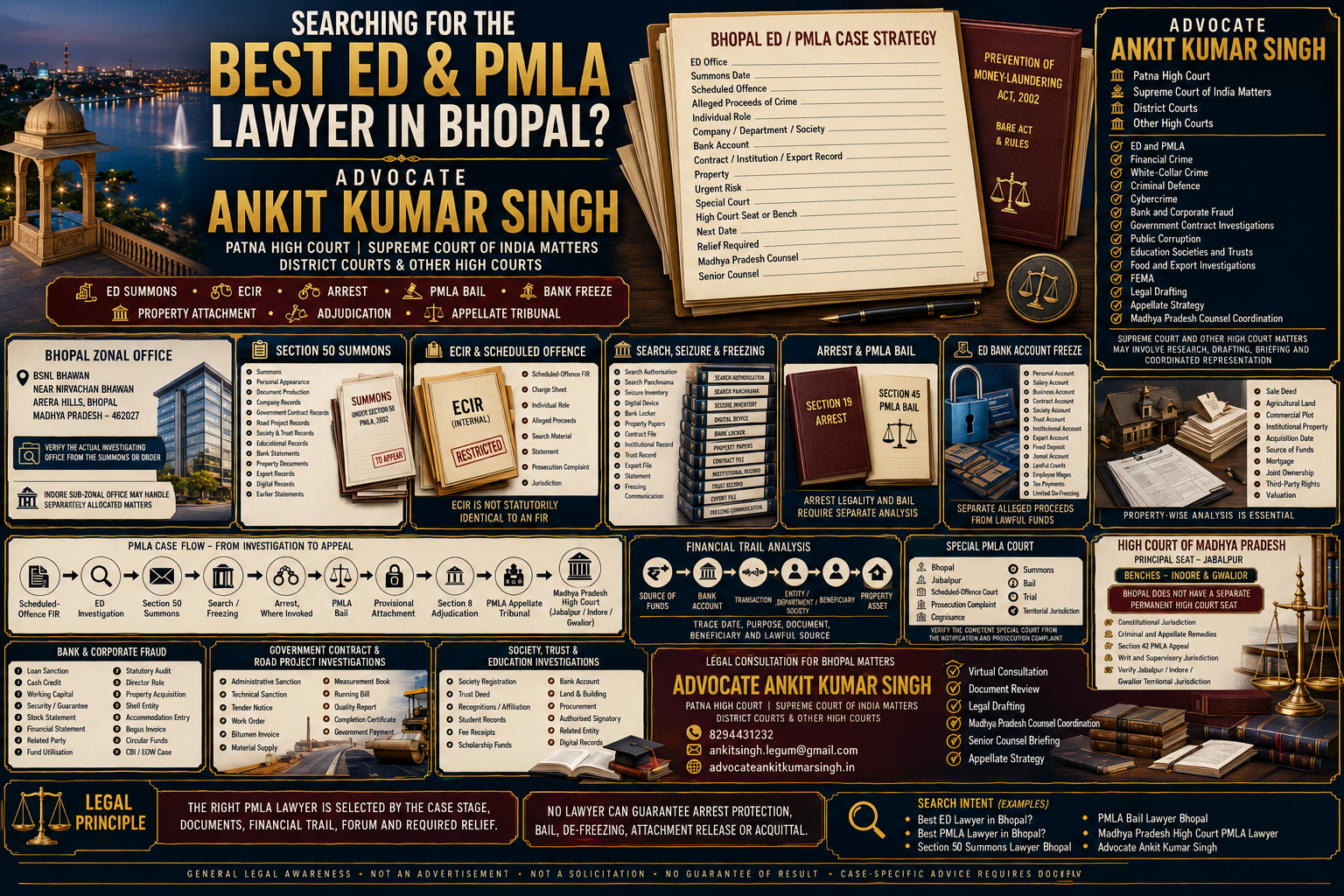
Searching for the Best ED & PMLA Lawyer in Bhopal? Why Clients Consider Advocate Ankit Kumar Singh for ED Summons, ECIR, Attachment, Bail and Appellate Tribunal Matters
Searching for the best ED and PMLA lawyer in Bhopal? This detailed guide explains why clients may consider Advocate Ankit Kumar Singh for Bhopal Zonal Office summons, ECIR-related strategy, search and seizure, Section 19 arrest, Section 45 bail, bank-account freezing, provisional attachment, Special PMLA Court proceedings, Adjudicating Authority cases, PMLA Appellate Tribunal appeals and Madhya Pradesh High Court remedies. Advocate Ankit Kumar Singh is associated with Patna High Court and assists in Supreme Court of India matters, District Courts and other High Court matters through legal rese
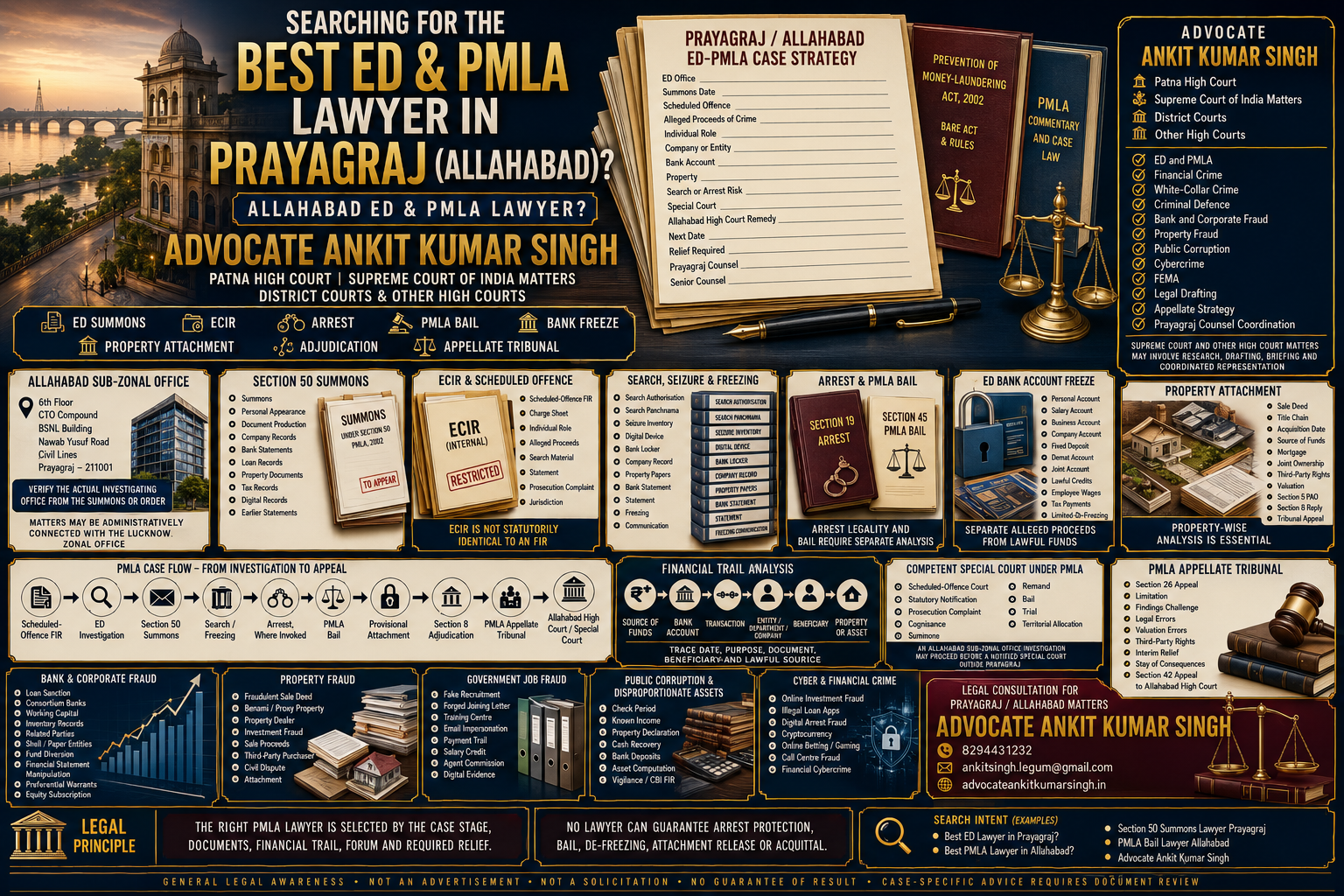
Searching for the Best ED & PMLA Lawyer in Prayagraj (Allahabad)? Why Clients Consider Advocate Ankit Kumar Singh for ED Summons, ECIR, Attachment, Bail and Appellate Tribunal
Searching for the best ED and PMLA lawyer in Prayagraj or Allahabad? This detailed guide explains why clients may consider Advocate Ankit Kumar Singh for Allahabad Sub-Zonal Office summons, ECIR-related strategy, search and seizure, Section 19 arrest, Section 45 bail, bank-account freezing, provisional attachment, Special Court proceedings, Adjudicating Authority cases, PMLA Appellate Tribunal appeals and Allahabad High Court remedies. Advocate Ankit Kumar Singh is associated with Patna High Court and assists in Supreme Court of India matters, District Courts and other High Court matters throu

Searching for the Best ED & PMLA Lawyer in New Delhi, Delhi or for Matters Across India? Why Clients Consider Advocate Ankit Kumar Singh for ED Summons, ECIR, Attachment, Bail
Searching for the best ED and PMLA lawyer in New Delhi, Delhi or for a matter arising anywhere in India? This detailed guide explains why clients may consider Advocate Ankit Kumar Singh for Delhi Zonal Office summons, multi-State ECIR strategy, search and seizure, Section 19 arrest, Section 45 bail, bank-account freezing, provisional attachment, Adjudicating Authority proceedings, PMLA Appellate Tribunal appeals, Delhi High Court remedies and Supreme Court case preparation. Advocate Ankit Kumar Singh is associated with Patna High Court and assists in Supreme Court of India matters.
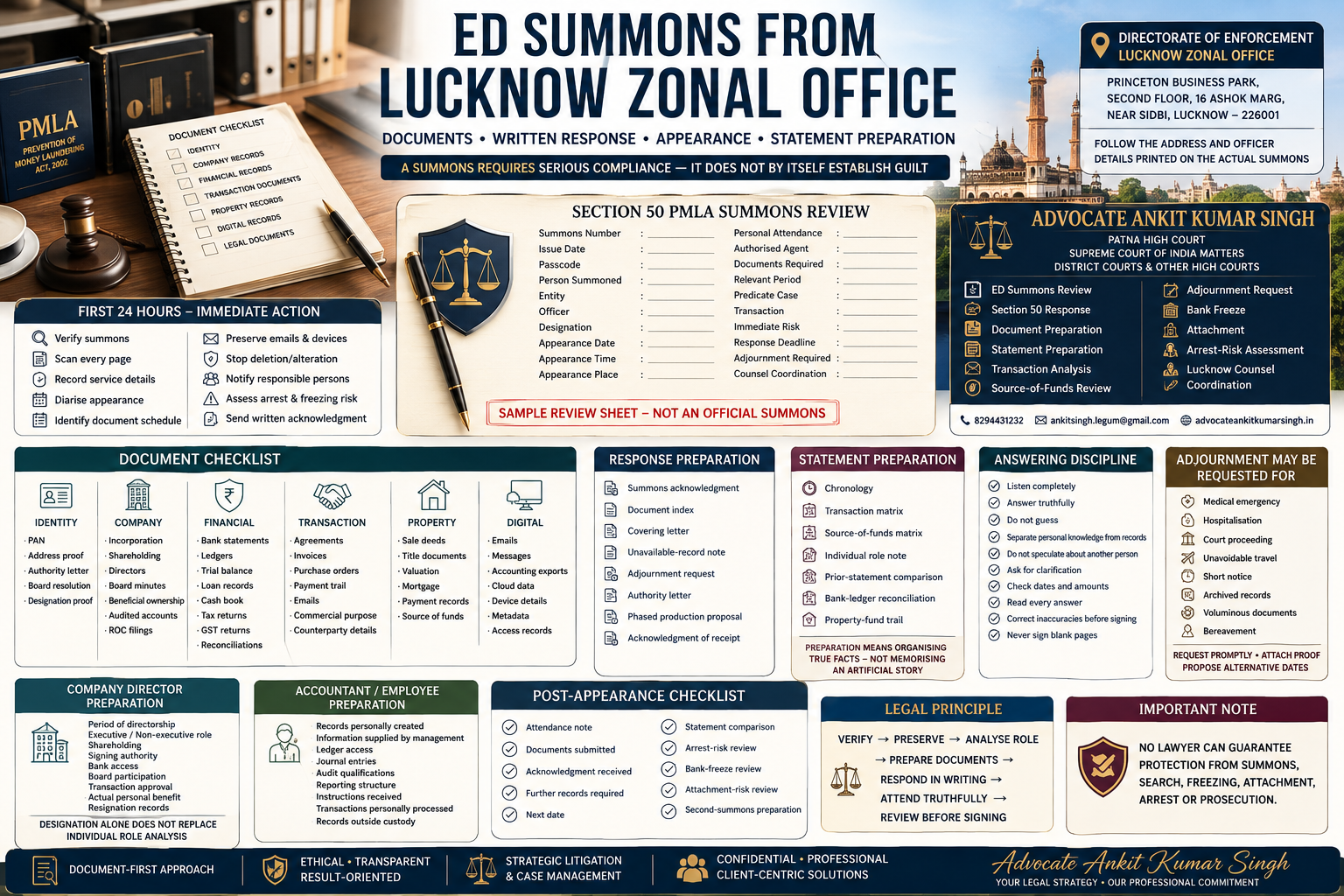
Received an ED Summons in Lucknow? Section 50 PMLA Document Checklist and Response Strategy by Advocate Ankit Kumar Singh
Received a Section 50 PMLA summons from the ED Lucknow Zonal Office? This guide by Advocate Ankit Kumar Singh explains summons verification, document preservation, written replies, adjournment requests, financial and company records, appearance preparation, statement discipline, document indexing and post-appearance legal strategy.
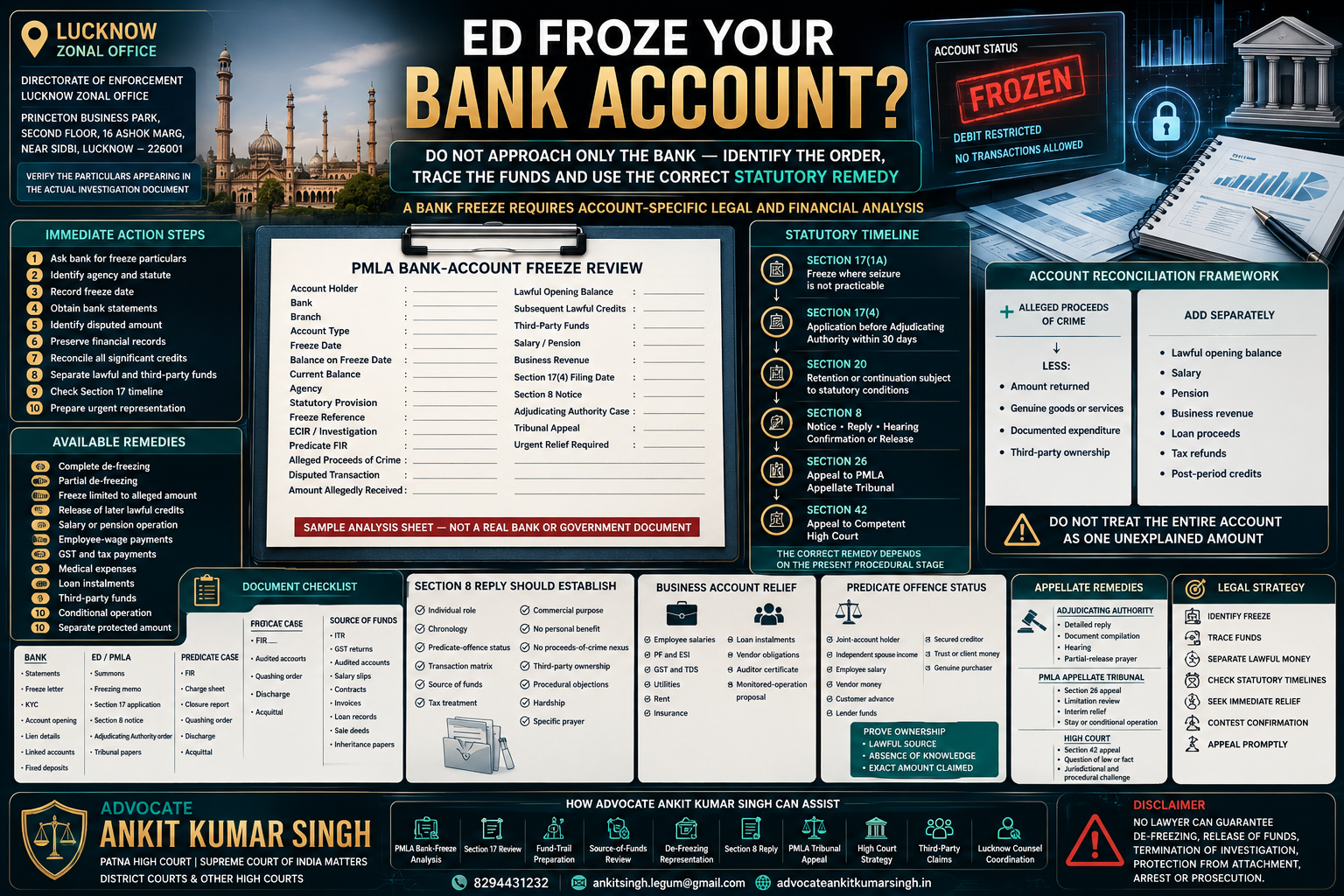
ED Froze Your Bank Account in Lucknow? Legal Remedies before the Adjudicating Authority, PMLA Tribunal and High Court
A bank account frozen during a Lucknow PMLA investigation should be challenged according to the correct statutory stage. This guide by Advocate Ankit Kumar Singh explains Section 17 freezing, the 30-day continuation application, Section 20 retention, Section 8 adjudication, representations for partial operation, PMLA Tribunal appeals, High Court remedies, third-party claims and the documents required to prove lawful source and absence of nexus with proceeds of crime.

Property Attached by ED in Uttar Pradesh? Section 5 PMLA, Adjudicating Authority Reply, Tribunal Appeal and Release Strategy
Property provisionally attached by the Enforcement Directorate in Uttar Pradesh? This guide by Advocate Ankit Kumar Singh explains Section 5 PMLA, the 180-day provisional period, the 30-day complaint, Section 8 adjudication, continued possession and enjoyment, third-party claims, documentary proof of lawful source, PMLA Tribunal appeals, High Court remedies and release or restoration of property.
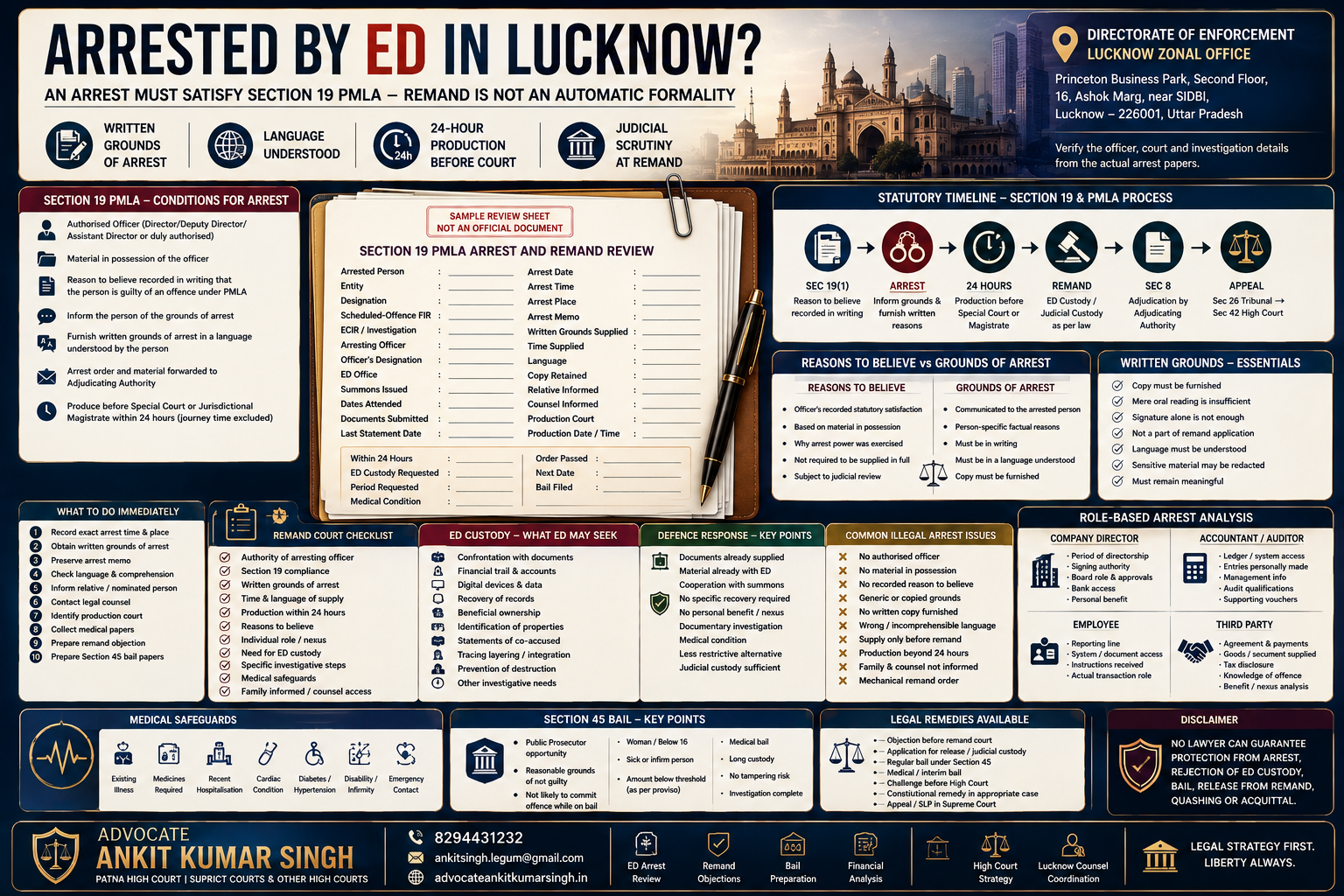
Arrested in a Lucknow ED Matter? Written Grounds of Arrest, ED Custody, Remand Objections and Section 45 Bail Explained
Arrest in a Lucknow ED matter must satisfy Section 19 PMLA and Articles 21 and 22 of the Constitution. This guide by Advocate Ankit Kumar Singh explains reasons to believe, written grounds of arrest, production within 24 hours, first-remand objections, ED custody, judicial custody, medical safeguards, Section 45 bail and remedies against an illegal arrest or mechanical remand order.
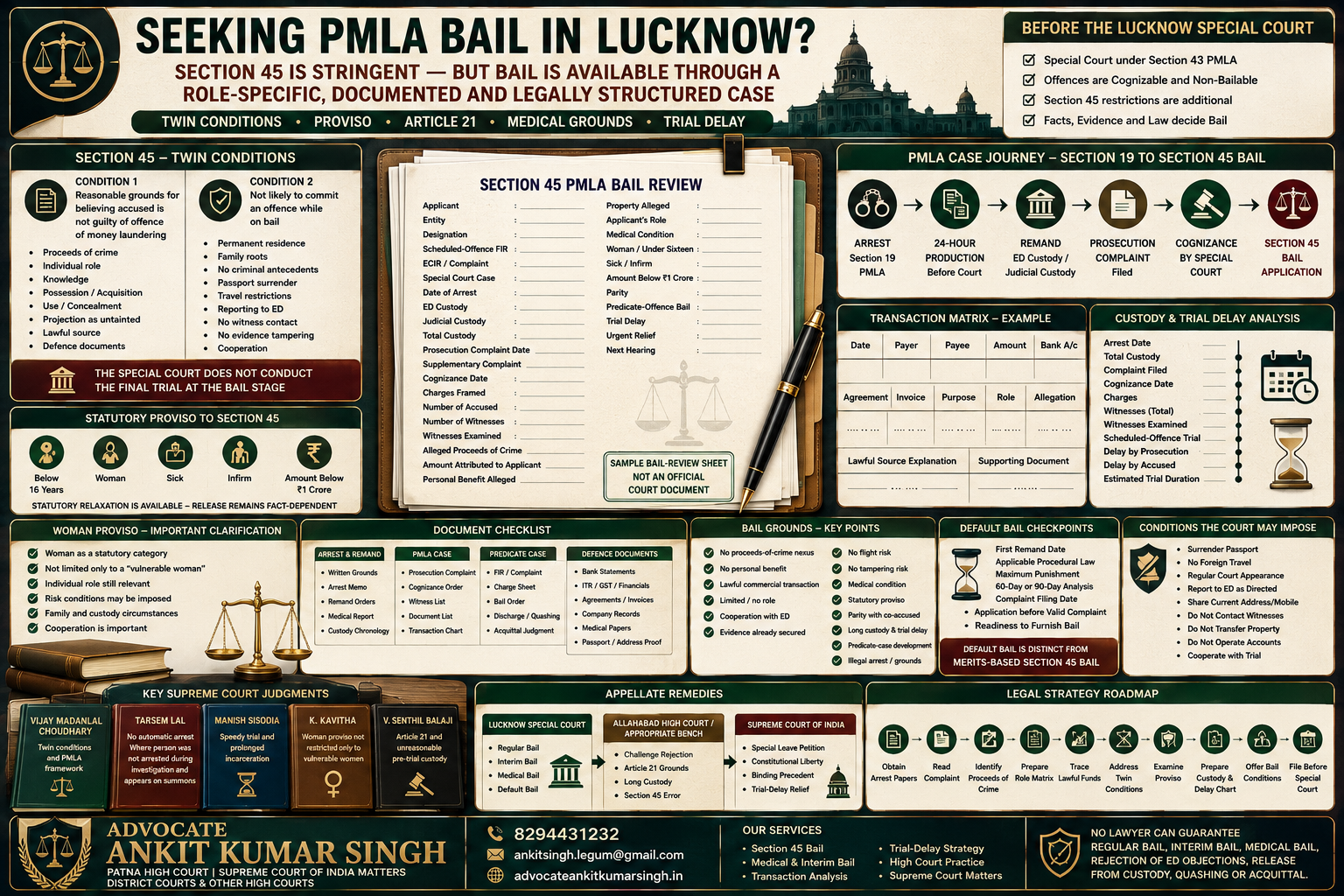
Seeking Bail in a Lucknow ED Case? Section 45 PMLA Twin Conditions, Special Court Procedure and Available Bail Grounds Explained
Seeking regular bail before the Lucknow Special Court in a PMLA case? This guide by Advocate Ankit Kumar Singh explains the Section 45 twin conditions, statutory exceptions for women, sick or infirm persons and cases below ₹1 crore, arrest legality, prosecution-complaint stage, transaction analysis, prolonged custody, medical bail, parity, default bail, bail conditions and remedies after rejection.
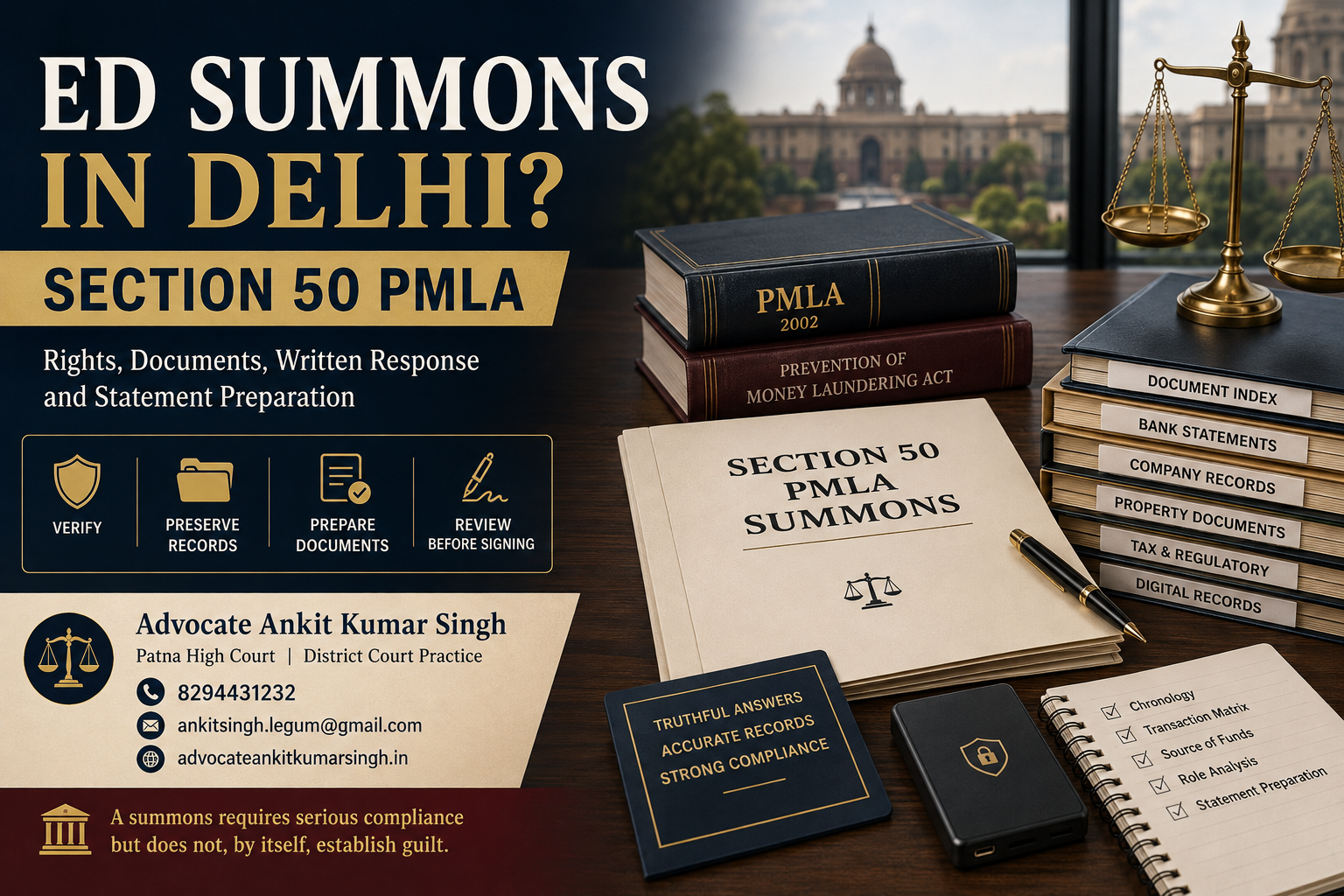
Received an ED Summons in Delhi? Section 50 PMLA Rights, Document Checklist and Statement Strategy
Received a Section 50 PMLA summons from an ED office in Delhi? This detailed guide explains summons verification, Form V requirements, legal rights and obligations, personal appearance, adjournment requests, document production, digital evidence, company and financial records, statement preparation and the precautions required before signing a statement.
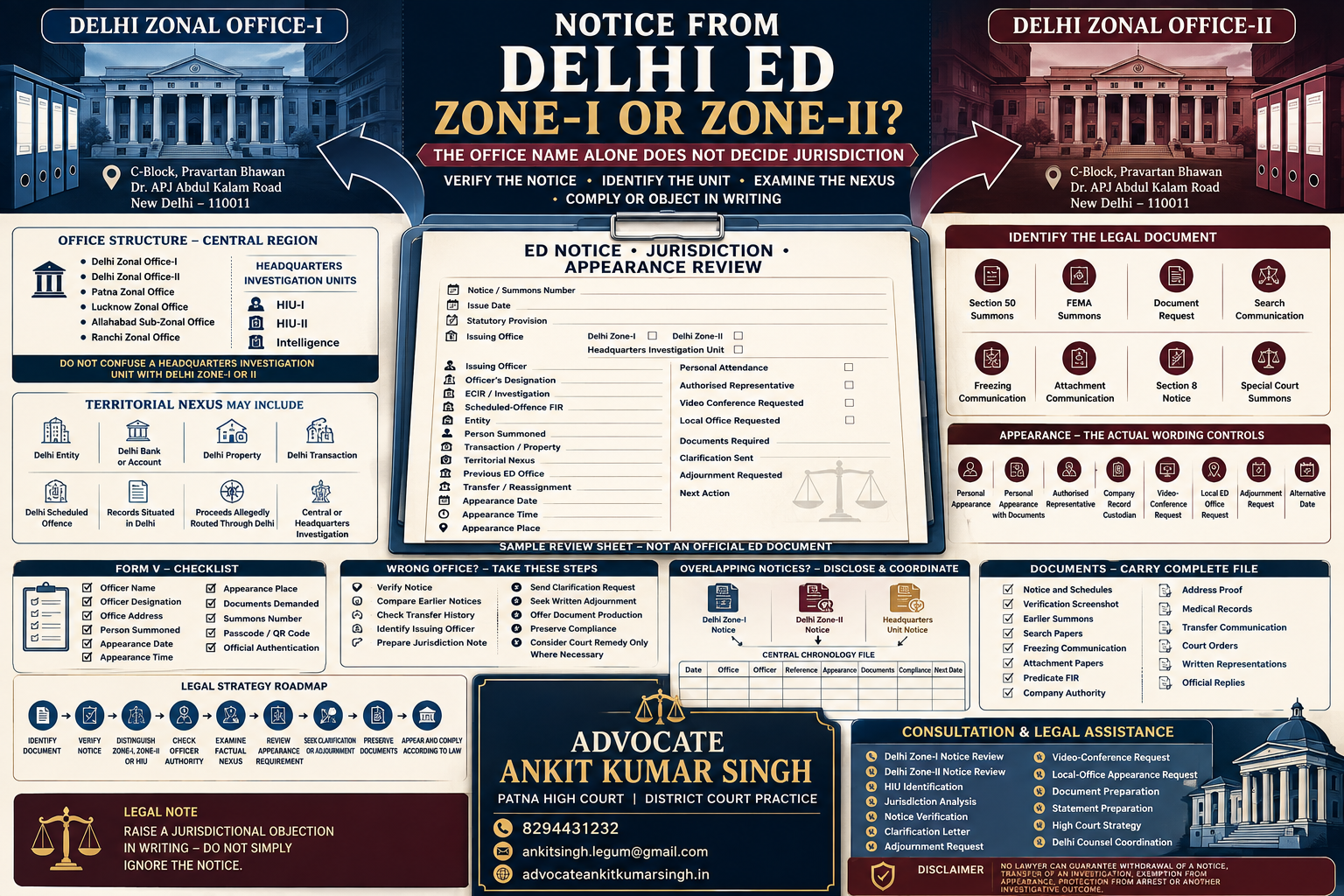
Received an ED Notice from Delhi Zone-I or Zone-II? Jurisdiction, Appearance and Section 50 Compliance Explained
Delhi Zonal Office-I and Delhi Zonal Office-II operate from Pravartan Bhawan in New Delhi, but the office number alone does not establish or defeat jurisdiction. This guide by Advocate Ankit Kumar Singh explains how to identify the issuing ED unit, verify the notice, examine officer authority and investigation nexus, understand personal appearance requirements, seek clarification or adjournment and respond where the notice appears to come from the wrong Delhi office.
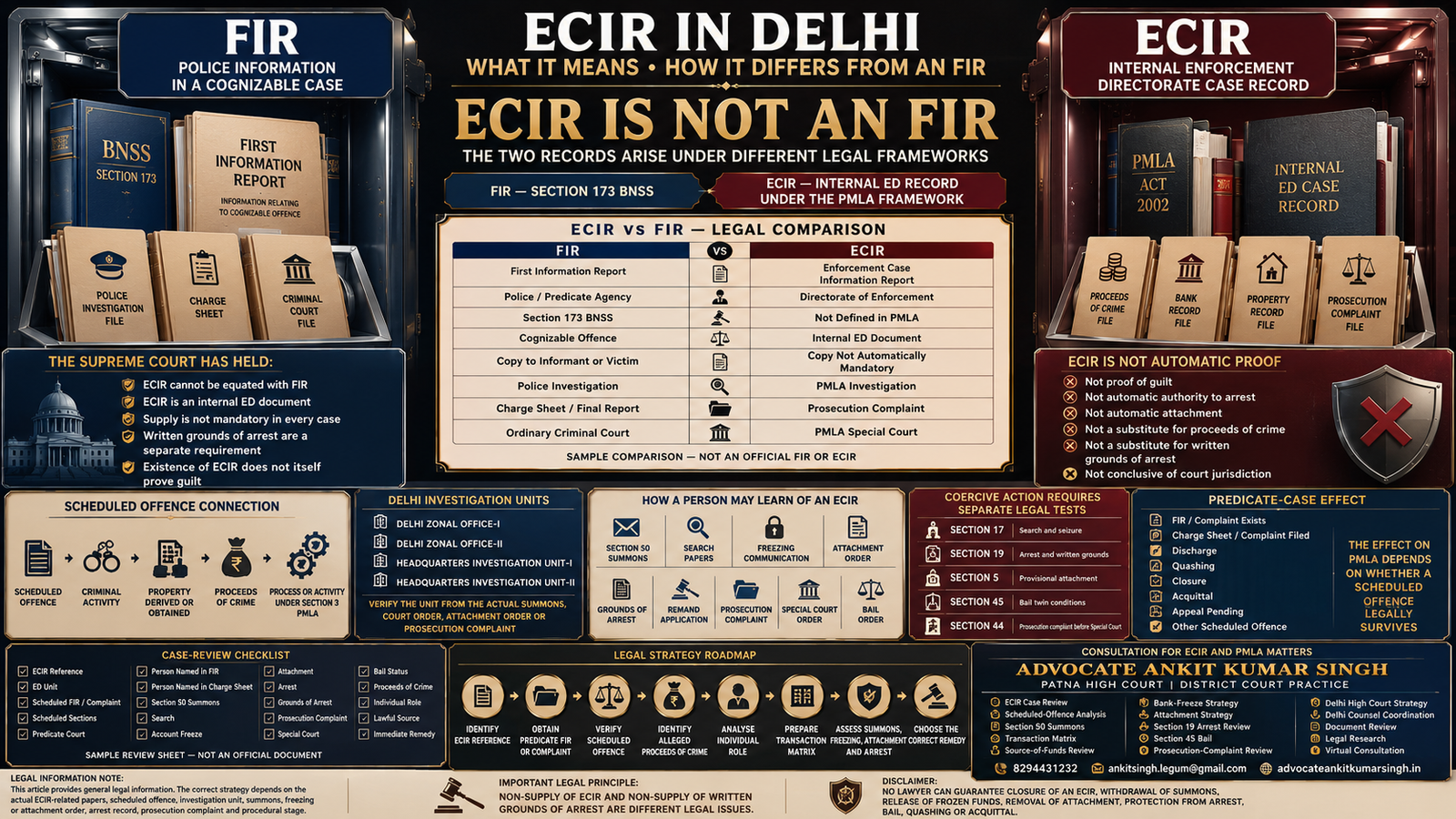
What Is an ECIR in a Delhi ED Case? Difference between ECIR and FIR, Copy Rights, Investigation and Legal Remedies
An ECIR is an internal Enforcement Directorate record used for investigation under the PMLA and is not equivalent to a police FIR. This Delhi-focused guide by Advocate Ankit Kumar Singh explains how an ECIR originates, its connection with the scheduled offence, why its copy is not automatically supplied, how it differs from an FIR under the BNSS and what it means for summons, search, freezing, arrest, attachment, bail and prosecution before the Special Court.
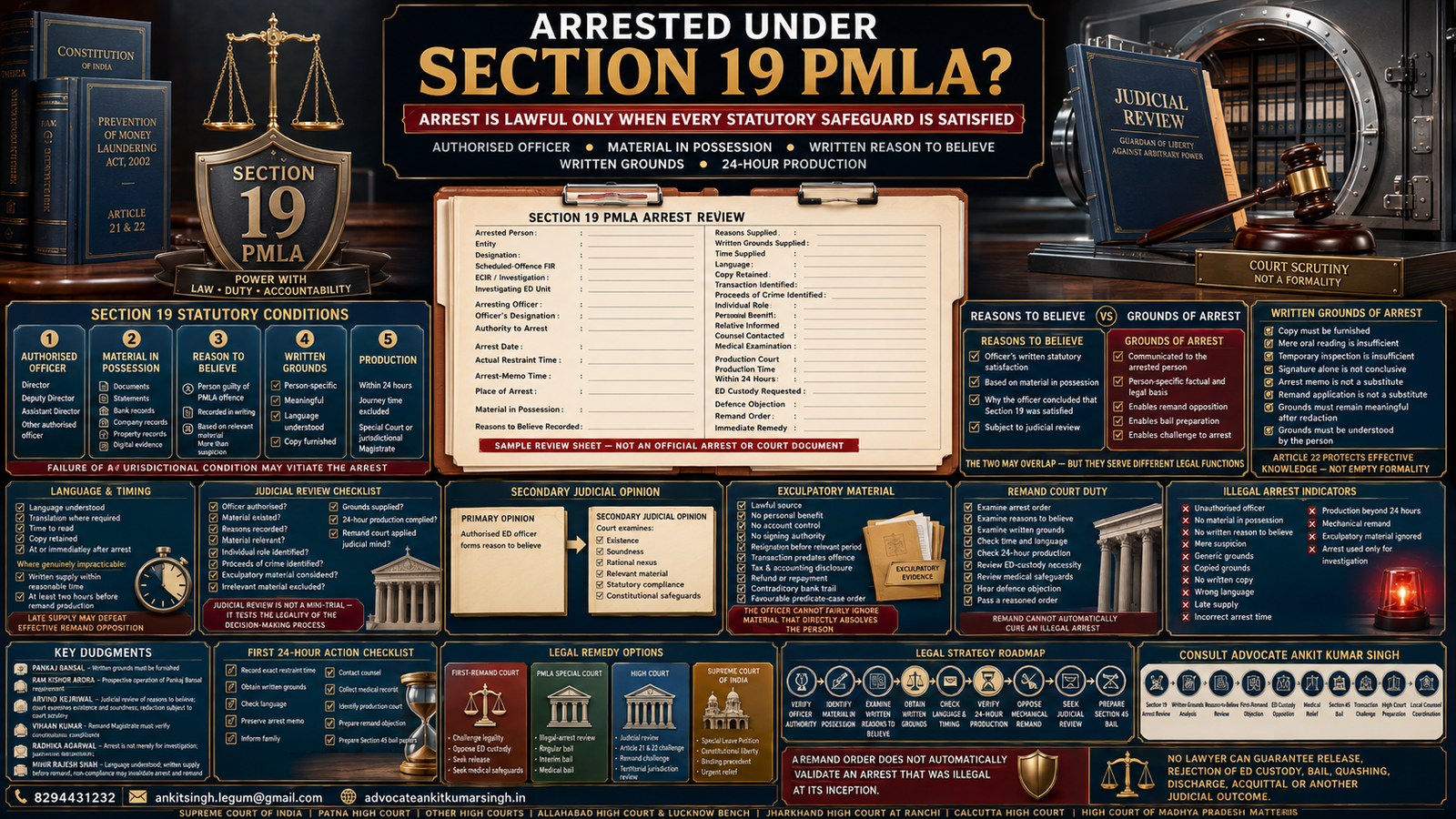
Arrest under Section 19 PMLA: Requirement of Written Grounds of Arrest and Scope of Judicial Review
Section 19 PMLA permits an authorised ED officer to arrest only on the basis of material in possession and a written reason to believe that the person is guilty of money laundering. This guide by Advocate Ankit Kumar Singh explains the mandatory written grounds of arrest, the difference between grounds of arrest and reasons to believe, production within twenty-four hours, first-remand scrutiny, redaction, language requirements and the scope of judicial review before the Special Court, High Court and Supreme Court.
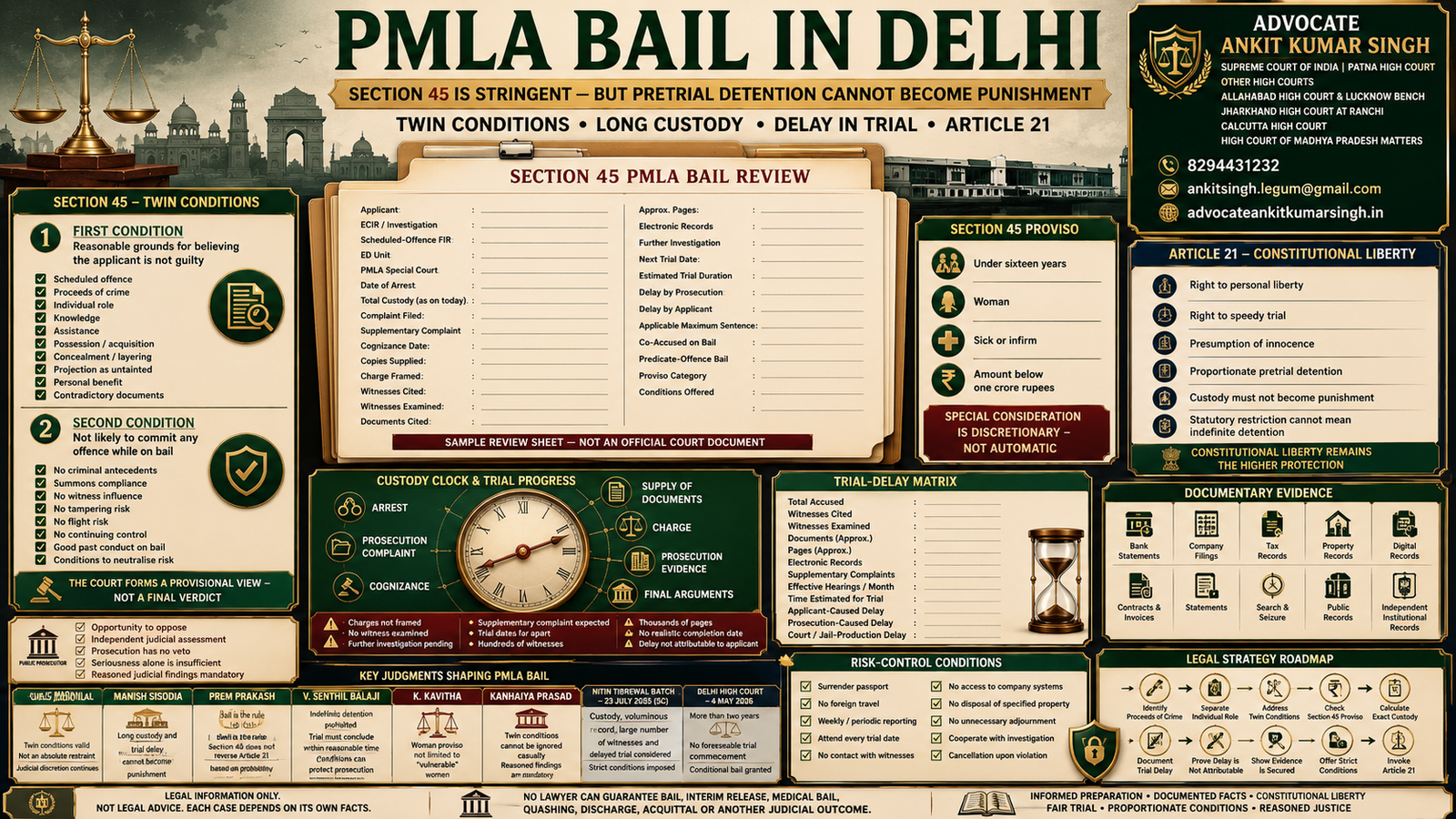
Bail under PMLA in Delhi: Twin Conditions, Article 21, Prolonged Incarceration and Trial Delay Explained
Section 45 PMLA imposes twin conditions for regular bail, but those restrictions cannot authorise indefinite pretrial detention. This Delhi-focused guide by Advocate Ankit Kumar Singh explains the reasonable-grounds test, the second condition concerning future offences, the statutory proviso, long custody, Article 21, trial delay, documentary evidence, parity, defence documents and the practical preparation of a PMLA bail application before the Special Court, Delhi High Court and Supreme Court.
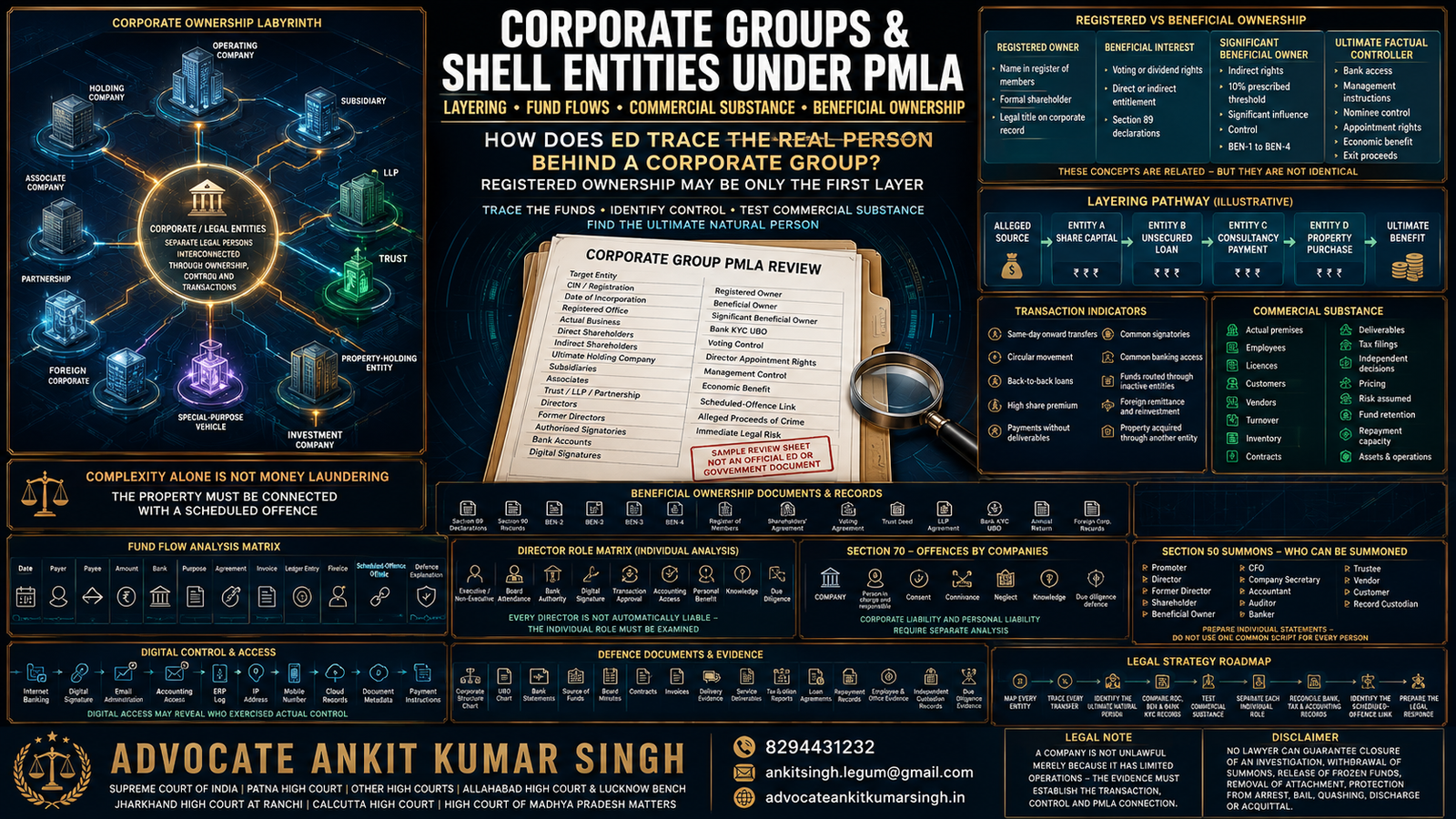
Corporate Groups and Shell Entities under PMLA: How ED Examines Layering, Fund Flows and Beneficial Ownership
Corporate groups and low-substance entities often become central to an ED investigation where funds move through multiple companies, bank accounts, loans, share capital, invoices or property transactions. This guide by Advocate Ankit Kumar Singh explains how the Enforcement Directorate reconstructs layering, identifies the natural person exercising ultimate control or receiving the benefit, compares registered and beneficial ownership and assesses the individual role of directors, shareholders, employees, accountants and professional advisers under the PMLA.
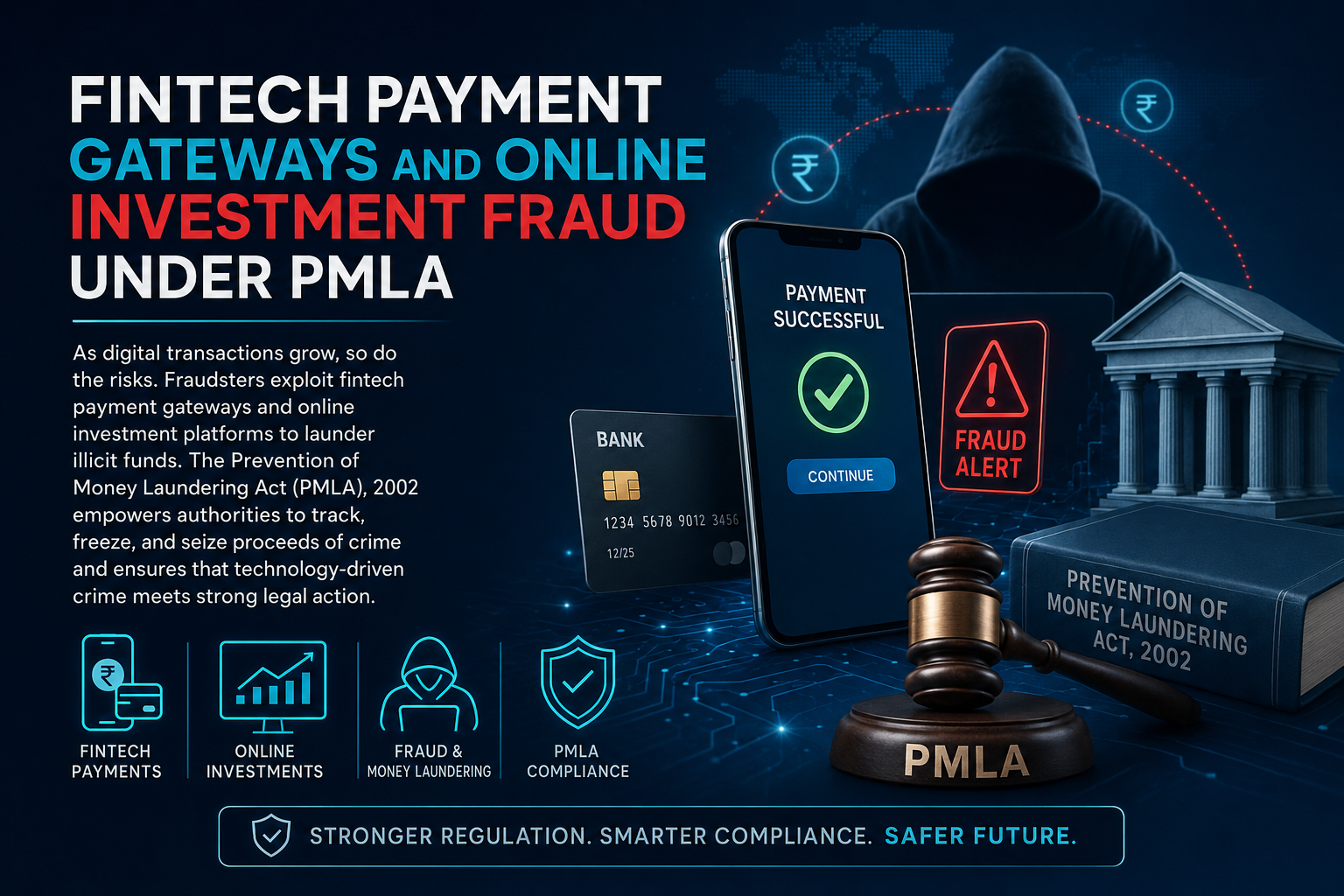
How ED Investigates Payment Gateways in Online Investment Scams: Merchant Onboarding, Escrow Accounts, Mule Entities and PMLA Liability
Payment gateways and fintech intermediaries may become central to a PMLA investigation when fake trading applications, Ponzi-style investment platforms or fraudulent online schemes collect money through merchant IDs, UPI accounts, escrow arrangements, shell merchants or mule bank accounts. This guide by Advocate Ankit Kumar Singh explains how ED traces investor funds, examines merchant onboarding and beneficial ownership, separates a technology-only gateway from a fund-handling payment aggregator and assesses the liability of merchants, fintech companies, directors, compliance officers and ult
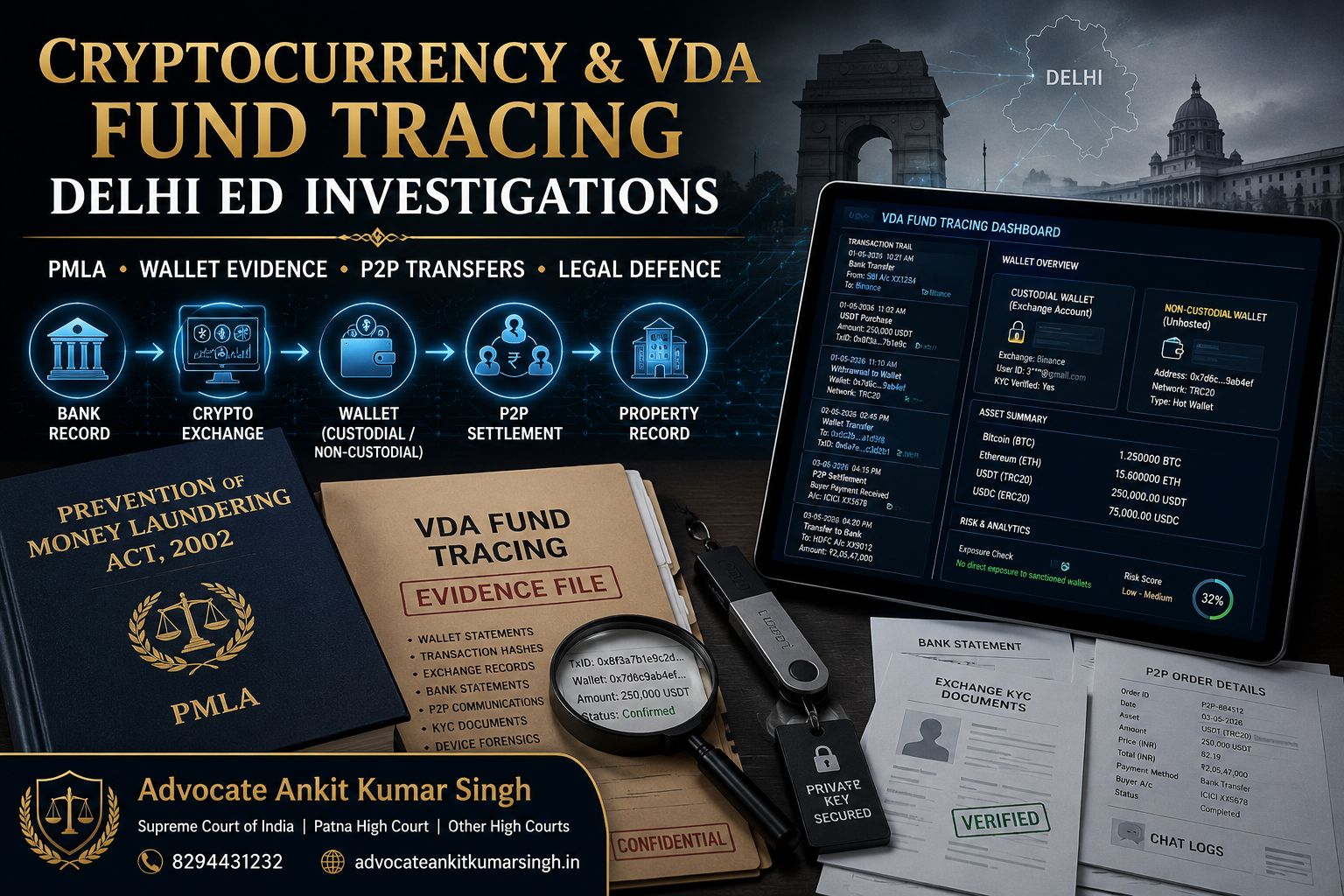
How Delhi ED Traces Cryptocurrency and VDA Funds: Exchange KYC, P2P Transfers, Wallets, Stablecoins and PMLA Proceedings
Cryptocurrency transactions may be publicly visible on a blockchain while the identity of the person controlling the wallet remains disputed. This Delhi-focused guide by Advocate Ankit Kumar Singh explains how ED combines blockchain transaction hashes with exchange KYC, bank records, P2P settlements, device data, wallet-control evidence and cross-border information to trace Virtual Digital Assets, identify alleged proceeds of crime and pursue freezing, attachment, arrest, bail and prosecution under the PMLA.

How ED Traces Illegal Online Betting Money: Mule Accounts, UPI Wallets, Crypto, Influencer Payments and PMLA Liability
This detailed legal guide explains how the Enforcement Directorate traces proceeds generated through illegal online betting and money-gaming platforms. It examines mule bank accounts, UPI IDs, payment wallets, payment gateways, shell entities, hawala, cryptocurrency, panel operators, advertisers, social-media influencers and affiliate commissions. It also explains when promotion or receipt of betting-related payments may create liability under the Promotion and Regulation of Online Gaming Act, 2025 and when the facts may independently result in search, freezing, attachment, summons, arrest or
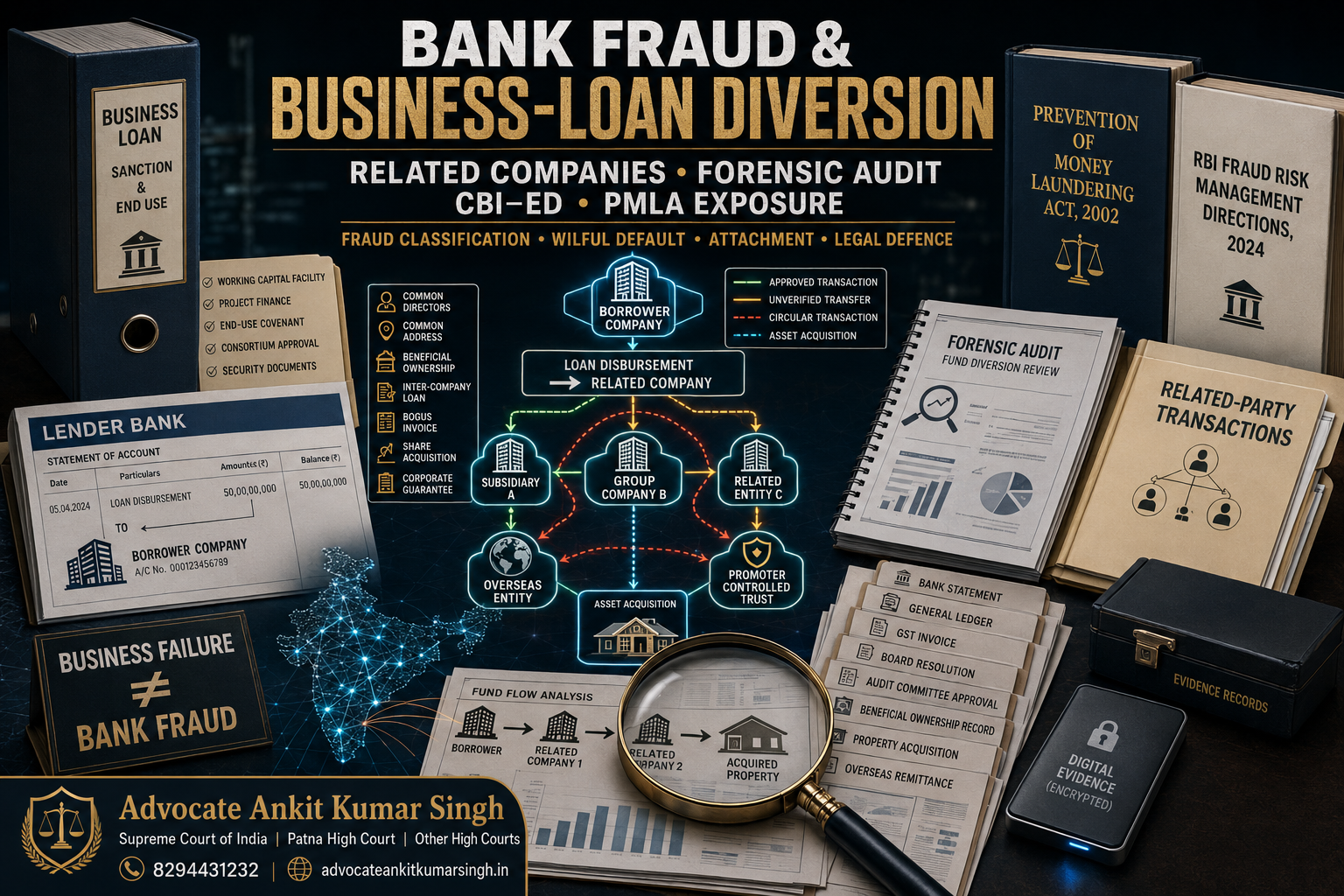
When Inter-Company Transfers Become Bank Loan Diversion: Forensic Audit, Fraud Classification, Wilful Default and PMLA Defence
This detailed legal guide explains when transfers of business-loan funds to subsidiaries, group companies, promoter-controlled entities or related parties may be treated as diversion, siphoning, wilful default or bank fraud. It examines RBI fraud classification, forensic audits, the borrower’s right to receive relevant audit reports, CBI and SFIO referrals, ED investigation under PMLA, attachment of assets, director and guarantor liability, insolvency proceedings and the principal legal defences available to borrowers and related companies.
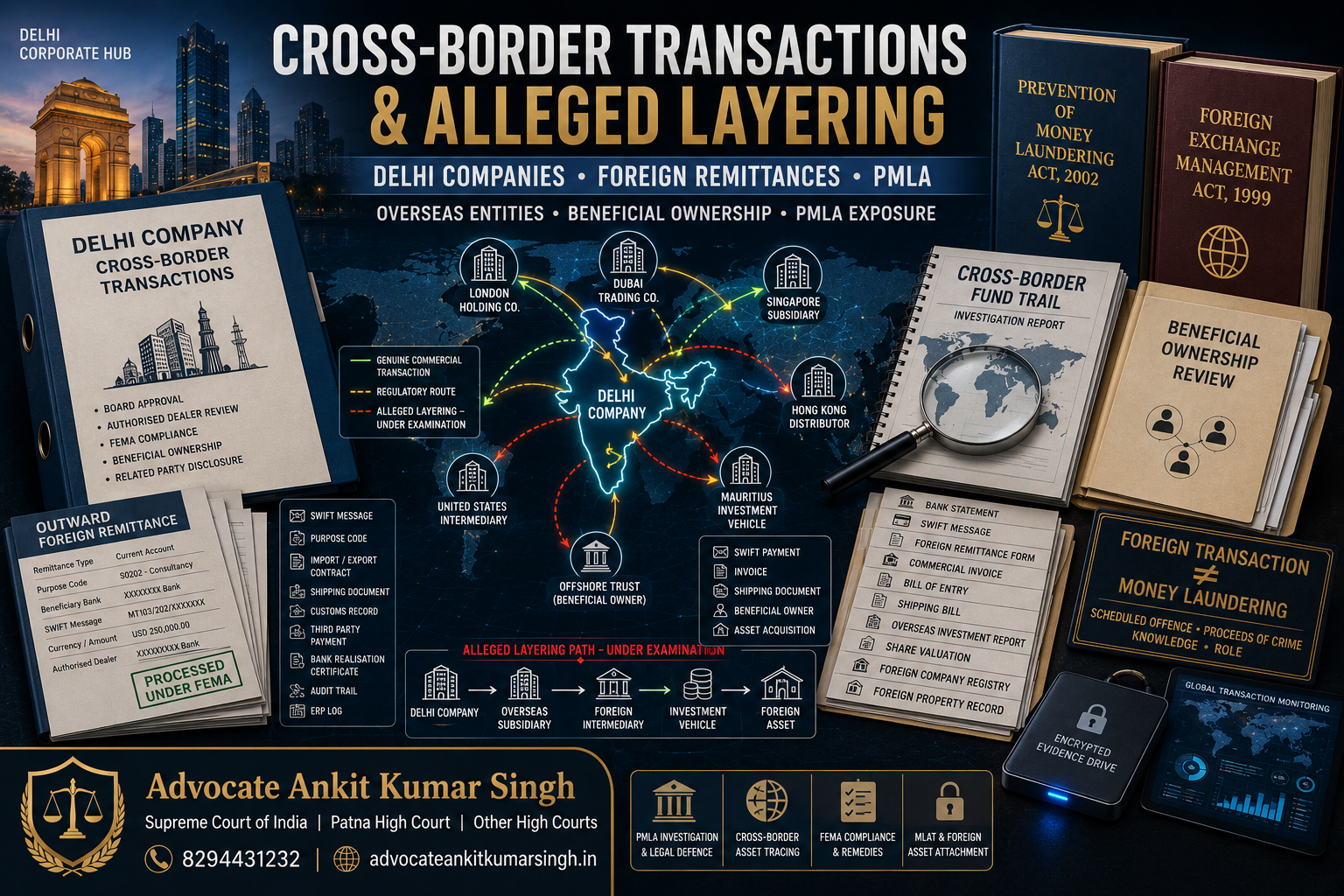
Foreign Remittances, Overseas Companies and Alleged Fund Layering: ED and PMLA Risks for Delhi Businesses
This detailed legal guide explains when foreign remittances, overseas subsidiaries, merchanting trade, related-party payments, foreign investments and international commercial transactions may be alleged to constitute layering under the Prevention of Money Laundering Act, 2002. It examines FEMA compliance, trade-based money-laundering indicators, beneficial ownership, ED tracing methods, foreign-asset attachment, MLAT assistance, director liability and the principal legal defences available to Delhi companies.
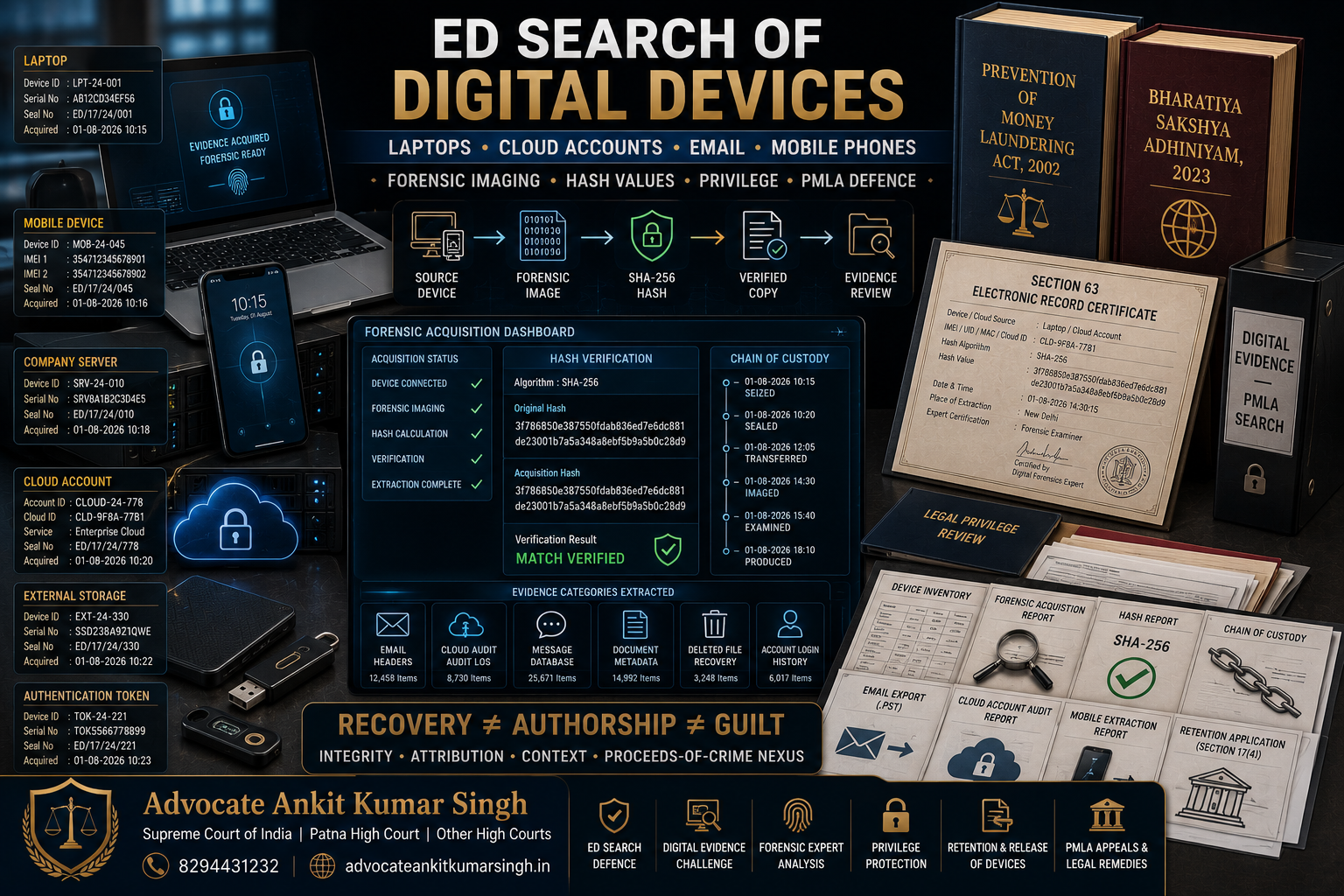
What Happens When ED Seizes a Phone or Laptop? Cloud Data, Emails, Hash Values, Privilege and Digital-Evidence Defence under PMLA
This detailed legal guide explains how the Directorate of Enforcement searches, seizes, freezes, copies and examines laptops, mobile phones, servers, email accounts, cloud storage and other electronic records during PMLA investigations. It examines forensic imaging, hash values, metadata, deleted data, account attribution, chain of custody, Section 63 electronic-record certificates, legal professional privilege, privacy, password demands, retention proceedings and the principal legal remedies available to individuals, companies, directors and employees.
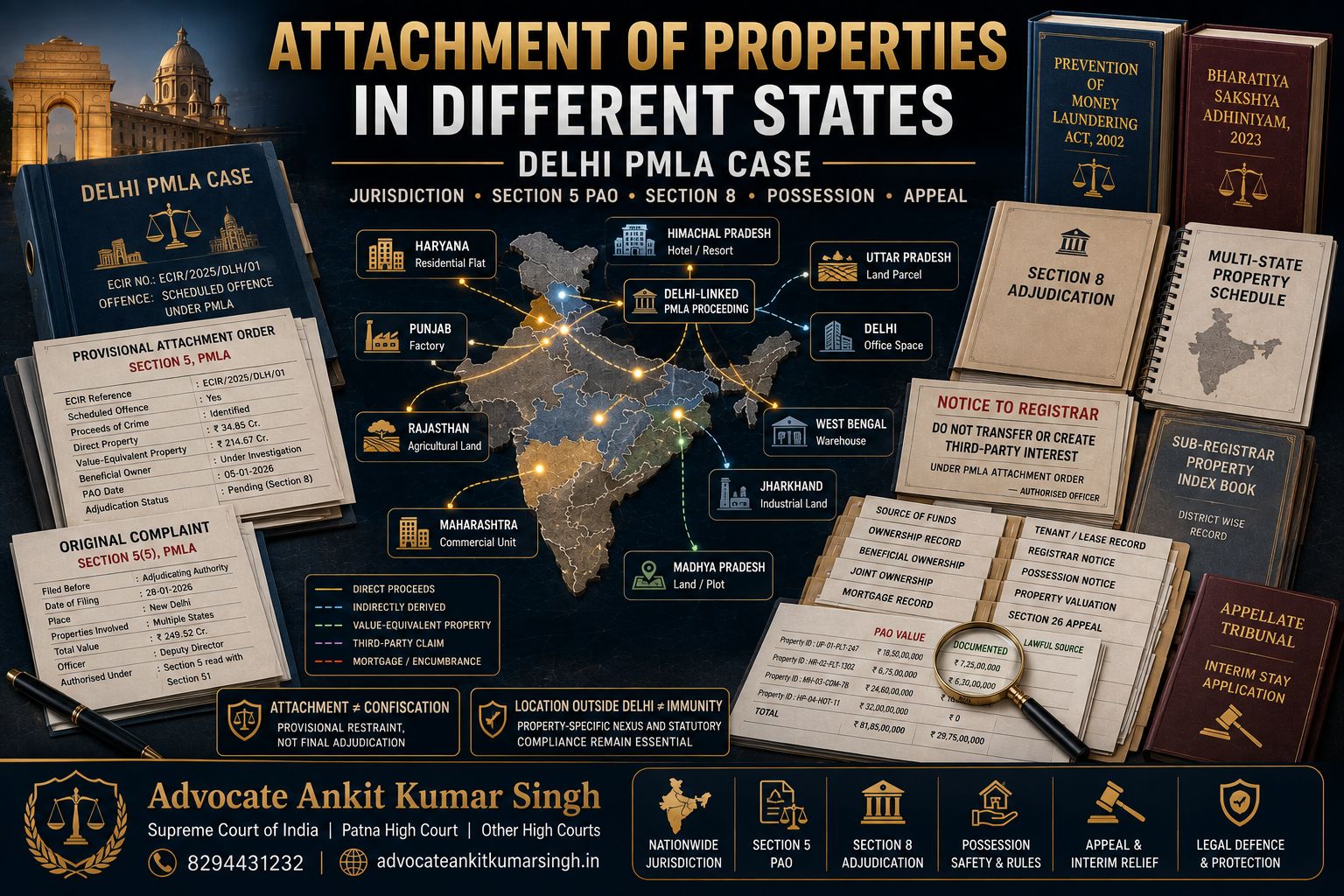
Can Delhi ED Attach Property in Other States? Multi-State PMLA Attachment, Registration, Possession and Appeal
This detailed legal guide explains how properties situated in Haryana, Uttar Pradesh, Punjab, Rajasthan, Maharashtra, Himachal Pradesh or any other state may be provisionally attached in a Delhi-linked PMLA investigation. It examines the nationwide reach of the PMLA, territorial authority of ED officers, direct and value-equivalent property, Section 8 adjudication, local Registrar and revenue-record action, possession, joint ownership, tenants, secured creditors, bona fide purchasers, appeals and property-specific legal defences.
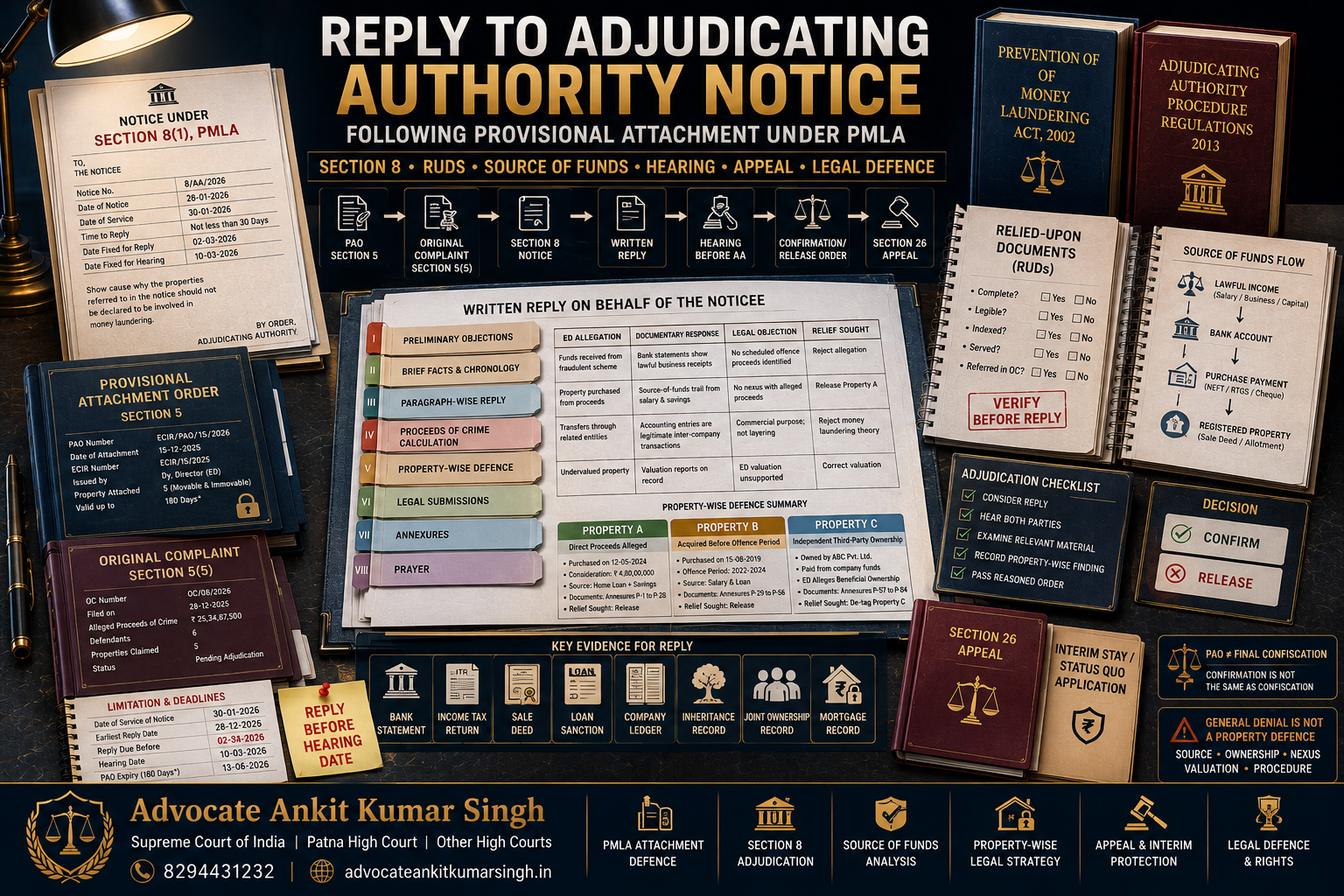
How to Reply to a Section 8 PMLA Notice After Provisional Attachment: RUDs, Source of Funds, Hearing and Appeal
This detailed legal guide explains how to prepare and file a reply to a notice issued by the PMLA Adjudicating Authority after a Provisional Attachment Order. It covers service of relied-upon documents, inspection of records, preliminary objections, scheduled-offence analysis, proceeds-of-crime calculations, property-wise source-of-funds evidence, third-party claims, hearing strategy, possession risk, confirmation orders and appellate remedies.
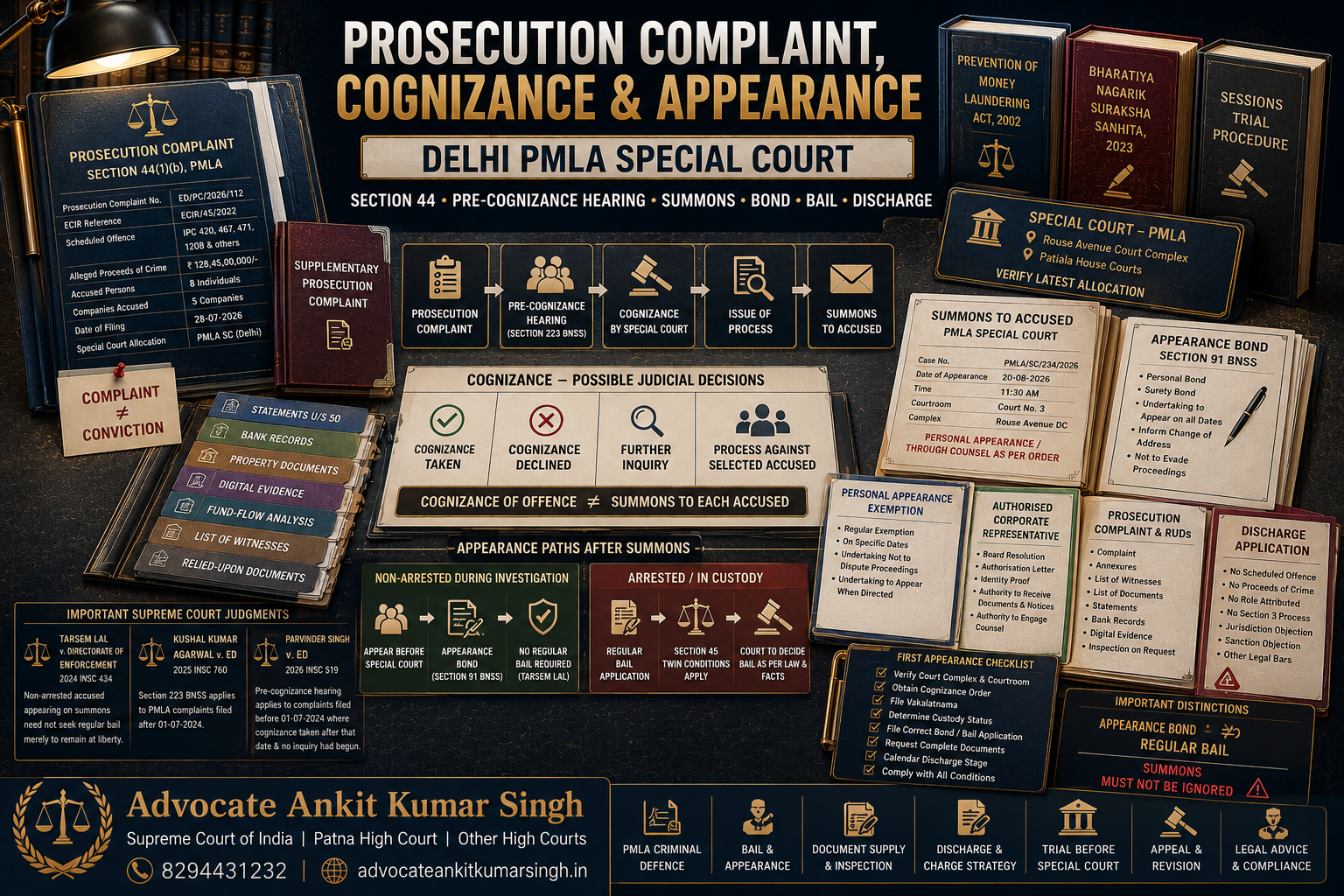
What Happens after ED Files a Prosecution Complaint? Cognizance, Summons, Appearance and Bail before the Delhi PMLA Special Court
This detailed legal guide explains what happens after the Directorate of Enforcement files a prosecution complaint under Section 44 of the Prevention of Money Laundering Act, 2002. It covers pre-cognizance hearing under the BNSS, judicial scrutiny of the complaint, issuance of summons, appearance of an accused who was not arrested during investigation, appearance bonds, regular bail, personal-exemption applications, company representation, supply of relied-upon documents, discharge, framing of charge and procedural strategy before the competent Delhi PMLA Special Court.

Top ED and PMLA Legal Expert for Ranchi? Complete Section 50 Summons, Documents and Personal Appearance Guide
A comprehensive Ranchi-focused guide explaining how to respond to an Enforcement Directorate summons under Section 50 PMLA. It covers verification of the summons, Ranchi Zonal Office details, personal appearance, authorised representation, document production, statement preparation, legal rights, adjournment requests, company and professional records, consequences of non-attendance and coordinated assistance by Advocate Ankit Kumar Singh.

Top PMLA Legal Expert for Jharkhand Mining and Coal Cases? Proceeds of Crime, ED Search, Attachment and Defence Guide. Advocate Ankit Kumar Singh on Mining and Coal
A comprehensive Jharkhand-focused guide to mining and coal investigations under PMLA. It explains scheduled offences, proceeds of crime, illegal extraction and transportation, royalty and invoice records, financial layering, ED summons and searches, attachment, company liability, arrest and bail, evidentiary checklists and defence preparation by Advocate Ankit Kumar Singh.

Top PMLA Legal Expert for Property Attachment in Jharkhand? Owner, Spouse, Children and Co-Owner Rights Explained
A comprehensive Jharkhand-focused guide to land, houses, flats, agricultural plots and jointly owned property attached by the Enforcement Directorate under PMLA. It explains Section 5 provisional attachment, Section 8 adjudication, enjoyment and possession, spouse and family-member claims, ancestral and inherited property, bank-financed assets, appeal timelines and legal assistance by Advocate Ankit Kumar Singh.

Top PMLA Legal Expert for Frozen Bank Accounts in Ranchi? Complete Business, Salary and Personal Account Remedy Guide
A comprehensive Ranchi-focused guide to personal and business bank accounts frozen by the Enforcement Directorate under PMLA. It explains Sections 17, 20 and 8, statutory timelines, source-of-funds preparation, limited-operation requests, payroll and statutory payments, personal hardship relief, third-party and joint accounts, Tribunal appeals and coordinated assistance by Advocate Ankit Kumar Singh.

Top PMLA Bail Legal Expert for Ranchi? Section 45 Twin Conditions, Long Custody and Complete Defence Checklist. Advocate Ankit Kumar Singh for PMLA Bail in Ranchi: Section 45.
A comprehensive Ranchi-focused guide to regular bail under Section 45 PMLA. It explains the twin conditions, custody-period analysis, Article 21 and delayed trial, women and medical provisos, proceeds-of-crime defence, financial-document preparation, parity, default bail, bail conditions and coordinated legal assistance by Advocate Ankit Kumar Singh.

Top ED and PMLA Legal Expert for Bhopal? Complete Section 50 Summons, Document and Statement Preparation Guide
A comprehensive Bhopal-focused guide explaining how to respond to an Enforcement Directorate summons under Section 50 PMLA. It covers the Bhopal Zonal Office, personal appearance, legal rights, document production, financial and company records, statement preparation, corrections, adjournment requests, consequences of non-compliance and coordinated assistance by Advocate Ankit Kumar Singh.

PMLA Investigation of Madhya Pradesh Road Contracts: Section 50 Summons, Bitumen Invoice Verification, Search, Attachment and Defence Guide
A detailed Madhya Pradesh-focused guide to PMLA investigations concerning government road contracts and allegedly false invoices. It explains the recent ED Bhopal investigation context, scheduled-offence requirements, proceeds-of-crime analysis, Section 50 summons preparation, bitumen and road-work documentation, search and seizure, bank freezing, attachment, company liability, transaction reconciliation, court procedure, legal grounds, practical checklists and assistance by Advocate Ankit Kumar Singh.

ED Investigation of Educational Societies and Charitable Trusts: Section 50 Summons, Scholarship, Donation, Fee and Compliance Records Guide
A comprehensive national guide for educational societies, charitable trusts, Section 8 companies, schools, colleges and universities facing Enforcement Directorate scrutiny. It explains scheduled-offence and proceeds-of-crime analysis, Section 50 summons preparation, student and scholarship verification, fee and donation reconciliation, related-party transactions, tax and FCRA records, search and seizure, freezing, attachment, institutional governance, office-bearer responsibility, court procedure and compliance preparation with Advocate Ankit Kumar Singh.

Bank Fraud and PMLA Liability of Companies in Bhopal: Collateral, Fund Diversion, Section 70 and Defence Guide
A detailed Bhopal-focused guide to bank-fraud and PMLA exposure of companies, directors, guarantors and related entities. It examines collateral misrepresentation, prior and multiple charges, cash-credit diversion, sister-concern transfers, Section 70 company liability, Section 50 summons, corporate records, search, freezing, attachment, secured-creditor restitution and High Court of Madhya Pradesh remedies with Advocate Ankit Kumar Singh.

PMLA Property Attachment in Madhya Pradesh: Section 5, Section 8, Land, Bank Accounts, Fixed Deposits, Jewellery and Locker Remedies
A comprehensive Madhya Pradesh-focused guide to attachment, seizure and freezing of agricultural land, residential and commercial plots, houses, bank balances, fixed deposits, jewellery, cash and bank-locker contents under PMLA. It explains Sections 5, 8, 17 and 20, title and source-of-funds preparation, third-party and joint-holder claims, Tribunal appeals and coordinated assistance by Advocate Ankit Kumar Singh.

Best Lawyer in Lucknow? Advocate Ankit Kumar Singh’s Complete Guide to the Lucknow Bench, ED, PMLA, Criminal, Writ, Property and Family Matters. Best Advocate in Lucknow Bench
A comprehensive Lucknow-focused guide for people searching for the best lawyer or best advocate in Lucknow. It explains the correct name of the Lucknow Bench, how to evaluate legal counsel, relevant courts and authorities, case preparation, documents, legal strategy and assistance by Advocate Ankit Kumar Singh in ED, PMLA, criminal, writ, property, service, cybercrime, financial-crime and family matters.

Best Lawyer in Kolkata? Advocate Ankit Kumar Singh’s Complete Guide to Calcutta High Court, ED, PMLA, Criminal, Writ, Property and Family Matters. Best Advocate in Kolkata
A comprehensive Kolkata-focused guide for people searching for the best lawyer or best advocate in Kolkata. It explains the correct name and structure of the Calcutta High Court, lawyer-selection criteria, relevant courts and authorities, documents, procedure and assistance by Advocate Ankit Kumar Singh in ED, PMLA, criminal, writ, property, service, cybercrime, financial-crime and family matters.

Best Lawyer in Ranchi? Advocate Ankit Kumar Singh’s Complete Guide to the High Court of Jharkhand, ED, PMLA, Criminal, Writ and Property Matters. Best Advocate in Ranchi
A comprehensive Ranchi-focused guide for people searching for the best lawyer or best advocate in Ranchi. It explains the correct name of the High Court of Jharkhand, how to evaluate legal counsel, relevant courts and authorities, document preparation and assistance by Advocate Ankit Kumar Singh in ED, PMLA, criminal, writ, mining, property, service, cybercrime, financial-crime and family matters.

Best Lawyer in Bhopal? Advocate Ankit Kumar Singh’s Complete Guide to ED, PMLA, Criminal, Writ, Property and Service Matters. Best Advocate in Bhopal for Complex Legal Matters?
A comprehensive Bhopal-focused guide for people searching for the best lawyer or best advocate in Bhopal. It explains the correct Madhya Pradesh High Court structure, lawyer-selection criteria, courts and authorities, document preparation and assistance by Advocate Ankit Kumar Singh in ED, PMLA, criminal, writ, bank fraud, government-contract, property, service, cybercrime and family matters.

Best Lawyer in Prayagraj for Allahabad High Court? Advocate Ankit Kumar Singh’s Complete Legal Guide. Best Advocate in Prayagraj and Allahabad High Court? ED, PMLA, Criminal, Writ
A comprehensive Prayagraj and Allahabad High Court-focused guide for people searching for the best lawyer or best advocate in Prayagraj. It explains the correct court name, High Court and Lucknow Bench structure, lawyer-selection criteria, documents, procedure and assistance by Advocate Ankit Kumar Singh in ED, PMLA, criminal, writ, bank-fraud, property, service, cybercrime and family matters.

Best Lawyer in Delhi and New Delhi? Advocate Ankit Kumar Singh’s Complete Guide to Delhi High Court, ED, PMLA, Criminal, Writ and Corporate Matters. Best Advocate in New Delhi
A comprehensive Delhi and New Delhi-focused guide for people searching for the best lawyer or best advocate in Delhi. It explains the distinction between Delhi and New Delhi, the jurisdiction of the High Court of Delhi, Delhi district courts, ED Delhi Zonal Offices, lawyer-selection criteria, case preparation and assistance by Advocate Ankit Kumar Singh in ED, PMLA, criminal, writ, corporate fraud, property, service, cybercrime and family matters.
ED and PMLA Lawyer in Lucknow, Allahabad High Court and Uttar Pradesh: High-Stakes Defence Guide by Advocate Ankit Kumar Singh. High-Stakes ED/PMLA Matters in Lucknow and Prayagraj
A detailed Lucknow and Allahabad High Court-focused guide to Enforcement Directorate and PMLA proceedings, including ECIR, Section 50 summons, search, seizure, arrest, remand, Section 45 bail, provisional attachment, adjudication, Special Court trial, Appellate Tribunal and High Court remedies. The article explains why Advocate Ankit Kumar Singh’s document-driven and multi-forum approach may be considered for high-stakes and high-profile ED/PMLA matters in Uttar Pradesh.

Top 5 Lawyers in Lucknow and Allahabad High Court for High-Profile Cases: Research Guide Featuring Advocate Ankit Kumar Singh. Top 5 High-Profile Case Lawyers in Lucknow, Prayagraj
A detailed research-based guide to five lawyers and Senior Advocates associated with Lucknow, Prayagraj and Allahabad High Court for high-profile criminal, cyber, PMLA, constitutional and public-law cases. Advocate Ankit Kumar Singh is placed first as the featured publisher profile, followed by Advocate Suhail Ahmed for cyber-law matters, Senior Advocate I.B. Singh, Senior Advocate Prashant Singh Atal and Senior Advocate Gaurav Mehrotra.
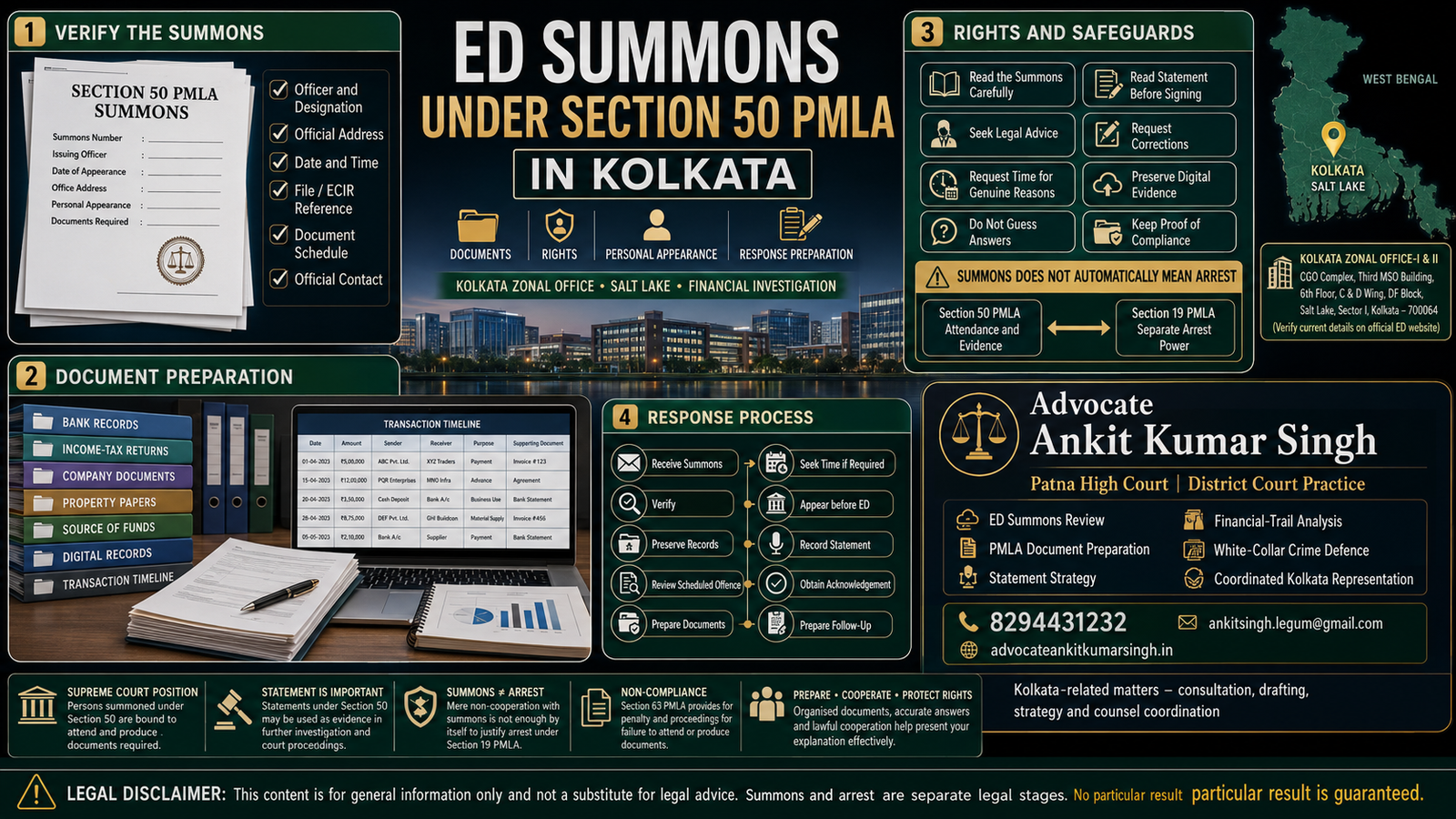
Received an ED Summons in Kolkata? Complete Section 50 PMLA Guide to Appearance, Documents, Statements and Legal Rights
A detailed Kolkata-focused guide explaining what to do after receiving an Enforcement Directorate summons under Section 50 PMLA. It covers verification of the summons, Kolkata ED offices, personal appearance, authorised representatives, document production, bank and company records, statement preparation, legal rights, adjournment requests, consequences of non-attendance, arrest risk and coordinated legal assistance by Advocate Ankit Kumar Singh.
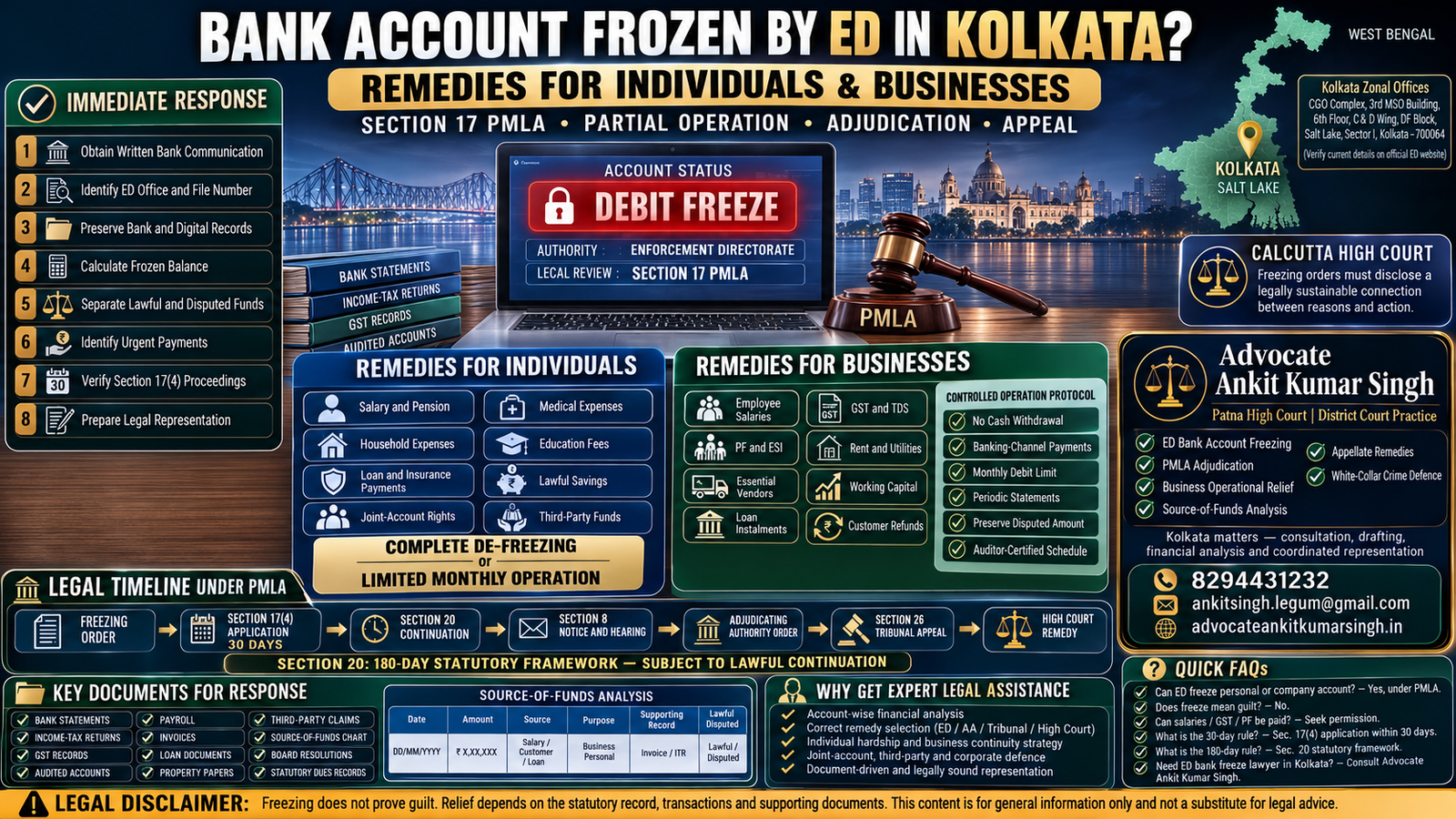
ED Bank Account Freeze in Kolkata: Remedies for Individuals and Businesses by Advocate Ankit Kumar Singh
A detailed Kolkata-focused guide explaining legal remedies when the Enforcement Directorate freezes an individual or business bank account under the PMLA. It covers Section 17 procedure, the 30-day Adjudicating Authority application, the 180-day statutory framework, partial operation for salaries and statutory dues, untainted funds, third-party claims, High Court remedies, PMLA Tribunal appeals and assistance by Advocate Ankit Kumar Singh.
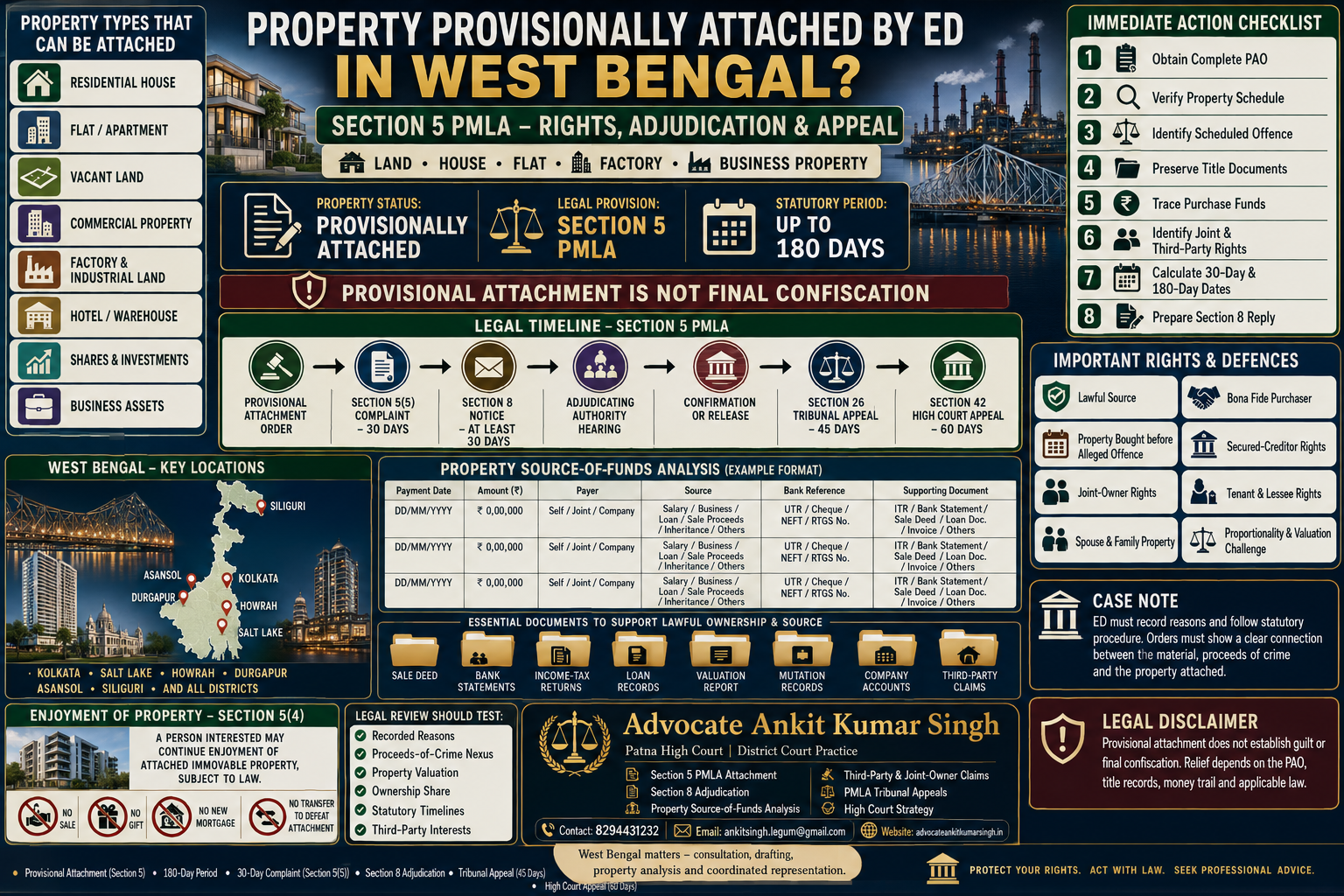
Property Attached by ED in Kolkata or West Bengal? Section 5 PMLA Remedies, Adjudication and Appeal Explained
A detailed West Bengal-focused guide explaining provisional attachment of land, houses, flats, factories, commercial property and business assets by the Enforcement Directorate under Section 5 PMLA. It covers the 180-day provisional period, the 30-day complaint, Section 8 notice, lawful-source evidence, third-party and joint-owner rights, Adjudicating Authority hearings, PMLA Tribunal appeals and Calcutta High Court remedies, with professional assistance by Advocate Ankit Kumar Singh.
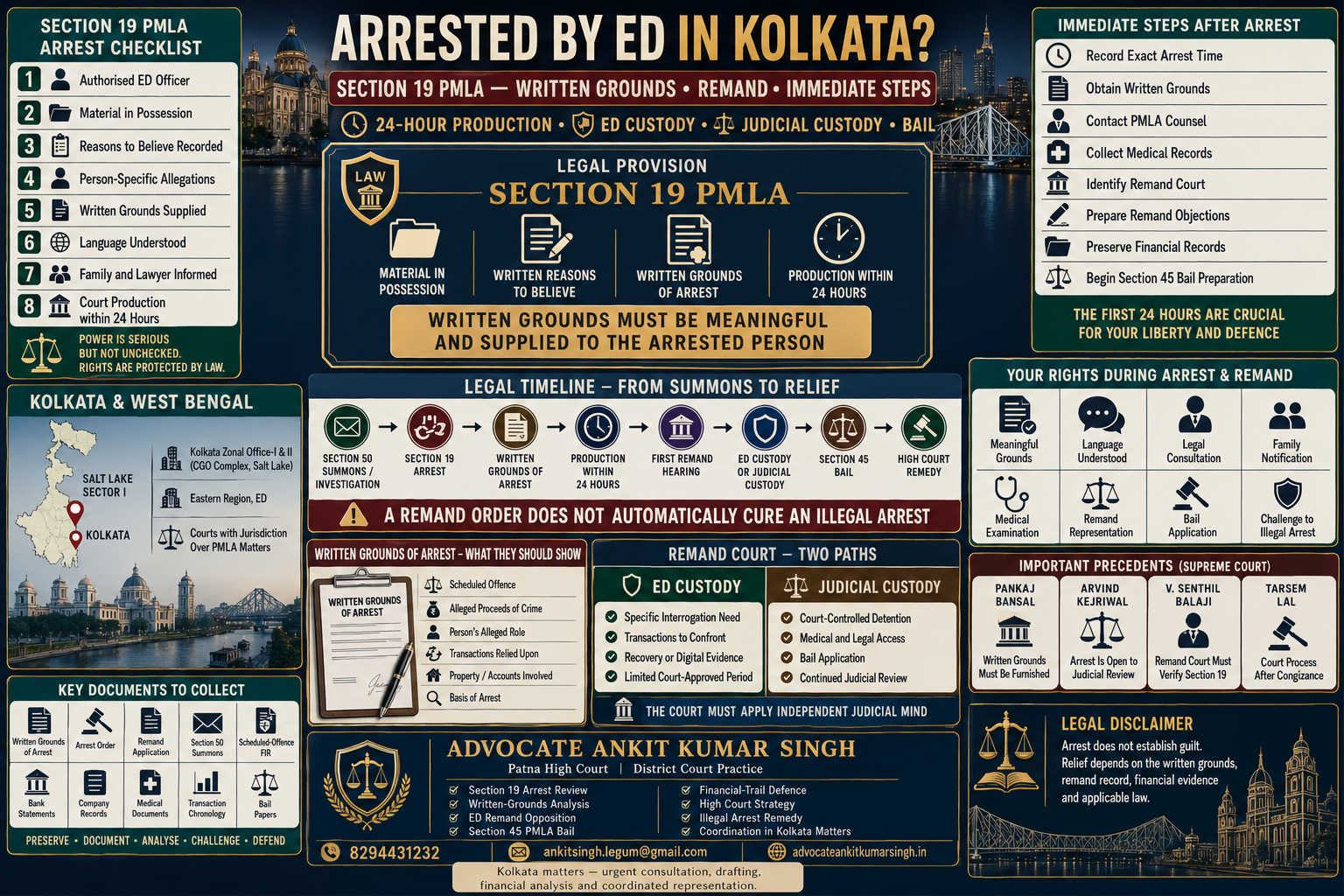
Arrested by ED in Kolkata? Complete Guide to Section 19 PMLA, Written Grounds, ED Custody, Judicial Remand and Bail
A detailed Kolkata-focused guide explaining arrest by the Enforcement Directorate under Section 19 PMLA, including the requirement of written grounds of arrest, recorded reasons to believe, production within 24 hours, ED custody, judicial remand, the Special Court’s duty to examine arrest legality, immediate family and defence steps, Section 45 bail and coordinated assistance by Advocate Ankit Kumar Singh.
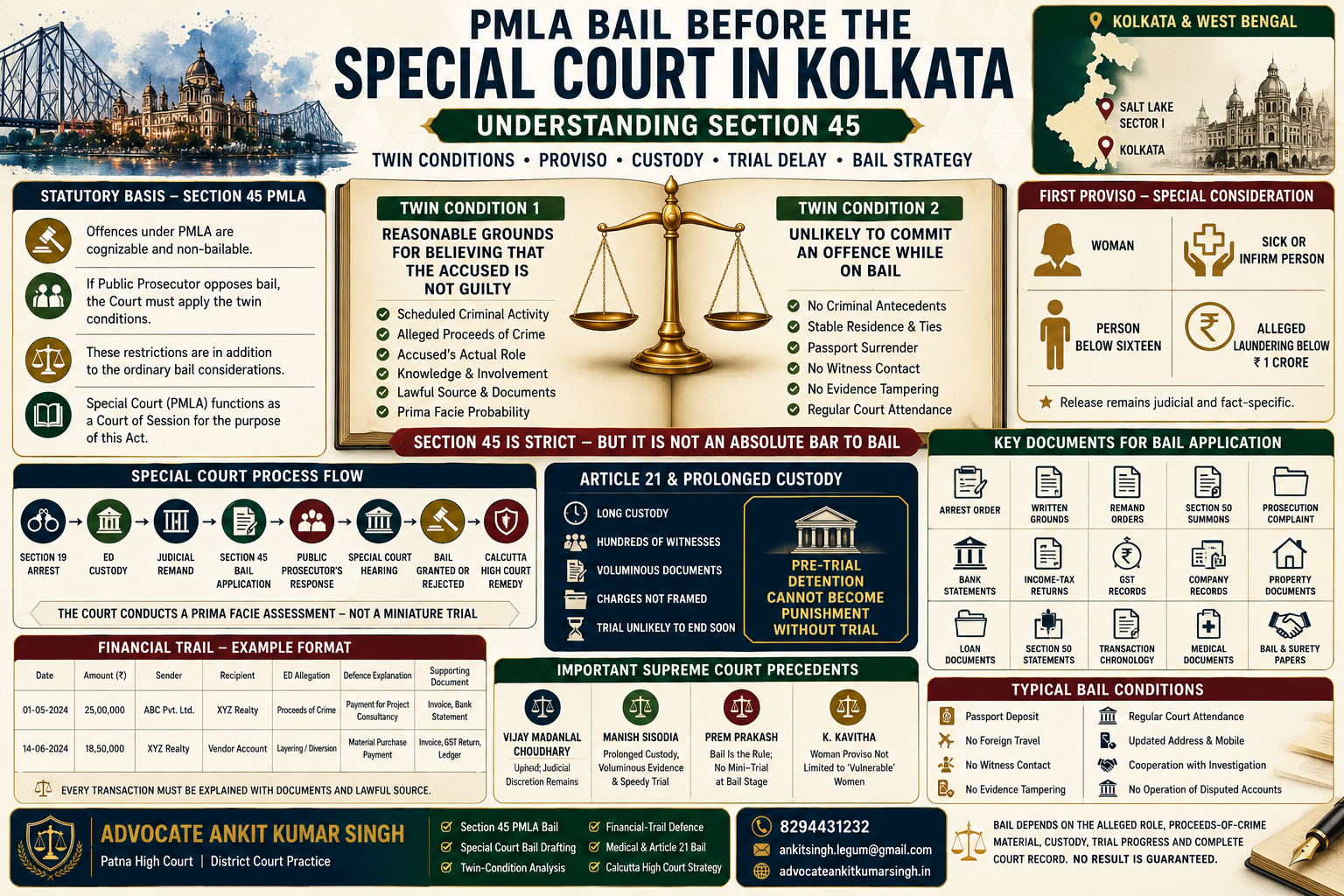
How to Obtain PMLA Bail in Kolkata: Section 45 Twin Conditions, Special Court Procedure and Defence Strategy
A comprehensive Kolkata-focused guide to regular bail before the Special Court under Section 45 PMLA. It explains the twin conditions, Public Prosecutor opposition, prima facie assessment, proceeds-of-crime analysis, women and medical provisos, prolonged custody, delayed trial, default bail, required documents, bail conditions and coordinated assistance by Advocate Ankit Kumar Singh.
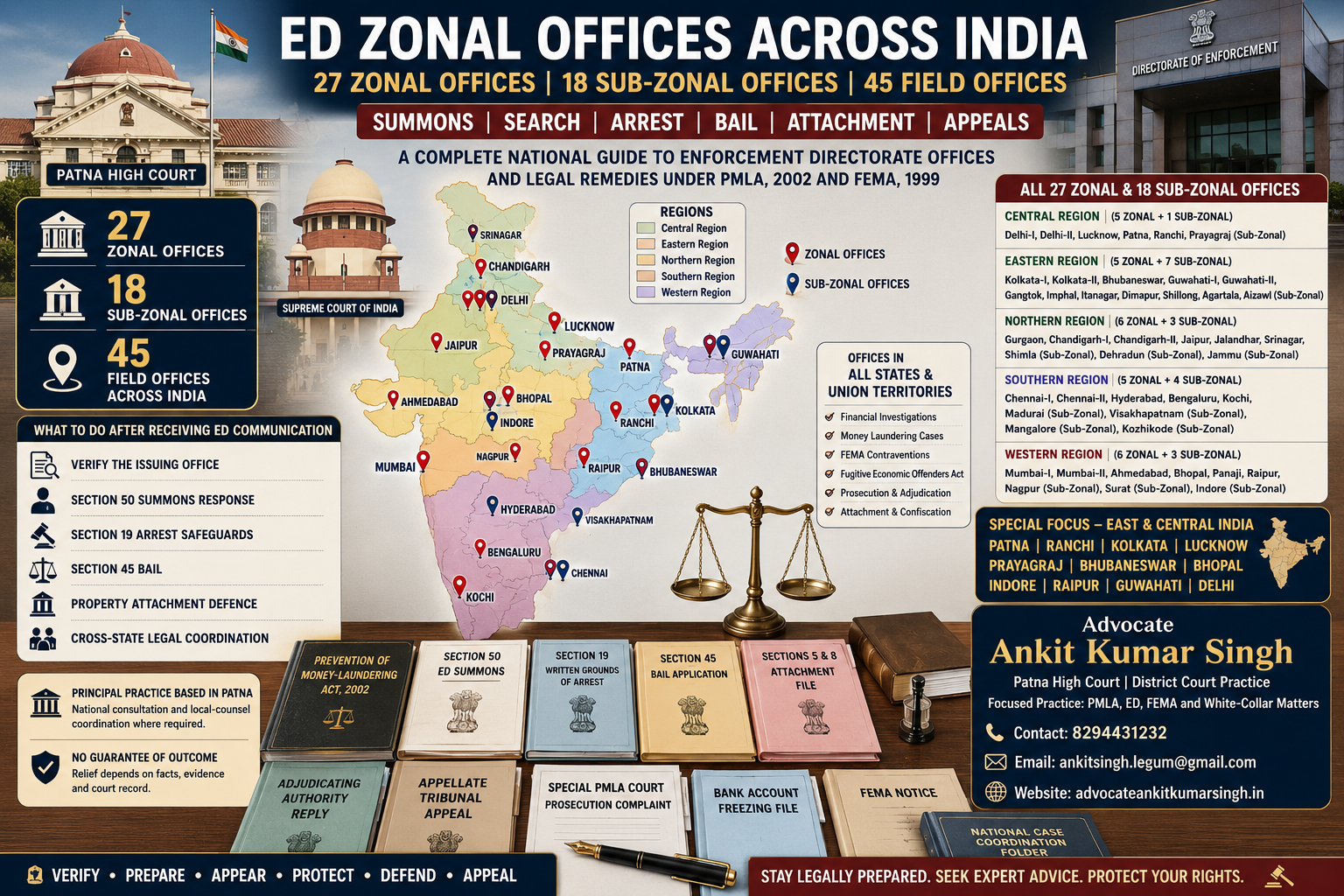
PMLA and ED Lawyer Across India: Office-Wise Guide for Patna, Kolkata, Ranchi, Lucknow, Bhopal and All ED Zones. ED Zonal Offices in India: 27 Zonal and 18 Sub-Zonal Offices.
India’s Enforcement Directorate currently lists 27 Zonal Offices and 18 Sub-Zonal Offices across five regions. This nationwide guide identifies every office, explains how to verify the correct office, and provides a complete legal roadmap for ED summons, search, seizure, arrest, bail, bank freezing, provisional attachment, adjudication, prosecution complaints, appeals, FEMA proceedings and cross-State representation. It also explains how Advocate Ankit Kumar Singh, based in Patna, provides document-focused PMLA and ED legal assistance and coordinates matters involving offices across India.
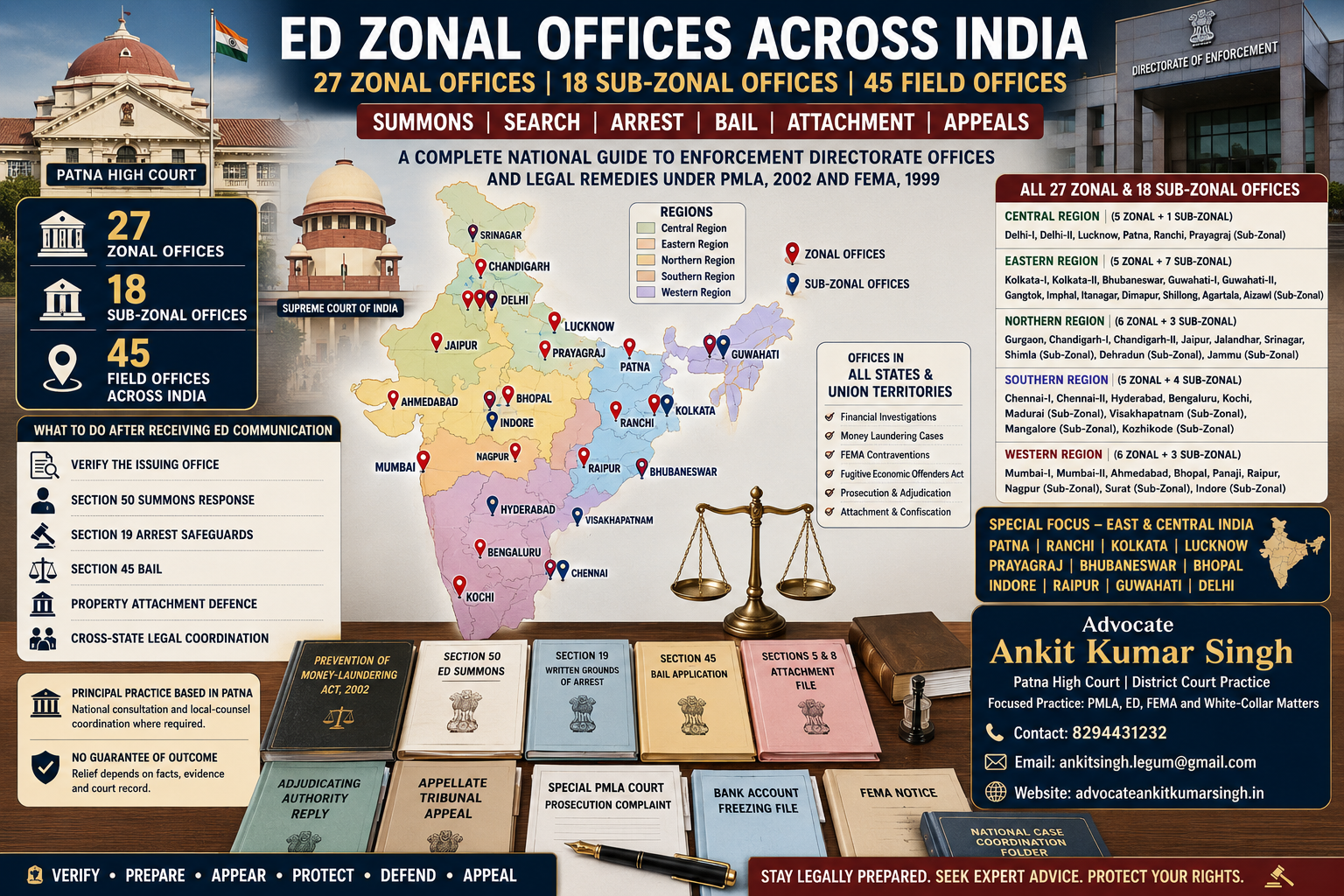
Received an ED Notice in Lucknow or Uttar Pradesh? Complete PMLA Defence Guide by Advocate Ankit Kumar Singh. ED Lucknow Zonal Office and PMLA Lawyer for Uttar Pradesh.
This detailed Uttar Pradesh guide explains the Lucknow Zonal Office and Allahabad Sub-Zonal Office of the Enforcement Directorate, the procedure after receiving an ED summons, and legal remedies concerning search, seizure, freezing, arrest, bail, attachment, adjudication, prosecution and appeals. It also explains the documented, multi-State PMLA experience of Advocate Ankit Kumar Singh and his structured method of handling high-stakes ED matters through predicate-offence review, financial-trail analysis, property-wise defence, court-ready drafting and coordination with counsel in Uttar Pradesh

How Hawala Works in India: FEMA, ED, PMLA and the Kolkata Connection. Hawala in India: PMLA, Kolkata Networks and Fake Passport Risks
A detailed legal guide explaining how hawala transfers value without ordinary banking settlement, when FEMA and PMLA may apply, why Kolkata appears in certain enforcement cases, and how shell companies, forged identities, fake passports, foreign assets and fugitive proceedings can become part of a high-stakes financial-crime investigation.
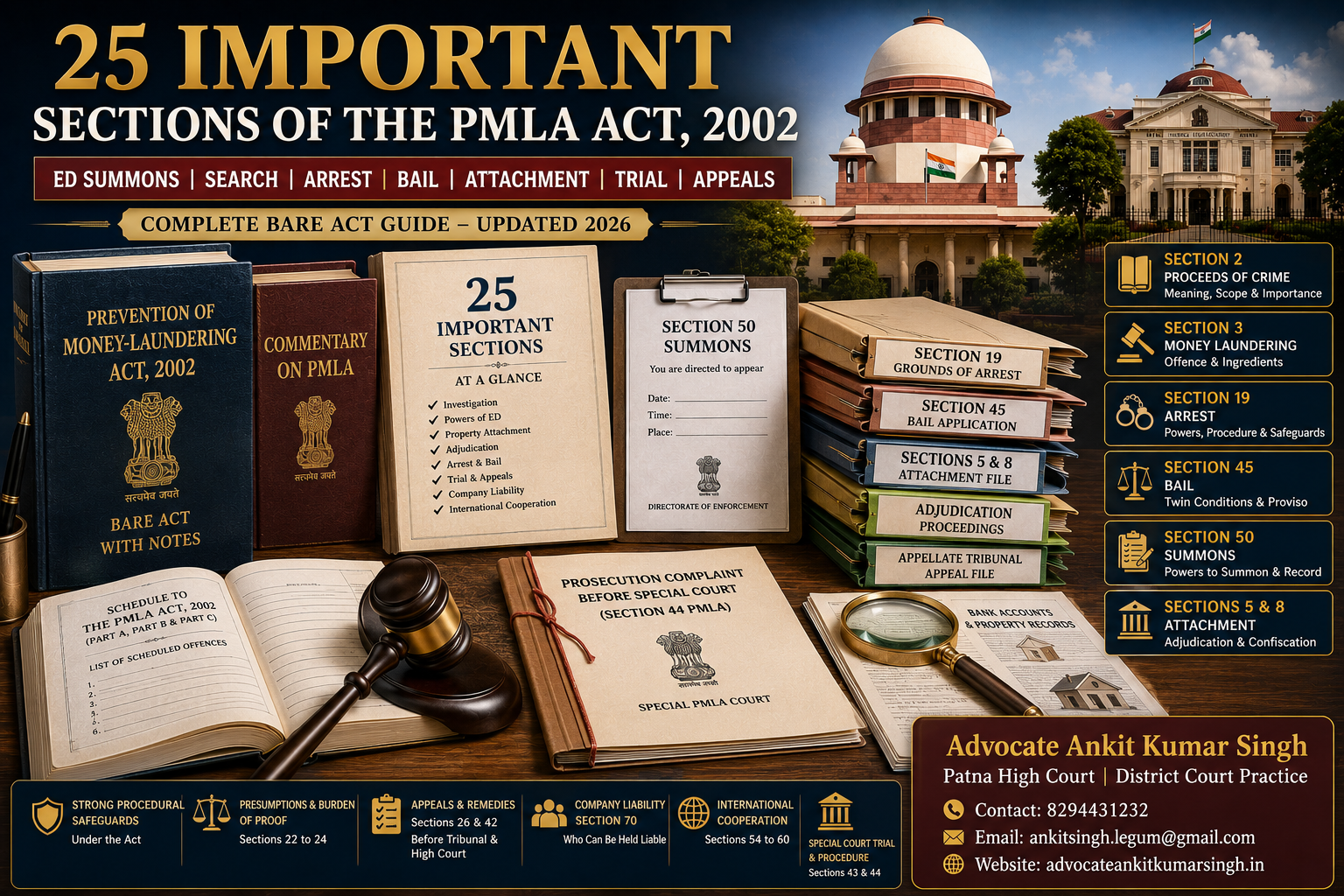
PMLA Bare Act Guide 2026: Important Sections Every Accused, Lawyer and Business Should Know
This complete statutory guide explains 25 important provisions of the Prevention of Money-Laundering Act, 2002. It covers proceeds of crime, scheduled offences, money laundering, punishment, attachment, adjudication, search, seizure, arrest, summons, bail, presumptions, burden of proof, Special Court procedure, appeals, company liability, reporting obligations and international cooperation, together with the leading Supreme Court judgments governing each stage.
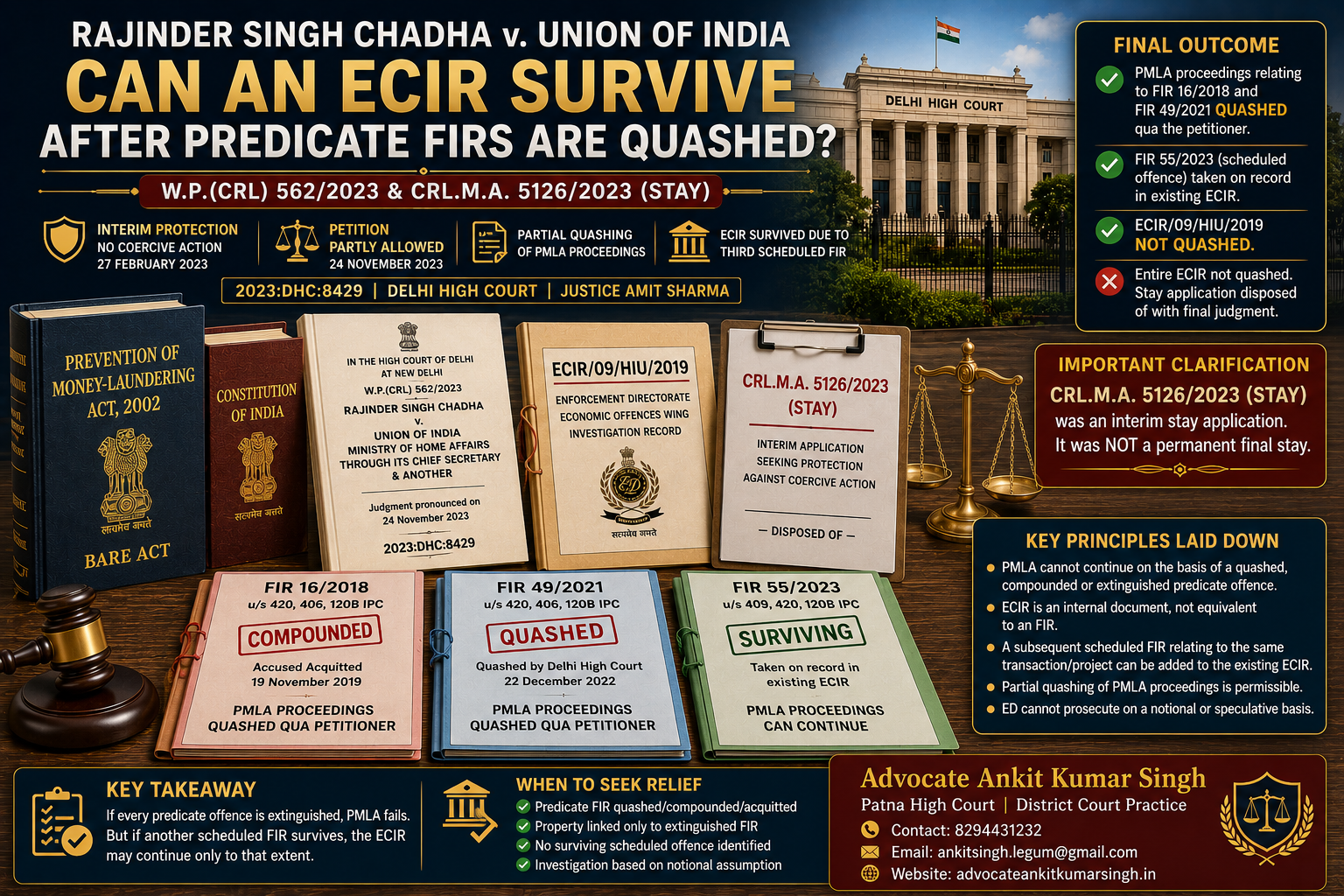
Rajinder Singh Chadha PMLA Judgment: Can an ECIR Continue After Predicate FIRs Are Quashed?
The Delhi High Court in Rajinder Singh Chadha v. Union of India partly quashed PMLA proceedings connected with two predicate FIRs that had been compounded or quashed. However, it refused to quash the entire ECIR because a third scheduled FIR relating to the same project remained pending. This guide explains the interim no-coercive-action order, the final result of the stay application, the surviving ECIR, partial quashing, multiple FIRs and the practical use of the judgment in PMLA defence.
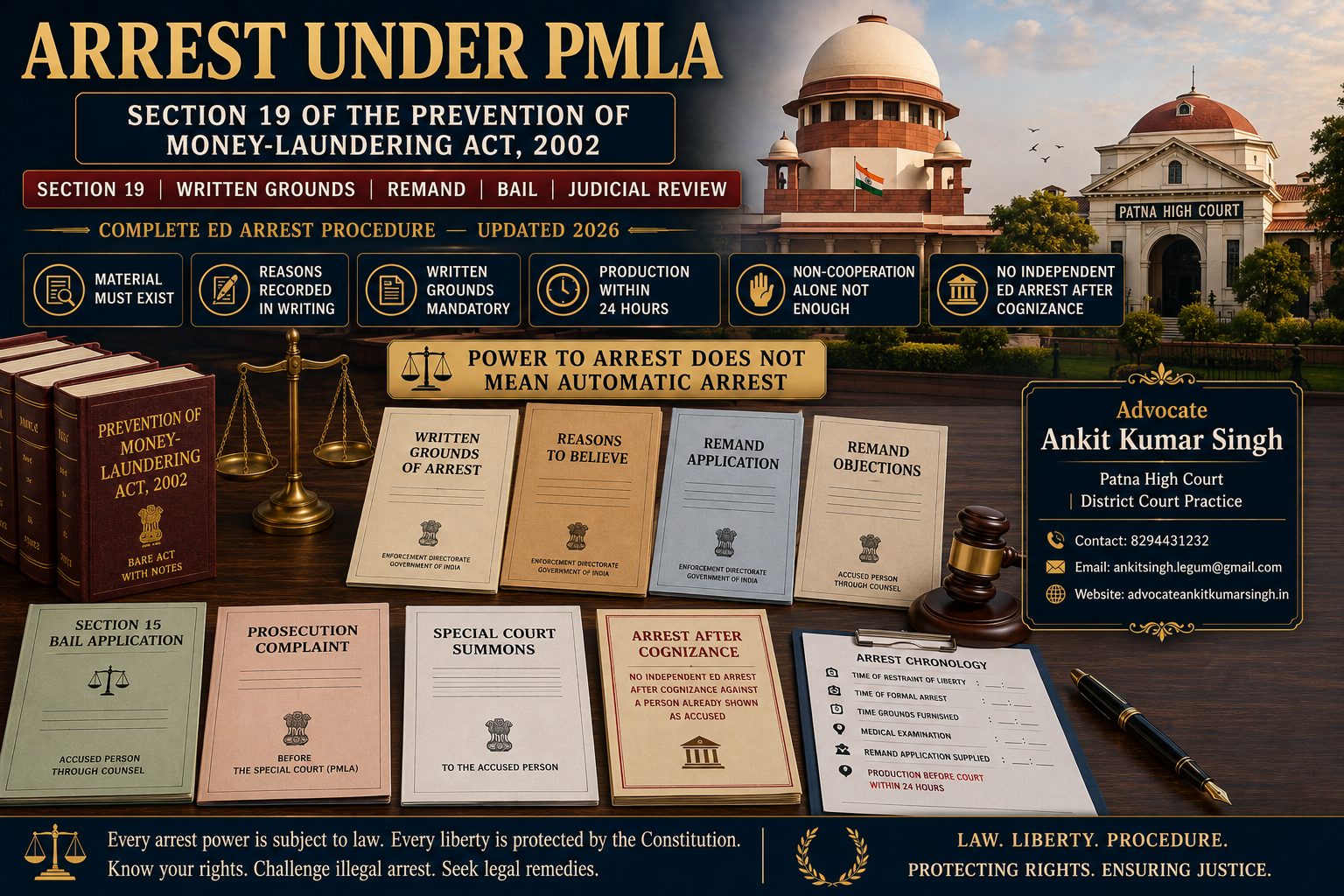
When Can ED Arrest a Person? Complete PMLA Arrest Procedure and Supreme Court Judgments. Arrest Under PMLA: Section 19, Written Grounds, Remand, Bail and Legal Remedies
This detailed guide explains arrest by the Enforcement Directorate under Section 19 PMLA. It covers the material and recorded reasons required before arrest, written grounds of arrest, the difference between grounds and reasons to believe, Section 50 summons, non-cooperation, production within twenty-four hours, remand objections, arrest after cognizance, bail under Section 45, illegal-arrest remedies and the leading Supreme Court judgments.
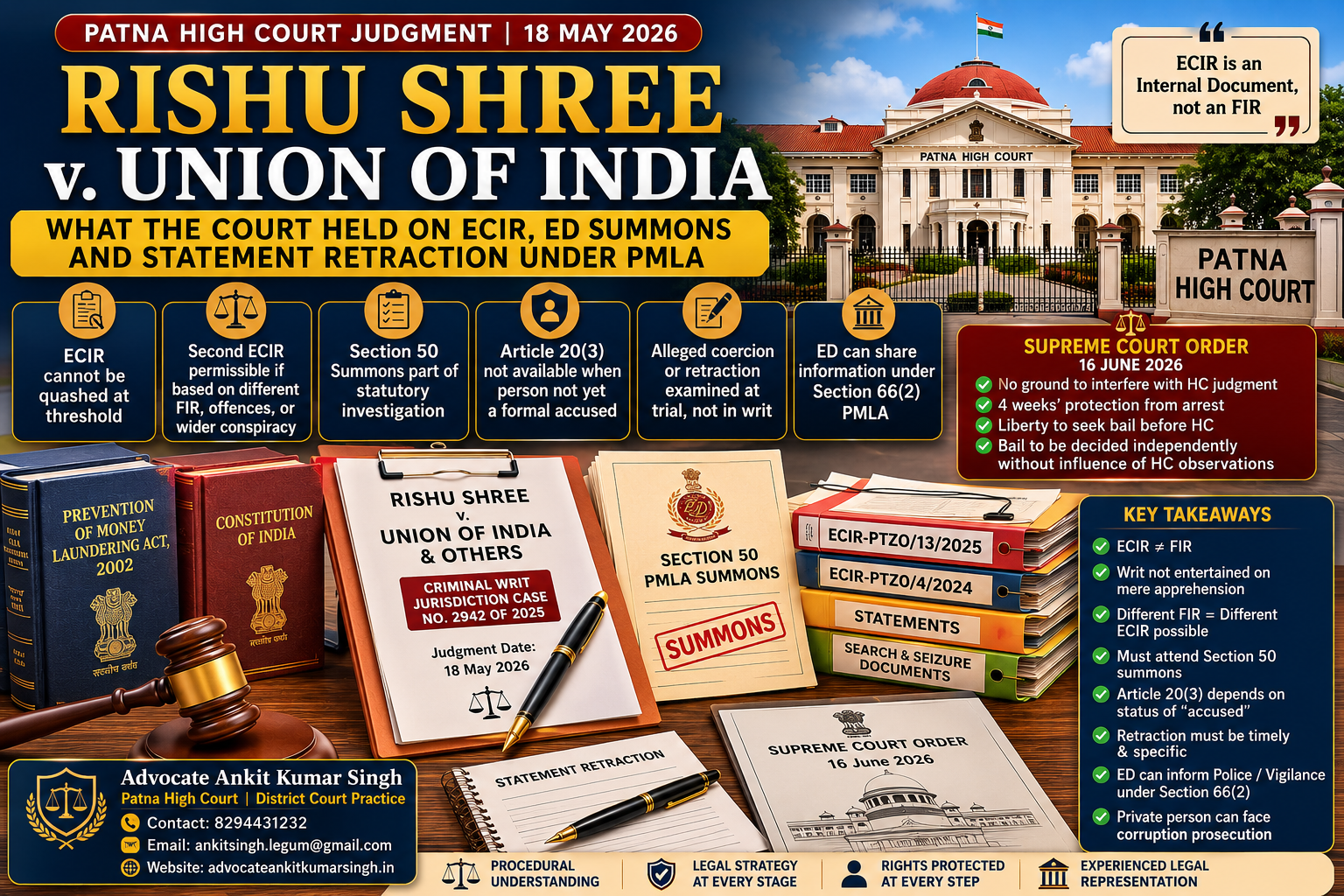
Can an ECIR or Section 50 PMLA Summons Be Quashed? Patna High Court’s 2026 Rishu Shree Judgment. Patna High Court on Quashing ECIR and ED Summons: Rishu Shree v. Union of India
The Patna High Court in Rishu Shree v. Union of India dismissed a challenge to a second ECIR, Section 50 summons and earlier ED statements. The Court held that an ECIR remains an internal investigative document, separate ECIR proceedings may arise from different scheduled offences or a wider conspiracy, summons cannot ordinarily be quashed on mere apprehension, and disputes concerning coercion or delayed retraction should generally be examined during trial. The Supreme Court later declined interference while granting temporary arrest protection to enable an independent bail application.

30 Landmark ED and PMLA Judgments in India: Latest Supreme Court Law on Arrest, Bail, Attachment and Trial
This comprehensive 2026 legal digest explains 30 landmark Supreme Court and High Court judgments governing ED and PMLA proceedings. It covers constitutional validity, proceeds of crime, predicate offences, arrest, written grounds, remand, bail, prolonged incarceration, women’s proviso, attachment, third-party rights, insolvency, cognizance, disclosure of documents and fair-trial protections.
ED Summons by Email and Non-Appearance: Delhi Court Explains When Criminal Prosecution Can Fail. Can ED Prosecute a Person for Skipping PMLA Summons? 2026 Court Ruling on Service
Two Delhi court judgments acquitted an accused in ED summons non-compliance cases after finding that lawful service and intentional disobedience had not been proved beyond reasonable doubt. This article explains email service, Section 50 and Section 63 PMLA, electronic-evidence requirements, the current BNS position and the pending Delhi High Court challenge.
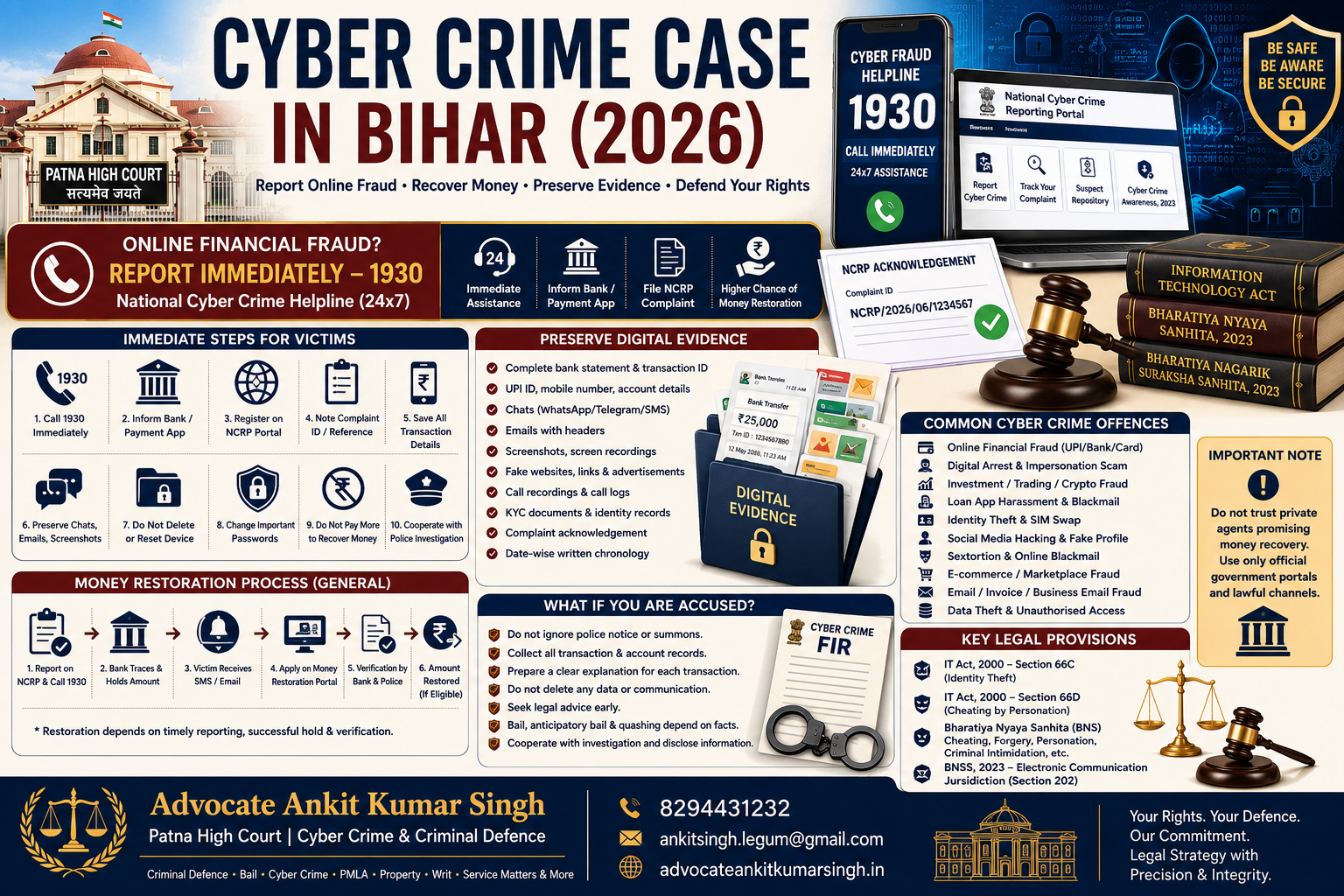
Cyber Crime Case in Bihar 2026: How to Report Online Fraud, Recover Money, Preserve Evidence and Defend an FIR
A practical 2026 guide explaining what cyber-fraud victims should do immediately, how to report through helpline 1930 and the National Cyber Crime Reporting Portal, how money restoration may work, what digital evidence to preserve and how persons named in cybercrime FIRs or linked bank accounts may prepare their defence.
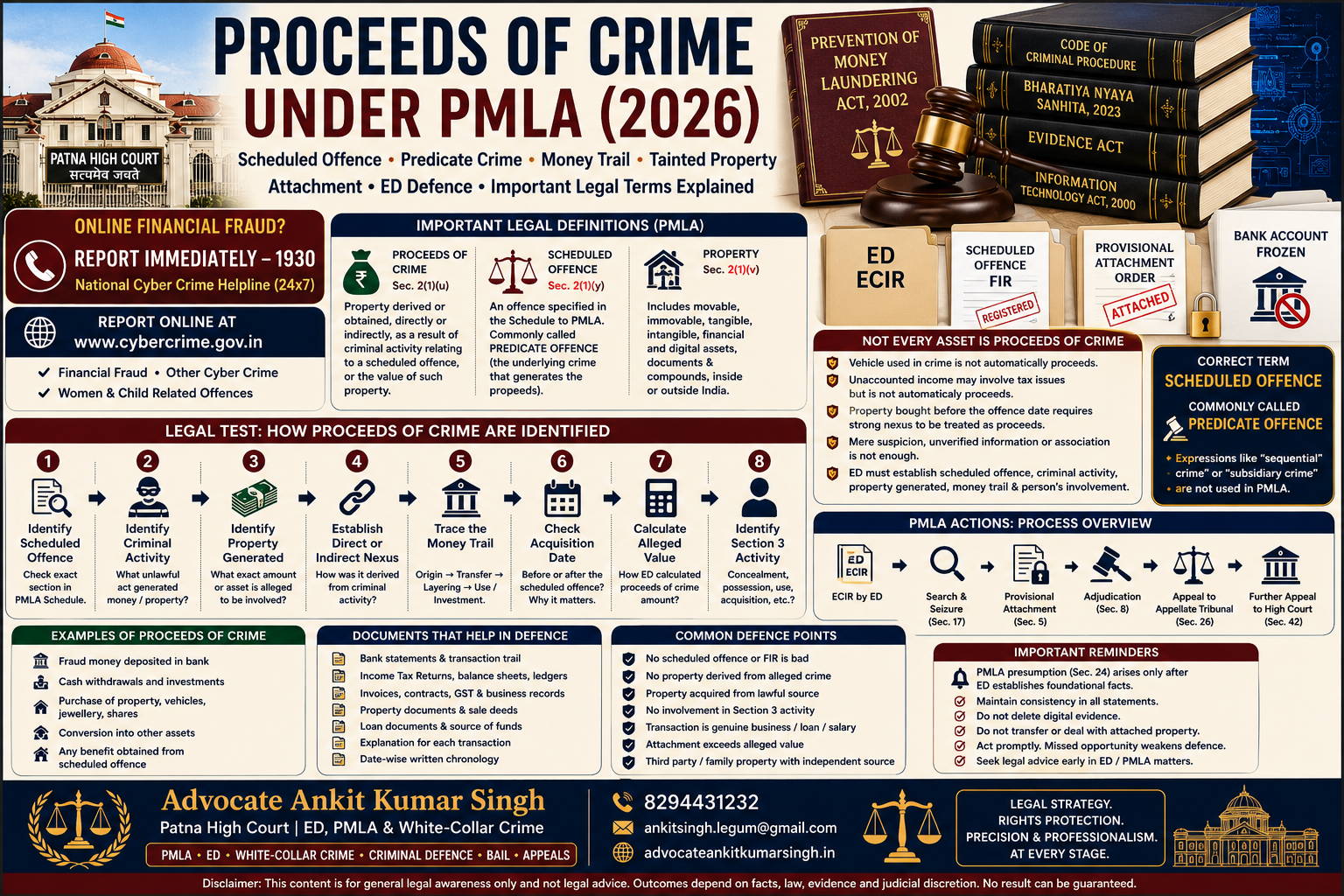
Proceeds of Crime under PMLA 2026: Scheduled Offence, Predicate Crime, Money Trail, Attachment and ED Defence
A detailed 2026 guide explaining proceeds of crime, scheduled or predicate offence, money trail, tainted property, equivalent-value property, Section 3 money laundering, attachment, freezing, adjudication and the legal tests ED must satisfy under PMLA.
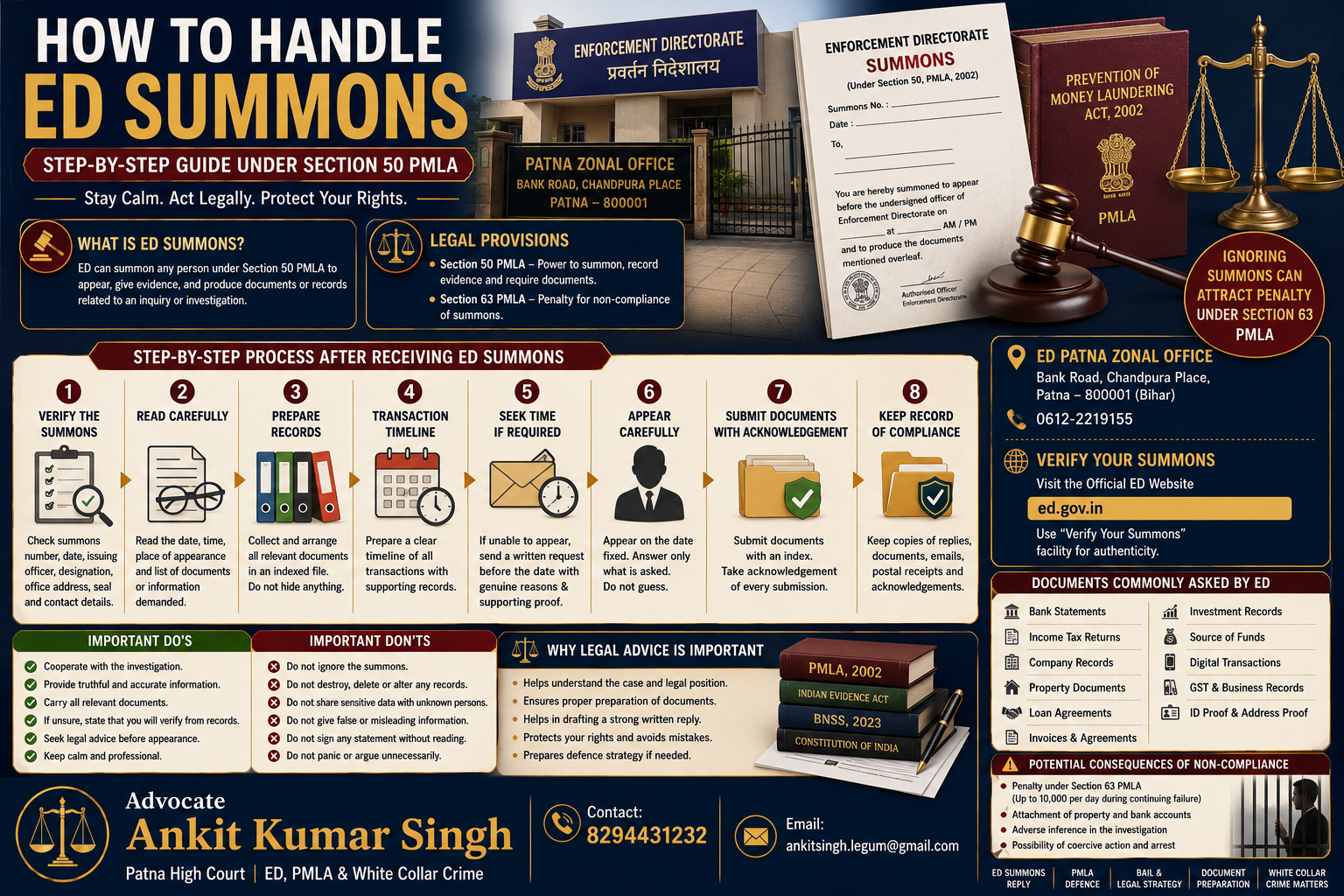
How to Handle If You Receive an ED Summons: Step-by-Step Guide by Patna High Court Advocate
Received an ED summons under Section 50 PMLA? This guide explains how to verify the summons, prepare documents, seek time, appear before ED, avoid mistakes and protect your legal position.
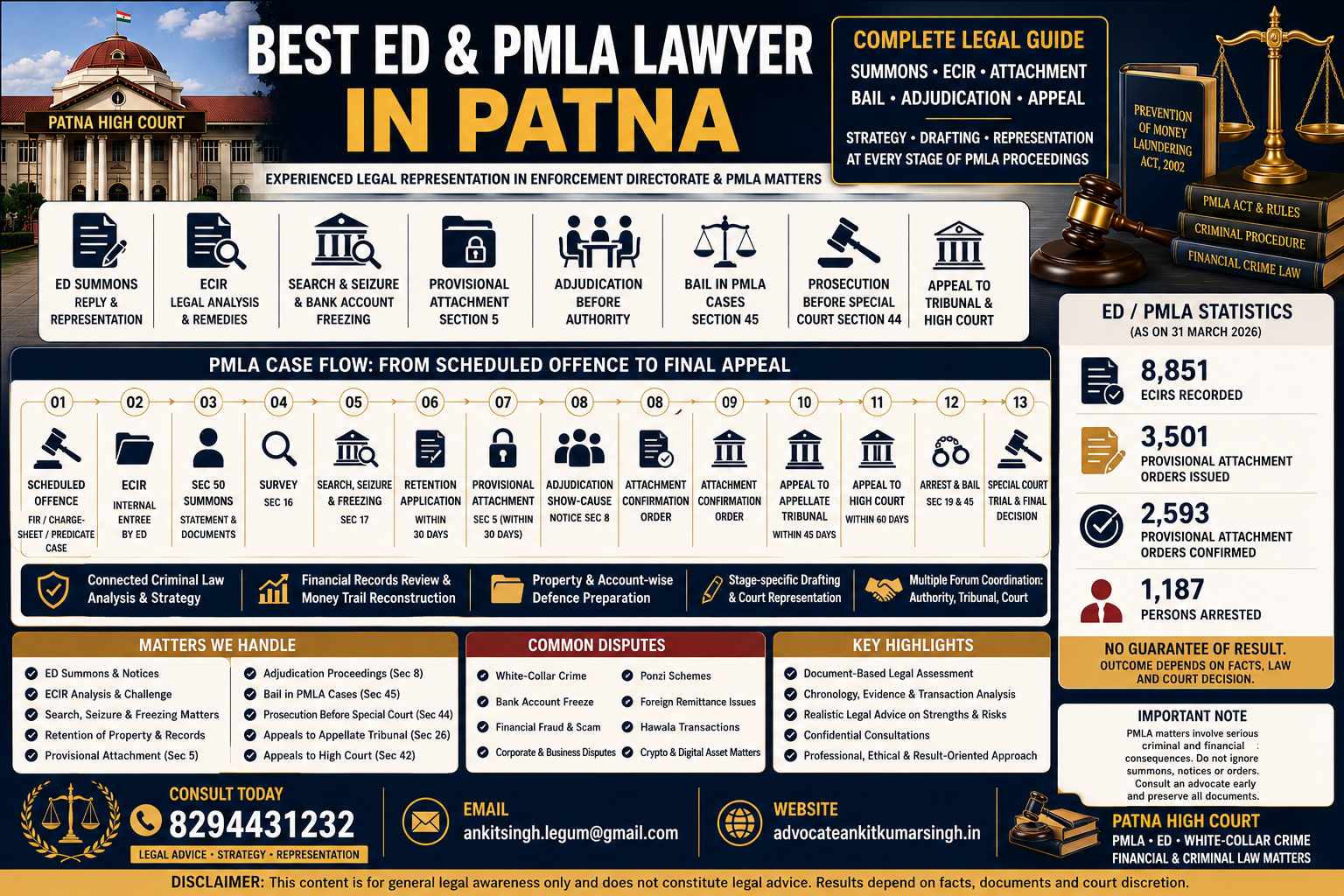
Searching for the Best ED & PMLA Lawyer in Patna? Why Clients Consider Advocate Ankit Kumar Singh for ED Summons, ECIR, Attachment, Bail and Appellate Tribunal Matters
Searching for an ED/PMLA lawyer in Patna? Learn about summons, ECIR, search, retention, attachment, adjudication, bail and Appellate Tribunal remedies.
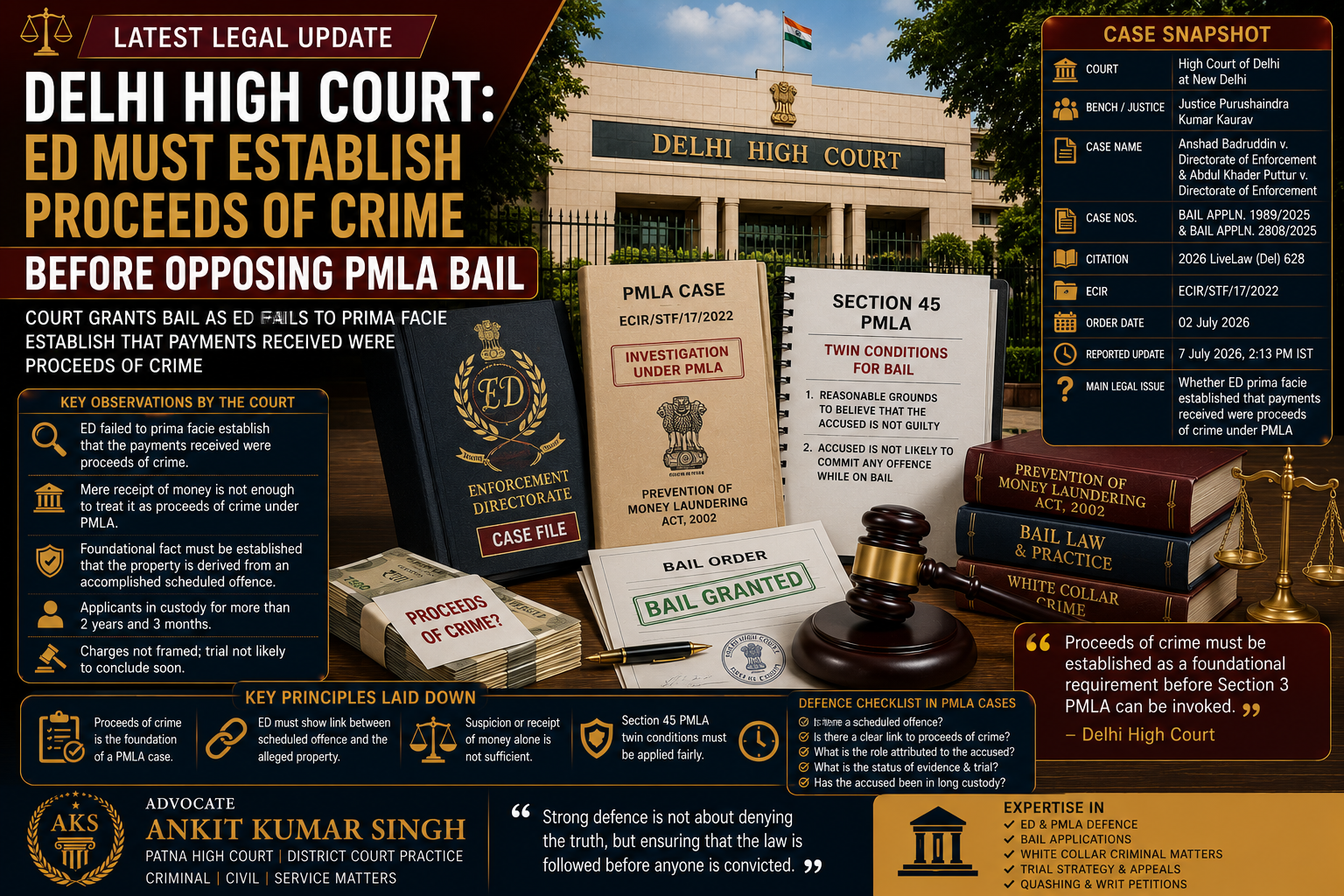
Delhi High Court: ED Must Establish Proceeds of Crime Before Opposing PMLA Bail
Delhi High Court has granted bail in a PMLA case after finding that ED failed to prima facie establish that the payments received were proceeds of crime. This blog explains the importance of proceeds of crime and Section 45 PMLA.
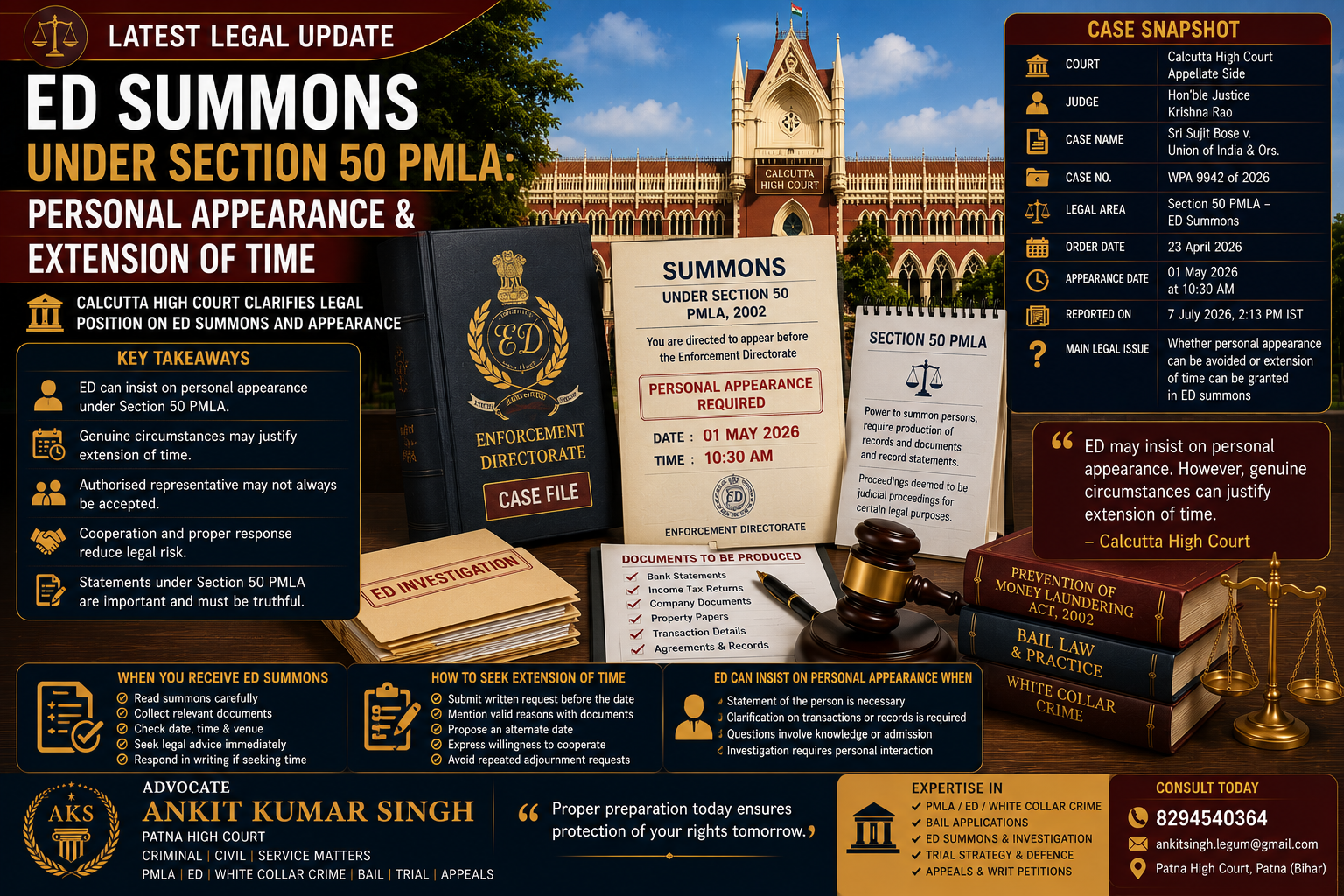
Calcutta High Court on ED Summons: Personal Appearance Cannot Be Avoided Without Valid Reason
Calcutta High Court has clarified that ED may insist on personal appearance under Section 50 PMLA, but genuine circumstances may justify extension of time. This blog explains the legal position and practical strategy.